
Recent from talks
True form (Taoism)
Knowledge base stats:
Talk channels stats:
Members stats:
True form (Taoism)
In Taoism, the concept of a true form (Chinese: 真形 / 眞形; pinyin: Zhēn xíng) is a metaphysical theory which posits that there are immutable essences of things — that is, images of the eternal Dao without form. This belief exists in Chinese Daoist traditions such as the Three Sovereigns corpus, where they emphasise the capacity of talismans, charts, and diagrams to depict both "true forms" and "true names" (真名; Zhēn míng) of demons and spirits. These talismanic representations are considered to be windows into the metaphysical substance of the entities whose "true form" and "true name" they depict. Since both the "true form" and the "true name" of an entity are two sides of the same coin, diagrams and talismans, could serve as apotropaic amulets or summoning devices for the deities the Taoists believed populated the cosmic mountains.
Taoists created charts (albums) depicting these "true forms" to help guide them safely through holy places during their pilgrimages, later they created talismans (charms) which displayed these true form charts. A talisman was more easily carried on the person and provided protection for seekers of the Dao as they journeyed into these mountainous areas.
During the medieval period (中世紀) Taoists developed the idea of the "true form" or zhenxing. The term "true form" denotes the original form something has as a part of the "Dao" (道; dào), which Taoists refer to as the "Great Image without form" (大象無形), and can be applied to a broad range of things such as a deity, an icon, a purified self, a talisman, or a picture. Essentially, talismans and diagrams were depictions of a supramundane entities, and gave a visually observable shape to the metaphysical substance of a supramundane being's "image", which they referred to as the xiang (象). Taoists believe that the "true form" or name of a spirit inscribed on a talisman is legible only to supernatural beings, and being in possession of such a talisman gives a sort of temporary "control" over the entity whose name or form is possessed. The names of the entities were typically written in celestial script (天文), a type of divine talismanic writing, pm a support medium per the instructions provided to the talisman maker in conventional Chinese characters. Once the talisman was reproduced it had to be activated through rituals allowing them to control the associated entities.
Taoists view the "true form" as the inner, often invisible, and formless quality of an entity which they contrast with the outer, visible, and concrete form of the entity. As a key concept behind Taoist visuality, "true forms" are not static and to gain the ability to see these underlying and secret phenomena entails an active journey. Taoist practitioners claim that being able to see "true forms" requires the person to rigorously meditate and visualize and receive spiritual revelation, which requires both practice and have a lot of religious discipline.
"True forms" serve as the parent concept for related Taoist notions such as "true names" (真名), "true concealed names" (真諱), "true talismans" (真符), "true characters" (真字), and "true texts" (真本).
According to Dutch Sinologist Kristofer Schipper the concept of "true forms" is the central unifying concept uniting both Taoist art and rituals.
Other than Taoists, Chinese Buddhists have also adopted "true forms", and the related concept of "true faces" (真容), into their practice.
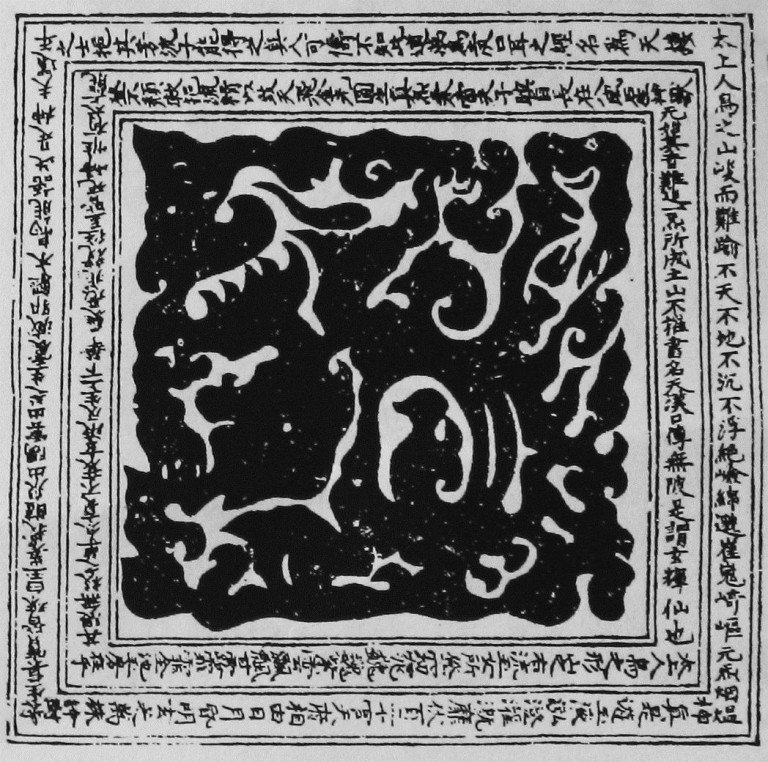
In order to visualize "true forms" medieval Taoists developed what they called "true form charts" (真形圖; zhēn xíng tú). These true form charts are typically aniconic diagrams organized in a puzzling configuration depicting mountain-inspired paradises (such as grotto-heavens), sacred sites, and Diyu (hells). They are classified by Guo Ruoxu (郭若虛) as "magical paintings" (術畫) and in the Daozang they are classified as "Numinous Charts". Taoists believe that true form charts and talismans have the power to uncover the "true forms" of the spirits, demons, and numinous entities that inhabit the world, as well as places such as mountains. Taoists used these "true form" charts both for communication and for protection. Regarding their protective function Ge Hong stated: "Having the Album of the True Forms of the Five Marchmounts in your home enables you to deflect violent assault and repulse those who wish to do you harm; they themselves will suffer the calamity they seek to visit upon you." indicating that being in possession of a true form chart can keep its owners safe from potential harm.
Hub AI
True form (Taoism) AI simulator
(@True form (Taoism)_simulator)
True form (Taoism)
In Taoism, the concept of a true form (Chinese: 真形 / 眞形; pinyin: Zhēn xíng) is a metaphysical theory which posits that there are immutable essences of things — that is, images of the eternal Dao without form. This belief exists in Chinese Daoist traditions such as the Three Sovereigns corpus, where they emphasise the capacity of talismans, charts, and diagrams to depict both "true forms" and "true names" (真名; Zhēn míng) of demons and spirits. These talismanic representations are considered to be windows into the metaphysical substance of the entities whose "true form" and "true name" they depict. Since both the "true form" and the "true name" of an entity are two sides of the same coin, diagrams and talismans, could serve as apotropaic amulets or summoning devices for the deities the Taoists believed populated the cosmic mountains.
Taoists created charts (albums) depicting these "true forms" to help guide them safely through holy places during their pilgrimages, later they created talismans (charms) which displayed these true form charts. A talisman was more easily carried on the person and provided protection for seekers of the Dao as they journeyed into these mountainous areas.
During the medieval period (中世紀) Taoists developed the idea of the "true form" or zhenxing. The term "true form" denotes the original form something has as a part of the "Dao" (道; dào), which Taoists refer to as the "Great Image without form" (大象無形), and can be applied to a broad range of things such as a deity, an icon, a purified self, a talisman, or a picture. Essentially, talismans and diagrams were depictions of a supramundane entities, and gave a visually observable shape to the metaphysical substance of a supramundane being's "image", which they referred to as the xiang (象). Taoists believe that the "true form" or name of a spirit inscribed on a talisman is legible only to supernatural beings, and being in possession of such a talisman gives a sort of temporary "control" over the entity whose name or form is possessed. The names of the entities were typically written in celestial script (天文), a type of divine talismanic writing, pm a support medium per the instructions provided to the talisman maker in conventional Chinese characters. Once the talisman was reproduced it had to be activated through rituals allowing them to control the associated entities.
Taoists view the "true form" as the inner, often invisible, and formless quality of an entity which they contrast with the outer, visible, and concrete form of the entity. As a key concept behind Taoist visuality, "true forms" are not static and to gain the ability to see these underlying and secret phenomena entails an active journey. Taoist practitioners claim that being able to see "true forms" requires the person to rigorously meditate and visualize and receive spiritual revelation, which requires both practice and have a lot of religious discipline.
"True forms" serve as the parent concept for related Taoist notions such as "true names" (真名), "true concealed names" (真諱), "true talismans" (真符), "true characters" (真字), and "true texts" (真本).
According to Dutch Sinologist Kristofer Schipper the concept of "true forms" is the central unifying concept uniting both Taoist art and rituals.
Other than Taoists, Chinese Buddhists have also adopted "true forms", and the related concept of "true faces" (真容), into their practice.
In order to visualize "true forms" medieval Taoists developed what they called "true form charts" (真形圖; zhēn xíng tú). These true form charts are typically aniconic diagrams organized in a puzzling configuration depicting mountain-inspired paradises (such as grotto-heavens), sacred sites, and Diyu (hells). They are classified by Guo Ruoxu (郭若虛) as "magical paintings" (術畫) and in the Daozang they are classified as "Numinous Charts". Taoists believe that true form charts and talismans have the power to uncover the "true forms" of the spirits, demons, and numinous entities that inhabit the world, as well as places such as mountains. Taoists used these "true form" charts both for communication and for protection. Regarding their protective function Ge Hong stated: "Having the Album of the True Forms of the Five Marchmounts in your home enables you to deflect violent assault and repulse those who wish to do you harm; they themselves will suffer the calamity they seek to visit upon you." indicating that being in possession of a true form chart can keep its owners safe from potential harm.
Recent media