
Recent from talks
Tskhinvali
Knowledge base stats:
Talk channels stats:
Members stats:
Tskhinvali
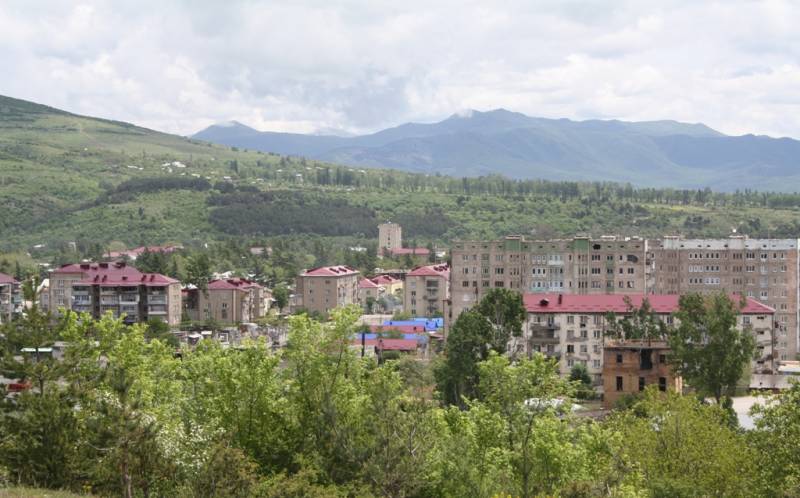
Tskhinvali (Georgian: ცხინვალი [ˈt͡sʰχinʷali] ⓘ) or Tskhinval (Ossetian: Цхинвал, Чъреба, romanized: Cxinval, Čreba, [t͡sχinˈvɒɫ, ˈt͡ʃʼɾʲebɑ] ⓘ; Russian: Цхинвал(и), romanized: Tskhinval(i), [tsxʲɪnˈval(ʲɪ)]) is the capital of the disputed de facto independent Republic of South Ossetia, internationally considered part of Shida Kartli, Georgia (except by Russia and four other UN member states). Tskhinvali Region, known historically as Samachablo, was traditionally part of the Georgia as a single military and administrative entity.[neutrality is disputed] It is located on the Great Liakhvi River approximately 100 kilometres (62 mi) northwest of the Georgian capital Tbilisi.
The name of Tskhinvali is derived from the Old Georgian Krtskhinvali (Georgian: ქრცხინვალი), from earlier Krtskhilvani (Georgian: ქრცხილვანი), literally meaning "the land of hornbeams", which is the historical name of the city. See ცხინვალი for more.
From 1934 to 1961, the city was named Staliniri (Georgian: სტალინირი, Ossetian: Сталинир), which was a compilation of Joseph Stalin's surname with Ossetian word "Ir" which means Ossetia. Modern Ossetians call the city Tskhinval (leaving off the final "i", which is a nominative case ending in Georgian); the other Ossetian name of the city is Chreba (Ossetian: Чъреба) which is only spread as a colloquial word. The name Chreba comes from the Georgian Ḳreba (Georgian: კრება), literally meaning "gathering" due to the city historically serving as a trading point.
Humans first settled in the area around present-day Tskhinvali in the Bronze Age. The unearthed settlements and archaeological artifacts from that time are unique in that they reflect influences from both Iberian (east Georgia) and Colchian (west Georgia) cultures with possible Sarmatian elements.
Tskhinvali was first chronicled by Georgian sources in 1398 as a village in Kartli (central Georgia), though a later account credits the 3rd-century AD Georgian king Aspacures II of Iberia with its foundation as a fortress. By the early-18th century, Tskhinvali was a small "royal town" populated chiefly by monastic serfs. Tskhinvali was annexed to the Russian Empire along with the rest of eastern Georgia in 1801. Located on a trade route which linked North Caucasus to Tbilisi and Gori, Tskhinvali gradually developed into a commercial town with a mixed Georgian Jewish, Georgian, Armenian and Ossetian population. In 1917, it had 600 households with 38.4% occupied by Georgian Jews, 34.4% by Georgians, 17.7% by Armenians and 8.8% by Ossetians.
The town saw clashes between the Georgian People's Guard and pro-Bolshevik Ossetian peasants during the 1918–20 period, when Georgia gained brief independence from Russia. Soviet rule was established by the invading Red Army in March 1921, and a year later, in 1922, Tskhinvali was made a capital of the South Ossetian Autonomous Oblast within the Georgian SSR. Subsequently, the town became largely Ossetian due to intense urbanisation and to the Soviet korenizatsiya ("nativization") policy which induced an inflow of the Ossetians from the nearby rural areas into Tskhinvali. The settlement was essentially an industrial centre, with lumber mills and manufacturing plants, and had also several cultural and educational institutions such as a venerated Pedagogical Institute (currently Tskhinvali State University) and a drama theatre. According to the last Soviet census (in 1989), Tskhinvali had a population of 42,934, and according to the census of Republic of South Ossetia in 2015, the population comprised 30,432 people.
During the acute phase of the Georgian-Ossetian conflict of 1989 and following, Tskhinvali was a scene of ethnic tensions and ensuing armed confrontation between Georgian and Ossetian forces. The 1992 Sochi ceasefire accord left Tskhinvali in the hands of Ossetians.
A considerable part of the population of South Ossetia (at least, 30,000 out of 70,000) fled into North Ossetia–Alania prior or immediately after the start of the Russo-Georgian War in August 2008. However, many civilians were killed during the shelling and the following Battle of Tskhinvali of 8 to 11 August 2008 (162 civilian deaths were documented by the Russian team of investigators and 365 – by the South Ossetian authorities). The town was heavily damaged during the battle due to extensive shelling by the Georgian Army. Andrey Illarionov visited the town in October 2008 and reported that Jewish Quarter was in ruins, though he observed that the ruins were overgrown with shrubs and trees, which indicates that the destruction took place during the 1991–1992 South Ossetia War. However, Mark Ames, who was covering the last war for The Nation, stated that Tskhinvali's main residential district, nicknamed Shanghai because of its population density (it's where most of the city's high-rise apartment blocks are located), and the old Jewish Quarter, were completely destroyed.
Hub AI
Tskhinvali AI simulator
(@Tskhinvali_simulator)
Tskhinvali
Tskhinvali (Georgian: ცხინვალი [ˈt͡sʰχinʷali] ⓘ) or Tskhinval (Ossetian: Цхинвал, Чъреба, romanized: Cxinval, Čreba, [t͡sχinˈvɒɫ, ˈt͡ʃʼɾʲebɑ] ⓘ; Russian: Цхинвал(и), romanized: Tskhinval(i), [tsxʲɪnˈval(ʲɪ)]) is the capital of the disputed de facto independent Republic of South Ossetia, internationally considered part of Shida Kartli, Georgia (except by Russia and four other UN member states). Tskhinvali Region, known historically as Samachablo, was traditionally part of the Georgia as a single military and administrative entity.[neutrality is disputed] It is located on the Great Liakhvi River approximately 100 kilometres (62 mi) northwest of the Georgian capital Tbilisi.
The name of Tskhinvali is derived from the Old Georgian Krtskhinvali (Georgian: ქრცხინვალი), from earlier Krtskhilvani (Georgian: ქრცხილვანი), literally meaning "the land of hornbeams", which is the historical name of the city. See ცხინვალი for more.
From 1934 to 1961, the city was named Staliniri (Georgian: სტალინირი, Ossetian: Сталинир), which was a compilation of Joseph Stalin's surname with Ossetian word "Ir" which means Ossetia. Modern Ossetians call the city Tskhinval (leaving off the final "i", which is a nominative case ending in Georgian); the other Ossetian name of the city is Chreba (Ossetian: Чъреба) which is only spread as a colloquial word. The name Chreba comes from the Georgian Ḳreba (Georgian: კრება), literally meaning "gathering" due to the city historically serving as a trading point.
Humans first settled in the area around present-day Tskhinvali in the Bronze Age. The unearthed settlements and archaeological artifacts from that time are unique in that they reflect influences from both Iberian (east Georgia) and Colchian (west Georgia) cultures with possible Sarmatian elements.
Tskhinvali was first chronicled by Georgian sources in 1398 as a village in Kartli (central Georgia), though a later account credits the 3rd-century AD Georgian king Aspacures II of Iberia with its foundation as a fortress. By the early-18th century, Tskhinvali was a small "royal town" populated chiefly by monastic serfs. Tskhinvali was annexed to the Russian Empire along with the rest of eastern Georgia in 1801. Located on a trade route which linked North Caucasus to Tbilisi and Gori, Tskhinvali gradually developed into a commercial town with a mixed Georgian Jewish, Georgian, Armenian and Ossetian population. In 1917, it had 600 households with 38.4% occupied by Georgian Jews, 34.4% by Georgians, 17.7% by Armenians and 8.8% by Ossetians.
The town saw clashes between the Georgian People's Guard and pro-Bolshevik Ossetian peasants during the 1918–20 period, when Georgia gained brief independence from Russia. Soviet rule was established by the invading Red Army in March 1921, and a year later, in 1922, Tskhinvali was made a capital of the South Ossetian Autonomous Oblast within the Georgian SSR. Subsequently, the town became largely Ossetian due to intense urbanisation and to the Soviet korenizatsiya ("nativization") policy which induced an inflow of the Ossetians from the nearby rural areas into Tskhinvali. The settlement was essentially an industrial centre, with lumber mills and manufacturing plants, and had also several cultural and educational institutions such as a venerated Pedagogical Institute (currently Tskhinvali State University) and a drama theatre. According to the last Soviet census (in 1989), Tskhinvali had a population of 42,934, and according to the census of Republic of South Ossetia in 2015, the population comprised 30,432 people.
During the acute phase of the Georgian-Ossetian conflict of 1989 and following, Tskhinvali was a scene of ethnic tensions and ensuing armed confrontation between Georgian and Ossetian forces. The 1992 Sochi ceasefire accord left Tskhinvali in the hands of Ossetians.
A considerable part of the population of South Ossetia (at least, 30,000 out of 70,000) fled into North Ossetia–Alania prior or immediately after the start of the Russo-Georgian War in August 2008. However, many civilians were killed during the shelling and the following Battle of Tskhinvali of 8 to 11 August 2008 (162 civilian deaths were documented by the Russian team of investigators and 365 – by the South Ossetian authorities). The town was heavily damaged during the battle due to extensive shelling by the Georgian Army. Andrey Illarionov visited the town in October 2008 and reported that Jewish Quarter was in ruins, though he observed that the ruins were overgrown with shrubs and trees, which indicates that the destruction took place during the 1991–1992 South Ossetia War. However, Mark Ames, who was covering the last war for The Nation, stated that Tskhinvali's main residential district, nicknamed Shanghai because of its population density (it's where most of the city's high-rise apartment blocks are located), and the old Jewish Quarter, were completely destroyed.
Recent media