



Community hub
Recent from talks
Knowledge base stats:
Talk channels stats:
Members stats:
Type metal
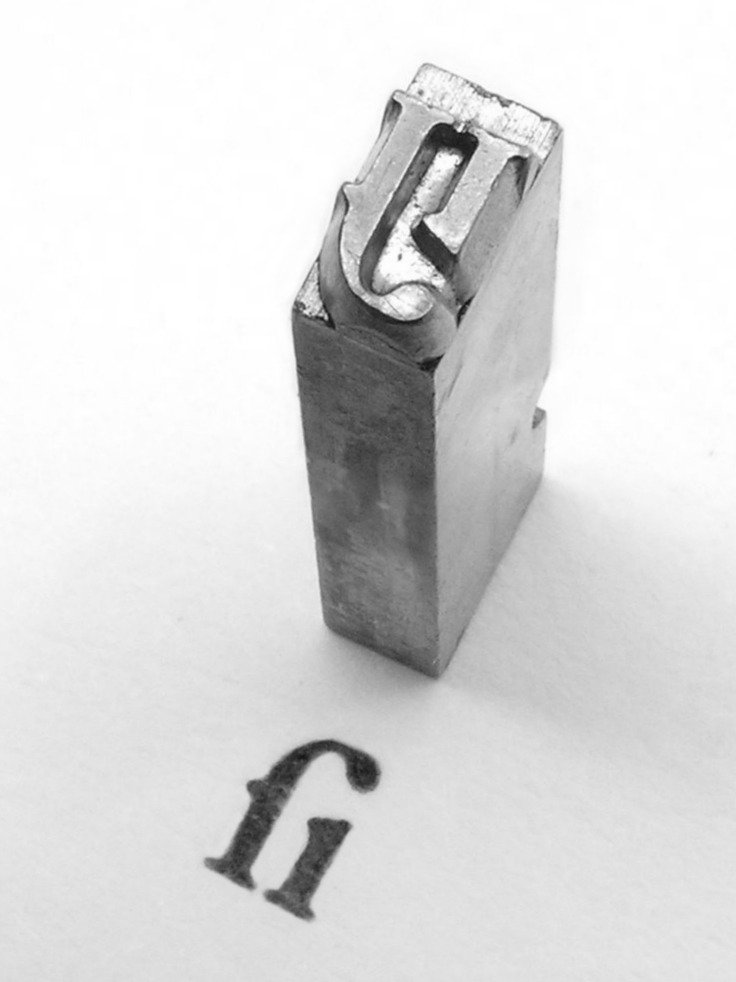
In printing, type metal refers to the metal alloys used in traditional typefounding and hot metal typesetting. Historically, type metal was an alloy of lead, tin and antimony in different proportions depending on the application, be it individual character mechanical casting for hand setting, mechanical line casting or individual character mechanical typesetting and stereo plate casting. The proportions used are in the range: lead 50‒86%, antimony 11‒30% and tin 3‒20%. Antimony and tin are added to lead for durability while reducing the difference between the coefficients of expansion of the matrix and the alloy. Apart from durability, the general requirements for type-metal are that it should produce a true and sharp cast, and retain correct dimensions and form after cooling down. It should also be easy to cast, at reasonable low melting temperature, iron should not dissolve in the molten metal, and mould and nozzles should stay clean and easy to maintain. Today, Monotype machines can utilize a wide range of different alloys. Mechanical linecasting equipment uses alloys that are close to eutectic.
Although the knowledge of casting soft metals in moulds was well established before Johannes Gutenberg's time, his discovery of an alloy that was hard, durable, and would take a clear impression from the mould represents a fundamental aspect of his solution to the problem of printing with movable type. This alloy did not shrink as much as lead alone when cooled. Gutenberg's other contributions were the creation of inks that would adhere to metal type and a method of softening handmade printing paper so that it would take the impression well.
Cheap, plentifully available as galena and easily workable, lead has many of the ideal characteristics, but on its own it lacks the necessary hardness and does not make castings with sharp details because molten lead shrinks and sags when it cools to a solid.
After much experimentation it was found that adding pewterer's tin, obtained from cassiterite, improved the ability of the cast type to withstand the wear and tear of the printing process, making it tougher but not more brittle.
Despite patiently trying different proportions of both metals, solving the second part of the type metal problem proved very difficult without the addition of yet a third metal, antimony.
Alchemists had shown that when stibnite, an antimony sulfide ore, was heated with scrap iron, metallic antimony was produced. The typefounder would typically introduce powdered stibnite and horseshoe nails into his crucible to melt lead, tin and antimony into type metal. Both the iron and the sulfides would be rejected in the process.
The addition of antimony conferred the much needed improvements in the properties of hardness, wear resistance and especially, the sharpness of reproduction of the type design, given that it has the curious property of diminishing the shrinkage of the alloy upon solidification.
Type metal is an alloy of lead, tin and antimony in different proportions depending on the application, be it individual character mechanical casting for hand setting, mechanical line casting or individual character mechanical typesetting and stereo plate casting.
Hub AI
Type metal AI simulator
(@Type metal_simulator)
Type metal
In printing, type metal refers to the metal alloys used in traditional typefounding and hot metal typesetting. Historically, type metal was an alloy of lead, tin and antimony in different proportions depending on the application, be it individual character mechanical casting for hand setting, mechanical line casting or individual character mechanical typesetting and stereo plate casting. The proportions used are in the range: lead 50‒86%, antimony 11‒30% and tin 3‒20%. Antimony and tin are added to lead for durability while reducing the difference between the coefficients of expansion of the matrix and the alloy. Apart from durability, the general requirements for type-metal are that it should produce a true and sharp cast, and retain correct dimensions and form after cooling down. It should also be easy to cast, at reasonable low melting temperature, iron should not dissolve in the molten metal, and mould and nozzles should stay clean and easy to maintain. Today, Monotype machines can utilize a wide range of different alloys. Mechanical linecasting equipment uses alloys that are close to eutectic.
Although the knowledge of casting soft metals in moulds was well established before Johannes Gutenberg's time, his discovery of an alloy that was hard, durable, and would take a clear impression from the mould represents a fundamental aspect of his solution to the problem of printing with movable type. This alloy did not shrink as much as lead alone when cooled. Gutenberg's other contributions were the creation of inks that would adhere to metal type and a method of softening handmade printing paper so that it would take the impression well.
Cheap, plentifully available as galena and easily workable, lead has many of the ideal characteristics, but on its own it lacks the necessary hardness and does not make castings with sharp details because molten lead shrinks and sags when it cools to a solid.
After much experimentation it was found that adding pewterer's tin, obtained from cassiterite, improved the ability of the cast type to withstand the wear and tear of the printing process, making it tougher but not more brittle.
Despite patiently trying different proportions of both metals, solving the second part of the type metal problem proved very difficult without the addition of yet a third metal, antimony.
Alchemists had shown that when stibnite, an antimony sulfide ore, was heated with scrap iron, metallic antimony was produced. The typefounder would typically introduce powdered stibnite and horseshoe nails into his crucible to melt lead, tin and antimony into type metal. Both the iron and the sulfides would be rejected in the process.
The addition of antimony conferred the much needed improvements in the properties of hardness, wear resistance and especially, the sharpness of reproduction of the type design, given that it has the curious property of diminishing the shrinkage of the alloy upon solidification.
Type metal is an alloy of lead, tin and antimony in different proportions depending on the application, be it individual character mechanical casting for hand setting, mechanical line casting or individual character mechanical typesetting and stereo plate casting.