



Community hub
Recent from talks
Knowledge base stats:
Talk channels stats:
Members stats:
Tyrolean Rebellion
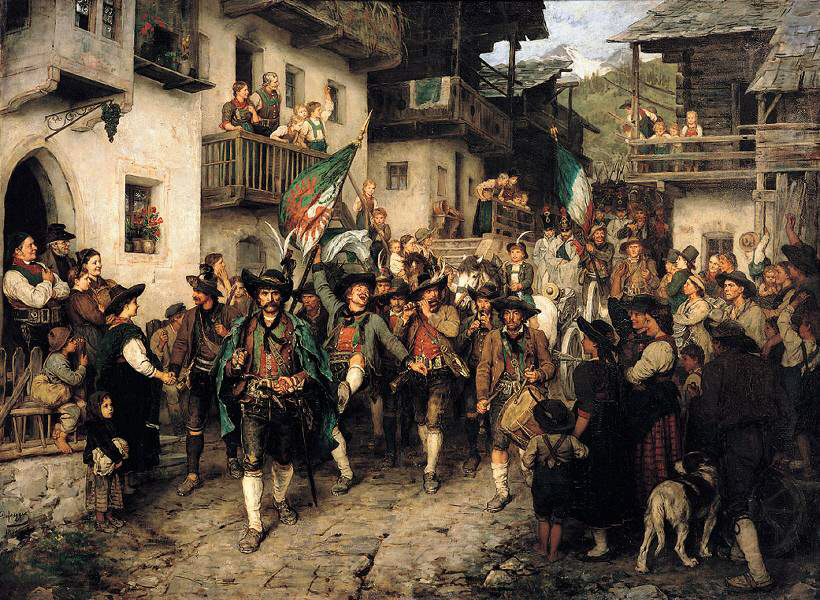
The Tyrolean Rebellion (German: Tiroler Volksaufstand) was an 1809 rebellion in the County of Tyrol against the Bavarian and French occupation of Tyrol during the War of the Fifth Coalition. Led by Andreas Hofer, the rebellion was initially successful in freeing the County of Bavarian occupation, but was later squashed by French troops. The rebellion was later mythologized as a part of Austrian nationalist historiography.
In September 1805, during the War of the Third Coalition, the Electorate of Bavaria allied with Napoleonic France against Austria and Russia. Napoleon quickly defeated Austria and Russia, and imposed the Peace of Pressburg (1805), by which Bavaria was elevated to a kingdom and gained French-occupied Tyrol, which had been held by the House of Habsburg since 1363. Napoleon officially handed over the County of Tyrol to Bavaria on 11 February 1806. (The area awarded to Bavaria included Trentino, which had not been part of the County of Tyrol until the Prince-Bishopric of Trent was secularized in 1803.)
In its policies and legislation, the Bavarian government under minister Count Montgelas angered the Tyrolean population in several ways. Bavaria imposed new laws, reorganized the school system, abolished the Tyrolean people's age-old right to self-defence (Wehrverfassung), and raised taxes. At the same time Bavaria barred exports, e.g. of cattle, from Tyrol into Bavaria. Furthermore, the state meddled with religious activities in Tyrol, banning traditional rural holidays, the ringing of church bells, processions etc. which were a vital part of Tyrolean culture. Additionally, on 1 May 1808, the County of Tyrol was disestablished and administratively split up into the three districts of Inn, Eisack, and Etsch. The new Bavarian constitution also replaced long existing feudal rights of the Tyrolean population, such as not having to fight in a foreign army and outside Tyrol's borders. Conscription was thus introduced in Tyrol, and Tyroleans were called into Bavarian military service, which led to open revolt. Bavaria had to provide soldiers for Napoleon's devastating wars in Russia and Spain, from which few or none expected to return. On top of this, the Bavarians ordered compulsory smallpox vaccination in 1807, with massive fines for refusal. For the Tyroleans this was pure blasphemy.
The Tyrolean uprising broke out with the flight to Innsbruck of young men due conscription into the Bavarian Army at Axams on 12 and 13 March 1809. These men in hiding were in contact with the Austrian court in Vienna through Baron Joseph Hormayr, an Innsbruck-born Hofrat and close friend of Archduke John of Austria. Austria, citing a breach of the conditions agreed in the Peace of Pressburg guaranteeing Tyrolean autonomy, declared war on the Bavaria and France on 9 April 1809. Archduke John explicitly stated that Bavaria had forfeited all rights to Tyrol, which rightfully belonged with to Austria, and therefore any resistance against Bavarian occupation would be legitimate.
An Austrian corps under General Johann Gabriel Chasteler de Courcelles, operating from Carinthia, occupied Lienz and marched against Innsbruck, but was defeated at Wörgl on 13 May by Bavarian troops led by French Marshal François Joseph Lefebvre.
Meanwhile, responding to the declaration of war, an army of Tyrolean citizen militia (Schützen), joined by peasants, craftsmen, and other civilians, gathered around Sterzing. Under the command of innkeeper, wine merchant, and cattle dealer Andreas Hofer and marched north through the Brenner Pass to the outskirts of Innsbruck. There they fortified Bergisel hill. In the First and Second Battles of Bergisel on 12 April and 25 May, the Tyroleans defeated the Bavarians, who were forced to retreat.
The Tyroleans celebrated the news that Napoleon had suffered defeat at the Battle of Aspern-Essling on 22 May. Nevertheless, after the French again gained the upper hand at the Battle of Wagram on 5-6 July, Archduke Charles of Austria signed the Armistice of Znaim, and Austrian forces withdraw from Tyrol. Thus the rebels, who had their strongholds in Southern Tyrol, were left fighting alone. However, they defeated the French and Bavarians under Marshal Lefebvre several times in July, culminating in a complete French retreat after the Third Battle of Bergisel on 12-13 August. Hofer now took over the administration of the unoccupied territories at Innsbruck; large parts of Tyrol enjoyed a brief period of independence.
However, Napoleon had defeated Austria, and in the Treaty of Schönbrunn of 14 October, ending the War of the Fifth Coalition, Emperor Francis I of Austria officially gave up any claims to Tyrol. Napoleon ordered the re-conquest of the province the same day. A combination of French military force under the new command of General Jean-Baptiste Drouet and pacifying measures by the rather pro-Tyrolean and anti-Napoleonic Bavarian commander, Prince Ludwig, caused many Tyrolean rebels to submit. The last rebel troops were defeated at the Fourth Battle of Bergisel on 1 November This effectively suppressed the revolt despite minor Tyrolean victories later in November.
Hub AI
Tyrolean Rebellion AI simulator
(@Tyrolean Rebellion_simulator)
Tyrolean Rebellion
The Tyrolean Rebellion (German: Tiroler Volksaufstand) was an 1809 rebellion in the County of Tyrol against the Bavarian and French occupation of Tyrol during the War of the Fifth Coalition. Led by Andreas Hofer, the rebellion was initially successful in freeing the County of Bavarian occupation, but was later squashed by French troops. The rebellion was later mythologized as a part of Austrian nationalist historiography.
In September 1805, during the War of the Third Coalition, the Electorate of Bavaria allied with Napoleonic France against Austria and Russia. Napoleon quickly defeated Austria and Russia, and imposed the Peace of Pressburg (1805), by which Bavaria was elevated to a kingdom and gained French-occupied Tyrol, which had been held by the House of Habsburg since 1363. Napoleon officially handed over the County of Tyrol to Bavaria on 11 February 1806. (The area awarded to Bavaria included Trentino, which had not been part of the County of Tyrol until the Prince-Bishopric of Trent was secularized in 1803.)
In its policies and legislation, the Bavarian government under minister Count Montgelas angered the Tyrolean population in several ways. Bavaria imposed new laws, reorganized the school system, abolished the Tyrolean people's age-old right to self-defence (Wehrverfassung), and raised taxes. At the same time Bavaria barred exports, e.g. of cattle, from Tyrol into Bavaria. Furthermore, the state meddled with religious activities in Tyrol, banning traditional rural holidays, the ringing of church bells, processions etc. which were a vital part of Tyrolean culture. Additionally, on 1 May 1808, the County of Tyrol was disestablished and administratively split up into the three districts of Inn, Eisack, and Etsch. The new Bavarian constitution also replaced long existing feudal rights of the Tyrolean population, such as not having to fight in a foreign army and outside Tyrol's borders. Conscription was thus introduced in Tyrol, and Tyroleans were called into Bavarian military service, which led to open revolt. Bavaria had to provide soldiers for Napoleon's devastating wars in Russia and Spain, from which few or none expected to return. On top of this, the Bavarians ordered compulsory smallpox vaccination in 1807, with massive fines for refusal. For the Tyroleans this was pure blasphemy.
The Tyrolean uprising broke out with the flight to Innsbruck of young men due conscription into the Bavarian Army at Axams on 12 and 13 March 1809. These men in hiding were in contact with the Austrian court in Vienna through Baron Joseph Hormayr, an Innsbruck-born Hofrat and close friend of Archduke John of Austria. Austria, citing a breach of the conditions agreed in the Peace of Pressburg guaranteeing Tyrolean autonomy, declared war on the Bavaria and France on 9 April 1809. Archduke John explicitly stated that Bavaria had forfeited all rights to Tyrol, which rightfully belonged with to Austria, and therefore any resistance against Bavarian occupation would be legitimate.
An Austrian corps under General Johann Gabriel Chasteler de Courcelles, operating from Carinthia, occupied Lienz and marched against Innsbruck, but was defeated at Wörgl on 13 May by Bavarian troops led by French Marshal François Joseph Lefebvre.
Meanwhile, responding to the declaration of war, an army of Tyrolean citizen militia (Schützen), joined by peasants, craftsmen, and other civilians, gathered around Sterzing. Under the command of innkeeper, wine merchant, and cattle dealer Andreas Hofer and marched north through the Brenner Pass to the outskirts of Innsbruck. There they fortified Bergisel hill. In the First and Second Battles of Bergisel on 12 April and 25 May, the Tyroleans defeated the Bavarians, who were forced to retreat.
The Tyroleans celebrated the news that Napoleon had suffered defeat at the Battle of Aspern-Essling on 22 May. Nevertheless, after the French again gained the upper hand at the Battle of Wagram on 5-6 July, Archduke Charles of Austria signed the Armistice of Znaim, and Austrian forces withdraw from Tyrol. Thus the rebels, who had their strongholds in Southern Tyrol, were left fighting alone. However, they defeated the French and Bavarians under Marshal Lefebvre several times in July, culminating in a complete French retreat after the Third Battle of Bergisel on 12-13 August. Hofer now took over the administration of the unoccupied territories at Innsbruck; large parts of Tyrol enjoyed a brief period of independence.
However, Napoleon had defeated Austria, and in the Treaty of Schönbrunn of 14 October, ending the War of the Fifth Coalition, Emperor Francis I of Austria officially gave up any claims to Tyrol. Napoleon ordered the re-conquest of the province the same day. A combination of French military force under the new command of General Jean-Baptiste Drouet and pacifying measures by the rather pro-Tyrolean and anti-Napoleonic Bavarian commander, Prince Ludwig, caused many Tyrolean rebels to submit. The last rebel troops were defeated at the Fourth Battle of Bergisel on 1 November This effectively suppressed the revolt despite minor Tyrolean victories later in November.