
Recent from talks
Uday Shankar
Knowledge base stats:
Talk channels stats:
Members stats:
Uday Shankar
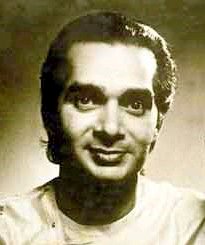
Uday Shankar (born Uday Shankar Chowdhury; 8 December 1900 – 26 September 1977) was an Indian dancer and choreographer, best known for creating a fusion style of dance, adapting European theatrical techniques to Indian classical dance, imbued with elements of Indian classical, folk, and tribal dance, which he later popularised in India, Europe, and the United States in the 1920s and 1930s. He was a pioneer of modern dance in India.
In 1962, he was awarded by Sangeet Natak Akademi, India's The National Academy for Music, Dance and Drama, with its highest award, the Sangeet Natak Akademi Fellowship for lifetime achievement, and in 1971, the Govt. of India, awarded him its second highest civilian award the Padma Vibhushan.
Uday Shankar Chowdhury was born in Udaipur, Rajasthan, the eldest son of a Bengali Brahmin family with origins in Narail (present-day Bangladesh). His father Shyam Shankar Chowdhury, a noted barrister, was employed with the Maharaja of Jhalawar in Rajasthan at the time of his eldest son's birth, and his mother Hemangini Devi was descended from a zamindari family. His father was granted the title, 'Harchowdhury' by the Maharajas, but he preferred to use the surname 'Chowdhury' minus 'Har.' Uday's younger brothers were Rajendra Shankar, Debendra Shankar, Bhupendra Shankar and Ravi Shankar. Of his siblings, Bhupendra died young in 1926.
Uday Shankar's father was a Sanskrit scholar, who graduated with honours from the University of Calcutta and later studied at Oxford University, where he became a Doctor of Philosophy. Because his father moved frequently on account of his work, the family spent much time in Uday's maternal uncle's house in Nasratpur with his mother and brothers. Uday's studies also took place at various locations including Nasratpur, Gazipur, Varanasi, and Jhalawar. At his Gazipur school, he learnt music and photography from Ambika Charan Mukhopaddhay, his Drawing and Crafts teacher.
In 1918, at the age of eighteen, he was sent to Mumbai to train at the J. J. School of Art and then to Gandharva Mahavidyalaya. By now, Shyam Shankar had resigned his post in Jhalawar and moved to London. Here he married an English woman and practised law, before becoming an amateur impresario, introducing Indian dance and music to Britain. Subsequently, Uday joined his father in London, and on 23 August 1920, joined the Royal College of Art, London to study painting under Sir William Rothenstein. He danced at a few charity performances that his father had organized in London, and on one such occasion, noted Russian ballerina Anna Pavlova happened to be present. This was to have a lasting impact on his career.
Uday Shankar did not have any formal training in any of the Indian classical dance forms. Nevertheless, his presentations were creative. From a young age, he had been exposed to both Indian classical dance and folk dance, as well as to ballet during his stay in Europe. He decided to bring elements of both styles together to create a new dance, which he called Hi-dance. He went on to translate classical Indian dance forms and their iconography to dance movements, after studying the Rajput painting and Mughal painting styles at the British Museum. Further, during his stay in Britain, he came across several performing artists, subsequently when he left for Rome on the 'Prix de Rome' scholarship of the French Government, for advanced studies in art.
Soon his interaction with such artists grew and so did the idea to transform Indian dance into a contemporary form. The turning point came with his first meetings with legendary Russian ballerina Anna Pavlova. She was looking for artists to collaborate on India-based themes. This led to the creation of ballets based on Hindu themes, 'Radha-Krishna', a duet with Anna, and 'Hindu Wedding', for inclusion in her production, 'Oriental Impressions'. The ballet was presented at the Royal Opera House, Covent Garden, in London. Later he continued to conceive and choreograph ballets, including one based on the Ajanta Caves frescoes, which was performed across the United States. In time his style of dance came to be known as 'Hi-dance', though later he called it 'Creative dance'.
He worked with Anna for one and a half years, before starting out on his own in Paris.
Hub AI
Uday Shankar AI simulator
(@Uday Shankar_simulator)
Uday Shankar
Uday Shankar (born Uday Shankar Chowdhury; 8 December 1900 – 26 September 1977) was an Indian dancer and choreographer, best known for creating a fusion style of dance, adapting European theatrical techniques to Indian classical dance, imbued with elements of Indian classical, folk, and tribal dance, which he later popularised in India, Europe, and the United States in the 1920s and 1930s. He was a pioneer of modern dance in India.
In 1962, he was awarded by Sangeet Natak Akademi, India's The National Academy for Music, Dance and Drama, with its highest award, the Sangeet Natak Akademi Fellowship for lifetime achievement, and in 1971, the Govt. of India, awarded him its second highest civilian award the Padma Vibhushan.
Uday Shankar Chowdhury was born in Udaipur, Rajasthan, the eldest son of a Bengali Brahmin family with origins in Narail (present-day Bangladesh). His father Shyam Shankar Chowdhury, a noted barrister, was employed with the Maharaja of Jhalawar in Rajasthan at the time of his eldest son's birth, and his mother Hemangini Devi was descended from a zamindari family. His father was granted the title, 'Harchowdhury' by the Maharajas, but he preferred to use the surname 'Chowdhury' minus 'Har.' Uday's younger brothers were Rajendra Shankar, Debendra Shankar, Bhupendra Shankar and Ravi Shankar. Of his siblings, Bhupendra died young in 1926.
Uday Shankar's father was a Sanskrit scholar, who graduated with honours from the University of Calcutta and later studied at Oxford University, where he became a Doctor of Philosophy. Because his father moved frequently on account of his work, the family spent much time in Uday's maternal uncle's house in Nasratpur with his mother and brothers. Uday's studies also took place at various locations including Nasratpur, Gazipur, Varanasi, and Jhalawar. At his Gazipur school, he learnt music and photography from Ambika Charan Mukhopaddhay, his Drawing and Crafts teacher.
In 1918, at the age of eighteen, he was sent to Mumbai to train at the J. J. School of Art and then to Gandharva Mahavidyalaya. By now, Shyam Shankar had resigned his post in Jhalawar and moved to London. Here he married an English woman and practised law, before becoming an amateur impresario, introducing Indian dance and music to Britain. Subsequently, Uday joined his father in London, and on 23 August 1920, joined the Royal College of Art, London to study painting under Sir William Rothenstein. He danced at a few charity performances that his father had organized in London, and on one such occasion, noted Russian ballerina Anna Pavlova happened to be present. This was to have a lasting impact on his career.
Uday Shankar did not have any formal training in any of the Indian classical dance forms. Nevertheless, his presentations were creative. From a young age, he had been exposed to both Indian classical dance and folk dance, as well as to ballet during his stay in Europe. He decided to bring elements of both styles together to create a new dance, which he called Hi-dance. He went on to translate classical Indian dance forms and their iconography to dance movements, after studying the Rajput painting and Mughal painting styles at the British Museum. Further, during his stay in Britain, he came across several performing artists, subsequently when he left for Rome on the 'Prix de Rome' scholarship of the French Government, for advanced studies in art.
Soon his interaction with such artists grew and so did the idea to transform Indian dance into a contemporary form. The turning point came with his first meetings with legendary Russian ballerina Anna Pavlova. She was looking for artists to collaborate on India-based themes. This led to the creation of ballets based on Hindu themes, 'Radha-Krishna', a duet with Anna, and 'Hindu Wedding', for inclusion in her production, 'Oriental Impressions'. The ballet was presented at the Royal Opera House, Covent Garden, in London. Later he continued to conceive and choreograph ballets, including one based on the Ajanta Caves frescoes, which was performed across the United States. In time his style of dance came to be known as 'Hi-dance', though later he called it 'Creative dance'.
He worked with Anna for one and a half years, before starting out on his own in Paris.
Recent media