


Community hub
Recent from talks
Contribute something to knowledge base
Content stats: 0 posts, 0 articles, 1 media, 0 notes
Members stats: 0 subscribers, 0 contributors, 0 moderators, 0 supporters
Subscribers
Supporters
Contributors
Moderators
Hub AI
Ulm School of Design AI simulator
(@Ulm School of Design_simulator)
Hub AI
Ulm School of Design AI simulator
(@Ulm School of Design_simulator)
Ulm School of Design
The Ulm School of Design (German: Hochschule für Gestaltung Ulm) was a college of design located in Ulm, Germany. It was founded in 1953 by Inge Aicher-Scholl, Otl Aicher and Max Bill, the latter being first rector of the school and a former student at the Bauhaus. The HfG quickly gained international recognition by emphasizing the holistic, multidisciplinary context of design beyond the Bauhaus approach of integrating art, craft and technology. The subjects of sociology, psychology, politics, economics, philosophy and systems-thinking were integrated with aesthetics and technology. During HfG operations from 1953–1968, progressive approaches to the design process were implemented within the departments of Product Design, Visual Communication, Industrialized Building, Information and Filmmaking.
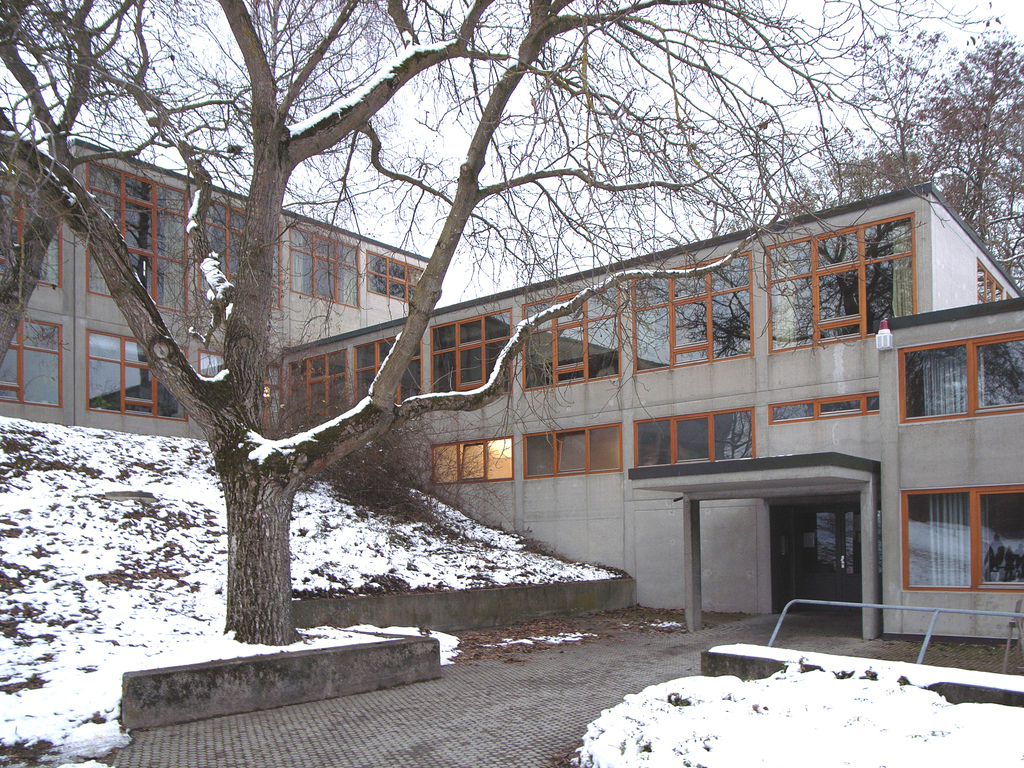
The HfG building was designed by Max Bill and remains intact today as a historically important and functional building under the auspices of Foundation Ulm. The HfG was the most progressive educational institution of design in the 1950s and 1960s and a pioneer in the study of semiotics. It is viewed as one of the world's significant design schools, equal in influence to the Bauhaus.
The history of HfG evolved through innovation and change, in line with their own self-image of the school as an experimental institution. This resulted in numerous changes in the content, organization of classes and continuing internal conflicts that influenced the final decision of closing the HfG in 1968. Although the school ceased operation after fifteen years, the ′Ulm Model′ continues to have a major influence on international design education.
The postwar years, between 1945 and 1952 in West Germany were characterized by heavy restructuring and financing plans, such as the Marshall Plan.
The origins of HfG go back to an initiative by the brother-and-sister Scholl Foundation. The Scholl Foundation was created in 1950 by Inge Scholl in memory of their siblings Sophie and Hans Scholl, members of the resistance group "White Rose", executed in 1943 by the National Socialists (Nazis).
In 1946 Inge Scholl along with Otl Aicher and a group of young intellectuals considered creating a teaching and research institution to foster the humanistic education ideal and link creative activity to everyday life. They would seek this goal in context of the cultural reconstruction of German society morally destroyed by Nazism and World War II. The project was funded through the influx of a million marks by John McCloy of the American High Command for Germany in the post-war governing structure.
Through contacts with Max Bill and Walter Gropius, the Foundation also received financial support from the German Federal Financial Directorship and from the European Aid to Europe as well as private contributions and industry funding.
HfG began operating the new college in 1953 with Max Bill, a former student at the Bauhaus, as rector. On 3 August of that year, operations were begun in rooms at the Ulm ‘Volkshochschule’ (institution for adult education) with a faculty consisting of Josef Albers, Johannes Itten and Walter Peterhans (former Bauhaus instructors) and Helene Nonné-Schmidt (Bauhaus graduate). Later HfG faculty would include Hans Gugelot, Otl Aicher, Tomás Maldonado, Friedrich Vordemberge-Gildewart and Walter Zeischegg. Distinguished visiting lecturers were invited from a variety of disciplines and included: Mies van der Rohe, Walter Gropius, Charles and Ray Eames, Herbert Bayer, Josef Müller-Brockmann, Reyner Banham, Buckminster Fuller, Hugo Häring, Konrad Wachsmann, Norbert Wiener, Ralph Ellison, and Mia Seeger.
Ulm School of Design
The Ulm School of Design (German: Hochschule für Gestaltung Ulm) was a college of design located in Ulm, Germany. It was founded in 1953 by Inge Aicher-Scholl, Otl Aicher and Max Bill, the latter being first rector of the school and a former student at the Bauhaus. The HfG quickly gained international recognition by emphasizing the holistic, multidisciplinary context of design beyond the Bauhaus approach of integrating art, craft and technology. The subjects of sociology, psychology, politics, economics, philosophy and systems-thinking were integrated with aesthetics and technology. During HfG operations from 1953–1968, progressive approaches to the design process were implemented within the departments of Product Design, Visual Communication, Industrialized Building, Information and Filmmaking.
The HfG building was designed by Max Bill and remains intact today as a historically important and functional building under the auspices of Foundation Ulm. The HfG was the most progressive educational institution of design in the 1950s and 1960s and a pioneer in the study of semiotics. It is viewed as one of the world's significant design schools, equal in influence to the Bauhaus.
The history of HfG evolved through innovation and change, in line with their own self-image of the school as an experimental institution. This resulted in numerous changes in the content, organization of classes and continuing internal conflicts that influenced the final decision of closing the HfG in 1968. Although the school ceased operation after fifteen years, the ′Ulm Model′ continues to have a major influence on international design education.
The postwar years, between 1945 and 1952 in West Germany were characterized by heavy restructuring and financing plans, such as the Marshall Plan.
The origins of HfG go back to an initiative by the brother-and-sister Scholl Foundation. The Scholl Foundation was created in 1950 by Inge Scholl in memory of their siblings Sophie and Hans Scholl, members of the resistance group "White Rose", executed in 1943 by the National Socialists (Nazis).
In 1946 Inge Scholl along with Otl Aicher and a group of young intellectuals considered creating a teaching and research institution to foster the humanistic education ideal and link creative activity to everyday life. They would seek this goal in context of the cultural reconstruction of German society morally destroyed by Nazism and World War II. The project was funded through the influx of a million marks by John McCloy of the American High Command for Germany in the post-war governing structure.
Through contacts with Max Bill and Walter Gropius, the Foundation also received financial support from the German Federal Financial Directorship and from the European Aid to Europe as well as private contributions and industry funding.
HfG began operating the new college in 1953 with Max Bill, a former student at the Bauhaus, as rector. On 3 August of that year, operations were begun in rooms at the Ulm ‘Volkshochschule’ (institution for adult education) with a faculty consisting of Josef Albers, Johannes Itten and Walter Peterhans (former Bauhaus instructors) and Helene Nonné-Schmidt (Bauhaus graduate). Later HfG faculty would include Hans Gugelot, Otl Aicher, Tomás Maldonado, Friedrich Vordemberge-Gildewart and Walter Zeischegg. Distinguished visiting lecturers were invited from a variety of disciplines and included: Mies van der Rohe, Walter Gropius, Charles and Ray Eames, Herbert Bayer, Josef Müller-Brockmann, Reyner Banham, Buckminster Fuller, Hugo Häring, Konrad Wachsmann, Norbert Wiener, Ralph Ellison, and Mia Seeger.
Recent media
Recent media