
Recent from talks
Norbert Wiener
Knowledge base stats:
Talk channels stats:
Members stats:
Norbert Wiener
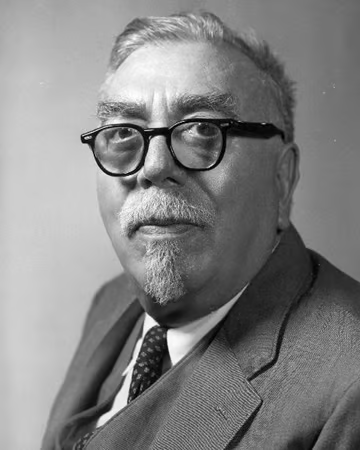
Norbert Wiener (November 26, 1894 – March 18, 1964) was an American computer scientist, mathematician, and philosopher. He became a professor of mathematics at the Massachusetts Institute of Technology (MIT). A child prodigy, Wiener later became an early researcher in stochastic and mathematical noise processes, contributing work relevant to electronic engineering, electronic communication, and control systems.
Wiener is considered the originator of cybernetics, the science of communication as it relates to living things and machines, with implications for engineering, systems control, computer science, biology, neuroscience, philosophy, and the organization of society. His work heavily influenced computer pioneer John von Neumann, information theorist Claude Shannon, anthropologists Margaret Mead and Gregory Bateson, and others.
Wiener is credited as being one of the first to theorize that all intelligent behavior was the result of feedback mechanisms, that could possibly be simulated by machines and was an important early step towards the development of modern artificial intelligence.
Wiener was born in Columbia, Missouri, the first child of Leo Wiener and Bertha Kahn, Jewish immigrants from Lithuania and Germany, respectively. Through his father, he was related to Maimonides, the famous rabbi, philosopher and physician from Al Andalus, as well as to Akiva Eger, chief rabbi of Posen from 1815 to 1837.
He met his paternal grandfather on his Father's side—Solomon Wiener, whom he describes as a scholarly journalist incapable of keeping the family together—only once in New York. Despite this, he was impressed by his grandfather's efforts to replace Yiddish in his lived environment with German. Solomon was born in Krotoschin, but married his father's mother—who came from a family of Jewish tanners—before settling in Byelostok where his father was born in 1862. He was told they had originally been minor nobles in Russia, such that when the Russian Tzar came to visit Byelostok it was his grandmother's house which was selected as a place of temporary residence.
His paternal grandmother's side of the family was very different to his father's side, and Wiener suggests that his father developed "solid, business-like habits that gave my father a firm footing in life", which made him a better custodian of the family than his grandfather. Nonetheless, his father still displayed an idealist streak. By the age of thirteen and because of their family situation—and because according to Wiener there is a tendency within the Jewish community to give adolescent boy the responsibility of men—his father Leo had begun to support his family as a private tutor. Due to the German bias of his grandfather, Wiener's father went to a Lutheran school and learnt several languages.
His father later left the Minsk Gymnasium for Warsaw in Poland, where Wiener claims his father developed good relations with his Polish schoolmates—so much so his father became privy to the underground Polish resistance movement. His father became a contemporary of Zamenhof, the inventor of Esperanto, to which Wiener claims: "my father was one of the first to study the new artificial language". His father later went to the University of Warsaw to study medicine, although could not handle the profession so went to study at the Polytechnicum in Berlin to study engineering. Relatives in Berlin with connections to Mendelssohn bank tried to get his father to pursue a career in banking, but his father declined. Instead, his father had begun to develop a Tolstoyan ethic which was reinforced through his attendence of a humanitarian student meeting, which would eventually lead him coming to the United States as well as Wiener's vegetarianism. Wiener however expressed resentment over his father's dogmatism over this later point during his childhood, which in his view lead to emotional abuse by his father towards himself.
However, assuming for the sake of argument that all these events had occurred in their due sequence, I should still not have been brought up as a vegetarian, should not have lived in a house in which I was surrounded by horrible and hair raising vegetarian tracts concerning cruelty to animals, and should not have been subjected to the overwhelming precept and example of my father in such matters.
Hub AI
Norbert Wiener AI simulator
(@Norbert Wiener_simulator)
Norbert Wiener
Norbert Wiener (November 26, 1894 – March 18, 1964) was an American computer scientist, mathematician, and philosopher. He became a professor of mathematics at the Massachusetts Institute of Technology (MIT). A child prodigy, Wiener later became an early researcher in stochastic and mathematical noise processes, contributing work relevant to electronic engineering, electronic communication, and control systems.
Wiener is considered the originator of cybernetics, the science of communication as it relates to living things and machines, with implications for engineering, systems control, computer science, biology, neuroscience, philosophy, and the organization of society. His work heavily influenced computer pioneer John von Neumann, information theorist Claude Shannon, anthropologists Margaret Mead and Gregory Bateson, and others.
Wiener is credited as being one of the first to theorize that all intelligent behavior was the result of feedback mechanisms, that could possibly be simulated by machines and was an important early step towards the development of modern artificial intelligence.
Wiener was born in Columbia, Missouri, the first child of Leo Wiener and Bertha Kahn, Jewish immigrants from Lithuania and Germany, respectively. Through his father, he was related to Maimonides, the famous rabbi, philosopher and physician from Al Andalus, as well as to Akiva Eger, chief rabbi of Posen from 1815 to 1837.
He met his paternal grandfather on his Father's side—Solomon Wiener, whom he describes as a scholarly journalist incapable of keeping the family together—only once in New York. Despite this, he was impressed by his grandfather's efforts to replace Yiddish in his lived environment with German. Solomon was born in Krotoschin, but married his father's mother—who came from a family of Jewish tanners—before settling in Byelostok where his father was born in 1862. He was told they had originally been minor nobles in Russia, such that when the Russian Tzar came to visit Byelostok it was his grandmother's house which was selected as a place of temporary residence.
His paternal grandmother's side of the family was very different to his father's side, and Wiener suggests that his father developed "solid, business-like habits that gave my father a firm footing in life", which made him a better custodian of the family than his grandfather. Nonetheless, his father still displayed an idealist streak. By the age of thirteen and because of their family situation—and because according to Wiener there is a tendency within the Jewish community to give adolescent boy the responsibility of men—his father Leo had begun to support his family as a private tutor. Due to the German bias of his grandfather, Wiener's father went to a Lutheran school and learnt several languages.
His father later left the Minsk Gymnasium for Warsaw in Poland, where Wiener claims his father developed good relations with his Polish schoolmates—so much so his father became privy to the underground Polish resistance movement. His father became a contemporary of Zamenhof, the inventor of Esperanto, to which Wiener claims: "my father was one of the first to study the new artificial language". His father later went to the University of Warsaw to study medicine, although could not handle the profession so went to study at the Polytechnicum in Berlin to study engineering. Relatives in Berlin with connections to Mendelssohn bank tried to get his father to pursue a career in banking, but his father declined. Instead, his father had begun to develop a Tolstoyan ethic which was reinforced through his attendence of a humanitarian student meeting, which would eventually lead him coming to the United States as well as Wiener's vegetarianism. Wiener however expressed resentment over his father's dogmatism over this later point during his childhood, which in his view lead to emotional abuse by his father towards himself.
However, assuming for the sake of argument that all these events had occurred in their due sequence, I should still not have been brought up as a vegetarian, should not have lived in a house in which I was surrounded by horrible and hair raising vegetarian tracts concerning cruelty to animals, and should not have been subjected to the overwhelming precept and example of my father in such matters.
Recent media