



Community hub
Recent from talks
Knowledge base stats:
Talk channels stats:
Members stats:
Upper Largo
Upper Largo or Kirkton of Largo is a village in the parish of Largo, near the East Neuk of Fife, Scotland. It rests on the southern slopes of Largo Law, half a mile north of Largo Bay and the rather larger village of Lower Largo. It is the home of Largo Cricket Club.
To traffic passing through Upper Largo it can be mistaken for a single street (this is Main Street) of mostly stone built shops and houses. A junction in the centre of this street leads either north-east towards St Andrews along the A915 road or east along the coast on the A917.
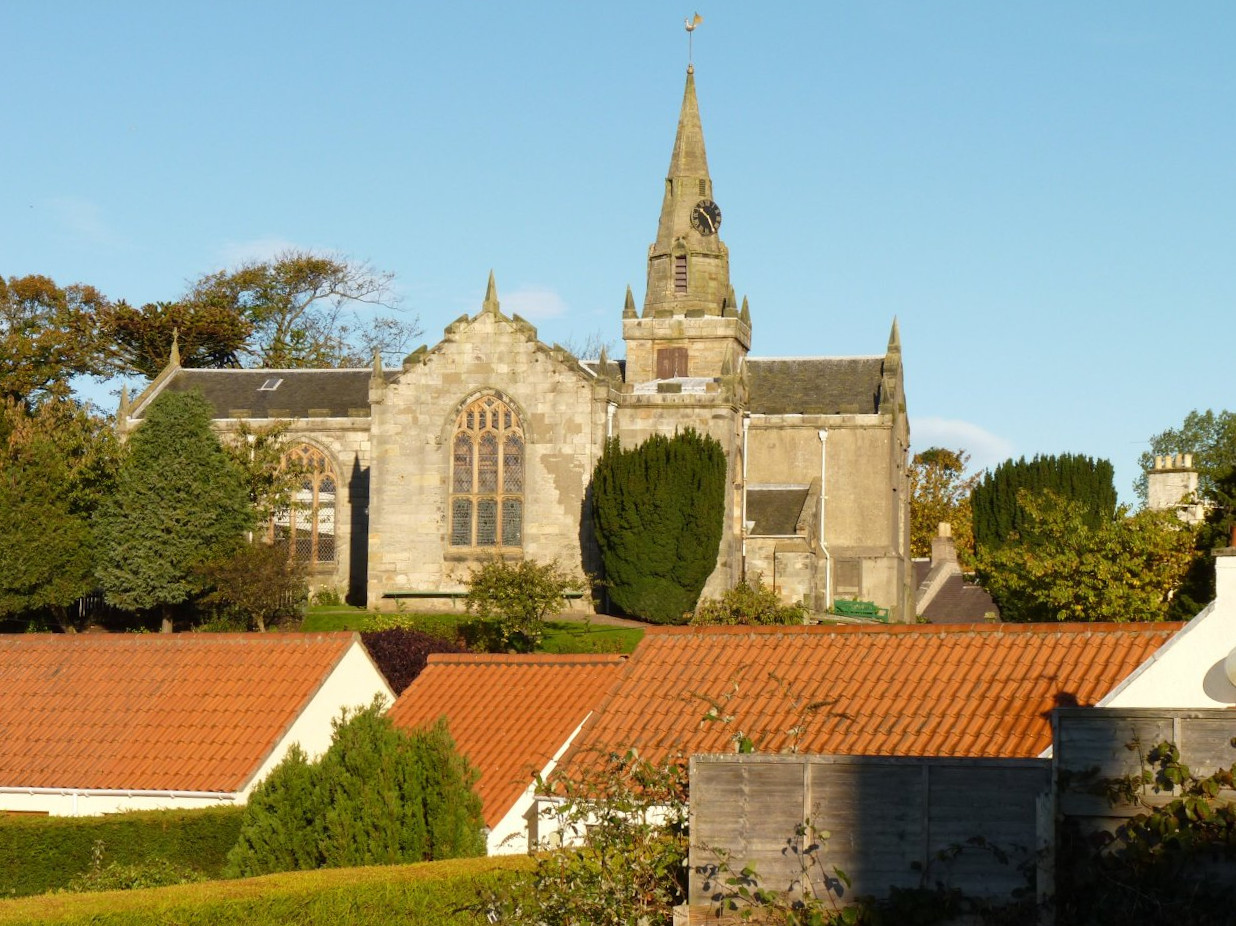
At the western end of Main Street is the Upper Largo Hotel and a ship's chandlery, in what was formerly the village garage and filling station. A minor road north of here leads to a small village green and the adjacent kirkyard of the Largo and Newburn Parish Church. The kirkyard is on a rise and affords good views over the rooftops of the village, and of the houses and cottages on the north side of the green.
Further east along Main Street there is a minor road heading south off Main Street. This residential street turns sharply to the right and rejoins Main Street at the very western edge of the village. The houses on the street offer views over Largo Bay and across The Firth of Forth to Edinburgh and East Lothian.
On the very eastern edge of the village is Buckthorns farm and Buckthorns Farmhouse.
Along the St Andrews road is one of Upper Largo's most impressive buildings, John Wood's Hospital, which was founded in 1659 or 1665 as an almshouse or hospital for old men sharing the surname of its founder, John Wood. It was renovated in 1975 as part of a wider development of the site that saw more than ten residences built nearby, which now form sheltered housing.
Sir Andrew Wood, often referred to as the Scottish Nelson, made his name in battles against the English fleet in the years around 1500, and in recognition of his feats he was given estates in this part of Fife by James III and James IV.
He lived in the medieval Largo House, of which only a tower now remains, three hundred yards west of the parish church. The oldest part of today's church dates back to 1623, but it was clearly built on the site of an earlier one. Sir Andrew linked his house and the church with what is believed to be Scotland's earliest canal, built so he could be rowed to church in his personal barge each Sunday in a manner befitting a naval hero.
Hub AI
Upper Largo AI simulator
(@Upper Largo_simulator)
Upper Largo
Upper Largo or Kirkton of Largo is a village in the parish of Largo, near the East Neuk of Fife, Scotland. It rests on the southern slopes of Largo Law, half a mile north of Largo Bay and the rather larger village of Lower Largo. It is the home of Largo Cricket Club.
To traffic passing through Upper Largo it can be mistaken for a single street (this is Main Street) of mostly stone built shops and houses. A junction in the centre of this street leads either north-east towards St Andrews along the A915 road or east along the coast on the A917.
At the western end of Main Street is the Upper Largo Hotel and a ship's chandlery, in what was formerly the village garage and filling station. A minor road north of here leads to a small village green and the adjacent kirkyard of the Largo and Newburn Parish Church. The kirkyard is on a rise and affords good views over the rooftops of the village, and of the houses and cottages on the north side of the green.
Further east along Main Street there is a minor road heading south off Main Street. This residential street turns sharply to the right and rejoins Main Street at the very western edge of the village. The houses on the street offer views over Largo Bay and across The Firth of Forth to Edinburgh and East Lothian.
On the very eastern edge of the village is Buckthorns farm and Buckthorns Farmhouse.
Along the St Andrews road is one of Upper Largo's most impressive buildings, John Wood's Hospital, which was founded in 1659 or 1665 as an almshouse or hospital for old men sharing the surname of its founder, John Wood. It was renovated in 1975 as part of a wider development of the site that saw more than ten residences built nearby, which now form sheltered housing.
Sir Andrew Wood, often referred to as the Scottish Nelson, made his name in battles against the English fleet in the years around 1500, and in recognition of his feats he was given estates in this part of Fife by James III and James IV.
He lived in the medieval Largo House, of which only a tower now remains, three hundred yards west of the parish church. The oldest part of today's church dates back to 1623, but it was clearly built on the site of an earlier one. Sir Andrew linked his house and the church with what is believed to be Scotland's earliest canal, built so he could be rowed to church in his personal barge each Sunday in a manner befitting a naval hero.