
Recent from talks
Urban ecology
Knowledge base stats:
Talk channels stats:
Members stats:
Urban ecology
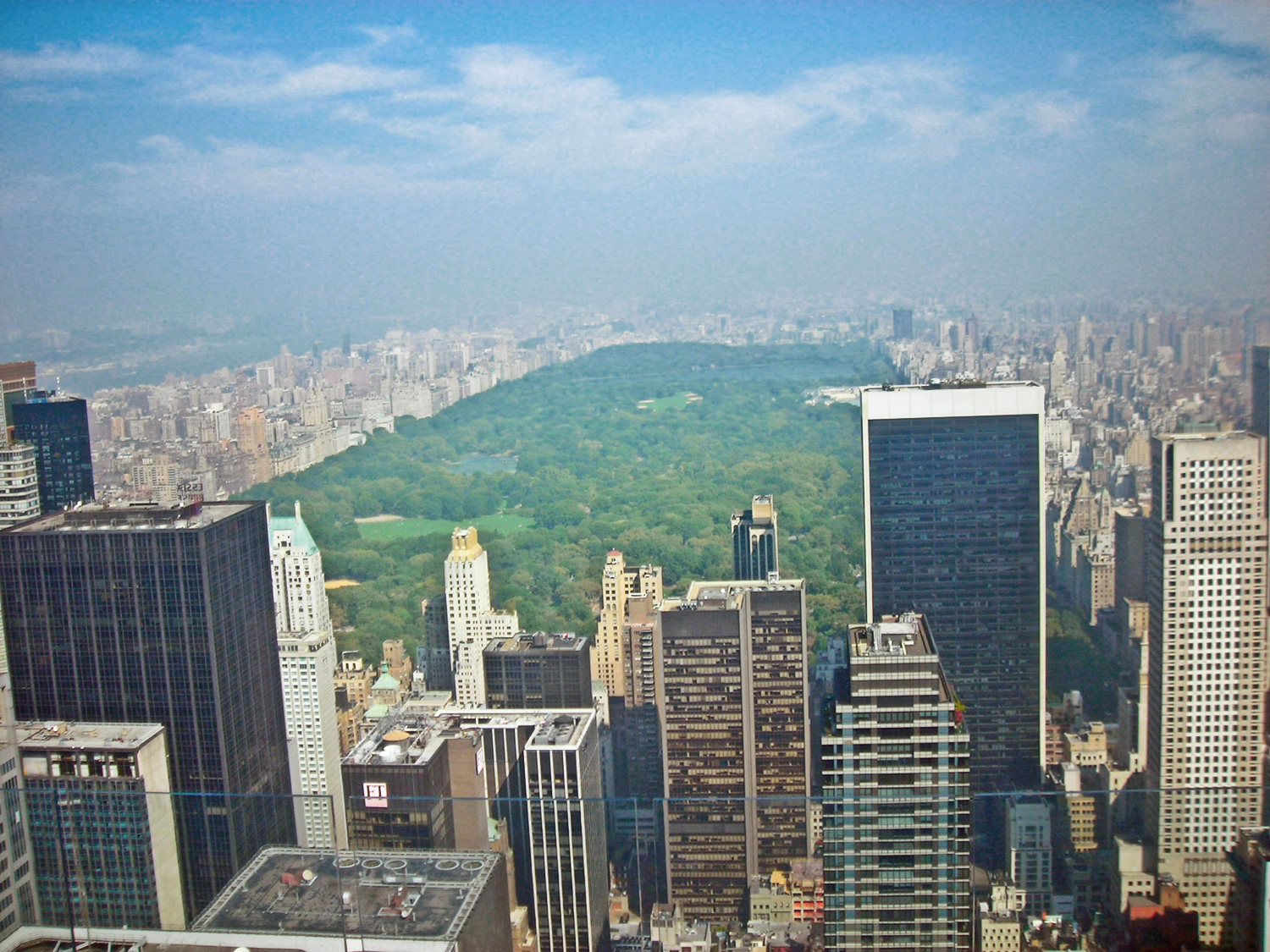
Urban ecology is the scientific study of the relation of living organisms with each other and their surroundings in an urban environment. An urban environment refers to environments dominated by high-density residential and commercial buildings, paved surfaces, and other urban-related factors that create a unique landscape. The goal of urban ecology is to achieve a balance between human culture and the natural environment.
Urban ecology is a recent field of study compared to ecology. Currently, most of the information in this field is based on the easier to study species of mammals and birds [source needed]. To close the gap in knowledge, attention should be paid to all species in the urban space like insects and fish. This study should also expand to suburban spaces with its unique mix of development and surrounding nature. The methods and studies of urban ecology is a subset of ecology. The study of urban ecology carries increasing importance because more than 50% of the world's population today lives in urban areas. It is also estimated that within the next 40 years, two-thirds of the world's population will be living in expanding urban centers. The ecological processes in the urban environment are comparable to those outside the urban context. However, the types of urban habitats and the species that inhabit them are poorly documented which is why more research should be done in urban ecology.
Historically, ecology has focused on natural environments, but by the 1970s many ecologists began to turn their interest towards ecological interactions taking place in and caused by urban environments. In the nineteenth century, naturalists such as Malthus, De Candolle, Lyell, and Darwin found that competition for resources was crucial in controlling population growth and is a driver of extinction. This concept was the basis of evolutionary ecology. Jean-Marie Pelt's 1977 book The Re-Naturalized Human, Brian Davis' 1978 publication Urbanization and the diversity of insects, and Herbert Sukopp et al.'s 1979 article "The soil, flora and vegetation of Berlin's wastelands" are some of the first publications to recognize the importance of urban ecology as a separate and distinct form of ecology the same way one might see landscape ecology as different from population ecology. Forman and Godron's 1986 book Landscape Ecology first distinguished urban settings and landscapes from other landscapes by dividing all landscapes into five broad types. These types were divided by the intensity of human influence ranging from pristine natural environments to urban centers.[better source needed]
Early ecologists defined ecology as the study of organisms and their environment. As time progressed urban ecology was recognized as a diverse and complex concept which differs in application between North America and Europe. The European concept of urban ecology examines the biota of urban areas, the North American concept has traditionally examined the social sciences of the urban landscape, as well as the ecosystem fluxes and processes, and the Latin American concept examines the effect of human activity on the biodiversity and fluxes of urban ecosystems. A renaissance in the development of urban ecology occurred in the 1990s that was initiated by the US National Science in funding two urban long-term ecological research centers and this promoted the study of urban ecology.
The field of urban ecology is rapidly expanding, with an increasing number of dedicated research centers emerging. Among the pioneers are the Urban Ecology Research Laboratory (UERL) at the University of Washington, established in 2001, and the Urban Ecology Laboratory (LEU) at the Costa Rican Distance University, founded in 2008. The UERL in Washington specializes in analyzing urban landscape patterns, ecosystem functions, modeling land cover changes, and developing scenarios for urban adaptation within the state. In contrast, Costa Rica's LEU holds distinction as the world's first research center exclusively devoted to studying tropical urban ecosystems. Research conducted there spans various facets of urban ecology, including biodiversity, the impacts of climate change on cities and their surrounding areas (particularly tropical highlands), and the intricate interactions between human activities and urban environments.
Since urban ecology is a subfield of ecology, many of the techniques are similar to that of ecology. Ecological study techniques have been developed over centuries, but many of the techniques use for urban ecology are more recently developed. Methods used for studying urban ecology involve chemical and biochemical techniques, temperature recording, heat mapping remote sensing, and long-term ecological research sites.
Chemical techniques may be used to determine pollutant concentrations and their effects. Tests can be as simple as dipping a manufactured test strip, as in the case of pH testing, or be more complex, as in the case of examining the spatial and temporal variation of heavy metal contamination due to industrial runoff. In that particular study, livers of birds from many regions of the North Sea were ground up and mercury was extracted. Additionally, mercury bound in feathers was extracted from both live birds and from museum specimens to test for mercury levels across many decades. Through these two different measurements, researchers were able to make a complex picture of the spread of mercury due to industrial runoff both spatially and temporally.
Other chemical techniques include tests for nitrates, phosphates, sulfates, etc. which are commonly associated with urban pollutants such as fertilizer and industrial byproducts. These biochemical fluxes are studied in the atmosphere (e.g. greenhouse gases), aquatic ecosystems and soil nematodes. Broad reaching effects of these biochemical fluxes can be seen in various aspects of both the urban and surrounding rural ecosystems.
Hub AI
Urban ecology AI simulator
(@Urban ecology_simulator)
Urban ecology
Urban ecology is the scientific study of the relation of living organisms with each other and their surroundings in an urban environment. An urban environment refers to environments dominated by high-density residential and commercial buildings, paved surfaces, and other urban-related factors that create a unique landscape. The goal of urban ecology is to achieve a balance between human culture and the natural environment.
Urban ecology is a recent field of study compared to ecology. Currently, most of the information in this field is based on the easier to study species of mammals and birds [source needed]. To close the gap in knowledge, attention should be paid to all species in the urban space like insects and fish. This study should also expand to suburban spaces with its unique mix of development and surrounding nature. The methods and studies of urban ecology is a subset of ecology. The study of urban ecology carries increasing importance because more than 50% of the world's population today lives in urban areas. It is also estimated that within the next 40 years, two-thirds of the world's population will be living in expanding urban centers. The ecological processes in the urban environment are comparable to those outside the urban context. However, the types of urban habitats and the species that inhabit them are poorly documented which is why more research should be done in urban ecology.
Historically, ecology has focused on natural environments, but by the 1970s many ecologists began to turn their interest towards ecological interactions taking place in and caused by urban environments. In the nineteenth century, naturalists such as Malthus, De Candolle, Lyell, and Darwin found that competition for resources was crucial in controlling population growth and is a driver of extinction. This concept was the basis of evolutionary ecology. Jean-Marie Pelt's 1977 book The Re-Naturalized Human, Brian Davis' 1978 publication Urbanization and the diversity of insects, and Herbert Sukopp et al.'s 1979 article "The soil, flora and vegetation of Berlin's wastelands" are some of the first publications to recognize the importance of urban ecology as a separate and distinct form of ecology the same way one might see landscape ecology as different from population ecology. Forman and Godron's 1986 book Landscape Ecology first distinguished urban settings and landscapes from other landscapes by dividing all landscapes into five broad types. These types were divided by the intensity of human influence ranging from pristine natural environments to urban centers.[better source needed]
Early ecologists defined ecology as the study of organisms and their environment. As time progressed urban ecology was recognized as a diverse and complex concept which differs in application between North America and Europe. The European concept of urban ecology examines the biota of urban areas, the North American concept has traditionally examined the social sciences of the urban landscape, as well as the ecosystem fluxes and processes, and the Latin American concept examines the effect of human activity on the biodiversity and fluxes of urban ecosystems. A renaissance in the development of urban ecology occurred in the 1990s that was initiated by the US National Science in funding two urban long-term ecological research centers and this promoted the study of urban ecology.
The field of urban ecology is rapidly expanding, with an increasing number of dedicated research centers emerging. Among the pioneers are the Urban Ecology Research Laboratory (UERL) at the University of Washington, established in 2001, and the Urban Ecology Laboratory (LEU) at the Costa Rican Distance University, founded in 2008. The UERL in Washington specializes in analyzing urban landscape patterns, ecosystem functions, modeling land cover changes, and developing scenarios for urban adaptation within the state. In contrast, Costa Rica's LEU holds distinction as the world's first research center exclusively devoted to studying tropical urban ecosystems. Research conducted there spans various facets of urban ecology, including biodiversity, the impacts of climate change on cities and their surrounding areas (particularly tropical highlands), and the intricate interactions between human activities and urban environments.
Since urban ecology is a subfield of ecology, many of the techniques are similar to that of ecology. Ecological study techniques have been developed over centuries, but many of the techniques use for urban ecology are more recently developed. Methods used for studying urban ecology involve chemical and biochemical techniques, temperature recording, heat mapping remote sensing, and long-term ecological research sites.
Chemical techniques may be used to determine pollutant concentrations and their effects. Tests can be as simple as dipping a manufactured test strip, as in the case of pH testing, or be more complex, as in the case of examining the spatial and temporal variation of heavy metal contamination due to industrial runoff. In that particular study, livers of birds from many regions of the North Sea were ground up and mercury was extracted. Additionally, mercury bound in feathers was extracted from both live birds and from museum specimens to test for mercury levels across many decades. Through these two different measurements, researchers were able to make a complex picture of the spread of mercury due to industrial runoff both spatially and temporally.
Other chemical techniques include tests for nitrates, phosphates, sulfates, etc. which are commonly associated with urban pollutants such as fertilizer and industrial byproducts. These biochemical fluxes are studied in the atmosphere (e.g. greenhouse gases), aquatic ecosystems and soil nematodes. Broad reaching effects of these biochemical fluxes can be seen in various aspects of both the urban and surrounding rural ecosystems.
Recent media