
Recent from talks
Uzziah
Knowledge base stats:
Talk channels stats:
Members stats:
Uzziah
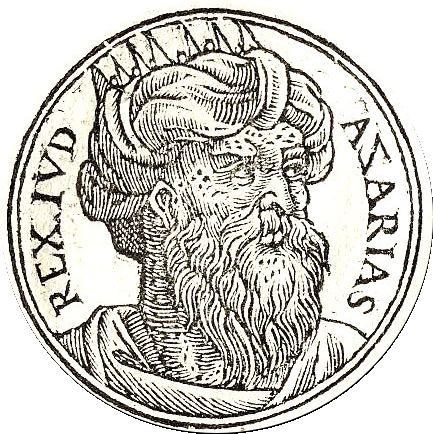
Uzziah (/əˈzaɪə/; Hebrew: עֻזִּיָּהוּ ‘Uzzīyyāhū, meaning "my strength is Yah"; Greek: Ὀζίας; Latin: Ozias), also known as Azariah (/ˈæzəˈraɪə/; Hebrew: עֲזַרְיָה ‘Azaryā; Greek: Αζαρίας; Latin: Azarias), was the tenth king of the ancient Kingdom of Judah, and one of Amaziah's sons. (2 Chronicles 26:1) Uzziah was 16 when he became king of Judah and reigned for 52 years. The first 24 years of his reign were as a co-regent with his father, Amaziah.
William F. Albright dates Uzziah's reign to 783–742 BC. Edwin R. Thiele's chronology has Uzziah becoming coregent with his father Amaziah in 792/791 BCE and sole ruler of Judah after his father's death in 768/767 BCE. According to Jewish tradition, Uzziah was struck with tzaraath for disobeying God (2 Kings 15:5, 2 Chronicles 26:19–21). Thiele dates Uzziah's being struck with tzaraath to 751/750 BCE, at which time his son Jotham took over the government, with Uzziah living on until 740/739 BCE. Pekah became king of Israel in the last year of Uzziah's reign.
The Gospel of Matthew lists Uzziah in the genealogy of Jesus.
Uzziah is referred to several times in the Hebrew Bible as Azariah. According to Catholic theologian James F. Driscoll, the second form of his name is most likely the result of a copyist's error.
2 Kings mentions Azariah 8 times and Uzziah 4 times, whereas Chronicles consistently refers to Uzziah. There are many reasons for this use of multiple names for kings, but one of them is that kings used both their royal and secular names. For example, Solomon was his royal name, and his secular name at birth was Jedidiah. Uzziah is also a royal name, and Azariah is likely a personal name. Regnal names were given at the time of anointing and coronation.
Uzziah took the throne at age 16 and reigned for about 52 years. His reign was "the most prosperous excepting that of Jehoshaphat since the time of Solomon." In the earlier part of his reign, under the influence of a prophet named Zechariah, he was faithful to God and "did that which was right in the eyes of the Lord" (2 Kings 15:3; 2 Chronicles 26:4–5). The Kings record (ib. xv. 2) states that his reign extended through fifty-two years (788–737 B.C.), and that he was righteous as his father had been, though he did not take away the high places, but allowed the people to sacrifice and burn incense at them. II Chron. xxvi. relates how Uzziah conquered the Philistines and the Arabians and received tribute from the Ammonites; how he fortified his country, reorganized and reequipped his army, and personally engaged in agricultural pursuits. His success as king, administrator, and commander-in-chief of the army made him ruler over the largest realm of Judah since the disruption of the kingdom. His power and authority over the peoples of this realm help to explain to a certain extent the political situation in the reign of Judah's later kings, and probably also in 739, when Tiglathpileser III conquered nineteen districts in northern Syria which had belonged to Uzziah (Azri-ia-u). In Jerusalem he made machines designed by skillful men for use on the towers and on the corner defenses to shoot arrows and hurl large stones. He was a vigorous and able ruler, and "his name spread abroad, even to the entrance of Egypt." (2 Chronicles 26:8–14).
Uzziah's strength became his weakness; for he attempted to usurp the power of the priesthood in burning incense in the Temple of Yhwh. He entered the Temple to burn incense on the altar of incense. Azariah the high priest saw this as an attempt to usurp the prerogatives of the priests and confronted him with a band of eighty priests, saying, "It is not for you, Uzziah, to burn incense to the Lord, but for the priests, the sons of Aaron, who are consecrated to burn incense" (2 Chronicles 26:18). In the meantime a great earthquake shook the ground, and a rent was made in the temple, and the bright rays of the sun shone through it, and fell upon the king's face, insomuch that the leprosy (Hebrew: tzaraath) seized upon him immediately (Josephus Flavius, Antiquities IX 10:4). Uzziah was suddenly struck with leprosy before he had offered the incense (2 Chronicles 26:19), and he was driven from the Temple and compelled to reside in "a separate house" until his death (2 Kings 15:5, 27; 2 Chronicles 26:3). The government was turned over to his son Jotham (2 Kings 15:5), a coregency that lasted for the last 11 years of Uzziah's life (751/750 to 740/739 BC). The total number of years, fifty-two, attributed to Uzziah's reign include the period from his accession to his death.
He was buried in a separate grave "in the field of the burial which belonged to the kings" (2 Kings 15:7; 2 Chronicles 26:23).
Hub AI
Uzziah AI simulator
(@Uzziah_simulator)
Uzziah
Uzziah (/əˈzaɪə/; Hebrew: עֻזִּיָּהוּ ‘Uzzīyyāhū, meaning "my strength is Yah"; Greek: Ὀζίας; Latin: Ozias), also known as Azariah (/ˈæzəˈraɪə/; Hebrew: עֲזַרְיָה ‘Azaryā; Greek: Αζαρίας; Latin: Azarias), was the tenth king of the ancient Kingdom of Judah, and one of Amaziah's sons. (2 Chronicles 26:1) Uzziah was 16 when he became king of Judah and reigned for 52 years. The first 24 years of his reign were as a co-regent with his father, Amaziah.
William F. Albright dates Uzziah's reign to 783–742 BC. Edwin R. Thiele's chronology has Uzziah becoming coregent with his father Amaziah in 792/791 BCE and sole ruler of Judah after his father's death in 768/767 BCE. According to Jewish tradition, Uzziah was struck with tzaraath for disobeying God (2 Kings 15:5, 2 Chronicles 26:19–21). Thiele dates Uzziah's being struck with tzaraath to 751/750 BCE, at which time his son Jotham took over the government, with Uzziah living on until 740/739 BCE. Pekah became king of Israel in the last year of Uzziah's reign.
The Gospel of Matthew lists Uzziah in the genealogy of Jesus.
Uzziah is referred to several times in the Hebrew Bible as Azariah. According to Catholic theologian James F. Driscoll, the second form of his name is most likely the result of a copyist's error.
2 Kings mentions Azariah 8 times and Uzziah 4 times, whereas Chronicles consistently refers to Uzziah. There are many reasons for this use of multiple names for kings, but one of them is that kings used both their royal and secular names. For example, Solomon was his royal name, and his secular name at birth was Jedidiah. Uzziah is also a royal name, and Azariah is likely a personal name. Regnal names were given at the time of anointing and coronation.
Uzziah took the throne at age 16 and reigned for about 52 years. His reign was "the most prosperous excepting that of Jehoshaphat since the time of Solomon." In the earlier part of his reign, under the influence of a prophet named Zechariah, he was faithful to God and "did that which was right in the eyes of the Lord" (2 Kings 15:3; 2 Chronicles 26:4–5). The Kings record (ib. xv. 2) states that his reign extended through fifty-two years (788–737 B.C.), and that he was righteous as his father had been, though he did not take away the high places, but allowed the people to sacrifice and burn incense at them. II Chron. xxvi. relates how Uzziah conquered the Philistines and the Arabians and received tribute from the Ammonites; how he fortified his country, reorganized and reequipped his army, and personally engaged in agricultural pursuits. His success as king, administrator, and commander-in-chief of the army made him ruler over the largest realm of Judah since the disruption of the kingdom. His power and authority over the peoples of this realm help to explain to a certain extent the political situation in the reign of Judah's later kings, and probably also in 739, when Tiglathpileser III conquered nineteen districts in northern Syria which had belonged to Uzziah (Azri-ia-u). In Jerusalem he made machines designed by skillful men for use on the towers and on the corner defenses to shoot arrows and hurl large stones. He was a vigorous and able ruler, and "his name spread abroad, even to the entrance of Egypt." (2 Chronicles 26:8–14).
Uzziah's strength became his weakness; for he attempted to usurp the power of the priesthood in burning incense in the Temple of Yhwh. He entered the Temple to burn incense on the altar of incense. Azariah the high priest saw this as an attempt to usurp the prerogatives of the priests and confronted him with a band of eighty priests, saying, "It is not for you, Uzziah, to burn incense to the Lord, but for the priests, the sons of Aaron, who are consecrated to burn incense" (2 Chronicles 26:18). In the meantime a great earthquake shook the ground, and a rent was made in the temple, and the bright rays of the sun shone through it, and fell upon the king's face, insomuch that the leprosy (Hebrew: tzaraath) seized upon him immediately (Josephus Flavius, Antiquities IX 10:4). Uzziah was suddenly struck with leprosy before he had offered the incense (2 Chronicles 26:19), and he was driven from the Temple and compelled to reside in "a separate house" until his death (2 Kings 15:5, 27; 2 Chronicles 26:3). The government was turned over to his son Jotham (2 Kings 15:5), a coregency that lasted for the last 11 years of Uzziah's life (751/750 to 740/739 BC). The total number of years, fifty-two, attributed to Uzziah's reign include the period from his accession to his death.
He was buried in a separate grave "in the field of the burial which belonged to the kings" (2 Kings 15:7; 2 Chronicles 26:23).
Recent media