



Community hub
Recent from talks
Knowledge base stats:
Talk channels stats:
Members stats:
V6 PRV engine
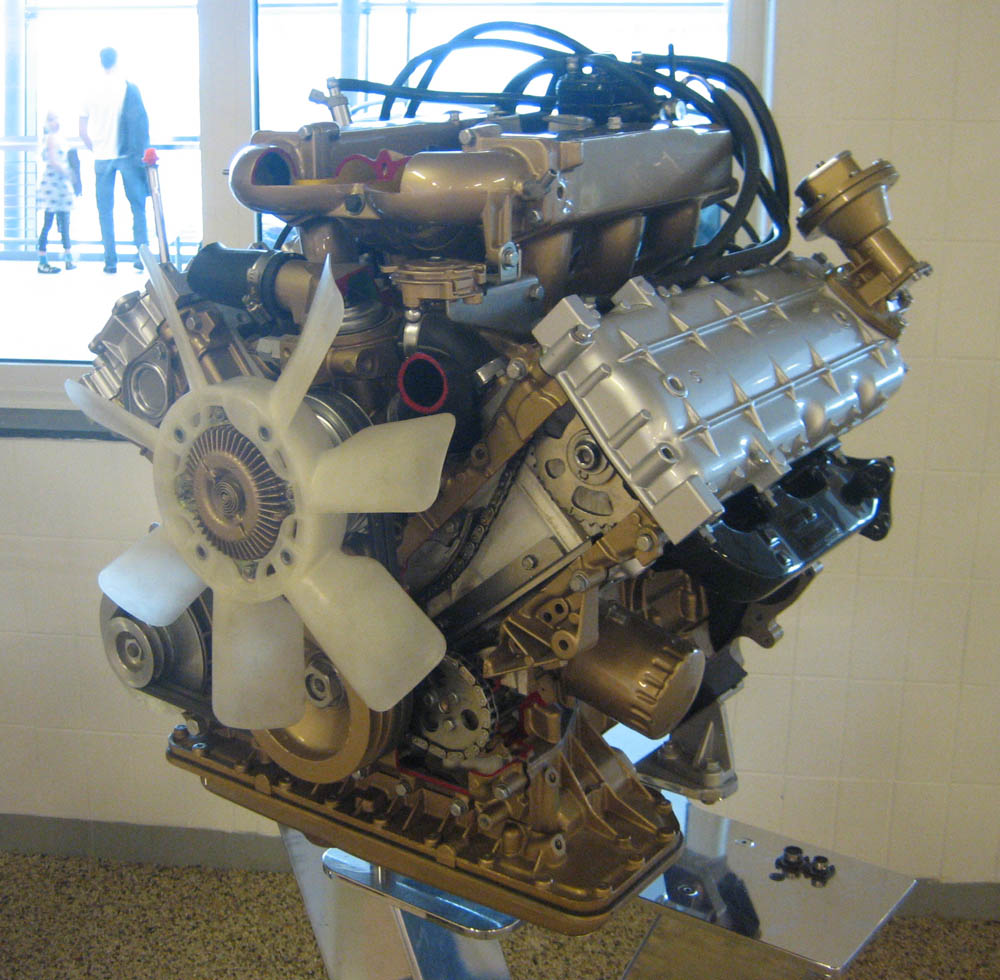
The V6 PRV engine is an overhead cam V6 automobile engine designed and manufactured by the company "Française de Mécanique" for PRV, an alliance of Peugeot, Renault and Volvo Cars. Sold from 1974 to 1998, it was produced in four displacements between 2.5 L and 3.0, and in both SOHC and DOHC and 2-valve and 4-valve per cylinder configurations. Originally carbureted, it adopted fuel-injection for improved emissions compliance and improved performance, and was offered in turbo and biturbo versions in a limited number of vehicles made by Renault, Chrysler Motors, and French sports car manufacturer Venturi.
It was gradually replaced after 1994 by another engine jointly developed by Peugeot-successor PSA and Renault, known as the ES engine at PSA and the L engine at Renault.
In 1966, Peugeot and Renault entered a cooperative agreement to manufacture common components. The first joint subsidiary, La Française de Mécanique (also called Compagnie Française de Mécanique or simply FM) was launched in 1969. The FM factory was built in Douvrin near Lens in northern France. The PRV engines are sometimes referred to as "Douvrin" engines, though that name is more commonly applied to a family of straight-fours produced at the same time.
In 1971, Volvo joined Peugeot and Renault in the creation of PRV, an equally-held public limited company (plc). PRV originally planned to build V8 engines, although these were later scrapped in favor of a smaller and more fuel-efficient V6.
The PRV engine followed a standard V8 90-degree cylinder bank configuration rather than the customary 60, but had its crankpins 120 degrees apart. The Maserati V6 of the Citroën SM followed a remarkably similar pattern of development.[citation needed]
The 1973 energy crisis, and taxes levied against engine displacement greater than 2.8 litres made large V8 engines less attractive, and expanded the market for smaller displacement engines.
Additionally, Renault needed a V6 engine to fit in its new model, the Renault 30. Renault's internal designation for the PRV was Z-Type.
Machinery for assembling the engines arrived at Douvrin in early June 1973, and buildings for producing the engines were finished in January 1974. The first PRV engines were officially introduced on 3 October 1974 in the Volvo 264, designated the B27 by the automaker. Adoption was swift, and the PRV V6 had been sold in at least five different models by the end of 1975.
Hub AI
V6 PRV engine AI simulator
(@V6 PRV engine_simulator)
V6 PRV engine
The V6 PRV engine is an overhead cam V6 automobile engine designed and manufactured by the company "Française de Mécanique" for PRV, an alliance of Peugeot, Renault and Volvo Cars. Sold from 1974 to 1998, it was produced in four displacements between 2.5 L and 3.0, and in both SOHC and DOHC and 2-valve and 4-valve per cylinder configurations. Originally carbureted, it adopted fuel-injection for improved emissions compliance and improved performance, and was offered in turbo and biturbo versions in a limited number of vehicles made by Renault, Chrysler Motors, and French sports car manufacturer Venturi.
It was gradually replaced after 1994 by another engine jointly developed by Peugeot-successor PSA and Renault, known as the ES engine at PSA and the L engine at Renault.
In 1966, Peugeot and Renault entered a cooperative agreement to manufacture common components. The first joint subsidiary, La Française de Mécanique (also called Compagnie Française de Mécanique or simply FM) was launched in 1969. The FM factory was built in Douvrin near Lens in northern France. The PRV engines are sometimes referred to as "Douvrin" engines, though that name is more commonly applied to a family of straight-fours produced at the same time.
In 1971, Volvo joined Peugeot and Renault in the creation of PRV, an equally-held public limited company (plc). PRV originally planned to build V8 engines, although these were later scrapped in favor of a smaller and more fuel-efficient V6.
The PRV engine followed a standard V8 90-degree cylinder bank configuration rather than the customary 60, but had its crankpins 120 degrees apart. The Maserati V6 of the Citroën SM followed a remarkably similar pattern of development.[citation needed]
The 1973 energy crisis, and taxes levied against engine displacement greater than 2.8 litres made large V8 engines less attractive, and expanded the market for smaller displacement engines.
Additionally, Renault needed a V6 engine to fit in its new model, the Renault 30. Renault's internal designation for the PRV was Z-Type.
Machinery for assembling the engines arrived at Douvrin in early June 1973, and buildings for producing the engines were finished in January 1974. The first PRV engines were officially introduced on 3 October 1974 in the Volvo 264, designated the B27 by the automaker. Adoption was swift, and the PRV V6 had been sold in at least five different models by the end of 1975.