
Recent from talks
Valdemar IV of Denmark
Knowledge base stats:
Talk channels stats:
Members stats:
Valdemar IV of Denmark
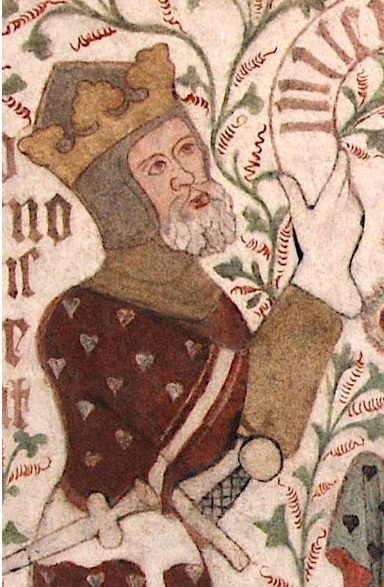
Valdemar IV Atterdag, Valdemar Christoffersen or Waldemar (c. 1320 – 24 October 1375) was King of Denmark from 1340 to 1375. He is mostly known for his reunion of Denmark after the bankruptcy and mortgaging of the country to finance wars under previous rulers. He gradually reacquired the lost territories that had been added to Denmark over the centuries. His heavy-handed methods, endless taxation, and usurpation of rights long held by noble families led to uprisings throughout Valdemar's reign.
He was the youngest son of King Christopher II of Denmark and Euphemia of Pomerania. He spent most of his childhood and youth in exile at the court of Emperor Louis IV in Bavaria, after the defeats of his father and the death and imprisonment, respectively, of his two older brothers, Eric and Otto, at the hand of the Holsteiners. Here he acted as a pretender, waiting for a comeback.
Following the assassination of Gerhard III, Count of Holstein-Rendsburg, by Niels Ebbesen and his warriors, Valdemar was proclaimed king of Denmark at the Viborg Assembly (landsting) on St John's Day (St Hans' Day) on 24 June 1340, led by Ebbesen. Through his marriage with Helvig of Schleswig, the daughter of Eric II, Duke of Schleswig and what he inherited from his father, he controlled about one-quarter of the territory of Jutland north of the Kongeå river. He was not compelled to sign a charter as his father had done, probably because Denmark had been without a king for years, and no one expected the twenty-year-old king to be any more trouble to the great nobles than his father had been. But Valdemar was a clever and determined man and realized that the only way to rule Denmark was to get control of its territory. Ebbesen attempted to liberate central Jutland from the Holsteiners at the siege of Sønderborg Castle on 2 November 1340, but Ebbesen and his men were surrounded and killed by the Germans.
Under his father, King Christopher II, Denmark went bankrupt and was mortgaged out in parcels. King Valdemar IV sought to repay the debt and reclaim the lands of Denmark. The first opportunity came with his wife Helvig's dowry. The mortgage on the rest of northern Jutland was paid off by taxes collected from King Valdemar's peasants above the Kongeå. In 1344, he recovered North Friesland, which he immediately taxed to pay off the debt on southern Jutland (7,000 silver marks). The over-taxed peasants grew restive under the constant demands for money.
Valdemar next set his sights on Zealand. The bishop of Roskilde, who owned Copenhagen Castle and town, gave both to Valdemar, providing a secure base from which to gather taxes on trade through the Sound (the Øresund). He was the first Danish king to rule from Copenhagen. Valdemar was able to capture or buy other castles and fortresses until he could force the Holsteiners out. When he ran out of money, he tried to take Kalundborg and Søborg Castles by force. While in the midst of that campaign, he went to Estonia to negotiate with the Teutonic Knights who controlled Estonia. Danes had never migrated there in any numbers, and so for 19,000 marks Valdemar gave up Danish Estonia, a far-off eastern province, which allowed him to pay off mortgages of parts of Denmark that were more important to him.
Around 1346 Valdemar IV initiated a crusade against Lithuania. Franciscan chronicler Detmar von Lübeck noted that Valdemar IV traveled to Lübeck in 1346, then turned to Prussia together with Eric II of Saxony in order to fight the Lithuanians. However, the crusade against the Lithuanians came to nothing, instead, Valdemar went on a pilgrimage to Jerusalem (without Papal permission). He succeeded and was made a Knight of the Holy Sepulchre in honor of his accomplishment. He was censured by Pope Clement VI for not getting prior approval for such a journey.
Upon his return, Valdemar gathered an army. In 1346, he took back Vordingborg Castle, the main headquarters of the Holsteiners. By the end of the year, Valdemar could claim all of Zealand as his own. He made Vordingborg his personal residence, expanded the castle, and built the Goose Tower which has become the symbol of the town. Valdemar's reputation for ruthlessness against those who opposed him made many think carefully about switching sides. His tax policy crushed the peasants who feared to do anything but pay up. By 1347 Valdemar had thrown out the Germans and once again Denmark was a nation.
With his increased income, Valdemar was able to pay for a larger army and by treachery came into possession of Nyborg Castle and eastern Funen Island and the smaller islands. Valdemar's attention had just turned to Scania, held by Sweden when disaster struck the entire region.
Hub AI
Valdemar IV of Denmark AI simulator
(@Valdemar IV of Denmark_simulator)
Valdemar IV of Denmark
Valdemar IV Atterdag, Valdemar Christoffersen or Waldemar (c. 1320 – 24 October 1375) was King of Denmark from 1340 to 1375. He is mostly known for his reunion of Denmark after the bankruptcy and mortgaging of the country to finance wars under previous rulers. He gradually reacquired the lost territories that had been added to Denmark over the centuries. His heavy-handed methods, endless taxation, and usurpation of rights long held by noble families led to uprisings throughout Valdemar's reign.
He was the youngest son of King Christopher II of Denmark and Euphemia of Pomerania. He spent most of his childhood and youth in exile at the court of Emperor Louis IV in Bavaria, after the defeats of his father and the death and imprisonment, respectively, of his two older brothers, Eric and Otto, at the hand of the Holsteiners. Here he acted as a pretender, waiting for a comeback.
Following the assassination of Gerhard III, Count of Holstein-Rendsburg, by Niels Ebbesen and his warriors, Valdemar was proclaimed king of Denmark at the Viborg Assembly (landsting) on St John's Day (St Hans' Day) on 24 June 1340, led by Ebbesen. Through his marriage with Helvig of Schleswig, the daughter of Eric II, Duke of Schleswig and what he inherited from his father, he controlled about one-quarter of the territory of Jutland north of the Kongeå river. He was not compelled to sign a charter as his father had done, probably because Denmark had been without a king for years, and no one expected the twenty-year-old king to be any more trouble to the great nobles than his father had been. But Valdemar was a clever and determined man and realized that the only way to rule Denmark was to get control of its territory. Ebbesen attempted to liberate central Jutland from the Holsteiners at the siege of Sønderborg Castle on 2 November 1340, but Ebbesen and his men were surrounded and killed by the Germans.
Under his father, King Christopher II, Denmark went bankrupt and was mortgaged out in parcels. King Valdemar IV sought to repay the debt and reclaim the lands of Denmark. The first opportunity came with his wife Helvig's dowry. The mortgage on the rest of northern Jutland was paid off by taxes collected from King Valdemar's peasants above the Kongeå. In 1344, he recovered North Friesland, which he immediately taxed to pay off the debt on southern Jutland (7,000 silver marks). The over-taxed peasants grew restive under the constant demands for money.
Valdemar next set his sights on Zealand. The bishop of Roskilde, who owned Copenhagen Castle and town, gave both to Valdemar, providing a secure base from which to gather taxes on trade through the Sound (the Øresund). He was the first Danish king to rule from Copenhagen. Valdemar was able to capture or buy other castles and fortresses until he could force the Holsteiners out. When he ran out of money, he tried to take Kalundborg and Søborg Castles by force. While in the midst of that campaign, he went to Estonia to negotiate with the Teutonic Knights who controlled Estonia. Danes had never migrated there in any numbers, and so for 19,000 marks Valdemar gave up Danish Estonia, a far-off eastern province, which allowed him to pay off mortgages of parts of Denmark that were more important to him.
Around 1346 Valdemar IV initiated a crusade against Lithuania. Franciscan chronicler Detmar von Lübeck noted that Valdemar IV traveled to Lübeck in 1346, then turned to Prussia together with Eric II of Saxony in order to fight the Lithuanians. However, the crusade against the Lithuanians came to nothing, instead, Valdemar went on a pilgrimage to Jerusalem (without Papal permission). He succeeded and was made a Knight of the Holy Sepulchre in honor of his accomplishment. He was censured by Pope Clement VI for not getting prior approval for such a journey.
Upon his return, Valdemar gathered an army. In 1346, he took back Vordingborg Castle, the main headquarters of the Holsteiners. By the end of the year, Valdemar could claim all of Zealand as his own. He made Vordingborg his personal residence, expanded the castle, and built the Goose Tower which has become the symbol of the town. Valdemar's reputation for ruthlessness against those who opposed him made many think carefully about switching sides. His tax policy crushed the peasants who feared to do anything but pay up. By 1347 Valdemar had thrown out the Germans and once again Denmark was a nation.
With his increased income, Valdemar was able to pay for a larger army and by treachery came into possession of Nyborg Castle and eastern Funen Island and the smaller islands. Valdemar's attention had just turned to Scania, held by Sweden when disaster struck the entire region.
Recent media