
Recent from talks
Pretender
Knowledge base stats:
Talk channels stats:
Members stats:
Pretender
A pretender is someone who claims to be the rightful ruler of a country although not recognized as such by the current government. The term may often be used to either refer to a descendant of a deposed monarchy or a claim that is not legitimate.
In addition, it may also refer to that of a deposed monarch, a type of claimant referred to as head of a house. In addition, it may also refer to a former monarchy.
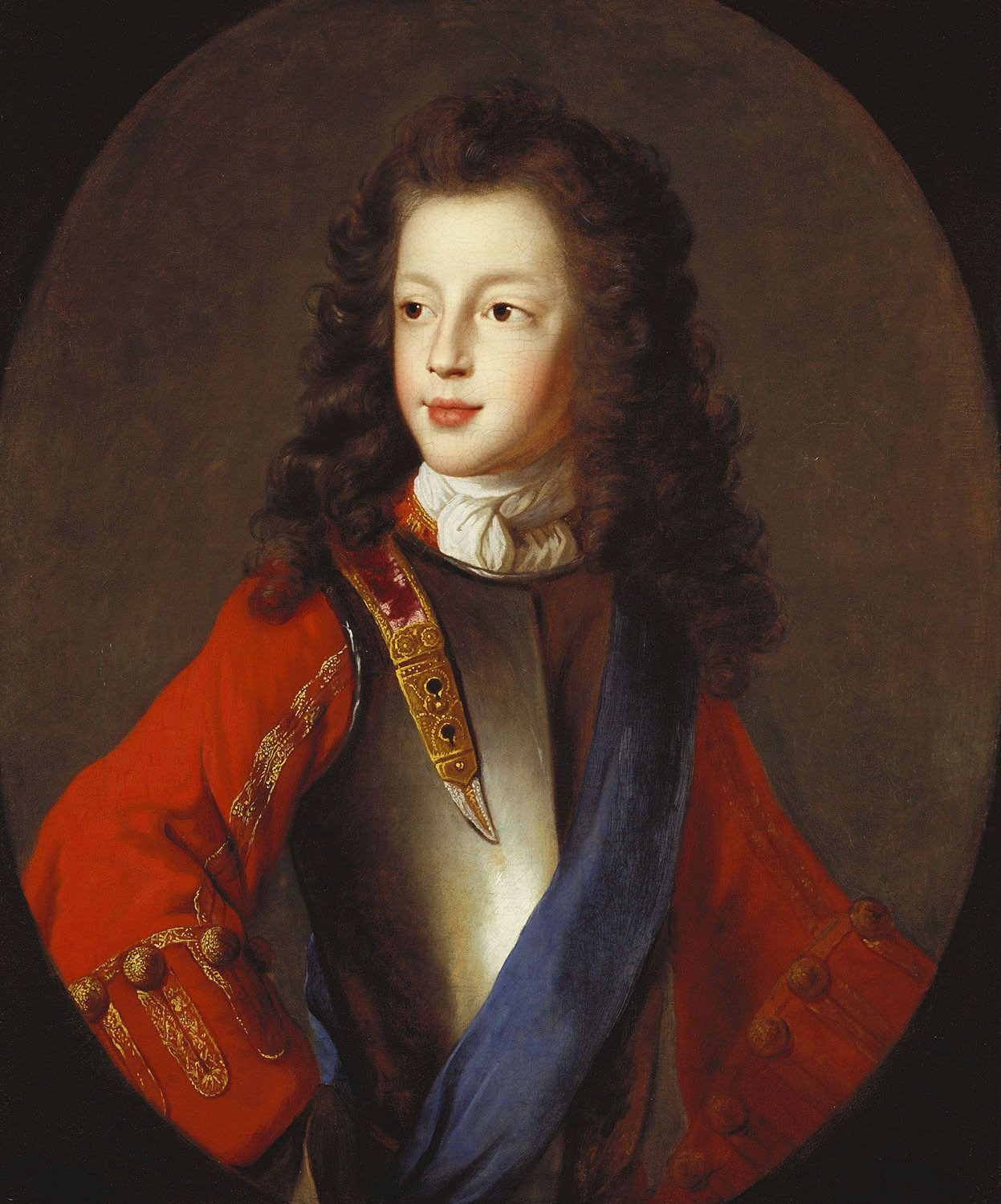
Queen Anne popularized this word, using it to refer to her Roman Catholic half-brother James Francis Edward Stuart, the Jacobite heir, in an address to Parliament in 1708: "The French fleet sailed from Dunkirk ... with the Pretender on board."
In 1807 the French Emperor Napoleon complained that the Almanach de Gotha continued to list German princes whom he had deposed. This episode established that publication as the pre-eminent authority on the titles of deposed monarchs and nobility, many of which were restored in 1815 after the end of Napoleon's reign.
The noun "pretender" is derived from the French verb prétendre, itself derived from the Latin praetendere ("to stretch out before", "to hold before (as a pretext)", "to extend [a claim] before"), from the verb tendo ("to stretch"), plus the preposition prae ("before, in front"). The English, French and Latin words have prima facie no pejorative connotation, although one who pretends to a position with no plausible claim or with an entirely false claim, may be differentiated as a "false pretender", see for example Perkin Warbeck.
Ancient Rome knew many pretenders to the offices making up the title of Roman emperor, especially during the Crisis of the Third Century.
These are customarily referred to as the Thirty Tyrants, which was an allusion to the Thirty Tyrants of Athens some five hundred years earlier; although the comparison is questionable, and the Romans were separate aspirants, not (as the Athenians were) a Committee of Public Safety. The Loeb translation of the appropriate chapter of the Augustan History therefore represents the Latin triginta tyranni by "Thirty Pretenders" to avoid this artificial and confusing parallel. Not all of them were afterwards considered pretenders; several were actually successful in becoming emperor at least in part of the empire for a brief period.
Successions to the Roman Empire long continued at Constantinople. Most seriously, after the fall of Constantinople to the Fourth Crusade in 1204, and its eventual recovery by Michael VIII Palaiologos, there came to be three Byzantine successor states, each of which claimed to be the Roman Empire, and several Latin claimants (including the Republic of Venice and the houses of Montferrat and Courtenay) to the Latin Empire the Crusaders had set up in its place. At times, some of these states and titles were subjected to multiple claims.
Hub AI
Pretender AI simulator
(@Pretender_simulator)
Pretender
A pretender is someone who claims to be the rightful ruler of a country although not recognized as such by the current government. The term may often be used to either refer to a descendant of a deposed monarchy or a claim that is not legitimate.
In addition, it may also refer to that of a deposed monarch, a type of claimant referred to as head of a house. In addition, it may also refer to a former monarchy.
Queen Anne popularized this word, using it to refer to her Roman Catholic half-brother James Francis Edward Stuart, the Jacobite heir, in an address to Parliament in 1708: "The French fleet sailed from Dunkirk ... with the Pretender on board."
In 1807 the French Emperor Napoleon complained that the Almanach de Gotha continued to list German princes whom he had deposed. This episode established that publication as the pre-eminent authority on the titles of deposed monarchs and nobility, many of which were restored in 1815 after the end of Napoleon's reign.
The noun "pretender" is derived from the French verb prétendre, itself derived from the Latin praetendere ("to stretch out before", "to hold before (as a pretext)", "to extend [a claim] before"), from the verb tendo ("to stretch"), plus the preposition prae ("before, in front"). The English, French and Latin words have prima facie no pejorative connotation, although one who pretends to a position with no plausible claim or with an entirely false claim, may be differentiated as a "false pretender", see for example Perkin Warbeck.
Ancient Rome knew many pretenders to the offices making up the title of Roman emperor, especially during the Crisis of the Third Century.
These are customarily referred to as the Thirty Tyrants, which was an allusion to the Thirty Tyrants of Athens some five hundred years earlier; although the comparison is questionable, and the Romans were separate aspirants, not (as the Athenians were) a Committee of Public Safety. The Loeb translation of the appropriate chapter of the Augustan History therefore represents the Latin triginta tyranni by "Thirty Pretenders" to avoid this artificial and confusing parallel. Not all of them were afterwards considered pretenders; several were actually successful in becoming emperor at least in part of the empire for a brief period.
Successions to the Roman Empire long continued at Constantinople. Most seriously, after the fall of Constantinople to the Fourth Crusade in 1204, and its eventual recovery by Michael VIII Palaiologos, there came to be three Byzantine successor states, each of which claimed to be the Roman Empire, and several Latin claimants (including the Republic of Venice and the houses of Montferrat and Courtenay) to the Latin Empire the Crusaders had set up in its place. At times, some of these states and titles were subjected to multiple claims.
Recent media