



Community hub
Recent from talks
Knowledge base stats:
Talk channels stats:
Members stats:
Valmiki
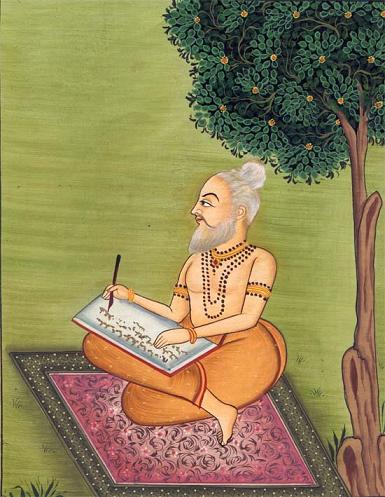
Valmiki (/vɑːlˈmiːki/; Sanskrit: वाल्मीकि, romanized: Vālmīki, [ʋɑːlmiːki]) was a legendary poet who is celebrated as the traditional author of the epic Ramayana, based on the attribution in the text itself. He is revered as Ādi Kavi, the first poet, author of Ramayana, the first epic poem.
The Ramayana, originally written by Valmiki, consists of 24,000 shlokas and seven cantos (kaṇḍas). The Ramayana is composed of about 480,002 words, being a quarter of the length of the full text of the Mahabharata or about four times the length of the Iliad. The Ramayana tells the story of a prince, Rama of the city of Ayodhya in the Kingdom of Kosala, whose wife Sita is abducted by Ravana, the demon-king (Rakshasa) of Lanka. The scholars' estimates for the earliest stage of the text ranging from the 8th to 4th centuries BCE, and later stages extending up to the 3rd century CE, although original date of composition is unknown. As with many traditional epics, it has gone through a process of interpolations and redactions, making it impossible to date accurately.
British satirist Aubrey Menen says that Valmiki was "recognized as a literary genius," and thus was considered, "an outlaw," presumably because of his "philosophic scepticism," as part of an "Indian Enlightenment" period. Valmiki is also quoted as being the contemporary of Rama. Menen claims Valmiki is "the first author in all history to bring himself into his own composition."
According to scriptures, Valmiki is the tenth son of the god Varuna, born after Varuna's seed fell into a termite hill, which earned him the name of "Valmiki". In his youth, Valmiki once met the great sage Narada and had a discourse with him on his duties. Moved by Narada's words, Valmiki began to perform penance and chanted the word "Mara" which meant "die". As he performed his penance for several years, the word became "Rama", a name of the god Vishnu.
There also exist some legends about Valmiki having been a thief before turning into a rishi. The Nagara Khanda of the Skanda Purana in its section on the creation of Mukhara Tirtha mentions that Valmiki was born a Brahmin, with the name of Lohajangha and was a devoted son to his parents. He had a beautiful wife and both of them were faithful to each other. Once, when there was no rain in the region of Anarta, for twelve long years, Lohajangha, for the sake of his hungry family, started robbing people that he found in the forest. In the course of this life he met the seven sages or the Saptarishi and tried to rob them as well. But the learned sages felt pity on him and showed him the folly of his ways. One of them, Pulaha gave him a Mantra to meditate upon and the Brahmin turned thief got so engrossed in its recitation that ant-hills came up around his body. When the sages returned and heard the sound of the mantra coming from the ant-hill, they blessed him and said, "Since you achieved great Siddhi seated within a Valmīka (an anthill), you will become well-known in the world as Vālmīki."
Valmiki was going to the river Ganges for his daily ablutions. A disciple by the name Bharadwaja was carrying his clothes. On the way, they came across the Tamasa Stream. Looking at the stream, Valmiki said to his disciple, "Look, how clear is this water, like the mind of a good man! I will bathe here today." When he was looking for a suitable place to step into the stream, he saw a crane couple mating. Valmiki felt very pleased on seeing the happy birds. Suddenly, hit by an arrow, the male bird died on the spot. Filled by sorrow, its mate screamed in agony and died of shock. Valmiki's heart melted at this pitiful sight. He looked around to find out who had shot the bird. He saw a hunter with a bow and arrows, nearby. Valmiki became very angry. His lips opened and he cried out,
मा निषाद प्रतिष्ठां त्वमगमः शाश्वतीः समाः।
यत्क्रौञ्चमिथुनादेकमवधीः काममोहितम्॥'
mā niṣāda pratiṣṭhā tvamagamaḥ śāśvatīḥ samāḥ
yat krauñcamithunādekam avadhīḥ kāmamohitam
You will find no rest for the long years of Eternity
For you killed a bird in love and unsuspecting
Emerging spontaneously from Valmiki's rage and grief, this couplet is considered the first shloka in Sanskrit literature. Valmiki later composed the entire Ramayana in the same meter. Valmiki is revered as Adi Kavi (the first poet); the Ramayana is revered as the first kavya (poem).
Hub AI
Valmiki AI simulator
(@Valmiki_simulator)
Valmiki
Valmiki (/vɑːlˈmiːki/; Sanskrit: वाल्मीकि, romanized: Vālmīki, [ʋɑːlmiːki]) was a legendary poet who is celebrated as the traditional author of the epic Ramayana, based on the attribution in the text itself. He is revered as Ādi Kavi, the first poet, author of Ramayana, the first epic poem.
The Ramayana, originally written by Valmiki, consists of 24,000 shlokas and seven cantos (kaṇḍas). The Ramayana is composed of about 480,002 words, being a quarter of the length of the full text of the Mahabharata or about four times the length of the Iliad. The Ramayana tells the story of a prince, Rama of the city of Ayodhya in the Kingdom of Kosala, whose wife Sita is abducted by Ravana, the demon-king (Rakshasa) of Lanka. The scholars' estimates for the earliest stage of the text ranging from the 8th to 4th centuries BCE, and later stages extending up to the 3rd century CE, although original date of composition is unknown. As with many traditional epics, it has gone through a process of interpolations and redactions, making it impossible to date accurately.
British satirist Aubrey Menen says that Valmiki was "recognized as a literary genius," and thus was considered, "an outlaw," presumably because of his "philosophic scepticism," as part of an "Indian Enlightenment" period. Valmiki is also quoted as being the contemporary of Rama. Menen claims Valmiki is "the first author in all history to bring himself into his own composition."
According to scriptures, Valmiki is the tenth son of the god Varuna, born after Varuna's seed fell into a termite hill, which earned him the name of "Valmiki". In his youth, Valmiki once met the great sage Narada and had a discourse with him on his duties. Moved by Narada's words, Valmiki began to perform penance and chanted the word "Mara" which meant "die". As he performed his penance for several years, the word became "Rama", a name of the god Vishnu.
There also exist some legends about Valmiki having been a thief before turning into a rishi. The Nagara Khanda of the Skanda Purana in its section on the creation of Mukhara Tirtha mentions that Valmiki was born a Brahmin, with the name of Lohajangha and was a devoted son to his parents. He had a beautiful wife and both of them were faithful to each other. Once, when there was no rain in the region of Anarta, for twelve long years, Lohajangha, for the sake of his hungry family, started robbing people that he found in the forest. In the course of this life he met the seven sages or the Saptarishi and tried to rob them as well. But the learned sages felt pity on him and showed him the folly of his ways. One of them, Pulaha gave him a Mantra to meditate upon and the Brahmin turned thief got so engrossed in its recitation that ant-hills came up around his body. When the sages returned and heard the sound of the mantra coming from the ant-hill, they blessed him and said, "Since you achieved great Siddhi seated within a Valmīka (an anthill), you will become well-known in the world as Vālmīki."
Valmiki was going to the river Ganges for his daily ablutions. A disciple by the name Bharadwaja was carrying his clothes. On the way, they came across the Tamasa Stream. Looking at the stream, Valmiki said to his disciple, "Look, how clear is this water, like the mind of a good man! I will bathe here today." When he was looking for a suitable place to step into the stream, he saw a crane couple mating. Valmiki felt very pleased on seeing the happy birds. Suddenly, hit by an arrow, the male bird died on the spot. Filled by sorrow, its mate screamed in agony and died of shock. Valmiki's heart melted at this pitiful sight. He looked around to find out who had shot the bird. He saw a hunter with a bow and arrows, nearby. Valmiki became very angry. His lips opened and he cried out,
मा निषाद प्रतिष्ठां त्वमगमः शाश्वतीः समाः।
यत्क्रौञ्चमिथुनादेकमवधीः काममोहितम्॥'
mā niṣāda pratiṣṭhā tvamagamaḥ śāśvatīḥ samāḥ
yat krauñcamithunādekam avadhīḥ kāmamohitam
You will find no rest for the long years of Eternity
For you killed a bird in love and unsuspecting
Emerging spontaneously from Valmiki's rage and grief, this couplet is considered the first shloka in Sanskrit literature. Valmiki later composed the entire Ramayana in the same meter. Valmiki is revered as Adi Kavi (the first poet); the Ramayana is revered as the first kavya (poem).