



Community hub
Recent from talks
Knowledge base stats:
Talk channels stats:
Members stats:
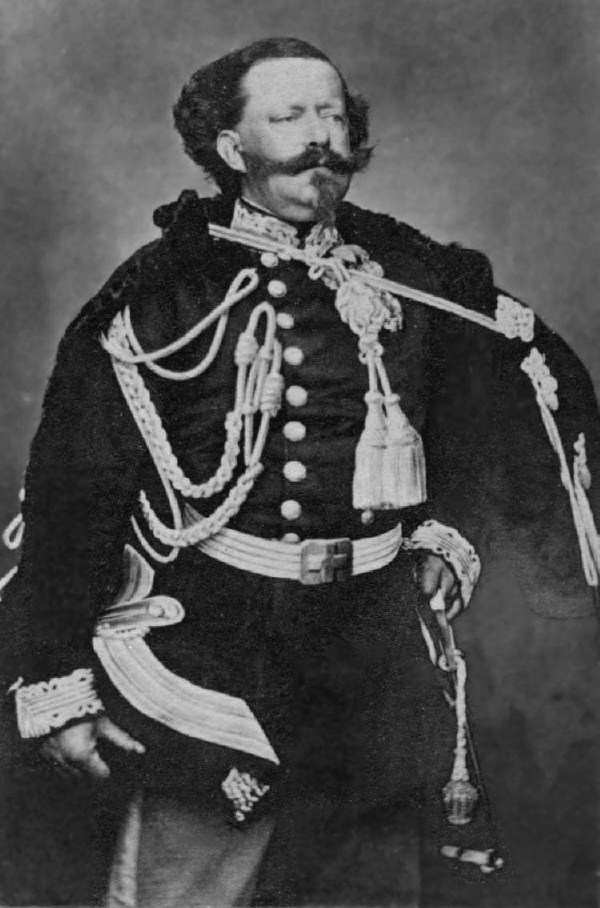
Victor Emmanuel II
Victor Emmanuel II (Italian: Vittorio Emanuele II; full name: Vittorio Emanuele Maria Alberto Eugenio Ferdinando Tommaso di Savoia; 14 March 1820 – 9 January 1878) was King of Sardinia (also informally known as Piedmont–Sardinia) from 23 March 1849 until 17 March 1861, when he assumed the title of King of Italy and became the first king of an independent, united Italy since the 6th century, a title he held until his death in 1878. Borrowing from the old Latin title Pater Patriae of the Roman emperors, the Italians gave him the epithet of "Father of the Fatherland" (Italian: Padre della Patria).
Born in Turin as the eldest son of Charles Albert, Prince of Carignano, and Maria Theresa of Austria, Victor Emmanuel fought in the First Italian War of Independence (1848–1849) before being made King of Sardinia following his father's abdication. He appointed Camillo Benso, Count of Cavour, as his Prime Minister, and he consolidated his position by suppressing the republican left. In 1855, he sent an expeditionary corps to side with French and British forces during the Crimean War; the deployment of Italian troops to the Crimea, and the gallantry shown by them in the Battle of the Chernaya (16 August 1855) and in the siege of Sevastopol led the Kingdom of Sardinia to be among the participants at the peace conference at the end of the war, where it could address the issue of the Italian unification to other European powers. This allowed Victor Emmanuel to ally himself with Napoleon III, Emperor of France. France then supported Sardinia in the Second Italian War of Independence, resulting in the liberation of Lombardy from Austrian rule; as payment for the help, Victor Emmanuel ceded Savoy and Nice to France.
Victor Emmanuel supported the Expedition of the Thousand (1860–1861) led by Giuseppe Garibaldi, which resulted in the rapid fall of the Kingdom of the Two Sicilies in southern Italy; however, Victor Emmanuel halted Garibaldi when he appeared ready to attack Rome, still under the Papal States, as it was under French protection. In 1860, Tuscany, Modena, Parma, and Romagna decided to side with Sardinia, and Victor Emmanuel then marched victoriously in the Marche and Umbria after the victorious Battle of Castelfidardo over the Papal forces. This led to his excommunication from the Catholic Church. He subsequently met Garibaldi at Teano, receiving from him the control of southern Italy and becoming the first King of Italy on 17 March 1861.
In 1866, the Third Italian War of Independence allowed Italy to annex Veneto. In 1870, Victor Emmanuel also took advantage of the Prussian victory over France in the Franco-Prussian War to conquer the Papal States after the French withdrew. He entered Rome on 20 September 1870 and set up the new capital there on 2 July 1871. He died in Rome in 1878, soon after his excommunication had been lifted, and was buried in the Pantheon. The Italian national Victor Emmanuel II Monument in Rome, containing the Altare della Patria, was built in his honour.
Victor Emmanuel was born in Palazzo Carignano, Turin as the eldest son of Carlo Alberto Prince of Carignano, and Maria Theresa of Tuscany. His father succeeded a distant cousin as King of Sardinia in 1831. He lived for some years of his youth in Florence and showed an early interest in politics, the military, and sports. In 1842, he married his cousin, Adelaide of Austria. He was styled as the Duke of Savoy prior to becoming King of Sardinia. He took part in the First Italian War of Independence (1848–1849) under his father, King Charles Albert, fighting in the front line at the battles of Pastrengo, Santa Lucia, Goito and Custoza.
Victor Emmanuel became King of Sardinia in 1849 when his father abdicated the throne, after being defeated by the Austrians at the Battle of Novara. Victor Emmanuel was immediately able to obtain a rather favourable armistice at Vignale by the Austrian imperial army commander, Radetzky. The treaty, however, was not ratified by the Piedmontese lower parliamentary house, the Chamber of Deputies, and Victor Emmanuel retaliated by firing his Prime Minister, Claudio Gabriele de Launay, replacing him with Massimo D'Azeglio. After new elections, the peace with Austria was accepted by the new Chamber of Deputies. In 1849, Victor Emmanuel also fiercely suppressed a revolt in Genoa, defining the rebels as a "vile and infected race of canailles".
In 1852, Victor Emmanuel appointed Camillo Benso, Count of Cavour, as Prime Minister of the Kingdom of Sardinia. Cavour was a clever strategist focused on establishing the House of Savoy as Italy's rulers. He applied liberalism and nationalism to dismantle the traditional structures of the Kingdom of Sardinia while advancing an anti-clerical agenda that started during Charles Albert. Cavour modernized the kingdom for war to expel the Austrians from Italy, facilitating Victor Emmanuel's eventual ascension as king. He also played a key role in securing an alliance with Napoleon III, leading to French support that enabled Emmanuel’s forces to capture Milan and other Austrian territories, though Venice remained under Austrian control. Victor Emmanuel II soon became the symbol of Risorgimento, the Italian unification movement of the 1850s and early 60s. He was especially popular in Piedmont–Sardinia because of his respect for the new constitution and his liberal reforms.
Following Victor Emmanuel's advice, Cavour joined Britain and France in the Crimean War against Russia. Cavour was reluctant to go to war due to the power of Russia at the time and the expense of doing so; however, Victor Emmanuel was convinced of the rewards to be gained from the alliance created with Britain and more importantly France. After successfully seeking British support and ingratiating himself with France and Napoleon III at the Congress of Paris in 1856 at the end of the war, Count Cavour arranged a secret meeting with the French emperor. In 1858, they met at Plombières-les-Bains (in Lorraine), where they agreed that if the French were to help Piedmont in its war against Austria, which still reigned over the Kingdom of Lombardy–Venetia in northern Italy, France would be awarded Nice and Savoy.
Hub AI
Victor Emmanuel II AI simulator
(@Victor Emmanuel II_simulator)
Victor Emmanuel II
Victor Emmanuel II (Italian: Vittorio Emanuele II; full name: Vittorio Emanuele Maria Alberto Eugenio Ferdinando Tommaso di Savoia; 14 March 1820 – 9 January 1878) was King of Sardinia (also informally known as Piedmont–Sardinia) from 23 March 1849 until 17 March 1861, when he assumed the title of King of Italy and became the first king of an independent, united Italy since the 6th century, a title he held until his death in 1878. Borrowing from the old Latin title Pater Patriae of the Roman emperors, the Italians gave him the epithet of "Father of the Fatherland" (Italian: Padre della Patria).
Born in Turin as the eldest son of Charles Albert, Prince of Carignano, and Maria Theresa of Austria, Victor Emmanuel fought in the First Italian War of Independence (1848–1849) before being made King of Sardinia following his father's abdication. He appointed Camillo Benso, Count of Cavour, as his Prime Minister, and he consolidated his position by suppressing the republican left. In 1855, he sent an expeditionary corps to side with French and British forces during the Crimean War; the deployment of Italian troops to the Crimea, and the gallantry shown by them in the Battle of the Chernaya (16 August 1855) and in the siege of Sevastopol led the Kingdom of Sardinia to be among the participants at the peace conference at the end of the war, where it could address the issue of the Italian unification to other European powers. This allowed Victor Emmanuel to ally himself with Napoleon III, Emperor of France. France then supported Sardinia in the Second Italian War of Independence, resulting in the liberation of Lombardy from Austrian rule; as payment for the help, Victor Emmanuel ceded Savoy and Nice to France.
Victor Emmanuel supported the Expedition of the Thousand (1860–1861) led by Giuseppe Garibaldi, which resulted in the rapid fall of the Kingdom of the Two Sicilies in southern Italy; however, Victor Emmanuel halted Garibaldi when he appeared ready to attack Rome, still under the Papal States, as it was under French protection. In 1860, Tuscany, Modena, Parma, and Romagna decided to side with Sardinia, and Victor Emmanuel then marched victoriously in the Marche and Umbria after the victorious Battle of Castelfidardo over the Papal forces. This led to his excommunication from the Catholic Church. He subsequently met Garibaldi at Teano, receiving from him the control of southern Italy and becoming the first King of Italy on 17 March 1861.
In 1866, the Third Italian War of Independence allowed Italy to annex Veneto. In 1870, Victor Emmanuel also took advantage of the Prussian victory over France in the Franco-Prussian War to conquer the Papal States after the French withdrew. He entered Rome on 20 September 1870 and set up the new capital there on 2 July 1871. He died in Rome in 1878, soon after his excommunication had been lifted, and was buried in the Pantheon. The Italian national Victor Emmanuel II Monument in Rome, containing the Altare della Patria, was built in his honour.
Victor Emmanuel was born in Palazzo Carignano, Turin as the eldest son of Carlo Alberto Prince of Carignano, and Maria Theresa of Tuscany. His father succeeded a distant cousin as King of Sardinia in 1831. He lived for some years of his youth in Florence and showed an early interest in politics, the military, and sports. In 1842, he married his cousin, Adelaide of Austria. He was styled as the Duke of Savoy prior to becoming King of Sardinia. He took part in the First Italian War of Independence (1848–1849) under his father, King Charles Albert, fighting in the front line at the battles of Pastrengo, Santa Lucia, Goito and Custoza.
Victor Emmanuel became King of Sardinia in 1849 when his father abdicated the throne, after being defeated by the Austrians at the Battle of Novara. Victor Emmanuel was immediately able to obtain a rather favourable armistice at Vignale by the Austrian imperial army commander, Radetzky. The treaty, however, was not ratified by the Piedmontese lower parliamentary house, the Chamber of Deputies, and Victor Emmanuel retaliated by firing his Prime Minister, Claudio Gabriele de Launay, replacing him with Massimo D'Azeglio. After new elections, the peace with Austria was accepted by the new Chamber of Deputies. In 1849, Victor Emmanuel also fiercely suppressed a revolt in Genoa, defining the rebels as a "vile and infected race of canailles".
In 1852, Victor Emmanuel appointed Camillo Benso, Count of Cavour, as Prime Minister of the Kingdom of Sardinia. Cavour was a clever strategist focused on establishing the House of Savoy as Italy's rulers. He applied liberalism and nationalism to dismantle the traditional structures of the Kingdom of Sardinia while advancing an anti-clerical agenda that started during Charles Albert. Cavour modernized the kingdom for war to expel the Austrians from Italy, facilitating Victor Emmanuel's eventual ascension as king. He also played a key role in securing an alliance with Napoleon III, leading to French support that enabled Emmanuel’s forces to capture Milan and other Austrian territories, though Venice remained under Austrian control. Victor Emmanuel II soon became the symbol of Risorgimento, the Italian unification movement of the 1850s and early 60s. He was especially popular in Piedmont–Sardinia because of his respect for the new constitution and his liberal reforms.
Following Victor Emmanuel's advice, Cavour joined Britain and France in the Crimean War against Russia. Cavour was reluctant to go to war due to the power of Russia at the time and the expense of doing so; however, Victor Emmanuel was convinced of the rewards to be gained from the alliance created with Britain and more importantly France. After successfully seeking British support and ingratiating himself with France and Napoleon III at the Congress of Paris in 1856 at the end of the war, Count Cavour arranged a secret meeting with the French emperor. In 1858, they met at Plombières-les-Bains (in Lorraine), where they agreed that if the French were to help Piedmont in its war against Austria, which still reigned over the Kingdom of Lombardy–Venetia in northern Italy, France would be awarded Nice and Savoy.