
Recent from talks
Vélizy-Villacoublay Air Base
Knowledge base stats:
Talk channels stats:
Members stats:
Vélizy-Villacoublay Air Base
The Vélizy-Villacoublay Air Base (French: Base aérienne 107 Vélizy-Villacoublay) (IATA: VIY, ICAO: LFPV) is a French Air and Space Force (Armée de l'air et de l'espace, abbr. ALAE) base. The base is located approximately 2 miles (3.2 km) southeast of the centre of Vélizy-Villacoublay; about 8 miles (13 km) southwest of Paris.
The air base property is within three communes in two departments: Vélizy-Villacoublay and Jouy-en-Josas in Yvelines, and Bièvres in Essonne.
The base is the home station for the following units:
Aircraft assigned to the base are:[citation needed]
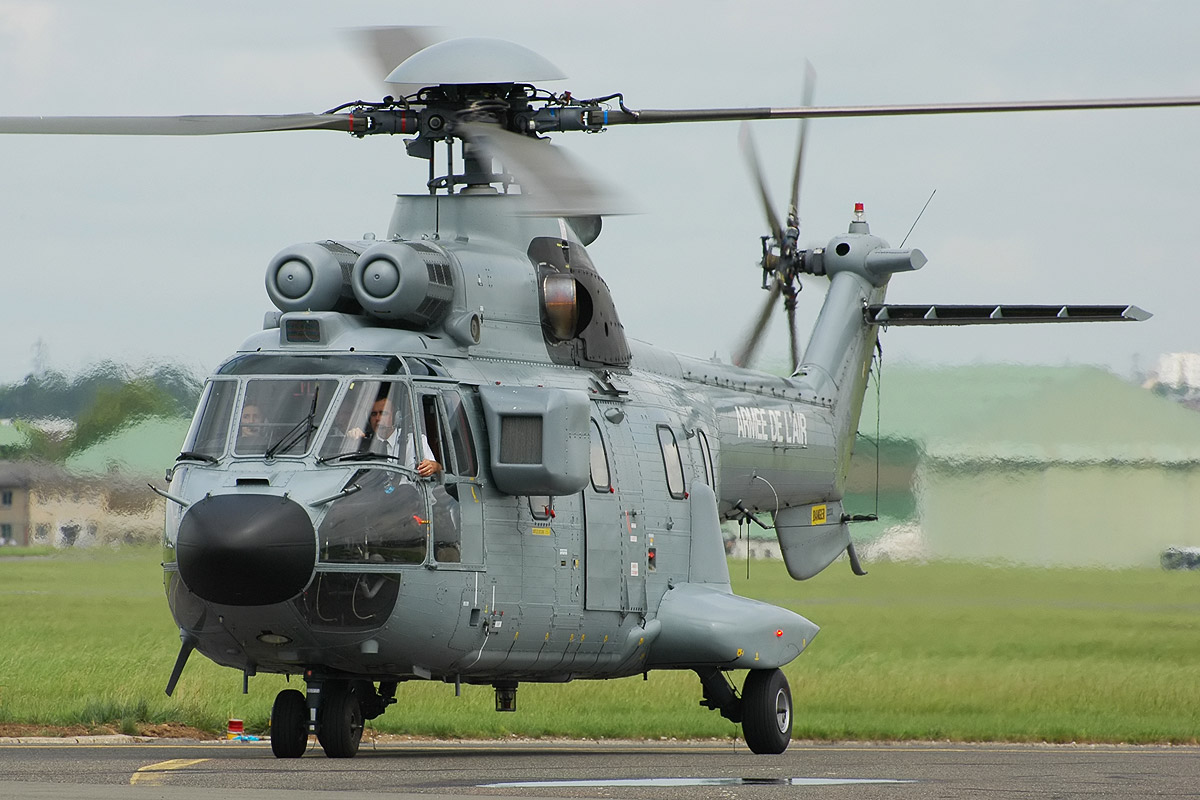
The air base is also important for the national security of France through the Joint Service Helicopter Group (Groupe interarmées d'hélicoptères). The Group is a joint Army / Air Force unit and provides air mobility to the country's two prime counter-terror units - the National Gendarmerie's GIGN and the National Police's RAID. The force is composed of six Aérospatiale SA 330 Puma helicopters, four provided by the Army Special Operations Brigade's 4th Special Forces Helicopter Regiment and two by the French Air and Space Force.
The Villacoublay plateau has played an important role in the development of French aviation ever since artist and photographer Nadar took the world's first aerial photographs from a balloon here in 1858. The world's first closed circuit flight took place at nearby Chalais-Meudon, in the airship La France, designed and flown by Charles Renard and Arthur Constantin Krebs, on 9 August 1884. It flew around Villacoublay during its 23-minute flight. In 1897, Clement Ader tested his Avion III on a circular track at nearby Satory with total lack of success.
Count Charles de Lambert owned two Wright biplanes. In 1910 his flying field flooded, and he was moving the aircraft by oxcart when he needed to stop in Villacoublay, at a farm whose owner, Paul Dautier, had the previous year permitted an aircraft, designed by Alfred de Pischof and Paul Koechlin to fly from his land. Dautier offered Lambert his fields as a base for the aircraft. The Count accepted and, as holder of the Wrights' patents, set up the Wright-Astra flying school later that year. Louis Breguet followed, and set up an aircraft factory and flying school in July 1911. The Morane Brothers joined in, buying fields around the original farm in February 1912 to establish their school, and the Nieuport flying school followed that November.
The French Army had also arrived in 1910, using it for aircraft testing, one of the first tests being of air-to-ground radio. The ground's proximity to Paris meant that Military Aeronautics, which was created in 1912, used the airfield to give demonstrations to high-ranking officials, performed in March and September 1912. The first flight test conducted by the Service Technique de l'Aéronautique (STAé) took place here in the same year, and the airfield remained a military flight test centre until World War II.
Hub AI
Vélizy-Villacoublay Air Base AI simulator
(@Vélizy-Villacoublay Air Base_simulator)
Vélizy-Villacoublay Air Base
The Vélizy-Villacoublay Air Base (French: Base aérienne 107 Vélizy-Villacoublay) (IATA: VIY, ICAO: LFPV) is a French Air and Space Force (Armée de l'air et de l'espace, abbr. ALAE) base. The base is located approximately 2 miles (3.2 km) southeast of the centre of Vélizy-Villacoublay; about 8 miles (13 km) southwest of Paris.
The air base property is within three communes in two departments: Vélizy-Villacoublay and Jouy-en-Josas in Yvelines, and Bièvres in Essonne.
The base is the home station for the following units:
Aircraft assigned to the base are:[citation needed]
The air base is also important for the national security of France through the Joint Service Helicopter Group (Groupe interarmées d'hélicoptères). The Group is a joint Army / Air Force unit and provides air mobility to the country's two prime counter-terror units - the National Gendarmerie's GIGN and the National Police's RAID. The force is composed of six Aérospatiale SA 330 Puma helicopters, four provided by the Army Special Operations Brigade's 4th Special Forces Helicopter Regiment and two by the French Air and Space Force.
The Villacoublay plateau has played an important role in the development of French aviation ever since artist and photographer Nadar took the world's first aerial photographs from a balloon here in 1858. The world's first closed circuit flight took place at nearby Chalais-Meudon, in the airship La France, designed and flown by Charles Renard and Arthur Constantin Krebs, on 9 August 1884. It flew around Villacoublay during its 23-minute flight. In 1897, Clement Ader tested his Avion III on a circular track at nearby Satory with total lack of success.
Count Charles de Lambert owned two Wright biplanes. In 1910 his flying field flooded, and he was moving the aircraft by oxcart when he needed to stop in Villacoublay, at a farm whose owner, Paul Dautier, had the previous year permitted an aircraft, designed by Alfred de Pischof and Paul Koechlin to fly from his land. Dautier offered Lambert his fields as a base for the aircraft. The Count accepted and, as holder of the Wrights' patents, set up the Wright-Astra flying school later that year. Louis Breguet followed, and set up an aircraft factory and flying school in July 1911. The Morane Brothers joined in, buying fields around the original farm in February 1912 to establish their school, and the Nieuport flying school followed that November.
The French Army had also arrived in 1910, using it for aircraft testing, one of the first tests being of air-to-ground radio. The ground's proximity to Paris meant that Military Aeronautics, which was created in 1912, used the airfield to give demonstrations to high-ranking officials, performed in March and September 1912. The first flight test conducted by the Service Technique de l'Aéronautique (STAé) took place here in the same year, and the airfield remained a military flight test centre until World War II.
Recent media