Hubbry Logo
Violet MacMillanViolet MacMillanMain
Open search
Violet MacMillan
Community hub
Violet MacMillan
logo
8 pages, 0 posts
0 subscribers
Be the first to start a discussion here.
Violet MacMillan
Violet MacMillan
from Wikipedia

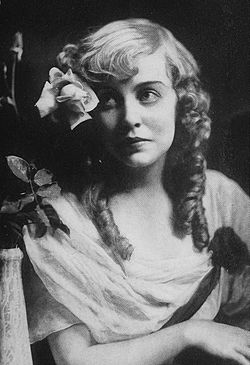
Violet MacMillan (March 4, 1887 – December 28, 1953), was an American actress in Broadway theatre productions, vaudeville, and silent films.

Key Information

Early career

[edit]

MacMillan gained fame as the "Cinderella Girl"[1] in a contest to discover a woman with feet small enough to wear a petite golden slipper. She was hesitant but entered a Broadway show, and won. Her foot measured an 11½ children's size.[1]

Theatrical actress

[edit]

Soon she had a leading part in the original production of the musical, The Time, The Place and The Girl. While engaged in this play, in the 1908 season, the actress had surgery at Harper Hospital, Detroit, Michigan.[2]

She completed a successful vaudeville tour in 1916. She participated in the stage production, The Wishing Slippers, at Universal City, California.[3] Another play of note is In And Out of the Movies. She performed in this "vaudeville oddity" in the Midwest in late 1917.[4]

Silent films

[edit]
His Majesty, the Scarecrow of Oz

In motion pictures Miss MacMillan joined the stock company of The Oz Film Manufacturing Company and debuted in the film versions of His Majesty, the Scarecrow of Oz (as Dorothy Gale), The Patchwork Girl of Oz (as Ojo),[5] and The Magic Cloak of Oz (as King Bud of Noland), all made in 1914, and the lost series of L. Frank Baum-written and produced shorts, Violet's Dreams, in which she played a girl named Claribel who had fairy-tale adventures in her dreams.[citation needed]

She was also an actress for Universal Pictures. She made twenty-six motion pictures, ending with the role of Violet Bronson in The Mystery Mind (1920), a 15-chapter serial about a Satanic cult in lost Atlantis. Among her co-stars in films were Lon Chaney, Blanche Ring, Trixie Friganza, and Julian Eltinge.[1]

MacMillan retired from show business in 1922.[1]

Personal life and death

[edit]

As Mrs. John H. Folger, she was the wife of an industrial executive, who became her press agent in entertainment.[1]

She was a member of Zonta International, the Grand Rapids Club, a non-profit organization working to advance the status of women through service and advocacy worldwide. She also served as president of the Grand Rapids Club from 1930–1932.[citation needed]

Violet MacMillan, at age 66, died at her home in Grand Rapids on December 28, 1953.[1]

References

[edit]
[edit]
Revisions and contributorsEdit on WikipediaRead on Wikipedia
from Grokipedia
'''Violet MacMillan''' (March 3, 1889 – March 29, 1953) was an American actress known for her roles in early silent films, particularly as Dorothy Gale in cinematic adaptations of L. Frank Baum's Oz stories during the 1910s. She began her career on the stage before transitioning to motion pictures with the Oz Film Manufacturing Company, where she starred in several early film adaptations of Baum's works. MacMillan also appeared in other silent era productions before retiring from acting.

Early life

Birth and family

Violet MacMillan was born Violet Iola MacMillan on March 4, 1885, in Grand Rapids, Michigan. She was the daughter of Edward Adelbert MacMillan and Katherine Hoffman. Her name was sometimes spelled McMillan.

Stage beginnings

Violet MacMillan began participating in amateur theatricals during her youth in Grand Rapids, Michigan, where her name frequently appeared at the top of programs for local entertainments. Her first public stage appearance came when she played the role of Dorothy in a production of The Wizard of Oz, marking the first time the public saw her in that part. She gained wider attention after winning a widely publicized "Cinderella Girl" contest, which sought a woman with feet small enough to fit a petite golden slipper, leading to her nickname "The Cinderella Girl" and opening doors on Broadway. By 1904, she made her Broadway debut playing Stella Mayhew’s friend in Flo-Flo. She went on to star as the leading woman in the musical The Time, the Place and the Girl during its 1907–1908 engagements, including a tour stop in Detroit where she underwent surgery but recovered to continue performing. In 1910, MacMillan appeared with Klaw & Erlanger opposite Max Rogers in The Young Turk and played the leading ingenue in Girlies at the New Amsterdam Theater. She also performed in vaudeville on the Keith and Orpheum circuits with an act that featured singing and rapid costume changes. Her established stage experience in juvenile and leading roles paved the way for her entry into motion pictures around 1910.

Silent film career

Entry into motion pictures

Violet MacMillan transitioned from a successful stage career in Broadway productions, vaudeville, and touring shows to silent films in 1914, when she joined the stock company of The Oz Film Manufacturing Company. Her established reputation as a versatile performer, with experience in both dramatic and comedic roles on stage, led to this initial opportunity in motion pictures. This marked her film debut, as her earliest known screen appearances began that year with the independent studio founded by L. Frank Baum. No earlier film credits are documented, confirming 1914 as the start of her motion picture work following years of theatrical experience.

Oz Film Manufacturing Company roles

Violet MacMillan joined the Oz Film Manufacturing Company, an independent studio founded by L. Frank Baum in Los Angeles in 1914 to adapt his popular Oz books into family-friendly motion pictures. The company produced several silent features that year, with MacMillan starring in the three Oz-themed titles released or completed in 1914, all directed by J. Farrell MacDonald. In The Patchwork Girl of Oz (1914), she played Ojo, a young Munchkin boy who sets out to find five ingredients for a magic powder to revive his petrified guardian Unc Nunkie. MacMillan, who had frequently portrayed male characters in her early film work, took on another boy role as King Timothy "Bud" of Noland in The Magic Cloak of Oz (1914), adapted from Baum's Queen Zixi of Ix, where her character ascends to the throne through a legal quirk and embarks on adventures involving a magical cloak. She finally portrayed Dorothy Gale in His Majesty, the Scarecrow of Oz (1914), a Kansas girl transported to Oz who joins the Scarecrow, Tin Woodman, and Cowardly Lion in efforts to thwart the tyrannical King Krewl and restore Princess Gloria. This silent portrayal of Dorothy predates Judy Garland's iconic performance in the 1939 film The Wizard of Oz by 25 years and remains one of the earliest cinematic depictions of the character from Baum's original stories. These three films represent MacMillan's most prominent contributions to early Oz cinema and highlight her versatility in leading roles within Baum's short-lived but ambitious production venture.

Other film appearances

Violet MacMillan starred in a series of four one-reel children's shorts produced by the Oz Film Manufacturing Company known as Violet's Dreams, separate from the Oz adaptations. These included A Box of Bandits (1915), The Country Circus (1915), The Magic Bon Bons (1915), and In Dreamy Jungletown (1916). These shorts were later compiled into an anthology re-release titled Like Babes in the Woods in 1917. Following the closure of the Oz Film Manufacturing Company, MacMillan joined Thomas H. Ince's studio at Inceville, where she transitioned to dramatic feature productions. Her first dramatic picture there was A Modern Noble, opposite Thomas Chatterton and directed by Jay Hunt. She also appeared in His Brother's Keeper (1915), playing opposite Jay Hunt. Other films from this period in which she held leading or title roles included The Phantom of the Hearth, The Artist’s Model, and The Disillusionment of Jane. She continued appearing in silent films into the late 1910s and early 1920s, with additional roles including The Girl Who Won Out (1917) and her final known appearance in the serial The Mystery Mind (1920).

Personal life

Marriage and family

Violet MacMillan was first married to Frank Edward Clark in 1901. They had one daughter, Lanora Gertrude Clark (later known as Lanora Gertrude Folger d'Archangel), born on December 15, 1902, before divorcing around 1903. She later married John Hall Folger (also referred to as John H. Folger), an industrial executive who had served as her press agent during her show business career, on December 24, 1908. She was known as Mrs. John H. Folger at the time of her death at her home in Grand Rapids, Michigan, on December 28, 1953. Lanora died on June 2, 1929. Limited primary sources are available for further details on her marriages or extended family.

Later years and death

Retirement and final years

After retiring from show business around 1922, Violet MacMillan returned to her hometown of Grand Rapids, Michigan. She resided in Grand Rapids during her final decades, with no public records indicating further professional activities or returns to performing.

Death

Violet MacMillan died on December 29, 1953, in Grand Rapids, Michigan, at the age of 68. No cause of death was reported in contemporary accounts.

Legacy

Violet MacMillan's legacy endures primarily through her portrayal of Dorothy Gale in ''His Majesty, the Scarecrow of Oz'' (1914), an early feature-length silent adaptation produced by L. Frank Baum's Oz Film Manufacturing Company. This role marked one of the first screen appearances of the character in a production directly overseen and scripted by Baum himself, lending it unique authenticity as an extension of his original Oz vision. In silent film and Oz scholarship, the work is valued as part of the broader cinematic legacy of ''The Wizard of Oz'' adaptations, distinguished from later versions by its intimate connection to the author's own creative involvement. Scholars emphasize the importance of remembering these early efforts, describing them as "an endearing little side road" in Oz screen history that carries "the unique stamp of the stories’ original author." Surviving prints of ''His Majesty, the Scarecrow of Oz'' have been preserved and made accessible in modern restorations, enabling continued study and appreciation of MacMillan's contribution to the foundational era of Oz cinema. Her work remains a notable chapter in the evolution of fantasy film adaptations from Baum's books.
Add your contribution
Related Hubs
User Avatar
No comments yet.