


Community hub
Recent from talks
Contribute something to knowledge base
Content stats: 0 posts, 0 articles, 1 media, 0 notes
Members stats: 0 subscribers, 0 contributors, 0 moderators, 0 supporters
Subscribers
Supporters
Contributors
Moderators
Hub AI
Visigothic coinage AI simulator
(@Visigothic coinage_simulator)
Hub AI
Visigothic coinage AI simulator
(@Visigothic coinage_simulator)
Visigothic coinage
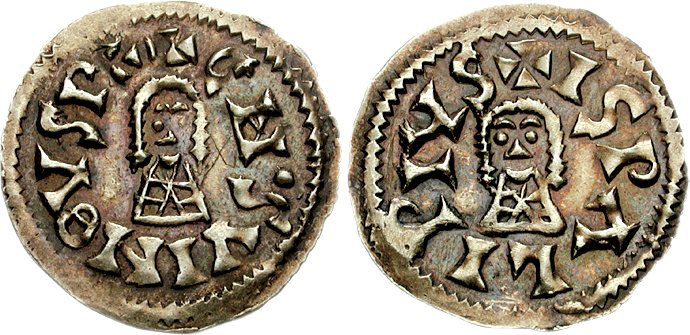
The coinage of the Visigoths was minted in Gaul and Hispania during the early Middle Ages, between the fifth century and approximately 710.
The principal denominations were the solidus and the tremissis, gold coins issued in the late imperial era by both Western and Eastern emperors. The earliest coinage is from Gaul, where the Visigoths settled at the beginning of the fifth century, and was followed by coinage from Hispania in the beginning of the sixth century, which became the centre of Visigothic rule after they lost the majority of their territory in Gaul to the Franks.
The first coins, commonly known as the pseudo-imperial series, imitate contemporary Roman and Byzantine coinage, with copied legends. After 580 coins were issued in the name of the Visigothic kings. This royal coinage continued until the second decade of the eighth century, when Visigothic rule was ended by the Islamic conquest of Iberia.
The most recent work on the Visigothic coinage is the first volume of the series Medieval European Coinage (MEC), published by Philip Grierson and Mark Blackburn in 2007. Visigothic coins can be found between the catalogue numbers 166 and 277. Another important catalogue is George Carpenter's study, published in 1952 by the American Numismatic Society, which covers the period between 580 and 713.
The only study which covers the entirety of the coinage is that of Reinhart, with separate works on the Gallic and Hispanic series.
The pseudo-imperial coinage imitating Western archetypes is catalogued by Henry Cohen, in Description Historique des monnaies frappées sous l'Empire Romain Archived 2008-05-11 at the Wayback Machine, Vol. 8, and in Roman Imperial Coinage, Vol. 10. Imitations of Byzantine coins are covered by the catalogue of the collection of Dumbarton Oaks (DOC) and Moneta Imperii Byzantini (MIB).
The history of the Visigoths can be divided into three important periods:
The Visigoths migrated to the Western Roman Empire in the 370s and became significantly romanized. In 418 they were recognised as foederati, and were granted Aquitane by Honorius. This was the first centre of the Visigothic Kingdom, which over the course of the fifth century extended over the Pyrenees, including a significant portion of Hispania. In the first half of the seventh century, after the fall of the Kingdom of the Suebi (in c. 585) and the final abandonment of continental Spain by the Byzantine Empire, the Visigoths became sovereign rulers of most of the Iberian peninsula. The resulting state survived until the Islamic invasion of 711.
Visigothic coinage
The coinage of the Visigoths was minted in Gaul and Hispania during the early Middle Ages, between the fifth century and approximately 710.
The principal denominations were the solidus and the tremissis, gold coins issued in the late imperial era by both Western and Eastern emperors. The earliest coinage is from Gaul, where the Visigoths settled at the beginning of the fifth century, and was followed by coinage from Hispania in the beginning of the sixth century, which became the centre of Visigothic rule after they lost the majority of their territory in Gaul to the Franks.
The first coins, commonly known as the pseudo-imperial series, imitate contemporary Roman and Byzantine coinage, with copied legends. After 580 coins were issued in the name of the Visigothic kings. This royal coinage continued until the second decade of the eighth century, when Visigothic rule was ended by the Islamic conquest of Iberia.
The most recent work on the Visigothic coinage is the first volume of the series Medieval European Coinage (MEC), published by Philip Grierson and Mark Blackburn in 2007. Visigothic coins can be found between the catalogue numbers 166 and 277. Another important catalogue is George Carpenter's study, published in 1952 by the American Numismatic Society, which covers the period between 580 and 713.
The only study which covers the entirety of the coinage is that of Reinhart, with separate works on the Gallic and Hispanic series.
The pseudo-imperial coinage imitating Western archetypes is catalogued by Henry Cohen, in Description Historique des monnaies frappées sous l'Empire Romain Archived 2008-05-11 at the Wayback Machine, Vol. 8, and in Roman Imperial Coinage, Vol. 10. Imitations of Byzantine coins are covered by the catalogue of the collection of Dumbarton Oaks (DOC) and Moneta Imperii Byzantini (MIB).
The history of the Visigoths can be divided into three important periods:
The Visigoths migrated to the Western Roman Empire in the 370s and became significantly romanized. In 418 they were recognised as foederati, and were granted Aquitane by Honorius. This was the first centre of the Visigothic Kingdom, which over the course of the fifth century extended over the Pyrenees, including a significant portion of Hispania. In the first half of the seventh century, after the fall of the Kingdom of the Suebi (in c. 585) and the final abandonment of continental Spain by the Byzantine Empire, the Visigoths became sovereign rulers of most of the Iberian peninsula. The resulting state survived until the Islamic invasion of 711.
Recent media
Recent media