Recent from talks
Contribute something
Nothing was collected or created yet.
Pyrenees
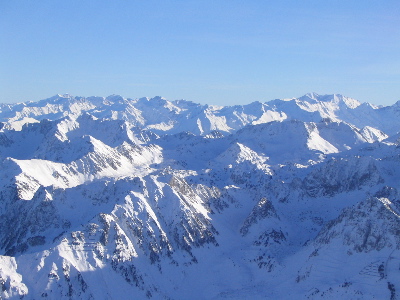
View on WikipediaThe Pyrenees[a] are a mountain range straddling the border of France and Spain. They extend nearly 500 km (310 mi) from their union with the Cantabrian Mountains to Cap de Creus on the Mediterranean coast, reaching a maximum elevation of 3,404 metres (11,168 ft) at the peak of Aneto.[1]
Key Information
For the most part, the main crest forms a political divide between the states of Spain and France, with the microstate of Andorra sandwiched in between. Historically, the Crown of Aragon and the Kingdom of Navarre extended on both sides of the mountain range.[2][3]
Etymology
[edit]In Greek mythology, Pyrene is a princess who gave her name to the Pyrenees. The Greek historian Herodotus says Pyrene is the name of a town in Celtic Europe.[4] According to Silius Italicus,[5] she was the virgin daughter of Bebryx, a king in Mediterranean Gaul by whom the hero Hercules was given hospitality during his quest to steal the cattle of Geryon[b] during his famous Labours. Hercules, characteristically drunk and lustful, violates the sacred code of hospitality and rapes his host's daughter. Pyrene gives birth to a serpent and runs away to the woods, afraid that her father will be angry. Alone, she pours out her story to the trees, attracting the attention of wild beasts who tear her to pieces.
After his victory over Geryon, Hercules passes through the kingdom of Bebryx again, finding the girl's lacerated remains. As is often the case in stories of this hero, the sober Hercules responds with heartbroken grief and remorse at the actions of his darker self, and lays Pyrene to rest tenderly, demanding that the surrounding geography join in mourning and preserve her name:[6] "struck by Herculean voice, the mountaintops shudder at the ridges; he kept crying out with a sorrowful noise 'Pyrene!' and all the rock-cliffs and wild-beast haunts echo back 'Pyrene!' ... The mountains hold on to the wept-over name through the ages." Pliny the Elder connects the story of Hercules and Pyrene to Lusitania, but rejects it as fabulosa, highly fictional.[7]
Other classical sources derived the name from the Greek word for fire, Ancient Greek: πῦρ (IPA: /pŷːr/).[8] According to Greek historian Diodorus Siculus "in ancient times, we are told, certain herdsmen left a fire and the whole area of the mountains was entirely consumed; and due to this fire, since it raged continuously day after day, the surface of the earth was also burned and the mountains, because of what had taken place, were called the Pyrenees."[9]
Geography
[edit]Political divisions
[edit]The Spanish Pyrenees are part of the following provinces, from east to west: Girona, Barcelona, Lleida (all in Catalonia), Huesca (in Aragon), Navarra (in Navarre) and Gipuzkoa (in the Basque Country).
The French Pyrenees are part of the following départements, from east to west: Pyrénées-Orientales (also known as Northern Catalonia), Aude, Ariège, Haute-Garonne, Hautes-Pyrénées, and Pyrénées-Atlantiques (the latter two of which include the Pyrenees National Park).
The independent principality of Andorra is sandwiched in the eastern portion of the mountain range between the Spanish Pyrenees and French Pyrenees.


Physiographical divisions
[edit]
Physiographically, the Pyrenees may be divided into three sections: the Atlantic (or Western), the Central, and the Eastern Pyrenees. Together, they form a distinct physiographic province of the larger Alpine System division.
In the Western Pyrenees, from the Basque Mountains near the Bay of Biscay of the Atlantic Ocean, the average elevation gradually increases from west to east.
The Central Pyrenees extend eastward from the Somport pass to the Aran Valley, and they include the highest summits of this range:[10]
- Pico de Aneto 3,404 metres (11,168 ft) in the Maladeta ridge,[10]
- Pico Posets 3,375 metres (11,073 ft),[10]
- Monte Perdido 3,355 metres (11,007 ft).[10]
In the Eastern Pyrenees, with the exception of one break at the eastern extremity of the Pyrénées Ariégeoises in the Ariège area, the mean elevation is remarkably uniform until a sudden decline occurs in the easternmost portion of the chain known as the Albères.[10]
Foothills
[edit]Most foothills of the Pyrenees are on the Spanish side, where there is a large and complex system of ranges stretching from Spanish Navarre, across northern Aragon and into Catalonia, almost reaching the Mediterranean coast with summits reaching 2,600 m (8,500 ft).[11] At the eastern end on the southern side lies a distinct area known as the Sub-Pyrenees.[12]
On the French side the slopes of the main range descend abruptly and there are no foothills except in the Corbières Massif in the northeastern corner of the mountain system.[13]
Geology
[edit]The Pyrenees are older than the Alps: their sediments were first deposited in coastal basins during the Paleozoic and Mesozoic eras. During Ediacaran to Ordovician times, Pyrenees were located at the Northwest margin of Gondwana, where they formed a lateral continuity of neighbouring areas, such as the Montagne Noire and the Mouthoumet massifs and Southwestern territory of Sardinia.[14] Between 100 and 150 million years ago, during the Early Cretaceous Period, the Bay of Biscay fanned out, pushing present-day Spain against France and applying intense compressional pressure to large layers of sedimentary rock. The intense pressure and uplifting of the Earth's crust first affected the eastern part and moved progressively to the entire chain, culminating in the Eocene Epoch.
The eastern part of the Pyrenees consists largely of granite and gneissose rocks, while in the western part the granite peaks are flanked by layers of limestone. The massive and unworn character of the chain comes from its abundance of granite, which is particularly resistant to erosion, as well as weak glacial development.
The upper parts of the Pyrenees contain low-relief surfaces forming a peneplain. This peneplain originated no earlier than in Late Miocene times. Presumably it formed at height as extensive sedimentation raised the local base level considerably.[15]
Landscape
[edit]Conspicuous features of Pyrenean scenery are:
- the absence of great lakes, such as those that fill the lateral valleys of the Alps[10]
- the rarity and relative high elevation of usable passes[10]
- the large number of the mountain torrents locally called gaves, which often form lofty waterfalls, surpassed in Europe only by those of Scandinavia[10]
- the frequency with which the upper end of a valley assumes the form of a semicircle of precipitous cliffs, called a cirque.[10]
The highest waterfall is Gavarnie (462 m or 1,515 ft), at the head of the Gave de Pau; the Cirque de Gavarnie, in the same valley,[10] together with the nearby Cirque de Troumouse and Cirque d'Estaubé, are notable examples of the cirque formation.
Low passes are lacking, and the principal roads and the railroads between France and Spain run only in the lowlands at the western and eastern ends of the Pyrenees, near sea level. The main passes of note are:
- Col de la Perche (1,581 m (5,187 ft)), towards the east, between the valley of the Têt and the valley of the Segre,
- Col de Puymorens (1,920 m (6,300 ft)), on European route E09 between France and Spain.
- The nearby Pas de la Casa or Port d'Envalira, the highest road pass in the Pyrenees at 2,408 m (7,900 ft), and one of the highest points of the European road network, which provides the route from France to Andorra,
- The Port de la Bonaigua (2,070 m (6,790 ft)), in the middle of the range at the head of the Aran Valley.
- Plan de Beret (1,870 m (6,140 ft))
- Col du Pourtalet (1,794 m (5,886 ft)).
- The Col de Somport or Port de Canfranc (1,632 m (5,354 ft)), where there were old Roman roads.
- Col de la Pierre St Martin (1,766 m (5,794 ft))
- Puerto de Larrau (1,578 m (5,177 ft))
- The Roncevaux Pass (1,057 m (3,468 ft)), entirely in Navarre (Spain) is an important point on the Camino de Santiago pilgrimage route.
Because of the lack of low passes a number of tunnels have been created, beneath the passes at Somport, Envalira, and Puymorens and new routes in the center of the range at Bielsa and Vielha.
A notable visual feature of this mountain range is La Brèche de Roland, a gap in the ridge line, which – according to legend – was created by Roland.

Natural resources
[edit]The metallic ores of the Pyrenees are not in general of much importance now[when?], though there were iron mines at several locations in Andorra, as well as at Vicdessos in Ariège, and the foot of Canigó in Pyrénées-Orientales long ago.[when?] Coal deposits capable of being profitably worked are situated chiefly on the Spanish slopes, but the French side has beds of lignite.[10] The open pit of Trimoun near the commune of Luzenac (Ariège) is one of the greatest sources of talc in Europe.

There are many marble quarries in the Pyrenees, most of which were opened by the Romans in ancient times. Quarried intermittently, they provided prestigious marbles such as Grand Antique (used in Rome and Constantinople by the Romans), statuary white marbles as well as coloured marbles used to decorate the royal palaces of the Louvre and Versailles in France and the Royal Palace of Madrid in Spain.[16][17]
Mineral springs are abundant and remarkable, and especially noteworthy are the hot springs. The hot springs, among which those of Les Escaldes in Andorra, Panticosa and Lles in Spain, Ax-les-Thermes, Bagnères-de-Luchon and Eaux-Chaudes in France may be mentioned, are sulfurous and mostly situated high, near the contact of the granite with the stratified rocks. The lower springs, such as those of Bagnères-de-Bigorre (Hautes-Pyrénées), Rennes-les-Bains (Aude), and Campagne-sur-Aude (Aude), are mostly selenitic and not hot.[10]
Climate
[edit]The amount of precipitation the range receives, including rain and snow, is much greater in the western than in the eastern Pyrenees[10] because of the moist air that blows in from the Atlantic Ocean over the Bay of Biscay. After dropping its moisture over the western and central Pyrenees, the air is left dry over the eastern Pyrenees. The winter average temperature is −2 °C (28 °F).
Sections of the mountain range vary in more than one respect. There are some glaciers in the western and snowy central Pyrenees, but there are no glaciers in the eastern Pyrenees because there is insufficient snowfall to cause their development. Glaciers are confined to the northern slopes of the central Pyrenees, and do not descend, like those of the Alps, far down into the valleys but rather have their greatest lengths along the direction of the mountain chain. They form, in fact, in a narrow zone near the crest of the highest mountains. Here, as in the other great mountain ranges of central Europe, there is substantial evidence of a much wider expanse of glaciation during the glacial periods. The best evidence of this is in the valley of Argeles Gazost, between Lourdes and Gavarnie, in the département of Hautes-Pyrénées.[10]
The annual snow-line varies in different parts of the Pyrenees from about 2,700 to 2,800 metres (8,900 to 9,200 ft) above sea level.[10] In average the seasonal snow is observed at least 50% of the time above 1,600 metres (5,200 ft) between December and April.[18]
Flora and fauna
[edit]Flora
[edit]
A still more marked effect of the preponderance of rainfall in the western half of the chain is seen in the vegetation. The lower mountains in the extreme west are wooded, but the extent of forest declines as one moves eastwards. The eastern Pyrenees are peculiarly wild and barren, all the more since it is in this part of the chain that granitic masses prevail. Also moving from west to east, there is a change in the composition of the flora, with the change becoming most evident as one passes the centre of the mountain chain from which point the Corbières Massif stretch north-eastwards towards the central plateau of France. Though the difference in latitude is only about 1°, in the west the flora resembles that of central Europe while in the east it is distinctly Mediterranean in character. The Pyrenees are nearly as rich in endemic species as the Alps, and among the most remarkable instances of that endemism is the occurrence of the monotypic genus Xatardia (family Apiaceae), which grows only on a high alpine pass between the Val d'Eynes and Catalonia. Other examples include Arenaria montana, Bulbocodium vernum, and Ranunculus glacialis. The genus most abundantly represented in the range is that of the saxifrages, several species of which are endemic here.[10]
Fauna
[edit]In their fauna the Pyrenees present some striking instances of endemism. The Pyrenean desman is found only in some of the streams of the northern slopes of these mountains; the only other desman, the Russian desman, is confined to the Volga river basin in southern Russia, Kazakhstan and Ukraine. The Pyrenean brook salamander (Calotriton asper), an endemic amphibian, also lives in streams and lakes located at high altitudes. Among other peculiarities of Pyrenean fauna are blind insects in the caverns of Ariège, the principal genera of which are Anophthalmus and Adelops.[10]
The Pyrenean ibex, an endemic subspecies of the Iberian ibex, became extinct in January 2000; another subspecies, the western Spanish ibex, was introduced into the area, with the population numbering over 400 individuals as of 2020. The native brown bear population was hunted to near-extinction in the 1990s, but its numbers rebounded in 1996 when three bears were brought from Slovenia. The bear population has bred successfully, and there are now believed to be about 15 brown bears in the central region around Fos, with only four native ones still living in the Aspe Valley.
Protected areas
[edit]
Principal nature reserves and national parks:
- Ordesa y Monte Perdido National Park (Spain)
- Pyrénées National Park (France)
- Aigüestortes i Estany de Sant Maurici National Park (Spain)
- Posets-Maladeta Natural Park (Spain)
In 1997, part of the Pyrenees (including Ordesa y Monte Perdido National Park and Pyrenees National Park) was inscribed on the UNESCO World Heritage List for its spectacular geologic landforms and testimony to the unique "transhumance" agricultural system.[19]
Demographics and culture
[edit]
The Pyrenean region possesses a varied ethnology, folklore and history: see Andorra; Aragon; Ariège; Basque Country; Béarn; Catalonia; Navarre; Roussillon. For their history, see also Almogavars, Marca Hispanica.
The principal languages spoken in the area are Spanish, French, Aragonese, Catalan (in Andorra and in Northern and Southern Catalonia), and Basque. Also spoken, to a lesser degree, is the Occitan language, consisting of the Gascon and Languedocien dialects in France and the Aranese dialect in the Aran Valley.
An important feature of rural life in the Pyrenees is 'transhumance', the moving of livestock from the farms in the valleys up to the higher grounds of the mountains for the summer.[20] In this way the farming communities could keep larger herds than the lowland farms could support on their own. The principal animals moved were cows and sheep, but historically most members of farming families also moved to the higher pastures along with their animals, so they also took with them pigs, horses[21] and chickens.[20] Transhumance thus took the form of a mass biannual migration, moving uphill in May or June[22] and returning to the farms in September or October. During the summer period, the families would live in basic stone cabins[20] in the high mountains.
Nowadays, industrialisation and changing agriculture practices have diminished the custom. However, the importance of transhumance continues to be recognised through its celebration in popular festivals.[21][22][23]
Scientific facilities
[edit]Pic du Midi Observatory
[edit]
The Pic du Midi Observatory is an astronomical observatory located at 2877 metres on top of the Pic du Midi de Bigorre in the French Pyrenees. Construction of the observatory began in 1878 and the 8-metre dome was completed in 1908.
The observatory housed a powerful mechanical equatorial reflector which was used in 1909 to formally discredit the Martian canal theory. A 1.06-metre (42 in) telescope was installed in 1963, funded by NASA and was used to take detailed photographs of the surface of the Moon in preparation for the Apollo missions. Other studies conducted in 1965 provided a detailed analysis of the composition of the atmospheres on Mars and Venus, this served as a basis for Jet Propulsion Laboratory scientists to predict that these planets had no life.
Since 1980, the observatory has had a 2-metre telescope, which is the largest telescope in France. Overtaken by the giant telescopes built in recent decades, today the observatory is widely open to amateur astronomy.
Odeillo solar furnace
[edit]
The Odeillo solar furnace is the world's largest solar furnace. It is situated in Font-Romeu-Odeillo-Via, in the department of Pyrénées-Orientales, in south of France. Built between 1962 and 1968, it is 54 metres (177 ft) and 48 metres (157 ft) wide, and includes 63 heliostats. The site was chosen because of the length and the quality of sunshine with direct light (more than 2,500 h/year) and the purity of its atmosphere (high elevation and low average humidity).
This furnace serves as a science research site studying materials at very high temperatures. Temperatures above 3,500 °C (6,330 °F) can be obtained in a few seconds; in addition, it provides rapid temperature changes and therefore allows studying the effect of thermal shocks.
Urban areas
[edit]
There are two roads each side of the mountains: the E15 road (parallel with the Perthus railway tunnel) near the Mediterranean end and the E5/E70/E80 road on the opposite Atlantic end, both having opened in the 1970s.[24] No big cities are in the range itself. The largest urban area close to the Pyrenees is Toulouse (Haute-Garonne), France with a population of 1,330,954 in its metropolitan area. On the Spanish side Pamplona (Navarre) is the closest city, with a population of 319,208 in its metropolitan area. Inside the Pyrenees the main towns are Andorra la Vella (22,256) and Escaldes-Engordany (14,367) in Andorra, Jaca (12,813), La Seu d'Urgell (12,252) and Ripoll (10,773) in Spain, and Lourdes (13,976), Saint-Gaudens (11,869) and Foix (10,046) in France.
Highest summits
[edit]The following is the complete list of the summits of the Pyrenees above 3,000 metres:
- Aneto (3,404 m) (Aragon)
- Posets (3,375 m) (Aragon)
- Monte Perdido (3,355 m) (Aragon)
- Punta de Astorg (3,355 m) (Aragon)
- Pico Maldito (3,350 m) (Aragon)
- Espalda del Aneto (3,350 m) (Aragon)
- Pico del Medio (3,346 m) (Aragon)
- Espadas Peak (3,332 m) (Aragon)
- Cilindro de Marboré (3,325 m) (Aragon)
- Maladeta (3,312 m) (Aragon)
- Vignemale (3,298 m) (Aragon-France)
- Pico Coronas (3,293 m) (Aragon)
- Pico Tempestades (3,290 m) (Aragon)
- Clot de la Hount (3,289 m) (Aragon-France)
- Soum de Ramond (3,259 m) (Aragon)
- 1st Western Peak Maladeta (3,254 m) (Aragon)
- Pic de Marboré (3,252 m) (Aragon-France)
- Cerbillona (3,247 m) (Aragon-France)
- Perdiguero (3,221 m) (Aragon-France)
- 2nd Western Peak Maladeta (3,220 m) (Aragon)
- Pic de Montferrat (3,219 m) (Aragon-France)
- Pico Russell (3,205 m) (Aragon)
- Pointe Chausenque (3,204 m) (France)
- Piton Carré (3,197 m) (France)
- Pic Long (3,192 m) (France)
- 3rd Western Peak Maladeta (3,185 m) (Aragon)
- Pic Schrader (3,177 m) (Aragon-France)
- Campbieil (3,173 m) (France)
- Pic de la cascade oriental (3,161 m) (Aragon-France)
- Les Jumeaux Ravier (3,160 m) (Aragon)
- Grand Tapou (3,160 m) (Aragon-France)
- Pic Badet (3,150 m) (France)
- Balaïtous (3,144 m) (Aragon-France)
- Pic du Taillon (3,144 m) (Aragon-France)
- Pica d'Estats (3,143 m) (Catalonia-France)
- Punta del Sabre (3,136 m) (Aragon)
- Diente de Alba (3,136 m) (Aragon)
- Pic de la Munia (3,134 m) (Aragon-France)
- Pointe de Literole (3,132 m) (Aragon-France)
- Pic Verdaguer (3,131 m) (Catalonia-France)
- Pic du Milieu (3,130 m) (Aragon-France)
- Pic des Gourgs Blancs (3,129 m) (Aragon-France)
- Les Veterans (3,125 m) (Aragon)
- Pico Pavots (3,121 m) (Aragon)
- Pic de Royo (3,121 m) (Aragon-France)
- Punta Ledormeur (3,120 m) (Aragon-France)
- Pico Alba (3,118 m) (Aragon)
- Pic des Crabioules (3,116 m) (Aragon-France)
- Seil Dera Baquo (3,110 m) (Aragon-France)
- Pic de Maupas (3,109 m) (Aragon-France)
- Pic Lézat (3,107 m) (France)
- Western Crabioules (3,106 m) (Aragon-France)
- Pico Brulle (3,106 m) (Aragon-France)
- Pic de la cascade occidental (3,095 m) (Aragon-France)
- Pic de Néouvielle (3,091 m) (France)
- Serre Mourene (3,090 m) (Aragon-France)
- Pic de Troumouse (3,085 m) (Aragon-France)
- Pico Posets (3,085 m) (Aragon)
- Infierno central (3,083 m) (Aragon)
- Pics d'Enfer (3,082 m) (France)
- Pico de Bardamina (3,079 m) (Aragon)
- Pic de la Paul (3,078 m) (Aragon)
- Pic de Montcalm (3,077 m) (France)
- Infierno oriental (3,076 m) (Aragon)
- Pic Maou (3,074 m) (France)
- Infierno occidental (3,073 m) (Aragon)
- Épaule du Marboré (3,073 m) (Aragon-France)
- Pic du port de Sullo (3,072 m) (Catalonia-France)
- Frondella NE (3,071 m) (Aragon)
- Grand pic d' Astazou (3,071 m) (Aragon-France)
- Pico de Vallibierna (3,067 m) (Aragon)
- Pico Marcos Feliu (3,067 m) (Aragon-France)
- Pic des Spijeoles (3,066 m) (France)
- Pico Jean Arlaud (3,065 m) (Aragon)
- Tuca de Culebras (3,062 m) (Aragon-France)
- Grand Quayrat (3,060 m) (France)
- Pic Maubic (3,058 m) (France)
- Pico Gran Eriste (3,053 m) (Aragon)
- Garmo negro (3,051 m) (Aragon)
- Pic du Portillon (3,050 m) (Aragon-France)
- Pico Argualas (3,046 m) (Aragon)
- Baudrimont NW (3,045 m) (Aragon)
- Pic de Eristé sur (3,045 m) (Aragon)
- Pic Camboue (3,043 m) (France)
- Trois Conseillers (3,039 m) (France)
- Pico Aragüells (3,037 m) (Aragon)
- Pico Algas (3,036 m) (Aragon)
- Turon de Néouvielle (3,035 m) (France)
- Pic de Batoua (3,034 m) (Aragon)
- Gabietou occidental (3,034 m) (Aragon-France)
- Comaloforno (3,033 m) (Catalonia)
- Petit Vignemale (3,032 m) (France)
- Gabietou oriental (3,031 m) (Aragon-France)
- Pic de Bugarret (3,031 m) (France)
- South Besiberri Massif (3,030 m) (Catalonia)
- Pic de l'Abeille (3,029 m) (Aragon-France)
- Baudrimont SE (3,026 m) (Aragon)
- Pic Béraldi (3,025 m) (Aragon)
- Pico de la Pez (3,024 m) (Aragon)
- Pic de Lustou (3,023 m) (France)
- Pic Heid (3,022 m) (France)
- Pic de Crabounouse (3,021 m) (France)
- Pico de Clarabide (3,020 m) (Aragon-France)
- Pico del puerto de la pez (3,018 m) (Aragon-France)
- Dent d'Estibère male (3,017 m) (France)
- North Besiberri Massif (3,014 m) (Catalonia)
- Punta Alta Massif (3,014 m) (Catalonia)
- Petit Astazou (3,012 m) (Aragon-France)
- Pic Ramougn (3,011 m) (France)
- Pico de Gias (3,011 m) (Aragon)
- Tuc de Molières (3,010 m) (Catalonia-Aragon)
- Tour du Marboré (3,009 m) (Aragon-France)
- Pic Belloc (3,008 m) (France)
- Pic Forqueta (3,007 m) (Aragon)
- Pic d'Estaragne (3,006 m) (France)
- Pico de Boum (3,006 m) (Aragon-France)
- Casque du Marboré (3,006 m) (Aragon-France)
- Arnales (3,006 m) (Aragon)
- Grande Fache (3,005 m) (Aragon-France)
- Pico Robiñera (3,005 m) (Aragon)
- Pic de Saint Saud (3,003 m) (France)
- Middle Besiberri S (3,003 m) (Catalonia)
- Middle Besiberri N (3,002 m) (Catalonia)
- Pointe Célestin Passet (3,002 m) (Catalonia)
- Punta de las Olas (3,002 m) (Aragon)
- Frondella SW (3,001 m) (Aragon)
Notable summits below 3,000 metres
[edit]-
Pic du Midi d'Ossau reflected in the lac Gentau
-
Aiguilles d'Ansabère and Mesa de los Tres Reyes reflected in the lake of Ansabère
- Pic de Palas (2,974 m)
- Pic de Comapedrosa (2,942 m) - highest point of Andorra
- Pic Carlit (2,921 m)
- Puigmal (2,913 m)
- Cotiella (2,912 m)
- Pic de Sanfonts (2,894 m)
- Pic d'Envalira (2,827 m)
- Collarada (2,886 m)
- Pic du Midi d'Ossau (2,885 m)
- Pic du Midi de Bigorre (2,876 m)
- Mont Valier (2,838 m)
- Petit Pic du Midi d'Ossau (2,812 m)
- Pic du Canigó (2,786 m)
- Peña Telera (2,764 m)
- Casamanya (2,740 m)
- Cambre d'Aze (2.726 m)
- Cap de la cometa del forn (2,691 m)[25]
- Visaurin (2,668 m)
- Pic del Port Vell (2,655 m)
- Aspe peak (2,645 m)
- Pic dels Aspres (2,562 m)
- Pedraforca (2,506 m)
- Pic d'Anie (2,504 m)
- Pic de Pedraforca (2,498 m)
- Pique d'Endron (2,472 m)
- Pic de Madrès (2,469 m)
- Mesa de los Tres Reyes (2,428 m)
- Grande Aiguille d'Ansabère (2,376 m)
- Pic du Soularac (2,368 m)
- Pic du Saint Barthélémy (2,348 m)
- Peña Montañesa (2,291 m)
- Peña Foratata (2,282 m)
- Pic des Trois Seigneurs (2,199 m)
- Pic d'Orhy (2,017 m)
- Chamanchoya (1,935 m)
- Otsogorrigaina (1,922 m)[26]
- Pic de Cagire (1,912 m)
- Pic du Gar (1,785 m)
- Urkulu (1,419 m)
- Larrun (905 m)
- Mount Baigura (897 m)
Sports and leisure
[edit]
Both sides of the Pyrenees are popular spots for winter sports such as alpine skiing and mountaineering. The Pyrenees are also a good place for athletes to do high-elevation training in the summer, such as by bicycling and cross-country running.
In the summer and the autumn, the Pyrenees are usually featured in two of cycling's grand tours, the Tour de France held annually in July and the Vuelta a España held in September. The stages held in the Pyrenees are often crucial legs of both tours, drawing hundreds of thousands of spectators to the region.
Three main long-distance footpaths run the length of the mountain range: the GR 10 across the northern slopes, the GR 11 across the southern slopes, and the HRP which traverses peaks and ridges along a high elevation route. In addition, there are numerous marked and unmarked trails throughout the region.
Pirena is a dog-mushing competition held in the Pyrenees.
Ski resorts
[edit]Ski resorts in the Pyrenees include:
- Alp 2500 (Spain)
- Arette (France)
- Astún (Spain)
- Artouste (France)
- Ax-les-Thermes (France)
- Baqueira-Beret (Spain)
- Boí Taüll Resort (Spain)
- Bareges-La Mongie (Tourmalet) (France)
- Luz Ardiden (France)
- Bourg-d'Oueil (France)
- Cauterets (France)
- Candanchú (Spain)
- Cerler (Spain)
- Espot Esquí (Spain)
- Font-Romeu (France)
- Formigal (Spain)
- Gavarnie Gèdre[27] (France)
- Gourette (France)
- Guzet-Neige (France)
- Hautacam (France)
- La Molina (Spain)
- La Pierre Saint Martin
- Le Mourtis (France)
- Les Angles (France)
- Luchon-Superbagnères (France)
- Luz-Ardiden (France)
- Nistos cap nestes (France)
- Panticosa-Los Lagos (Spain)
- Pas de la Casa (Andorra)
- Peyragudes (France)
- Piau-Engaly (France)
- Port Ainé (Spain)
- Port del Comte (Spain)
- Somport (France-Spain)
- Saint Lary (France)
- Soldeu / El Tarter (Andorra)
- Superbagnères (France)
- Tavascan (Spain)
- Vall de Núria (Spain)
- Vallnord (Andorra)
- Vallter 2000 (Spain)
See also
[edit]Notes
[edit]- ^ (UK: /ˌpɪrəˈniːz/ PIRR-ə-NEEZ, US: /ˈpɪrəˌniːz/ PIRR-ə-neez; Spanish: Pirineos [piɾiˈneos]; French: Pyrénées [piʁene] ⓘ; Catalan: Pirineus [piɾiˈnɛws]; Basque: Pirinioak [piɾini.o.ak]; Occitan: Pirenèus [piɾeˈnɛws]; Aragonese: Pirineus)
- ^ Although Geryon was usually located in the mythical west of the setting sun, he was also associated with Iberia; according to Strabo, his triple-body was preserved at Cadiz in the form of a tree.
References
[edit]- ^ Barnolas, A. y Pujalte, V. (2004). «La Cordillera Pirenaica». Vera Torres, J. A. (ed.), ed. Geología de España. Sociedad Geológica de España e Instituto Geológico y Minero de España. pp. 231–343. ISBN 84-7840-546-1.
- ^ Preamble of the "Charter of the Catalan Language" Archived 25 March 2009 at the Wayback Machine
- ^ Collins Road Atlas of Europe. London: Harper Collins. 1995. pp. 28–29. ISBN 0-00-448148-8.
- ^ Herodotus, Histories 2.33. Archived 4 April 2012 at the Wayback Machine
- ^ Silius Italicus, Punica 3.415–441.
- ^ Ben Tipping, Exemplary Epic: Silius Italicus' Punica (Oxford University Press, 2010), pp. 20–21 online.
- ^ Pliny the Elder, Natural History 3.3. Archived 14 October 2012 at the Wayback Machine
- ^ Dictionary of Greek and Roman Geography (1854) William Smith, LLD, Ed.[1]
- ^ Diodorus Siculus, The Library of History Vol III, 35 [2] Archived 2023-08-17 at the Wayback Machine
- ^ a b c d e f g h i j k l m n o p q One or more of the preceding sentences incorporates text from a publication now in the public domain: Chisholm, Hugh, ed. (1911). "Pyrenees". Encyclopædia Britannica (11th ed.). Cambridge University Press.
- ^ Pirineus-Prepirineus Archived 23 July 2008 at the Wayback Machine
- ^ Jordi Sacasas i Lluís, Geografia de Catalunya, Publicacions L'Abadia de Montserrat. ISBN 978-84-8415-915-5
- ^ Christophe Neff : Les Corbières maritimes – forment-elles un étage de végétation méditerranéenne thermophile masqué par la pression humaine ? In: Eric Fouache (Edit.): The Mediterranean World Environment and History. IAG Working Group on Geo-archeology, Symposium Proceedings. Environmental Dynamics and History in Mediterranean Areas, Paris, Université de Paris – Sorbonne 24 – 26 avril 2002. Paris, 2003, 191 – 202, (Elsevier France, ISBN 2-84299-452-3).
- ^ Padel Maxime; Sébastien Clausen; Marc Poujol; José-Javier Alvaro (2022). "Shifts in the Ediacaran to Lower Ordovician sedimentary zircon provenances of Northwest Gondwana: the Pyrenean files". Geologica Acta. 20 (14): 2. Bibcode:2022GeolA..20...14P. doi:10.1344/GeologicaActa2022.20.14. hdl:20.500.12210/78094.
- ^ Babault, Julien; Van Den Driessche, Jean; Bonnet, Stephanie; Castelltort, Sébastien; Crave, Alain (2005). "Origin of the highly elevated Pyrenean peneplain". Tectonics. 24 (2) 2004TC001697: n/a. Bibcode:2005Tecto..24.2010B. doi:10.1029/2004TC001697.
- ^ Pascal Julien, Marbres, de carrières en palais (Marbles, from quarries to palaces), Le Bec en l'air editor, 2006.
- ^ María Luisa Tárraga Baldó, Marble in the Palace of Madrid's decoration: Origins and impacts Archived 2024-03-02 at the Wayback Machine, Bulletin du Centre de recherche du château de Versailles (Bulletin of the Research Centre of the Château de Versailles), 2013.
- ^ Gascoin, S.; Hagolle, O.; Huc, M.; Jarlan, L.; Dejoux, J.F.; Szczypta, C.; Marti, R.; Sánchez, R. (2015). "A snow cover climatology for the Pyrenees from MODIS snow products". Hydrology and Earth System Sciences. 19 (5): 2337–2351. Bibcode:2015HESS...19.2337G. doi:10.5194/hess-19-2337-2015. Archived from the original on 29 May 2015. Retrieved 29 May 2015.
- ^ "Pyrénées - Mont Perdu". UNESCO World Heritage Centre. United Nations Educational, Scientific, and Cultural Organization. Archived from the original on 11 July 2017. Retrieved 24 October 2021.
- ^ a b c "The Transhumance". Ariege.com. Archived from the original on 3 November 2018. Retrieved 1 February 2016.
- ^ a b "The traditional transhumance of pyrenean horses". Archived from the original on 7 February 2016. Retrieved 1 February 2016.
- ^ a b "Transhumance in the Midi-Pyrenees region of south west France". Archived from the original on 8 October 2016. Retrieved 1 February 2016.
- ^ "Transhumances dans les Hautes-Pyrénées : un peu de civisme, SVP !" (in French). Archived from the original on 7 October 2015. Retrieved 1 February 2016.
- ^ "CROSS-BORDER COOPERATION FOR WINTER ROAD MAINTENANCE IN THE PYRENEES" (PDF). Association of European Border Regions. 27 September 2024.
- ^ 1 of 3 summits (archive)
- ^ "El monte del lobo rojo. Otsogorrigaina (1.922 m). El Correo". El Correo. 9 October 2004. Archived from the original on 31 January 2012. Retrieved 9 March 2012.
- ^ Pays Toy Ski Resort Archived 29 March 2009 at the Wayback Machine (archive)
Further reading
[edit]- Belloc, Hilaire (1909). The Pyrenees. Methuen & Co., London.
- Oakley, Amy (1923). Hill-Towns of the Pyrenees. The Century Co., New York.
- Edelmayer, Friedrich (2012). The Pyrenees Region (in German and English). Institute of European History.
- Paegelow, Claus (2008). Pyrenäen Bibliografie. Andorra, spanische & französische Pyrenäen, Pyrenees Bibliography. Andorra, Spain & French Pyrenees (in German and English). Verlag Claus Paegelow. ISBN 978-3-00-023936-6.
- Milne, Tony (2015). 10 Manuels and a Manolete. Handmaid Books, Herblay. ASIN 1507691408 .
External links
[edit]- (in English) Official website of France's Pyrenees National Park
- (in French) Archives of Pyrénées-Atlantiques department
- Great Routes: Pirineos, from a website of the Instituto de Turismo de España
- Les Amis du Livre Pyrénéen (bibliography and history of the Pyrenees)
Pyrenees
View on GrokipediaEtymology and Naming
Etymology
The name "Pyrenees" derives primarily from the Greek "Pyrēnē," associated in ancient mythology with a tragic figure linked to the hero Heracles. According to the Roman poet Silius Italicus in his epic Punica (Book 3, lines 415–441), Pyrene was the daughter of Bebryx, a king in the region, who was violated by Heracles (known as Hercules in Roman tradition) during his labors, specifically while pursuing the cattle of Geryon. Terrified after giving birth to a serpent and fleeing her father's wrath, Pyrene hid in mountain caves, where she was devoured by wild beasts; upon his return, Heracles mourned her deeply, piling earth over her remains to form the mountains, which he named in her honor.[10] This etiological myth, preserved in Silius Italicus' work from the 1st century CE, explains the range's name as a memorial to the nymph's fate, blending Greek heroic legend with the geography of Iberia. A literal Greek interpretation of "Pyrēnē" is "fruit-stone."[11] Linguistically, the term evolved from Ancient Greek "Πυρήνη" (Pyrēnē) into Latin "Pyrenaei montes" by the time of classical geographers, referring to the mountain chain separating Iberia from Gaul.[11] The Greek historian Herodotus (5th century BCE) also references "Pyrene" as the name of a town in Celtic Europe near the range, suggesting an early association with a coastal settlement, possibly modern Port-Vendres, which may have influenced the broader toponym.[12] The name appeared in French as "Pyrénées" around the 1550s, standardizing its use for the entire range in European cartography and texts.[11] Alternative etymological theories propose pre-Greek origins, potentially tied to Indo-European roots. One interpretation links "Pyrēnē" to the Greek "πῦρ" (pyr, "fire") combined with "ἐνέος" (eneos, "dumb" or "speechless"), evoking a sense of fiery silence or a mythological fire-related event, though this remains speculative.[11] Some scholars suggest Celtic influences, deriving the name from words like "pyr" (meaning "fir tree" in Welsh) or "bryn" (hill or mountain), reflecting the forested highlands.[13] Possible Basque connections have also been hypothesized, with links to terms denoting "rock" (e.g., "haitz") or "path" through the rugged terrain, given the Basques' ancient presence in the western Pyrenees, though no definitive Proto-Basque root has been established.[14] These theories underscore the name's complex layering from mythological, linguistic, and indigenous substrates.Names in Regional Languages
The Pyrenees mountain range is referred to by distinct names in the regional languages of the areas it traverses, underscoring the linguistic mosaic of southwestern Europe. In French, spoken primarily on the northern side, the range is known as Pyrénées[15]. On the southern flank, Spanish uses Pirineos[16]. Catalan, prevalent in northeastern Spain and the microstate of Andorra, renders the name as Pirineus, with common forms including els Pirineus for the plural or el Pirineu in singular usage[17]. In Andorra, where Catalan is the sole official language, this form dominates cross-border references to the range, facilitating shared cultural ties with adjacent Catalan-speaking regions in Spain and France[18]. Occitan, a Romance language used in scattered Pyrenean valleys on both sides of the border—including the Aranese dialect in Spain's Val d'Aran—employs Pirenèus[19]. Aragonese, indigenous to central sections of the Spanish Pyrenees, adopts Pirineus, closely mirroring Catalan orthography[19]. Finally, Basque, or Euskara, spoken in the western extremities, terms the mountains Pirinioak or Auñamendiak[20]. Cross-border naming conventions reflect national boundaries while incorporating local variations; for instance, French Pyrénées prevails in official Franco-Spanish agreements, but regional signage and literature often blend with adjacent dialects like Occitan or Catalan for accessibility in border zones. In Spain, historical shifts in naming occurred due to political changes: under Francisco Franco's regime (1939–1975), regional languages were suppressed in favor of Castilian Spanish, curtailing the public use of non-Spanish terms like Pirineus or Pirinioak in official contexts. The 1978 Spanish Constitution granted co-official status to languages such as Catalan, Basque, Aragonese, and Occitan (as Aranese) in their autonomous communities, spurring a revival that promoted these indigenous names in education, tourism, and media, enhancing cultural recognition of the Pyrenees across linguistic divides[21].Geography
Location and Extent
The Pyrenees constitute a major mountain range in southwestern Europe, stretching approximately 430 km in an east-west orientation from the Bay of Biscay along the Atlantic coast in the west to the Cap de Creus on the Mediterranean Sea in the east.[22] This elongated chain serves as a formidable natural divider, separating the Iberian Peninsula to the south from the rest of continental Europe to the north.[2] The range's width exhibits significant variation along its length, measuring roughly 10 km at its narrowest point in the eastern sector near the Mediterranean and expanding to about 130 km in the broader central and western portions.[23] Politically, it forms the primary border between France on the northern slopes and Spain on the southern flanks, incorporating the independent microstate of Andorra as well as several small enclaves belonging to adjacent territories.[24] Elevations across the Pyrenees span from sea level at the extremities to a maximum of 3,404 m at Pico de Aneto in the central Maladeta massif.[2] Geographically, the Pyrenees are centered around coordinates of approximately 42° to 43° N latitude and 0° longitude, encompassing a compact yet diverse latitudinal band that influences regional climates and ecosystems.[3]Political Divisions
The Pyrenees primarily serve as a natural frontier between France and Spain, dividing the range along its crest for much of its 430-kilometer length, with the northern slopes administered by France and the southern by Spain. In France, the mountains span the Occitanie and Nouvelle-Aquitaine regions, encompassing key departments such as Pyrénées-Atlantiques in the west, Hautes-Pyrénées and Ariège in the center, and Pyrénées-Orientales in the east. These departments manage the northern flanks, including significant transboundary areas like national parks and border passes.[25] On the Spanish side, the Pyrenees extend across the autonomous communities of Catalonia to the east, Aragon centrally, Navarre in the mid-west, and the Basque Country to the far west, each with its own regional governance structures that oversee southern slope territories. These communities handle local administration, including infrastructure and environmental policies along the shared border.[26] The Principality of Andorra, a landlocked co-principality of 468 square kilometers nestled entirely within the eastern Pyrenees, represents a distinct sovereign entity bordered by France to the north and Spain to the south. Governed jointly by the President of France and the Bishop of Urgell (in Spain), Andorra maintains full independence while participating in cross-border affairs.[27] The contemporary France-Spain border was formalized by the 1659 Treaty of the Pyrenees, signed on the Île des Faisans in the Bidasoa River, which concluded the Franco-Spanish War (1635–1659 and established the mountain divide as the primary line of demarcation, with minor adjustments over time for enclaves like Llívia. This treaty remains the foundational legal basis for the frontier, influencing ongoing territorial delineations.[28][29] Administrative challenges in the Pyrenees, such as coordinating resource management and mobility across the border, are mitigated through EU-supported frameworks like the Working Community of the Pyrenees (CTP), founded in 1983 to promote interregional collaboration among French, Spanish, and Andorran territories. Additional initiatives, including the Pirineos-Pyrénées European Grouping of Territorial Cooperation (EGTC), facilitate joint projects in sustainable development, climate adaptation, and economic integration, addressing issues like rural depopulation and environmental protection.[30][31]Physiographical Divisions
The Pyrenees mountain range is physiographically divided into three primary sections from west to east: the Western Pyrenees, the Central Pyrenees, and the Eastern Pyrenees, each exhibiting distinct landform characteristics influenced by their position relative to oceanic and Mediterranean climates.[24] The Western Pyrenees, extending from the Bay of Biscay inland, feature rounded, forested hills and lower peaks shaped by higher precipitation, with elevations generally rising eastward and including remnants of glacial activity in some valleys.[24][32] These Basque-influenced mountains transition seamlessly into the Cantabrian Mountains to the west, creating a broader arc of undulating terrain that affects regional drainage patterns.[33] The Central Pyrenees form the rugged core of the range, with steeper slopes, deeper valleys, and the highest elevations, including peaks exceeding 3,000 meters that dominate the skyline and support limited glacial features.[24] This section encompasses the axial zone, the central backbone of high mountains that rises prominently and serves as the structural and elevational heart of the Pyrenees, flanked by thrust-related deformations to the north and south.[4][34] In contrast, the Eastern Pyrenees, stretching toward the Mediterranean Sea and including Andorra, present a drier landscape with more subdued relief, prominent karst formations such as sinkholes and poljes, and a transition to coastal influences.[24][35] These eastern extensions blend into the Catalan Pre-Pyrenees, a series of parallel ridges that extend the range's footprint southward.[36] Surrounding the main range are the foothills, known as the Pré-Pyrénées in the north and Pirineos exteriores in the south, consisting of low, rolling hills and plateaus at elevations typically between 500 and 1,000 meters, such as the Corbières in the northeast and the Basque foothills in the west.[37] These peripheral zones provide gentler transitions from the high mountains to adjacent plains, supporting diverse valley systems. To the south, the Sub-Pyrenean zone comprises foreland basins that form broad, sediment-filled depressions accommodating alluvial deposits and facilitating southward drainage.[38] These physiographical divisions overlap with political boundaries between France and Spain, influencing cross-border land management.[24]Geology
Formation and Tectonic History
The Pyrenees mountain range formed as part of the Alpine orogeny, resulting from the convergence and collision between the Iberian and Eurasian tectonic plates. This process was preceded by a phase of rifting during the Late Jurassic to Early Cretaceous, when the Iberian plate underwent significant extension, leading to hyperextension and mantle exhumation in the rift system between 125 and 94 million years ago (Ma). Convergence initiated in the Late Cretaceous around 83–84 Ma, inverting the rift structures and marking the onset of compressional tectonics, with total shortening estimated at 85–170 km across the orogen.[39][40][41] The main phase of orogenesis occurred between 65 and 25 Ma, during the Paleocene to Oligocene, characterized by continental subduction of the Iberian plate northward beneath the Eurasian plate. This subduction drove crustal thickening and uplift, with the Iberian lower crust and mantle lithosphere being underthrust, forming a double-vergent orogen with asymmetric thrusting—predominantly south-vergent in the south and north-vergent in the north. In the Eocene (56–34 Ma), intense compression produced major thrust faults and fold systems, particularly in the Axial Zone, elevating the range to its proto-Pyrenean form through tectonic wedging and isostatic rebound.[39][40][42] Following peak compression, the Oligocene (34–23 Ma) saw a transition to extension, particularly in the eastern Pyrenees, associated with the opening of the Gulf of Lion and the formation of sedimentary basins like the Ebro Foreland Basin through back-arc spreading. This extensional phase overprinted earlier structures, leading to normal faulting and basin development. By the Miocene (23–5 Ma), tectonic activity waned, and erosion became dominant, sculpting the modern topography through fluvial incision and mass wasting, with uplift pulses continuing until around 20 Ma.[39][40]Rock Types and Mineralogy
The Pyrenees feature a rich geological diversity in rock types, reflecting their position as a collisional orogen between the Iberian and Eurasian plates. The axial zone, forming the central backbone of the range, consists primarily of the Variscan basement, dominated by granites and gneisses that outcrop extensively in areas like the central and eastern sectors.[43] These Paleozoic rocks, part of the axial Paleozoic core, underwent metamorphism during the Variscan orogeny around 300 million years ago, resulting in foliated gneisses and intrusive granitic bodies that provide structural stability to the range.[43] In the northern Pyrenean zone, sedimentary sequences prevail, with Mesozoic cover rocks including thick limestones from Jurassic and Cretaceous periods, often forming karstic landscapes, and Eocene flysch deposits of turbiditic sandstones and shales that infill foreland basins.[43] To the south, in the South Pyrenean Zone, the rock assemblage shifts to schists and conglomerates, with Paleozoic schists deformed during Alpine compression and Tertiary conglomerates derived from erosion of the rising orogen, deposited in piggyback basins.[43] This north-south zonation in lithologies arises from the asymmetric thrusting during the Pyrenean orogeny, exposing deeper basement rocks centrally while preserving shallower sedimentary covers on the flanks.[43] The varied rock compositions contribute to distinct erosion patterns, with resistant granites and gneisses in the axial zone promoting steep, rugged peaks, whereas softer flysch and limestones in the north facilitate broader valleys and coastal plains, and conglomerates in the south yield alluvial fans.[43] Regarding mineralogy, the Pyrenees host significant deposits associated with these rock units; historically, iron ores were extracted from metamorphic terrains in the southern central sectors, coal seams occurred in Permo-Carboniferous basins like those near Fígols, and lead-zinc mineralization, often silver-bearing, formed in hydrothermal veins within Paleozoic schists of the Ariège region.[44][45][46] Currently, talc is sourced from large deposits in serpentinite bodies at Trimouns in the Ariège Pyrenees, linked to Mesozoic ultramafic rocks, while salt extraction continues from brine springs in Salies-de-Béarn to the north; historically, Eocene evaporites were extracted at sites like Cardona in the southern foothills until 1990.[47][48]Landscape and Hydrology
Topographical Features
The Pyrenees display a pronounced topographic asymmetry, characterized by a steep northern escarpment along the French side and gentler, more gradual southern slopes extending into Spain. This structural imbalance arises from the orogenic processes that formed the range, with the northern flank exhibiting higher average slopes and greater local relief due to thrust faulting and erosion patterns.[49][50] Glaciation during the Quaternary era profoundly influenced the range's landforms, producing cirques, U-shaped valleys, arêtes, and horns through erosive action on bedrock. Prominent cirques, such as the Cirque de Gavarnie in the central Pyrenees, formed as amphitheater-like basins via repeated cycles of ice accumulation and headwall quarrying, reaching depths of over 1,500 meters in some cases. U-shaped valleys, sculpted by valley glaciers, dominate the central and eastern sectors, with examples in the Aran and Boí valleys showing broad, flat floors flanked by steep walls.[51] Sharp arêtes—narrow ridges separating adjacent cirques—and pyramidal horns, resulting from cirque erosion on multiple faces, are evident in the central Pyrenees, including weathered bedrock features around the Vignemale massif.[52] These glacial features link to the broader tectonic history of the range, where uplift facilitated extensive ice cover during Pleistocene cold phases.[53] In the eastern Pyrenees, karst topography prevails due to the dissolution of carbonate rocks, creating distinctive landforms such as poljes—flat-floored depressions—and sinkholes (dolines). A notable example is the Opoul polje, countersunk about 50 m into the landscape, alongside large sinkholes exceeding several meters in diameter, which form through subsurface drainage and collapse in limestone terrains.[35] Conversely, the western Pyrenees transition to lower-relief rolling plateaus, particularly in the Basque sector, where rounded hills and subdued elevations reflect less intense tectonic deformation and erosion compared to the central axis.[54] Several high passes traverse the range, serving as natural corridors amid the rugged terrain. The Col du Tourmalet, at 2,115 meters, stands as one of the highest paved passes, exemplifying the steep gradients typical of the central Pyrenees.[55] The Roncevaux Pass, lower at around 1,057 meters but strategically vital, gained historical prominence from the 778 CE ambush of Charlemagne's forces by Basque warriors, shaping medieval narratives of conflict in the region.[56]Rivers, Lakes, and Water Bodies
The Pyrenees function as a critical hydrological divide between the Atlantic and Mediterranean watersheds, with the main drainage divide closely following the axial crest of the range, separating northern rivers flowing westward from southern ones directed eastward. This divide influences the overall drainage patterns, where northern slopes experience higher precipitation and more consistent flows compared to the drier southern flanks. The asymmetry arises from the orogenic structure, promoting pro-side migration of the divide over geological time scales.[57][58] On the northern flank, major rivers including the Garonne and Adour originate in the high Pyrenees and drain into the Atlantic Ocean via the Adour-Garonne basin, which encompasses significant portions of southwestern France. The Garonne, rising near the Spanish border in the [Val d'Aran](/page/Val d'Aran), gathers meltwater and rainfall from glacial cirques and forested slopes before flowing northwestward through deep transverse valleys. Similarly, the Adour collects tributaries from the western Pyrenees, supporting perennial flows that sustain downstream agriculture and ecosystems. These northern systems exhibit relatively regular discharge due to abundant orographic rainfall, though seasonal variations occur from snowmelt peaks in spring and summer.[59][60] Southern rivers, in contrast, form key tributaries to the Ebro River basin, ultimately reaching the Mediterranean Sea, with principal contributors such as the Aragón, Gállego, Cinca, and Segre emerging from the Aragonese and Catalan Pyrenees. The Aragón, for instance, drains the central-southern slopes through narrow gorges, capturing water from high plateaus and contributing substantially to the Ebro's sediment load. These rivers often display torrential characteristics, with flows dominated by episodic heavy rains and reduced summer baseflow, reflecting the semi-arid conditions south of the divide. Transverse drainage patterns in this sector show evidence of tectonic influences, including river diversions and captures that have shaped large alluvial fans at the mountain fronts.[61][62] The range hosts numerous glacial lakes, locally termed ibones, which are cirque basins scoured by Pleistocene glaciers and filled by snowmelt and precipitation, particularly abundant above 2,000 meters in the central and eastern sectors. These oligotrophic water bodies, such as Lake Gaube at 1,725 meters in the Hautes-Pyrénées, exemplify the post-glacial hydrology, with clear waters supporting unique alpine ecosystems and serving as natural regulators of downstream river flows. In addition, human-engineered high-altitude reservoirs, like the Lanoux complex at over 2,000 meters in the eastern Pyrenees, store glacial and pluvial inflows for regulated release, enhancing water availability in the arid south. The Yesa Reservoir on the Aragón River, with a capacity of 450 million cubic meters, represents one of the largest such facilities, impounding waters from multiple Pyrenean tributaries.[63][64] Narrow valleys channeling these rivers pose significant flash flood risks, exacerbated by intense convective storms and steep gradients that accelerate runoff in confined channels. Historical records from 1981 to 2015 document 181 flood events across the Pyrenees, with many originating as flash floods in southern torrents during autumn, causing debris flows and infrastructure damage. Karst aquifers in limestone formations, such as the Port del Comte massif in the southeastern Pyrenees, store and transmit groundwater through dissolution-enlarged conduits, recharging rivers during dry periods and supporting baseflows in the Ebro tributaries. Thermal springs, emerging from deep circulatory systems in faulted zones, are prominent features; at Ax-les-Thermes in Ariège, waters issue at temperatures up to 77°C from granitic and metamorphic rocks, utilized historically for balneotherapy due to their sulfur-rich composition.[65][66][67]Climate
Climatic Zones and Patterns
The Pyrenees display a complex array of climatic zones shaped by their transitional position between the Atlantic and Mediterranean influences, coupled with steep topographic gradients that create distinct longitudinal and altitudinal variations. In the western Pyrenees, an oceanic climate dominates, featuring mild temperatures year-round and abundant precipitation, often exceeding 2,000 mm annually in higher basins, with the majority falling during the colder months due to frequent Atlantic fronts.[68][69] This wet regime supports lush vegetation but also contributes to higher erosion rates in valleys. In contrast, the eastern Pyrenees shift to a Mediterranean climate, marked by hotter, drier summers and reduced overall rainfall of approximately 600–800 mm per year in lower areas, with precipitation peaks in spring and autumn driven by Mediterranean cyclonic activity.[68][70] At higher elevations across the range, an alpine climate prevails, with cold, snowy winters and shorter, cooler summers, transitioning into a nival zone above 2,800 m where permanent snow and ice features persist.[71] Altitudinal zonation is particularly pronounced, with climate types progressing from temperate Mediterranean conditions in the lowlands (below 1,000 m) through montane and subalpine belts (1,000–2,500 m) to harsh alpine and nival environments above 2,500 m.[72] This vertical stratification results in temperature lapses of about 0.6–0.7°C per 100 m rise, leading to average annual temperatures of 8–12°C at mid-altitudes (around 1,500–2,000 m), while high-elevation sites often record winter means below 0°C.[70][73] Precipitation also intensifies with elevation, reaching up to 2,500 mm in the central and western highlands, though a north-south gradient exists, with wetter conditions on the northern (French) slopes compared to the drier southern (Spanish) flanks due to orographic lift and rain shadow effects.[68][70] Microclimates further diversify the patterns, notably through the foehn effect, where southwesterly winds crossing the range warm rapidly on the northern lee side, causing sudden temperature rises of up to 10–15°C and reduced humidity, which can accelerate snowmelt or exacerbate fire risk in summer.[74] Historical records indicate stable seasonal rhythms, with mid-altitude sites experiencing mean annual temperatures around 8–12°C over the late 20th century and snow cover persisting for 4–6 months above 2,000 m, primarily from November to April, supporting seasonal hydrological cycles.[70][69] These patterns underscore the Pyrenees' role as a climatic divide, influencing local ecosystems through varied moisture and thermal regimes.Climate Change Effects
The Pyrenees have experienced significant glacier retreat since the Little Ice Age maximum around 1850, with glaciers losing substantial volume due to rising temperatures; for instance, the largest glaciers have lost up to 40% of their volume since the 19th century.[2] According to estimates, by the early 21st century the number of glaciers had reduced from 52 in 1850 to about 19, with further losses leaving 14-15 active glaciers by 2024.[75][76] The Maladeta Glacier, one of the largest in the range, has shrunk rapidly, with its tongue retreating over 5 meters per year and area losses exceeding 0.2 hectares annually between 2010 and 2020, and significant further losses of 36.6% in area from 2020 to 2023, potentially leading to its complete disappearance by the 2030s if trends continue.[70][77][5] Permafrost thaw is also accelerating above 2,600 meters, particularly on north-facing slopes above 2,700 meters, where approximately 96 active rock glaciers out of 733 identified are degrading, increasing risks of rockfalls and gravitational instability while altering local hydrology.[78] In the southern Pyrenees, climate change has intensified droughts and wildfires, with longer dry spells and reduced snow cover exacerbating fire risk during extended summer periods; notable drought events occurred in 2003, 2005, 2007, and 2012, impacting forests and wetlands.[70] Precipitation patterns have shifted, showing an annual decrease of about 2.5% per decade from 1959 to 2010, alongside greater variability and more frequent extreme events, such as intense rainfall episodes transitioning from snow to rain, which disrupts seasonal streamflow; however, over the longer period from 1950 to 2024, precipitation changes have been non-significant.[70][79] Projections for the 21st century indicate a temperature rise of 2.4–3.4°C by 2090–2099 relative to pre-industrial levels, potentially reaching up to 4°C by 2100 under high-emission scenarios, leading to a shortened snow season by over one month at mid-elevations like 1,800 meters, with snow cover potentially halving by 2050 and duration decreasing by 20–50 days overall.[70][80] These changes will reduce water availability, with streamflows projected to decline by 10–34% by mid-century due to diminished snowpack and earlier melting, affecting downstream agriculture, hydropower, and ecosystems.[70] Recent monitoring as of 2024 showed minimal ice thickness loss (average 0.3 m across major glaciers), aided by significant snow accumulation, though overall trends remain toward rapid retreat, with projections indicating the Pyrenees could be ice-free by 2034. In 2025, the United Nations designated the International Year of Glaciers' Preservation, highlighting the urgency of conservation efforts for vanishing glaciers like those in the Pyrenees.[81][82][83] Exceptional heatwaves, such as in 2022, continue to drive extreme mass losses, with the total glacierized area at 143.2 hectares across 15 ice bodies by 2023.[5] Biodiversity shifts are evident, with species like bumblebees moving to higher elevations in response to warming, and projected upward habitat migrations for endemic plants and trees, threatening alpine and subalpine ecosystems.[84][85]Ecology
Flora
The flora of the Pyrenees encompasses a rich diversity of plant life, shaped by the range's varied topography and climatic gradients, with approximately 3,652 indigenous vascular plant species recorded across its extent.[86] This diversity is particularly pronounced in the altitudinal zonation, where vegetation transitions from Mediterranean-influenced lowlands to high-alpine communities, reflecting influences from adjacent climatic zones as detailed in broader patterns of regional climate.[87] Vegetation in the Pyrenees is organized into distinct altitudinal belts. In the lowlands and basal zones (below approximately 900 m), Mediterranean maquis dominates, featuring sclerophyllous shrubs and trees such as Quercus ilex and Quercus coccifera, adapted to drier conditions on the southern slopes.[87] Between 800 and 1,800 m, deciduous forests prevail, primarily composed of beech (Fagus sylvatica) and various oaks (Quercus petraea, Quercus robur), forming mixed woodlands in more mesic, Atlantic-influenced areas on the northern side.[87] From 1,800 to 2,400 m, coniferous forests take over, dominated by Scots pine (Pinus sylvestris), mountain pine (Pinus uncinata), and silver fir (Abies alba), marking the subalpine treeline around 2,200–2,450 m.[87] Above this elevation, alpine meadows and tundra-like communities occur, characterized by short grasses like Festuca gautieri and cushion plants such as Saxifraga species, with sparse subnival vegetation on rocky outcrops exceeding 2,800 m.[87] The Pyrenees host more than 300 endemic vascular plant species, representing a significant portion of the regional flora and highlighting its biogeographical uniqueness.[88] Notable endemics include Ramonda myconi, a rosette-forming perennial restricted to shady limestone crevices in the central and eastern Pyrenees, and the Pyrenean buttercup (Ranunculus pyrenaeus), a white-flowered herb of subalpine grasslands.[89] Among medicinal plants, edelweiss (Leontopodium alpinum) is prominent, traditionally used for its anti-inflammatory properties in alpine habitats across the range. Forests cover approximately 40% of the Pyrenean landscape, providing essential habitats and contributing to the region's ecological stability.[91] Within these forests, ancient yew groves (Taxus baccata) persist in sheltered valleys and north-facing slopes of the northeastern Iberian Peninsula, including Pyrenean sectors, where mature stands exhibit dense canopy structures and support specialized understory flora.[92] Pastoralism has notably shaped the grasslands, particularly in subalpine zones, where grazing by sheep and cattle reduces shrub encroachment but can lower plant species diversity by favoring competitive grasses over forbs.[93] Phytogeographically, the Pyrenees span three main provinces: the Atlantic province in the west, characterized by oceanic influences and beech-oak woodlands; the Orocantabric province in the central sectors, blending Cantabrian elements with montane conifers; and the Oromediterranean province in the east, featuring drier maquis and pine formations transitional to Mediterranean lowlands.[87]Fauna
The fauna of the Pyrenees is characterized by species adapted to diverse alpine, forest, and montane habitats, ranging from high-elevation tundra to lower woodland areas. Mammals dominate the large vertebrate communities, with many species exhibiting seasonal migrations or altitudinal shifts in response to climatic variations. Birds, particularly raptors and passerines, utilize the range's passes as key migration corridors, while reptiles, amphibians, and invertebrates thrive in the cooler, moist environments of streams and meadows. Conservation efforts have played a crucial role in stabilizing or recovering several populations, though challenges like habitat fragmentation persist. Among mammals, the brown bear (Ursus arctos) stands out as a flagship species, having been reintroduced to the Pyrenees after near-extinction in the late 20th century. As of 2024, a minimum of 96 individuals were detected across the range, including 22 cubs from 13 litters, reflecting an 11% annual increase driven by ongoing transboundary monitoring and supplementation from Slovenian stock.[94] The Pyrenean chamois (Rupicapra pyrenaica), a goat-antelope endemic to the region, inhabits steep rocky slopes and forests up to 2,600 meters, where it browses on grasses and shrubs year-round. Alpine marmots (Marmota marmota), introduced in 1948, now number around 10,000 across the Pyrenees, occupying subalpine meadows and hibernating in burrows during winter.[95] In the southern sectors, particularly along the Spanish side, Iberian ibex (Capra pyrenaica) populations persist in adjacent sierras, though the Pyrenean subspecies is extinct, with survivors from other subspecies occasionally dispersing northward. Avian diversity is high, with raptors and ground birds well-represented in the montane zones. The lammergeier, or bearded vulture (Gypaetus barbatus), a scavenger reintroduced in the 1980s, soars over cliffs and feeds on bone marrow, contributing to nutrient cycling in remote valleys.[96] The rock ptarmigan (Lagopus muta pyrenaica), a subspecies confined to high-altitude tundra above 2,000 meters, exhibits seasonal plumage changes for camouflage and faces declines from climatic shifts and human disturbance.[97] Black woodpeckers (Dryocopus martius) inhabit mature forests, excavating nests in dead trees and foraging for ants and insects in the understory.[98] The Pyrenees' low passes serve as vital corridors for migratory birds, including raptors like golden eagles and short-toed eagles, facilitating seasonal movements between Europe and Africa.[99] Reptiles and amphibians are less conspicuous but vital to aquatic and riparian ecosystems. The Pyrenean brook salamander (Calotriton asper), an endemic species, inhabits cold, oxygen-rich streams and lakes from 500 to 2,500 meters, where it remains largely aquatic throughout its life cycle.[100] The viperine snake (Natrix maura), a non-venomous semi-aquatic species, preys on amphibians and fish in lowland rivers and wetlands along the Pyrenean foothills.[101] Among invertebrates, the Apollo butterfly (Parnassius apollo) frequents alpine meadows and scree slopes, its white wings with red eye-spots making it a striking indicator of high-elevation biodiversity.[102] Population trends reflect both recoveries and losses among large carnivores. The Iberian lynx (Lynx pardinus) vanished from the Pyrenees by the early 20th century due to habitat loss and persecution, with its historical range contracting steadily from the 1940s onward.[103] As of 2025, wolf (Canis lupus) reintroduction efforts are nascent, with natural recolonization from Italian and Alpine populations noted in the eastern Pyrenees since the 2010s, supported by cross-border conservation to mitigate conflicts with livestock.[104]Biodiversity and Endemism
The Pyrenees harbor significant biological diversity, serving as one of Europe's key mountain biodiversity hotspots due to their varied altitudes, climates, and geological features that support a rich array of species. The range hosts approximately 3,652 indigenous vascular plant species, reflecting its role as a convergence zone for alpine, Mediterranean, and Atlantic floras.[86] Endemism is notable among vascular plants, with around 120 species strictly endemic to the Pyrenees or shared exclusively with the Iberian Peninsula, representing about 3-4% of the total flora.[105] Reptile diversity is also high, with over 30 species recorded across the range, including endemics adapted to its rocky and forested habitats.[106] Among the iconic endemic animals, the Pyrenean desman (Galemys pyrenaicus), a semiaquatic mammal related to shrews and moles, inhabits fast-flowing streams and rivers, relying on its sensitive snout for detecting prey in clear waters.[107] Similarly, the Pyrenean brook newt (Calotriton asper), an amphibian restricted to the Pyrenean range in France, Spain, and Andorra, thrives in cold, oxygen-rich mountain streams but faces risks from water quality degradation.[108] Fungal diversity further enriches the ecosystem, particularly in old-growth forests; Pyrenean oak (Quercus pyrenaica) woodlands support over 560 macrofungal species, many of which are mycorrhizal or saprophytic and indicate habitat health, while old-growth stands are crucial for preserving rare, red-listed fungi.[109][110] Biodiversity hotspots within the Pyrenees include the Ariège region and the Central Pyrenees, where high species densities—exceeding 2,500 vascular plants per 100 km² in some areas—occur due to diverse microhabitats like alpine grasslands and calcareous soils that foster endemics and peripheral species at range limits.[111] These areas exemplify the range's conservation value as a transitional biome between central European (alpine-Atlantic) and Mediterranean influences, enabling gene flow and unique assemblages not found elsewhere in Europe.[70] However, habitat fragmentation from land-use changes, infrastructure development, and climate-induced shifts poses a major threat, isolating populations of endemics like the desman and newt and reducing overall connectivity in this fragile ecotone.[112]Natural Resources
Mineral Resources
The Pyrenees host a variety of mineral deposits, primarily metallic and non-metallic ores, shaped by its complex geological history. Metallic ores include iron, lead, and zinc, with notable historical extractions in the French sector. Iron deposits were extensively mined in the Ariège department, particularly at the Rancié mine, which operated from the 13th century until its closure in the 1930s due to economic factors.[113] Lead-zinc mineralization occurs in vein-type deposits near Aulus-les-Bains in central Ariège, associated with Devonian carbonates and Mesozoic fluids, as seen in the Les Argentières and Lacore sites.[114] These ores are often linked to granitic intrusives and tectonic structures in the Axial Zone.[115] Non-metallic resources are prominent, especially talc and gypsum. The Trimouns quarry near Luzenac in Ariège is the world's largest open-pit talc operation, extracting high-purity talc from a 350-hectare deposit at 1,700 meters elevation, with annual production around 400,000 tonnes.[116] Gypsum deposits appear in evaporitic sequences across the range, such as in the Pyrénées-Orientales near Canaveilles and in the western Pyrenees at Arignac, formed during Triassic marine regressions.[117][118] Marble and slate quarries contribute to the resource base; marble extraction occurs in the Pyrénées-Atlantiques at sites like Saint-Anne-des-Pyrénées in Arudy, yielding gray varieties from Cretaceous limestones, while slate quarries in the Labassère area provided roofing materials historically.[119][120] Historical mining in the Pyrenees dates to Roman times, with evidence of Roman-era atmospheric pollution from silver and lead mining operations in the Iberian Peninsula, as indicated by lead isotope signatures in high-altitude lake sediments.[44] In Ariège, coal mining occurred on a limited scale but declined after World War II as focus shifted to metals, though specific sites remain minor compared to iron and lead-zinc activities.[121] Reserve estimates highlight talc's significance, with the Trimouns deposit supporting long-term extraction due to its vast sedimentary-hosted chlorite-talc schists.[122] Geologically, many Pyrenean mineral deposits are sedimentary-hosted, particularly in the foreland basins where Mesozoic and Tertiary sediments accumulated along the range's flanks, trapping metals in sandstones and carbonates during basin inversion.[123] These formations, including red beds and evaporites, host stratabound copper and lead-zinc, influenced by the orogenic compression that concentrated ores in thrust-related traps.[124] Rock types such as dolomites and sandstones in these basins provide the primary matrix for these resources.[125]Hydropower and Other Resources
The Pyrenees feature extensive hydropower infrastructure, with most high mountain valleys on both the French and Spanish sides equipped with dams, water intake structures, aqueducts, and penstocks to harness the region's abundant water resources from rivers and lakes.[126] Pioneering developments began in the French Pyrenees with the dam on Lake Orédon, constructed between 1869 and 1884, followed by rapid expansion in the early 20th century to support industrial growth and energy needs.[127] Notable examples include the Génos-Loudenvielle reservoir in the Louron Valley, an artificial lake created in 1975 spanning 32 hectares at 960 meters altitude, which serves as a key storage facility for hydroelectric generation.[128] Other significant installations, such as the Cap-de-Long-Pragnères complex commissioned in 1954 and the Capdella plant from 1914, utilize both storage reservoirs and run-of-river systems to produce renewable electricity, contributing substantially to regional and national grids, including power supplied to distant areas like Barcelona.[126] Forestry represents a vital renewable resource in the Pyrenees, where forests cover approximately 59% of the mountain range and support sustainable timber production from dominant species like Scots pine (Pinus sylvestris) and beech (Fagus sylvatica).[129] These woodlands, encompassing old-growth beech-fir stands and managed pine forests, are harvested under ecosystem-level approaches to maintain long-term sustainability, with practices that balance timber yield against biodiversity and soil health.[130][131] In addition to timber, non-timber forest products play an economic role, particularly wild edible mushrooms such as those from pine forests and pine honey derived from insect secretions on conifers, which enhance forest profitability without depleting tree stocks.[132][133] Beyond hydropower and forestry, the Pyrenees exhibit untapped potential in other renewable resources. Geothermal energy prospects are promising in sedimentary basins and along crustal faults, where salt structures like the Estopanyà Salt Wall and hot springs emerging from the Têt fault indicate viable reservoirs for low-enthalpy production, with identified unused resources estimated at up to 365 kW in areas like Ax-les-Thermes.[134][135][136] Wind energy is emerging in the foothills, supported by the region's high potential for renewables, with post-2020 initiatives aligning with broader European strategies to expand installations while minimizing environmental impacts in mountainous terrain.[137] Resource management in the Pyrenees adheres to EU directives emphasizing sustainability, including frameworks for water and forest protection that guide cross-border efforts through projects like LIFE initiatives to promote climate-resilient practices and efficient use of natural assets.[138] These policies ensure that hydropower, forestry, and emerging renewables contribute to regional energy security without compromising ecosystems, fostering balanced exploitation across France, Spain, and Andorra.[139]Protected Areas and Conservation
National Parks and Reserves
The Pyrenees mountain range hosts several key national parks and reserves dedicated to preserving its diverse ecosystems, geological features, and wildlife habitats. These protected areas span France, Spain, and Andorra, emphasizing strict conservation measures to safeguard against human impacts while allowing regulated public access. Established primarily in the mid-20th century, they cover significant portions of the range's high-altitude terrain, including glacial valleys, cirques, and forested slopes.[140] In France, the Parc National des Pyrénées, created in 1967, encompasses a core protected area of approximately 457 square kilometers along the Franco-Spanish border, with an extended peripheral zone bringing the total to around 2,463 square kilometers. This park protects iconic sites such as the Cirque de Gavarnie and Vignemale peak, focusing on maintaining natural processes in its alpine and subalpine zones.[141][142][143] On the Spanish side, Ordesa y Monte Perdido National Park, designated in 1918 and expanded over time to 156 square kilometers, is renowned for its dramatic canyons, waterfalls, and the Monte Perdido massif. Recognized as a UNESCO World Heritage Site in 1997 for its outstanding geological and biological value, the park integrates four valleys—Ordesa, Añisclo, Escuaín, and Pineta—serving as a critical refuge for endemic species.[144][145] Further east in Catalonia, Spain, Aigüestortes i Estany de Sant Maurici National Park covers a core area of 141 square kilometers within a larger natural park of 408 square kilometers, established in 1955 to conserve over 200 lakes, peat bogs, and coniferous forests in the Central Pyrenees. Its emphasis on hydrological features, including the Estany de Sant Maurici lake, supports watershed protection across the region.[146][147] In Andorra, the Parc Natural de les Valls del Comapedrosa, Andorra's largest protected area, safeguards high-mountain landscapes around the 2,943-meter Comapedrosa peak, including glacial lakes, waterfalls, and diverse forests since its creation in 2003. This compact reserve, spanning alpine meadows and rocky terrains, plays a vital role in maintaining connectivity within the transboundary Pyrenean ecosystem.[148][149] These parks operate under core-periphery models, where central "no-go" zones enforce minimal human intervention to allow ecological recovery, while surrounding buffer areas promote sustainable activities like controlled grazing and eco-tourism. Wildlife corridors, such as those facilitating brown bear movements, link these reserves across borders; reintroduction efforts since the 1990s have boosted the Pyrenean bear population to at least 96 individuals as of 2024, with 22 cubs born in 2024, though concerns remain over low genetic diversity through protected migration routes.[150][151][94][152] These areas collectively protect high levels of biodiversity, including rare flora and fauna adapted to the range's varied altitudes.[144] Annually, the Pyrenees national parks attract around 2.7 million visitors, with access regulated through permits, trail quotas, and educational programs to minimize environmental strain and support local economies.[153][154][155][156]International Conservation Efforts
The Working Community of the Pyrenees (CTP), established in 1983, serves as a key platform for transboundary cooperation among France, Spain, and Andorra to protect the region's natural heritage, including the development of cross-border parks and joint environmental initiatives.[157] This organization fosters synergies between regional authorities to address shared challenges like habitat fragmentation and biodiversity loss, promoting collaborative management of protected areas that span national borders.[137] European Union-funded LIFE projects have significantly contributed to conservation in the Pyrenees through targeted habitat restoration efforts, particularly for threatened species such as the brown bear. For instance, the LIFE93 NAT/F/011804 project focused on improving bear habitats in the French Pyrenees by implementing management measures that enhance connectivity and reduce human-wildlife conflicts, benefiting long-term population recovery.[158] Similarly, the LIFE95 NAT/E/001159 initiative in Catalonia supported habitat enhancements for vertebrates, including bears, through restoration activities that promote ecological corridors across borders.[159] UNESCO's designation of the Pyrénées - Mont Perdu as a World Heritage Site in 1997 highlights international recognition of the area's outstanding natural and cultural value, encompassing glacial cirques, canyons, and pastoral landscapes shared between France and Spain.[144] This mixed site, covering 30,639 hectares, underscores transboundary efforts to preserve geological features and agropastoral traditions that sustain biodiversity. Complementing this, Ramsar Convention sites in the Pyrenees, such as the Parc naturel de la vallée de Sorteny in Andorra, protect vital wetlands that support rare species like the Pyrenean desman, emphasizing international commitments to wetland conservation amid cross-border ecological pressures.[160] In the 2020s, initiatives have intensified to combat specific threats, including anti-poaching measures for vultures through programs like the Bearded Vulture Conservation Action Plan for the Pyrenees and Cantabrian Mountains, which addresses illegal killing and poisoning to bolster reintroduced populations.[161] Post-COP26 climate adaptation strategies, such as the LIFE PYRENEES4CLIMA project launched in 2023, promote resilient cross-border mountain communities by integrating nature-based solutions for habitat protection and water resource management.[162] However, challenges persist from smuggling routes that facilitate illegal activities, such as the spread of rumors in 2020-2021 claiming vulture parts have medicinal value, leading to targeted poaching and complicating enforcement across borders.[163]History
Prehistoric and Ancient Periods
The Pyrenees region has yielded significant evidence of Paleolithic human occupation, particularly through decorated caves associated with the Magdalenian culture. The Niaux Cave in Ariège, France, stands out as a premier site, featuring well-preserved parietal art dated to approximately 14,000 years ago.[164] This artwork, located in the "Salon Noir" chamber about 800 meters from the entrance, includes dynamic line-drawn and shaded depictions of bison, horses, and ibex, executed in charcoal and ochre, reflecting the artistic and symbolic practices of Upper Paleolithic hunter-gatherers.[164] Nearby sites, such as La Vache Cave, complement these findings with Magdalenian artifacts like engraved bones and stone tools, indicating sustained habitation and resource exploitation in the Ariège valley during this period.[164] Transitioning to the Neolithic period around 5000–2500 BCE, the Pyrenees foothills witnessed the emergence of megalithic culture, marked by the construction of dolmens and other monumental stone structures primarily used for burial purposes. These sites symbolize a shift toward sedentary communities with advancements in agriculture, pottery, and polished stone tools.[165] In southern France, including the Pyrenean departments, archaeologists have documented over 900 dolmens, with notable concentrations in areas like Ariège and Pyrénées-Orientales.[166] Examples in Ariège include the Brillaud Dolmen near Mas d'Azil, a low-profile chamber tomb at 564 meters altitude dating to the Neolithic, and the Cap del Pouech site, accessible via hiking trails and exemplifying the era's ritual landscapes.[167] During the Bronze Age (circa 2200–800 BCE), mining communities established themselves in the Pyrenees, exploiting copper deposits that supported early metallurgical innovations across Europe. Archaeological evidence from sites in the eastern Pyrenees forelands, such as La Caune de Belesta cave near Perpignan, reveals environmental impacts from farming, including pollen records of cleared forests.[168] In the central Pyrenees, particularly around Ariège, early copper mining operations contributed to regional trade networks, with fire-setting techniques evident in ore extraction dating to 1740–1120 BCE.[169] These activities fostered small-scale settlements adapted to the mountainous terrain, blending pastoralism with mineral processing. In the Iron Age (circa 800–50 BCE), the southern slopes of the Pyrenees were inhabited by pre-Roman Iberian tribes, a fusion of Celtic migrants from across the mountains and indigenous Iberian groups, known for their warrior traditions and hillforts. Tribes such as the Ceretani and Iacetani occupied the eastern and central southern flanks, engaging in agriculture, herding, and conflict with neighboring Phoenician and Greek colonists.[170] This period saw the development of oppida—fortified settlements—like those near modern Huesca, reflecting social complexity and defensive strategies amid expanding Mediterranean influences.[170] The inhabitants' mixed Iberian material culture, including distinctive pottery and iron weapons, underscores their role in bridging Pyrenean and peninsular dynamics. Roman influence profoundly shaped the Pyrenees from the late 2nd century BCE onward, integrating the region into the empire's infrastructure and administration. The Via Aquitania, constructed in 118 BCE by Gnaeus Domitius Ahenobarbus, was a key road linking Narbonne to Bordeaux via Toulouse, spanning about 400 km and facilitating military campaigns, trade, and tribute collection across the Pyrenean foothills. Following Julius Caesar's campaigns, the Aquitani tribes on the northern slopes were subdued by 56 BCE, paving the way for formal incorporation into the province of Aquitania under Augustus in 27 BCE, which extended from the Loire River to the Pyrenees.[171] This provincial status promoted Romanization through villas, roads, and aqueducts, while the southern flanks fell under Hispania Tarraconensis after the Sertorian Wars (82–72 BCE), blending local traditions with imperial governance.[171]Medieval to Modern Developments
The medieval history of the Pyrenees was marked by significant Frankish incursions, notably Charlemagne's campaign of 778, during which his army crossed the Roncevaux Pass en route to support Muslim allies in northern Spain against the Emirate of Córdoba. On the return journey, the Frankish rear guard, commanded by Roland, was ambushed and decimated by Basque forces in the pass, an event that highlighted the strategic vulnerabilities of the mountainous terrain and became legendary in later epics.[172][173] In the following centuries, the region fragmented into feudal entities, including the County of Bigorre, established around the late 860s and encompassing the Tarbes diocese in the central Pyrenees, initially under Gascon influence before shifting vassalage to Aragon in 1082 and later to the bishops of Le Puy-en-Velay. To the east, the Catalan counties—such as those of Urgell, Cerdanya, and Pallars—emerged as semi-independent feudal territories in the 9th–10th centuries, ruled by counts who balanced allegiance to the Carolingian Empire, local Muslim taifas, and emerging Aragonese crowns, fostering a mosaic of Christian reconquest efforts along the southern slopes. These counties facilitated vital pilgrimage routes, particularly the Camino Francés of the Camino de Santiago, which crossed the Pyrenees from Saint-Jean-Pied-de-Port via Roncevaux Pass starting in the 10th century, drawing medieval pilgrims from France to Santiago de Compostela and spurring the development of hospices, bridges, and fortified waysides amid the harsh terrain.[174][175] The 1659 Treaty of the Pyrenees, signed on Pheasant Island in the Bidasoa River between France and Spain, definitively fixed the modern border along the Pyrenean crest, ceding Roussillon and parts of Cerdanya to France while granting Spain Artois territories, and was sealed by the marriage of Louis XIV to Maria Theresa of Spain, ending decades of Franco-Spanish conflict.[176] In the 19th century, the Pyrenees served as critical theaters during the Napoleonic Wars, with key battles at passes like Roncesvalles and Maya in July–August 1813, where Anglo-Portuguese-Spanish forces under Wellington repelled Marshal Soult's offensive, securing the Allied advance into France.[177] The 20th century brought further turmoil, as the Spanish Civil War (1936–1939) drove approximately 500,000 Republican refugees across the Pyrenees into France in early 1939, enduring squalid internment camps like Argelès-sur-Mer amid harsh winter conditions and disease.[178] During World War II, the range became a vital escape corridor for the French Resistance and Allied airmen, with networks like the Chemin de la Liberté facilitating over 33,000 crossings from Ariège into Spain between 1940 and 1944, often via hidden mountain paths to evade German patrols.[179] Post-1945, the Franco regime's isolation deepened the Pyrenees' role as a fortified barrier, with the construction of the "P Line"—over 4,500 bunkers along a 60 km depth from 1944 onward—aimed at deterring potential invasions from liberated France, reflecting broader diplomatic ostracism until the 1953 Pact of Madrid.[8] Spain's entry into the European Economic Community in 1986, alongside Portugal, dismantled such isolation by promoting cross-border cooperation in the Pyrenees through EU programs like INTERREG, enhancing infrastructure, environmental management, and economic ties between French and Spanish regions.[180][181]Demographics
Population and Distribution
The population of the Pyrenees and its surrounding lowlands in the bordering administrative divisions is estimated at approximately 2.9 million as of 2024, encompassing the French departments of Pyrénées-Atlantiques (708,825 inhabitants), Hautes-Pyrénées (229,567 inhabitants), and Pyrénées-Orientales (497,810 inhabitants est. 2025), along with the Spanish provinces of Navarra (678,333 inhabitants), Huesca (228,519 inhabitants), and Lleida (451,707 inhabitants), and the microstate of Andorra (83,259 inhabitants est. 2025).[182][183][184][185][186][187] Larger metropolitan areas in the surrounding lowlands, such as the Toulouse basin (1.51 million residents est. 2022) and the Zaragoza plain (741,000 people est. 2024), contribute an additional ~2.25 million. The overall population density across this region remains low at around 50 inhabitants per km², reflecting the rugged terrain and dispersed settlements, though it falls to less than 10 inhabitants per km² in the central and high-altitude mountain zones where accessibility limits development. Recent trends show continued rural depopulation in highlands, with net migration toward urban and foothill areas driven by economic opportunities and climate pressures. Settlement patterns show a marked concentration in the northern and southern lowlands, particularly the Toulouse basin in France, where the metropolitan area supports over 1.5 million residents, and the Zaragoza plain in Spain, home to about 741,000 people in its urban zone. In contrast, the highlands experience significant rural depopulation, driven by an aging population and emigration to urban centers, leading to land abandonment in remote valleys and a decline in traditional farming communities.[188][189] The region exhibits modest population growth of about 0.5% annually, largely fueled by tourism-related economic opportunities that attract workers and investors to foothill areas.[190] Andorra, nestled within the range, has around 83,000 residents and contributes to this trend through its duty-free commerce and ski resorts.[187] Migration patterns include seasonal influxes of workers for agriculture and tourism, alongside retirees settling in milder foothill locales for their scenic appeal and accessibility.[191]Ethnic Groups and Languages
The Pyrenees region, spanning France, Spain, and Andorra, is home to a diverse array of ethnic groups shaped by its position as a historical crossroads between Romance and pre-Romance cultures. The primary ethnic identities include the Basques in the western sector, Catalans in the eastern areas, and Occitans along the northern slopes, alongside smaller groups speaking Aragonese in the central Spanish Pyrenees. These communities reflect a blend of indigenous and migrant influences, with the Basques maintaining a distinct pre-Indo-European heritage that predates the arrival of Romance languages.[192] The Basques, concentrated in the western Pyrenees across Navarre and the Basque Country (Euskadi), represent an indigenous group with a unique linguistic isolate, Euskara (Basque), spoken by approximately 900,000 people in the broader region, though daily use in the Pyrenean valleys is more limited to around 150,000 speakers. Euskara, unrelated to any Indo-European language, serves as a marker of Basque identity, with genetic studies confirming their differentiation from neighboring populations due to historical isolation in the mountains.[193][194] Catalans form a significant ethnic presence in the eastern Pyrenees, particularly in northern Catalonia (the French département of Pyrénées-Orientales), where about 131,000 individuals speak Catalan as a first language, comprising roughly 26% of the local population. Catalan, a Romance language, is co-official in Spain's Catalan regions bordering the Pyrenees and reinforces ethnic ties across the Franco-Spanish divide. In the Spanish side, including Aragon and Catalonia proper, Catalan speakers number in the millions, contributing to a shared cultural identity that extends into the mountains.[195][196] Occitans inhabit the northern French Pyrenees, primarily in areas like the Hautes-Pyrénées and Pyrénées-Atlantiques, where dialects such as Gascon are spoken by minority communities estimated at tens of thousands, though exact figures are elusive due to assimilation pressures. Occitan, another Romance language with medieval roots, persists in rural valleys and is recognized as a regional tongue in parts of the French Pyrenees, often alongside French. Smaller minorities include Aragonese speakers in the Val d'Aran (Spain), where Aranese—a dialect of Occitan—has official status since 2006, highlighting the linguistic mosaic of the central Pyrenees.[197][198] French and Spanish dominate as the principal languages across the Pyrenees, reflecting the national boundaries, but minority languages like Basque, Catalan, Occitan, and Aragonese are protected under frameworks such as Spain's regional co-officiality laws and the European Charter for Regional or Minority Languages, ratified by Spain in 2001 but not fully by France. These protections, including EU-supported initiatives since the 2000s, aim to preserve pre-Indo-European substrates like Basque and promote bilingual education, though challenges persist in transmission to younger generations.[199][200] In Andorra, nestled within the Pyrenees, ethnic composition features a mix of Andorrans (primarily ethnic Catalans, about 48%), Spaniards (25%), and Portuguese (11%), fostering a cultural blend where Catalan is the official language spoken by 44% as a first tongue, alongside widespread Spanish (40%) due to cross-border ties. This multilingual environment exemplifies the Pyrenees' role in linguistic hybridization, with no single group exceeding half the population.[27][201]Culture
Traditions and Folklore
The traditions and folklore of the Pyrenees reflect the enduring pastoral lifestyle and pre-Christian beliefs of its mountain communities, preserved through seasonal rituals and oral narratives. Transhumance, the seasonal migration of livestock to high pastures, begins in early June and serves as a key cultural marker, with shepherds leading herds amid the ringing of bells and communal gatherings that celebrate this ancestral practice.[202] These events, often involving locals following the flocks from dawn, underscore the rhythm of rural life and the interdependence between herders and their environment.[203] Central to these traditions are the Patou dogs, large white guardians bred in the French Pyrenees to protect flocks from predators like wolves and bears, embodying a lore of steadfast vigilance passed down through generations of shepherds.[204] Known for their calm demeanor and intuitive bond with livestock, Patous feature in tales of heroic defense during transhumance, symbolizing the harmony and perils of mountain herding. In 2023, UNESCO recognized transhumance, including Pyrenean practices, as an Intangible Cultural Heritage of Humanity, highlighting its role in fostering social cohesion and ecological knowledge.[205][206] Pyrenean folklore draws heavily from Basque and Catalan mythologies, featuring giants and dragons as primordial forces shaping the landscape. In Basque lore, the Jentilak—immense, rock-throwing giants—represent ancient pagan inhabitants who built megalithic structures and vanished with the advent of Christianity, with figures like Olentzero surviving as a festive charcoal-burner akin to a winter solstice herald.[207] Dragons, or Herensuge, appear as serpentine beasts dwelling in caves such as those near Orduña, luring victims with enchanting breath before devouring them, embodying chaotic natural elements tamed by human cunning in oral tales.[207] In the Ariège region, witch legends intertwine with the historical memory of the Cathars, a 13th-century heretical sect persecuted at Montségur fortress. Folklore recounts a wicked witch at Bethmale Lake who terrorized villagers until confronted and banished into the waters, her submerged blue-green dress said to tint the lake's eerie reflections.[208] At Montségur, myths persist of a hidden Cathar treasure—possibly spiritual, linked to the Holy Grail—and the ghostly White Lady, Dame Esclarmonde de Foix, who haunts the ramparts on stormy nights, mourning the 1244 pyre where over 200 Cathars perished.[209] Traditional crafts in the Pyrenees, such as wood carving, preserve communal skills tied to daily life and storytelling. Artisans in the Couserans area craft clogs, spinning tops, and light fixtures from local woods, techniques transmitted through workshops and markets that echo ancient pastoral needs.[210] Oral traditions in Euskera, the Basque language spoken across the western Pyrenees, sustain these narratives via poetry competitions like the 19th-century Lore Jokoak, which revived cultural expression and ensured myths' continuity among Basque-speaking communities.[193]Cuisine and Festivals
The cuisine of the Pyrenees reflects the mountain region's rugged terrain and pastoral traditions, emphasizing hearty, seasonal ingredients sourced from local farms, forests, and vineyards. On the French side, garbure stands out as a signature stew, a thick soup combining cabbage, beans, potatoes, confit de canard, and herbs, slow-cooked to create a comforting one-pot meal that has sustained shepherds for centuries.[211] In the Spanish Pyrenees, particularly in Aragonese and Navarrese areas, cordero al chilindrón offers a similar robust dish, featuring lamb cooked with red peppers, tomatoes, onions, garlic, and white wine, simmered to meld flavors in a tradition rooted in rural self-sufficiency.[212] Catalan-influenced zones highlight trinxat, a simple yet flavorful preparation of mashed cabbage, potatoes, and cured pork or bacon, fried into a crisp pancake that embodies the area's winter comfort foods.[213] Cheeses play a central role, with Ossau-Iraty, an AOP-protected sheep's milk variety from the Basque-Béarnaise Pyrenees, prized for its nutty, semi-hard texture and use in both everyday meals and pairings with local jams.[214] Foraged elements add wild depth to Pyrenean dishes, especially mushrooms gathered from the damp forests, including cepes, chanterelles, and black trumpets, often sautéed simply with garlic or incorporated into risottos and stews to enhance umami without overpowering the produce.[215] Wine production complements these flavors, with the Madiran appellation in the western French Pyrenees producing robust Tannat-based reds that pair well with game and stews, while the eastern Empordà region in Catalonia yields powerful, mineral-driven wines from old Grenache and Carignan vines, reflecting the schist soils near the mountain slopes.[216][217] Since the 2010s, tourism has spurred modern fusions through organized gastronomic routes, such as those linking Madiran vineyards with farm-to-table experiences featuring elevated takes on garbure or trinxat, blending traditional recipes with contemporary techniques to attract food enthusiasts.[218] Festivals in the Pyrenees celebrate these culinary and cultural threads, often tying into seasonal migrations and solstice rites. The Fêtes de la Transhumance, held in late spring around areas like the Val d'Azun near Lourdes, marks the ascent of sheep herds to high pastures with parades, livestock demonstrations, and communal feasts featuring local cheeses and stews, honoring the pastoral heritage that underpins the region's economy.[206] In Andorra, the Festa de la Mare de Déu de Meritxell on September 8 draws pilgrims and locals to the Sanctuary of Meritxell for masses, folk dances, and fireworks, commemorating the patron saint's apparition and incorporating traditional Andorran breads and wines into the gatherings.[219] The summer solstice fire festivals, known as Falles del Pirineu in Catalan Pyrenean communities, ignite on June 23-24 with torch processions down mountainsides, bonfires, and communal meals of grilled meats and foraged salads, a UNESCO-recognized practice symbolizing renewal and shared heritage across the borderlands.[220]Economy
Tourism and Recreation
Tourism in the Pyrenees plays a vital role in the regional economy, drawing millions of visitors annually to its diverse landscapes, cultural heritage, and recreational offerings. For example, Andorra alone welcomed about 9.6 million visitors in 2024, many engaging in summer activities such as hiking and nature exploration as well as winter sports like skiing.[221] A key attraction is the pilgrimage site of Lourdes in the French Pyrenees, which welcomed around 3.1 million visitors in 2023, with pre-pandemic figures reaching 5-6 million annually, many seeking spiritual experiences at the Sanctuary of Our Lady of Lourdes.[222] Thermal spas, exemplified by those in Bagnères-de-Bigorre, offer therapeutic waters renowned for their mineral-rich properties, attracting visitors for wellness retreats amid the mountain scenery. These sites contribute significantly to year-round visitation, blending religious, health, and leisure tourism. Eco-tourism has seen notable growth in recent years, with initiatives promoting birdwatching along dedicated trails that highlight the region's biodiversity, including species like the lammergeier and Egyptian vulture. Post-2020, sustainable practices have advanced through the EU Green Deal, leading to certifications such as the Biosphere Gold label for destinations in the Pyrenees and Lleida, emphasizing low-impact travel and environmental protection.[223] These efforts aim to balance visitor numbers with conservation, fostering long-term viability for nature-based experiences. Despite its benefits, tourism faces challenges from overtourism, particularly in Andorra's duty-free zones, where annual visitors exceed 9 million—outnumbering the local population by a wide margin—and strain resources like roads and housing. Local authorities are implementing measures to manage crowds and promote sustainable alternatives, such as off-peak visits and eco-friendly transport, to mitigate environmental and social pressures.Agriculture, Industry, and Energy
The agriculture of the Pyrenees is predominantly characterized by mountain pastoralism, with sheep and goat herding forming a cornerstone of farming activities. In surveyed livestock farms across the Spanish Pyrenees, approximately 63% incorporated sheep or goats, often in mixed flocks that support extensive grazing systems essential for maintaining biodiversity and landscape heritage.[224] These practices, including transhumance, enable the utilization of high-altitude pastures, contributing to the production of meats that reflect the region's terroir.[225] Crop cultivation complements livestock in the lower valleys and foothills, where vineyards thrive due to the Mediterranean influences on the southern slopes. Notable wine-producing areas, such as Béarn, yield around 13,500 hectoliters annually from hand-harvested grapes, emphasizing quality over volume in appellations like Madiran and Jurançon. Chestnut orchards are also prominent, particularly in the northern French Pyrenees and Catalan areas, where traditional groves provide nuts for local cuisine and forestry products, with Spain's chestnut sector supporting multiple processing industries.[226] Organic farming has gained momentum, aligning with broader European trends; the EU's organic agricultural land expanded by over 50% from 2012 to 2020, while regional initiatives in Occitanie have allocated €2.7 billion to support conversions, fostering sustainable practices amid climate pressures.[227][228] Industrial activities in the Pyrenees remain small-scale and localized, leveraging natural resources without large conglomerates. Talc processing stands out, with the Trimouns quarry in Ariège, France—the world's largest—producing 400,000 tons annually since 1905, supplying pharmaceuticals, cosmetics, and paper industries through sustainable extraction methods.[229] Manufacturing of ski equipment has emerged as a niche, exemplified by artisanal producers like Villacampa, which crafts eco-friendly skis using local Pyrenean wood, emphasizing handcrafted, low-impact production for the winter sports market.[230] Traditional textiles, once vital in areas like the Pays Cathare, have experienced a marked decline due to post-war shifts and global competition, leading to factory closures and a pivot toward heritage crafts rather than mass production.[231][232] Energy production in the Pyrenees relies heavily on hydropower, harnessing the steep rivers and reservoirs for renewable output. Facilities like the Aldeadávila pumped-storage plant on the Spanish side boast 433 MW capacity in its pumped-storage component, while smaller installations such as Soulom contribute 57 MW, collectively underscoring hydro's dominance in regional supply.[233][234] Solar development is emerging, particularly in sunnier southern exposures, with ground-mounted plants like a 2022 installation generating over 2 million kWh yearly using inclined terrain for efficiency.[235] Forest biomass supports complementary energy needs, with initiatives promoting local wood residues for heating and electricity to enhance autonomy, as seen in cross-border projects utilizing the dense Pyrenean woodlands. These sectors collectively shape the Pyrenean economy, where agriculture accounts for roughly 2-3% of GDP in encompassing areas like Spain's primary sector, industry around 15-20% through resource-based manufacturing, and energy contributing 10% via renewables, though exact regional figures vary by sub-basin. In Occitanie, agriculture sustains 140,000 jobs as France's second-largest sector by employment, while hydro and biomass bolster energy independence amid broader EU transitions.[236] As of 2025, sustainable tourism and renewable energy continue to drive growth under EU green initiatives.Urban Areas and Infrastructure
Major Settlements
The major settlements in the Pyrenees are primarily concentrated in the foothills and lower valleys, serving as administrative, historical, cultural, and economic hubs for the surrounding mountainous regions. Pau, located in southwestern France on the northern side of the range, is the largest city directly associated with the Pyrenees, with a population of approximately 76,248 as of 2025 estimates. As the prefecture of the Pyrénées-Atlantiques department, Pau functions as a key administrative center, hosting government offices, educational institutions, and a university, while benefiting from its proximity to the mountains for tourism and outdoor activities.[237] On the Spanish side, Huesca stands out as a significant foothill city in the province of the same name, with a population of 54,664 in 2024. It serves as the capital of Aragon's Huesca province, supporting agricultural trade, light industry, and access to the Pyrenean national parks, though its growth has been tempered by rural depopulation trends in the interior. Nearby, Jaca, a smaller town with 13,849 residents in 2024, holds historical importance as one of the oldest settlements in the Spanish Pyrenees, featuring medieval architecture like its Romanesque cathedral and serving as a gateway for skiing and hiking.[238][239] Andorra la Vella, the capital of the microstate of Andorra nestled within the Pyrenees, has a population of about 24,540 in 2025 estimates and acts as the principality's political and commercial heart, driven by duty-free shopping, banking, and winter tourism. Foothill cities like Tarbes in France, with 44,529 inhabitants in 2022, and the aforementioned Huesca provide essential services for regional agriculture and transport, while smaller mountain towns such as Bagnères-de-Luchon, a spa center with 2,081 residents in 2022, emphasize thermal baths and wellness tourism rooted in 19th-century traditions.[240][241][242] Specialized functions define other notable settlements: Lourdes, with 13,266 residents in 2022, is renowned globally as a Catholic pilgrimage site, attracting millions annually to its sanctuary despite its modest size.[243] In contrast, Perpignan, on the southeastern edge of the Pyrenees with 120,996 inhabitants in 2022, supports industrial activities including aerospace and logistics, leveraging its position near the French-Spanish border. Urban growth in these Pyrenean settlements has shown relative recovery since the early 2000s, with modest increases attributed to tourism and, more recently, remote work opportunities post-COVID-19 that draw professionals to the region's quality of life.[244][245][246]Transportation Networks
The transportation networks of the Pyrenees primarily rely on road infrastructure to navigate the steep and rugged terrain, with over 20 major high mountain passes serving as key crossings between France and Spain. Notable examples include the Port d'Envalira at 2,408 meters elevation, recognized as the highest paved road in the Pyrenees, which connects Andorra to France and supports year-round vehicular traffic despite occasional winter closures. Other significant passes, such as the Col du Tourmalet at 2,115 meters, facilitate both local travel and tourism, often featuring narrow, winding roads that challenge drivers and cyclists alike.[247][248] Motorways like the A64 (also designated as La Pyrénéenne and part of European route E80) run parallel to the northern foothills, linking Toulouse in France to Bayonne on the Atlantic coast while providing efficient access to Pyrenean gateways and onward connections to Barcelona via cross-border routes. These highways bypass the most formidable sections of the range, reducing travel times for freight and passengers, though secondary roads through the passes remain essential for direct trans-Pyrenean journeys.[249][250] Rail services are sparse within the central Pyrenees due to topographic constraints, but the narrow-gauge Little Yellow Train (Le Petit Train Jaune) operates as a 63-kilometer tourist route in the eastern sector, climbing from Villefranche-de-Conflent at 427 meters to Latour-de-Carol at 1,232 meters and passing through the highest railway station in France at Bolquère-Eyne (1,593 meters). High-speed TGV lines skirt the northern periphery, connecting major hubs like Paris to Lourdes in approximately 4 hours and 45 minutes, thereby supporting pilgrimage and regional travel without penetrating the core mountains.[251][252] Tunnels enhance connectivity by avoiding high passes, exemplified by the Somport Tunnel, an 8.6-kilometer bidirectional road link opened in 2003 that primarily accommodates freight between Zaragoza in Spain and Pau in France. The Bielsa-Aragnouet Tunnel, a toll-free 3.1-kilometer crossing operational since 1976, connects the Hautes-Pyrénées to Aragon and received upgrades including the installation of a new advanced medical post (LDC) at its French entrance in 2022 to bolster safety and winter operations.[253][254][255] Aviation options include regional airports such as Pau-Pyrénées (PUF), located 10 kilometers northwest of Pau and handling over 600,000 passengers in 2023 with flights to Paris and other European destinations, serving as a primary gateway to the western Pyrenees. In ski areas, cable cars provide vertical transport, such as the gondola and cable car systems at Saint-Lary-Soulan offering direct access to 100 kilometers of slopes, and the aerial tramway to Pic du Midi at 2,877 meters for panoramic views and recreational access.[256][257][258]Scientific Facilities
Astronomical Observatories
The Pic du Midi Observatory, perched at an elevation of 2,877 meters on the Pic du Midi de Bigorre in the French Pyrenees, stands as the premier astronomical facility in the range, renowned for its contributions to celestial observation since its establishment.[259] Construction began in 1878 initially for meteorological purposes, but astronomical activities commenced in 1882 with the installation of a solar telescope, marking the site's transition to dedicated stargazing and planetary research.[260] Over the decades, the observatory has hosted pioneering work in solar physics, including Bernard Lyot's development of the coronagraph in the 1930s, which enabled groundbreaking studies of the Sun's corona by blocking out its bright disk.[261] Key discoveries at Pic du Midi include the 1980 identification of Saturn's moon Helene using the 1-meter telescope, a faint satellite orbiting near Dione, confirmed through high-resolution imaging that leveraged the site's exceptional seeing conditions.[262] In the mid-20th century, the facility contributed to lunar surface mapping, with a NASA-funded 1.06-meter telescope installed in 1963 capturing detailed photographs that aided Apollo mission planning by revealing crater and rille features in unprecedented clarity.[260] Atmospheric studies have also been central, with ongoing observations of cosmic rays, sprites above thunderstorms, and upper-air dynamics, supported by the Pyrenean Atmospheric Observation Platform since the early 2000s.[263] The observatory's advantages stem from its high altitude and the Pyrenees' geological features, which provide stable atmospheric layers and low turbulence, ideal for infrared and high-magnification observations where ground-level distortion is minimized.[262] This stability, combined with minimal light pollution, has earned the surrounding 3,000-square-kilometer area designation as the Pic du Midi International Dark Sky Reserve in 2013 by DarkSky International, certifying it for optimal stargazing and preserving night sky quality across the Hautes-Pyrénées.[264] In the 2020s, modern upgrades have enhanced digital imaging capabilities, including spectro-polarimetry instruments at the Turret Dome for detailed stellar analysis and upgraded sensors on the Bernard Lyot Telescope (2-meter aperture, operational since 1981) for galaxy and exoplanet research.[265] Public access programs, such as guided night tours, immersive planetarium shows, and amateur astronomer sessions via the T60 dome, allow visitors to engage with these tools, fostering education on cosmic phenomena while the site continues professional operations under the Observatoire Midi-Pyrénées.[266] Smaller facilities complement Pic du Midi elsewhere in the Pyrenees, such as the MónNatura Pirineus Observatory in the Catalan Pre-Pyrenees, equipped with a 16-inch Meade telescope for deep-sky viewing, and the Centre d'Observació de l'Univers in Àger, which offers public stargazing under similarly dark skies certified for low light pollution.[267][268] These sites underscore the Pyrenees' role in accessible astronomical research, distinct from broader environmental studies conducted at other regional facilities.Energy and Environmental Research Sites
The Odeillo Solar Furnace, located in Font-Romeu-Odeillo-Via in the French Pyrenees, stands as the world's largest solar concentrator facility, operational since 1969 and managed by the French National Centre for Scientific Research (CNRS).[269] Constructed under the direction of physicist Félix Trombe, it features a 1,830 m² parabolic reflector composed of 10,000 adjustable mirrors that concentrate sunlight to produce up to 1 MW of thermal power, achieving temperatures exceeding 3,500°C.[270] This infrastructure primarily supports research on high-temperature materials testing for solar energy applications, including the development of advanced ceramics, thermochemical processes, and hydrogen production via water splitting.[269] Studies conducted at the facility have contributed key data on solar efficiency, such as optical optimization models that enhance energy flux uniformity and reduce shading losses in concentrated solar systems.[271] Environmental research in the Pyrenees focuses on ecological monitoring through dedicated centers, including the Géosciences Environnement Toulouse (GET) laboratory in Toulouse, established in the 2010s as part of the Observatoire Midi-Pyrénées, which conducts glacier mass balance assessments across the range.[272] Collaborating with initiatives like the CryoPYR project, GET researchers track alpine glacier retreat, revealing average annual thickness losses of about 0.3 meters in key Pyrenean glaciers such as those on Aneto peak between 2023 and 2024.[81] These efforts have produced influential publications on alpine warming, including analyses of glacier evolution from 1981 to 2022, highlighting accelerated melt rates linked to rising temperatures and reduced snow cover.[273] Complementing this, biodiversity stations within protected areas, such as the Pyrenees Limnological Observatory (LOOP) near Aigüestortes i Estany de Sant Maurici National Park, monitor aquatic ecosystems and species diversity in high-altitude lakes and streams.[274] Similarly, the Research Observatory at Alt Pirineu Natural Park serves as a hub for long-term ecological studies, emphasizing habitat conservation amid climate pressures.[275] Recent advancements include a 2023 pilot project for natural hydrogen extraction in Aragon's Monzón region, near the Pyrenees foothills, led by Helios Aragon to tap underground reservoirs for low-cost renewable fuel production. As of November 2025, the project advanced with the drilling of the Monzon-2 appraisal well in the second half of 2025 to confirm reserve sizes. This initiative aims to yield hydrogen at approximately €0.75 per kg, positioning it as one of Europe's most economical sources while minimizing emissions.[276][277] On the environmental front, EU-funded trials under the CAPACITI project (2011–2014) have examined carbon dynamics in Pyrenean mountain pastures, quantifying net carbon sequestration potential through plant-soil interactions to inform mitigation strategies.[278] These efforts underscore the Pyrenees' role in advancing sustainable energy and ecological resilience, with outputs feeding into broader EU climate policies.Recreation and Sports
Winter Sports and Skiing
The Pyrenees mountain range hosts over 35 ski resorts, making it a prominent destination for winter sports in southern Europe, with facilities spanning France, Spain, and Andorra.[279] These resorts collectively offer diverse terrain for alpine skiing, snowboarding, and freeride activities, attracting visitors seeking both groomed pistes and off-piste challenges. The region's resorts vary in size and elevation, providing reliable snow conditions due to altitudes often exceeding 2,000 meters.[280] Among the largest is Grandvalira in Andorra, featuring approximately 210 kilometers of pistes across multiple sectors, including Soldeu and Pas de la Casa, served by a unified ski pass system.[281] In Spain, Formigal in the Aragonese Pyrenees provides about 137 kilometers of slopes, emphasizing intermediate and beginner-friendly runs with modern lift access.[282] On the French side, the Grand Tourmalet resort, linking Barèges and La Mongie, spans roughly 100 kilometers of terrain and is noted for its accessibility from Toulouse, approximately two hours away by road.[283] These examples highlight the Pyrenees' capacity to accommodate a wide range of skill levels, from novice areas to advanced freeride zones. Many resorts are family-friendly, offering gentle slopes, dedicated children's areas, ski schools, and non-ski activities like sledding or snow parks. French resorts often hold the Famille Plus label for family-oriented services, while Andorran and Spanish resorts provide larger domains and better value.[284][285][286] The ski infrastructure across the Pyrenees includes around 675 lifts in total, facilitating efficient access to high-altitude slopes and reducing wait times for skiers.[287] Snowmaking systems are widely used in many resorts, enhancing reliability in variable weather and extending the season, which typically runs from November to April. This coverage helps maintain consistent conditions, with resorts like Grandvalira and Formigal investing in energy-efficient cannons to produce snow at warmer temperatures.[288] Winter sports events underscore the Pyrenees' competitive scene, particularly in freeride disciplines. Ordino Arcalís in Andorra has hosted qualifying rounds of the Freeride World Tour since 2015, drawing elite athletes to its challenging terrain.[289] The resort will also host the inaugural FIS Freeride World Championships in February 2026, featuring competitions in ski and snowboard categories for men and women.[290] Recent trends reflect adaptations to climate challenges, with resorts prioritizing sustainability through expanded artificial snow production and eco-friendly practices. Post-2020 initiatives include commitments to carbon neutrality by 2037 in French Pyrenees areas, involving reduced energy use in lifts and snowmaking—potentially cutting electricity costs by 10-20% via optimized operations.[291] Innovations like low-resource snowmaking technologies, tested in Spanish resorts, aim to produce snow at higher temperatures while minimizing water and energy demands.[292] These efforts support the longevity of winter sports amid declining natural snowfall.Summer Activities and Mountaineering
The Pyrenees offer a wealth of summer activities centered on hiking and mountaineering, drawing adventurers to its rugged terrain from June through September when snowmelt reveals extensive trail networks. The GR-10, a renowned long-distance footpath on the French side, spans approximately 900 kilometers from Hendaye on the Atlantic coast to Banyuls-sur-Mer on the Mediterranean, paralleling the Franco-Spanish border through diverse landscapes of forests, valleys, and high passes with a total elevation gain of 55,000 meters.[293] Typically completed in 40 to 45 days, it includes challenging sections like the ascent to the Hourquette d'Ossau and provides access to remote refuges managed by organizations such as the Fédération Française des Clubs Alpins et de Montagne (FFCAM).[294] Complementing this, the GR-11 on the Spanish side covers about 800 kilometers from Irún to Cap de Creus, traversing the Aragonese and Catalan Pyrenees with 47 stages that emphasize steep ascents and glacial valleys, often taking 35 to 40 days for experienced trekkers.[295] Via ferrata routes in the Catalan Pyrenees provide accessible yet thrilling climbing experiences, equipped with fixed cables, ladders, and bridges for safer progression on steep rock faces. Notable examples include the Via Ferrata Roca de la Creu near Ribes de Freser, a basic-to-intermediate route spanning 300 meters with panoramic views of the Freser Valley, suitable for families and lasting about three hours.[296] Another popular option is the Via Ferrata Serra de les Canals in Oliana, an introductory path of 250 meters that introduces participants to vertical terrain amid the Alt Urgell region's dramatic cliffs.[297] Mountaineering in the Pyrenees highlights classic ascents on peaks over 3,000 meters, supported by clubs like the Club Alpin Français (CAF), which organizes guided outings, maintains over 140 mountain huts across the range, and promotes safe practices through local sections such as the CAF de Bagnères-de-Bigorre.[294] The normal route to Aneto, the highest peak at 3,404 meters, starts from the Refugio de la Renclusa and involves a 1,500-meter ascent over glacier terrain requiring crampons, ice axe, and rope for crevasse navigation, graded PD (Peu Difficile) due to its moderate technical demands including a traverse of the exposed Puente de Mahoma ridge.[298] This two-day itinerary, with the summit day covering 17 kilometers and 1,700 meters of elevation, exemplifies the range's alpine challenges while remaining attainable for fit hikers with basic glacier experience.[298] Beyond trails and climbs, paragliding from sites like the Pic du Midi de Bigorre offers soaring flights over 2,800-meter summits, with tandem launches from the cable car-accessible plateau providing 20- to 30-minute glides amid thermals and views of the Hautes-Pyrénées cirques, operated by certified schools such as Air Aventure Pyrénées.[299] Canyoning thrives in the western Pyrenees, particularly around the Gorges de Kakuetta near Sainte-Engrâce, where descents like the Errekaltia Canyon feature jumps, slides, and rappels through narrow, water-sculpted slots in Basque limestone, with eight routes available for varying skill levels in the humid forest setting.[300] Annual events underscore the region's summer vibrancy, including the Grand Raid des Pyrénées ultra-trail, a demanding race in the Hautes-Pyrénées that features a flagship 160-kilometer solo loop with 10,000 meters of positive elevation gain, traversing iconic sites like the Gavarnie Cirque over five days in late August.[301] Tourism surges during July and August, the peak season for these pursuits, as warmer weather (20–30°C daytime highs) and longer days attract crowds to trailheads and activity centers, contrasting the winter focus on skiing.[302]Highest Peaks
Peaks Above 3,000 Meters
The Pyrenees host 129 main summits exceeding 3,000 meters, primarily concentrated in the central sectors where tectonic uplift has preserved high-relief granitic and calcareous massifs.[303] These peaks form dramatic cirques, ridges, and glaciers, contributing to the range's alpine character and serving as key landmarks for mountaineers. The ultra-prominent summits—those with at least 1,500 meters of topographic prominence—number around 15 in the central Pyrenees, including clusters in the Maladeta and Posets areas that dominate the skyline between Spain and France.[304] Aneto, at 3,404 meters, stands as the highest peak in the Pyrenees and the entire Spanish portion of the range, located in the Maladeta massif of Aragon, Spain.[304] Its first ascent occurred on July 20, 1842, led by Russian explorer Platon de Tchihatcheff with local guides, marking a milestone in Pyrenean exploration.[305] The summit features a prominent cross and offers views across the Noguera Ribagorzana valley, with its northern face guarded by the Glaciar de Aneto, one of the range's largest remaining ice fields. Nearby, Posets rises to 3,369 meters in the Posets-Maladeta Natural Park, serving as the second-highest point and a central anchor for the western high peaks. Further east, Monte Perdido reaches 3,355 meters in the Ordesa y Monte Perdido National Park, a UNESCO World Heritage site recognized for its glacial cirques and biodiversity since 1997.[306] In the eastern sector, Vignemale culminates at 3,298 meters, the highest summit entirely within French territory and a glacial massif straddling the border near Gavarnie.[307] This peak anchors a series of aiguilles and ridges, with its Hourquette d'Osau pass providing access to cross-border routes. The central cluster, encompassing massifs like those around Aneto and Posets, includes over 15 ultra-prominent peaks such as Punta de Astorg (3,354 m) and Pico Maldito (3,354 m), forming a dense concentration of elevations above 3,200 meters that define the Pyrenees' axial zone.[308] Access to these summits typically requires guided climbs due to crevassed glaciers, steep snow slopes, and exposure, with difficulties rated UIAA II to IV on standard routes like Aneto's normal path from Refugio de Renclusa or Vignemale's ascent from the Ossau Valley.[309] Roped travel and crampons are essential, especially in summer when cornices and seracs pose risks. Geologically, many high peaks feature granite domes from Variscan plutons intruded 300–320 million years ago, exhumed during Alpine orogeny; these form rounded summits in the eastern and central Pyrenees, contrasting with the limestone karsts of the west.[310] For context, lower elevations below 3,000 meters offer more accessible terrain detailed elsewhere.Notable Peaks Below 3,000 Meters
The Pyrenees host numerous notable peaks between 2,000 and 2,999 meters with a prominence exceeding 100 meters, many of which offer accessible day hikes and serve as biodiversity refuges amid diverse alpine flora and fauna.[311] These summits, often reachable via well-marked trails or cable car-assisted routes, attract hikers seeking scenic vistas without the technical demands of higher elevations.[312] One of the most emblematic is Pic du Canigou at 2,784 meters, a sacred symbol in Catalan culture revered for its folklore, including legends of dragons and mystical flames that have inspired poetry and traditions for centuries.[313] Visible from the Mediterranean coast, it draws pilgrims and trekkers to its monastery ruins and panoramic views, accessible via multi-day circuits like the Tour du Canigou.[314] Near the Andorran border, Comapedrosa at 2,943 meters is the highest peak in Andorra, offering stunning overlooks of cross-border valleys and popular for moderate hikes emphasizing the region's geopolitical history. In the eastern sector, Pic Carlit at 2,921 meters holds historical allure through its surrounding glacial lakes, such as those in the Bouillouses Natural Site, which form a circuit of nine high-altitude bodies of water used for centuries by shepherds and now protected as a regional park.[315] These lakes offer reflective scenery and easy loops for families, highlighting the area's post-glacial geology.[316] Further west, peaks like Midi d'Ossau at 2,884 meters feature iconic granite cirques and are popular for their dramatic profiles and accessibility from the Ossau Valley, integrating natural beauty with opportunities to observe local wildlife such as chamois. Overall, such peaks underscore the Pyrenees' blend of accessibility and layered significance, from folklore to ecological value, while serving as vital habitats for species like chamois and alpine newts.References
- https://www.[inaturalist](/page/INaturalist).org/taxa/468777-Ranunculus-pyrenaeus
