
Recent from talks
Vladimir Ghika
Knowledge base stats:
Talk channels stats:
Members stats:
Vladimir Ghika
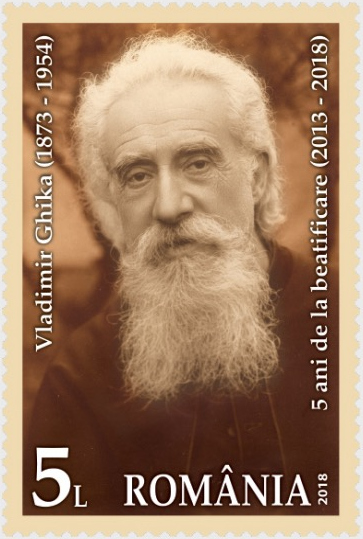
Vladimir Ghika (or Ghica) (25 December 1873 – 16 May 1954) was a Romanian diplomat and essayist who, after his conversion from Romanian Orthodoxy became a priest of the Catholic Church. He was a member of the princely Ghica family, which ruled Moldavia and Wallachia at various times from the 17th to the 19th century. He died in prison in May 1954 after his arrest by the Communist regime of Romania.
Vladimir Ghika was born on Christmas Day of 1873 in Constantinople (now Istanbul, Turkey). His father was Ioan Grigore Ghica, diplomat, minister plenipotentiary in Turkey; his mother Alexandrina was born Moret de Blaremberg (van Blarembergue) in a Flemish-Russian family; he had four brothers and a sister: Gregory, Alexander, George and Ella (who both died at an early age), and Dimitrie I. Ghika (future ambassador and minister of foreign affairs). He was the grandson of the last Prince sovereign of Moldavia, Prince Gregory V Ghika, who ruled from 1849 to 1856.
He was raised with the Eastern Orthodox faith. In 1878, in order to give a good education to the children, the family moved to Toulouse in France. There, they frequented the Protestant community, because the Orthodox church was not represented in the area. Ghika received his Degree in Law in 1895, after which he attended the Paris Faculty of Political Science. At the same time, he frequented courses of Medicine, Botany, Art, Literature, Philosophy, and History. He returned to Romania due to an attack of angina pectoris and continued his studies in Romania.
Ghika was an alumnus of the College of St. Thomas, the future Pontifical University of St. Thomas Aquinas Angelicum, in Rome. In 1898, he enrolled in the Faculty of Philosophy and Theology. At the Angelicum, Ghika completed a licentiate in Philosophy and a Doctorate in Theology in 1905. Soon after, he converted to the Catholic faith in 1902.
Ghika wanted to become a priest or monk, but Pius X advised him to give up the idea, at least for a while, and to dedicate himself to secular apostolate instead. He became one of the pioneers of the lay apostolate.
After returning to Romania, he dedicated himself to works of charity and opened the first free clinic in Bucharest called Mariae Bethlehem. He also set the foundation for a great hospital and sanatorium named after Vincent de Paul, founded the first free hospital in Romania and the first ambulance, thereby becoming founder of the first Catholic charity work in Romania. He was dedicated to patient care while participating in health services in the Balkan War in 1913, without the fear of cholera in Zimnicea.
During World War I, he was also in charge of diplomatic missions among the victims of the Avezzano earthquake who were suffering from tuberculosis in the Hospice of Rome.
On 7 October 1923, Ghika was ordained a priest in Paris by Cardinal Dubois, Archbishop of the city. He served as a priest in France until 1939. Shortly after Ghika was ordained, the Holy See authorized him to celebrate the Byzantine Rite. Prince Ghika thereby became the first bi-ritual Romanian priest.
Hub AI
Vladimir Ghika AI simulator
(@Vladimir Ghika_simulator)
Vladimir Ghika
Vladimir Ghika (or Ghica) (25 December 1873 – 16 May 1954) was a Romanian diplomat and essayist who, after his conversion from Romanian Orthodoxy became a priest of the Catholic Church. He was a member of the princely Ghica family, which ruled Moldavia and Wallachia at various times from the 17th to the 19th century. He died in prison in May 1954 after his arrest by the Communist regime of Romania.
Vladimir Ghika was born on Christmas Day of 1873 in Constantinople (now Istanbul, Turkey). His father was Ioan Grigore Ghica, diplomat, minister plenipotentiary in Turkey; his mother Alexandrina was born Moret de Blaremberg (van Blarembergue) in a Flemish-Russian family; he had four brothers and a sister: Gregory, Alexander, George and Ella (who both died at an early age), and Dimitrie I. Ghika (future ambassador and minister of foreign affairs). He was the grandson of the last Prince sovereign of Moldavia, Prince Gregory V Ghika, who ruled from 1849 to 1856.
He was raised with the Eastern Orthodox faith. In 1878, in order to give a good education to the children, the family moved to Toulouse in France. There, they frequented the Protestant community, because the Orthodox church was not represented in the area. Ghika received his Degree in Law in 1895, after which he attended the Paris Faculty of Political Science. At the same time, he frequented courses of Medicine, Botany, Art, Literature, Philosophy, and History. He returned to Romania due to an attack of angina pectoris and continued his studies in Romania.
Ghika was an alumnus of the College of St. Thomas, the future Pontifical University of St. Thomas Aquinas Angelicum, in Rome. In 1898, he enrolled in the Faculty of Philosophy and Theology. At the Angelicum, Ghika completed a licentiate in Philosophy and a Doctorate in Theology in 1905. Soon after, he converted to the Catholic faith in 1902.
Ghika wanted to become a priest or monk, but Pius X advised him to give up the idea, at least for a while, and to dedicate himself to secular apostolate instead. He became one of the pioneers of the lay apostolate.
After returning to Romania, he dedicated himself to works of charity and opened the first free clinic in Bucharest called Mariae Bethlehem. He also set the foundation for a great hospital and sanatorium named after Vincent de Paul, founded the first free hospital in Romania and the first ambulance, thereby becoming founder of the first Catholic charity work in Romania. He was dedicated to patient care while participating in health services in the Balkan War in 1913, without the fear of cholera in Zimnicea.
During World War I, he was also in charge of diplomatic missions among the victims of the Avezzano earthquake who were suffering from tuberculosis in the Hospice of Rome.
On 7 October 1923, Ghika was ordained a priest in Paris by Cardinal Dubois, Archbishop of the city. He served as a priest in France until 1939. Shortly after Ghika was ordained, the Holy See authorized him to celebrate the Byzantine Rite. Prince Ghika thereby became the first bi-ritual Romanian priest.
Recent media