


Community hub
Recent from talks
Contribute something
Nothing was collected or created yet.
WAFF Championship
View on Wikipedia
| Organiser(s) | WAFF |
|---|---|
| Founded | 2000 |
| Region | West Asia |
| Teams | 12 (2026) |
| Current champions |  Bahrain (1st title) Bahrain (1st title) |
| Most championships |  Iran (4 titles) Iran (4 titles) |
| Website | the-waff.com |
 2026 WAFF Championship 2026 WAFF Championship | |

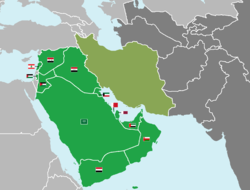
The West Asian Football Federation Championship (Arabic: بطولة اتحاد غرب آسيا لكرة القدم), or simply WAFF Championship, is an international association football competition contested by the senior men's national teams of the members of the West Asian Football Federation (WAFF), the governing body of football in West Asia. The championship has been held nine times since the first edition in 2000.[1]
The defending champions are Bahrain, having defeated hosts Iraq in the 2019 final. The most successful team is Iran, with four titles; however, they do not compete in the competition anymore as they are no longer members of the WAFF.
History
[edit]The inaugural WAFF Championship was held in 2000 in Jordan, with Iran winning the first edition.[2] It was hosted in memory of Hussein of Jordan, who had died a year prior.[3] The Al Hussein Cup, assigned to the winner of each tournament, was designed and manufactured in Italy in 2000, and is made of silver and copper.[2]
Results
[edit]| Edition | Year | Hosts | Champions | Score | Runners-up | Third place | Score | Fourth place | No. of Teams |
|---|---|---|---|---|---|---|---|---|---|
| 1 | 2000 |  Jordan Jordan
|
Iran |
1–0 |  Syria |
 Iraq |
4–1 | Jordan |
8 |
| 2 | 2002 | Syria
|
Iraq |
3–2 (a.e.t.) | Jordan |
Iran |
2–2 (a.e.t.) (4–2 pen.) |
Syria |
6 |
| 3 | 2004 | Iran
|
Iran |
4–1 | Syria |
Jordan |
3–1 |  Iraq |
6 |
| 4 | 2007 | Jordan
|
Iran |
2–1 | Iraq |
Jordan and Syria[note 1]
|
6 | ||
| 5 | 2008 | Iran
|
Iran |
2–1 | Jordan |
 Qatar and Syria[note 1] Qatar and Syria[note 1]
|
6 | ||
| 6 | 2010 | Jordan
|
 Kuwait |
2–1 | Iran |
 Iraq and Iraq and  Yemen[note 1] Yemen[note 1]
|
9 | ||
| 7 | 2012 | Kuwait
|
Syria |
1–0 | Iraq |
 Oman |
1–0 | Bahrain |
11 |
| 8 | 2013 | Qatar
|
Qatar |
2–0 | Jordan |
Bahrain |
0–0 (a.e.t.) (3–2 pen.) |
Kuwait |
9 |
| 9 | 2019 | Iraq
|
Bahrain |
1–0 | Iraq |
[note 2] | 9 | ||
| 10 | 2026 | Kuwait
|
12 | ||||||
- a.e.t.: after extra time
- pen.: after penalty shoot-out
- TBD: to be determined
- Notes
Teams reaching the top four
[edit]| Team | Titles | Runners-up | Third place1 | Fourth place | Total |
|---|---|---|---|---|---|
| Iran
|
4 (2000, 2004*, 2007, 2008*) | 1 (2010) | 1 (2002) | 6 | |
| Iraq
|
1 (2002) | 3 (2007, 2012, 2019*) | 2 (2000, 20102) | 1 (2004) | 7 |
 Syria Syria
|
1 (2012) | 2 (2000, 2004) | 2 (20072, 20082) | 1 (2002*) | 6 |
| Bahrain
|
1 (2019) | 1 (2013) | 1 (2012) | 3 | |
| Qatar
|
1 (2013*) | 1 (20082) | 2 | ||
| Kuwait
|
1 (2010) | 1 (2013) | 2 | ||
| Jordan
|
3 (2002, 2008, 2013) | 2 (2004, 20072*) | 1 (2000*) | 6 | |
| Yemen
|
1 (20102) | 1 | |||
| Oman
|
1 (2012) | 1 |
- * = hosts
- 1 = includes semi-finals in case there was no third-place match
- 2 = semi-final
Records and statistics
[edit]Top goalscorers by tournament
[edit]| Year | Player(s) | Goals |
|---|---|---|
| 2000 | Razzaq Farhan
|
4 |
| 2002 | Alireza Nikbakht
|
2 |
| Razzaq Farhan
| ||
| Muayad Salim
| ||
| Anas Sari
| ||
| 2004 | Ali Daei
|
5 |
| 2007 | Mehdi Rajabzadeh
|
2 |
| Salih Sadir
| ||
| 2008 | Kianoush Rahmati
|
3 |
| 2010 | Ali Al-Nono
|
4 |
| 2012 | Qasim Said
|
4 |
| Ahmad Al Douni
| ||
| 2013 | Boualem Khoukhi
|
6 |
| 2019 | Hussein Ali
|
3 |
See also
[edit]References
[edit]- ^ "West Asian Championship". RSSSF. Archived from the original on 1 October 2007. Retrieved 4 December 2020.
- ^ a b ""كأس الحسين".. رمزية تاريخية وعودة ميمونة". The WAFF. Archived from the original on 24 September 2022. Retrieved 30 June 2022.
- ^ "اتحاد غرب آسيا يُحدد موعد بطولة الرجال العاشرة". جريدة الغد (in Arabic). 18 March 2020. Archived from the original on 30 June 2022. Retrieved 30 June 2022.
External links
[edit]International association football | |||||||||||||||||||
|---|---|---|---|---|---|---|---|---|---|---|---|---|---|---|---|---|---|---|---|
| World |
|  | |||||||||||||||||
| Africa |
| ||||||||||||||||||
| Asia |
| ||||||||||||||||||
| Europe |
| ||||||||||||||||||
| North, Central America & the Caribbean |
| ||||||||||||||||||
| Oceania |
| ||||||||||||||||||
| South America |
| ||||||||||||||||||
| Intercontinental |
| ||||||||||||||||||
| Non-FIFA |
| ||||||||||||||||||
WAFF Championship
View on GrokipediaOverview
Format and rules
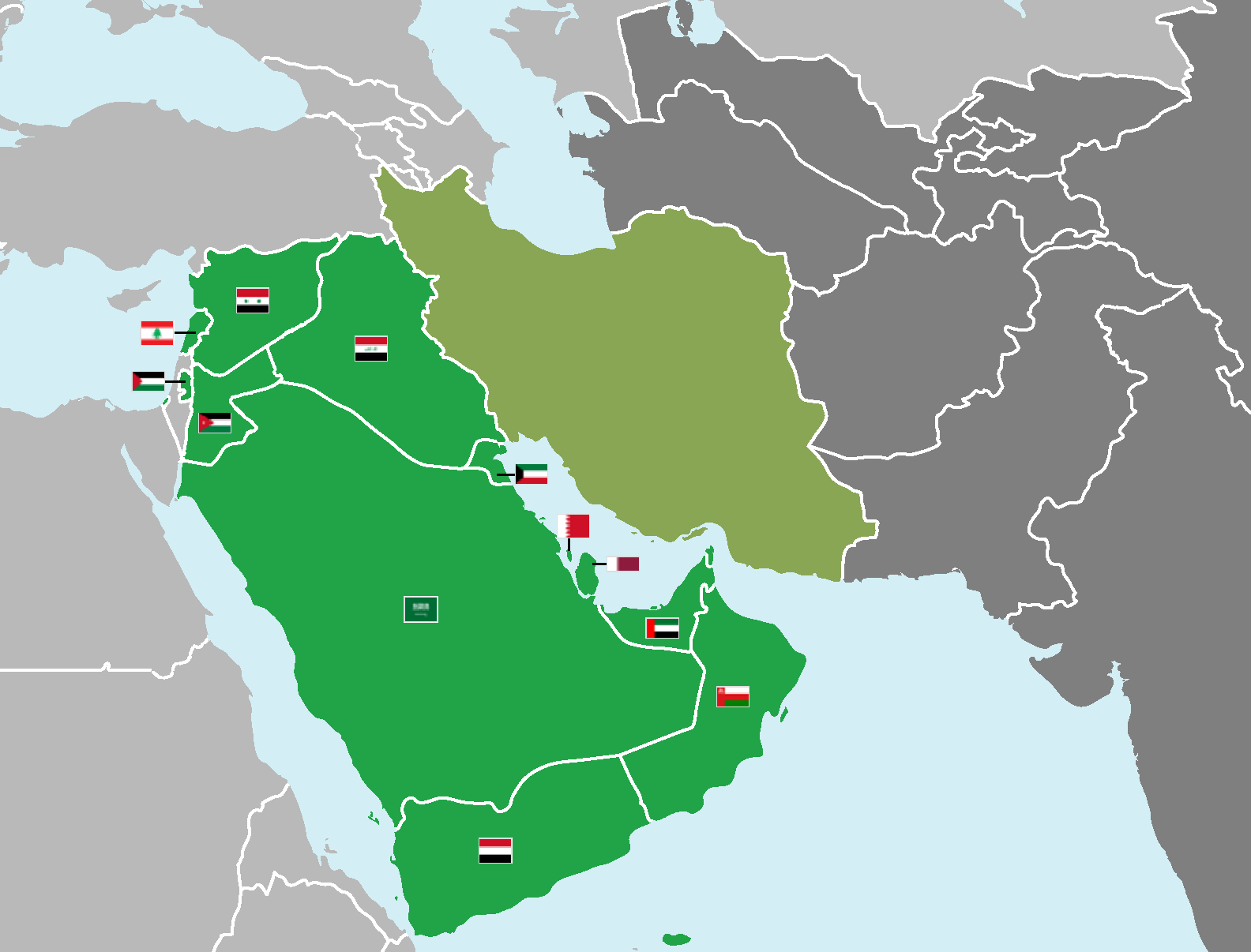
The WAFF Championship is open to the senior men's national teams of West Asian Football Federation (WAFF) member associations, including Bahrain, Iraq, Jordan, Kuwait, Lebanon, Oman, Palestine, Qatar, Saudi Arabia, Syria, the United Arab Emirates, and Yemen.[4] Eligibility requires players to hold the nationality of the participating country in accordance with FIFA regulations, with each team registering up to 23 players and 10 officials for the final squad.[5] The tournament typically features 6 to 10 teams divided into two groups, often of 3 to 5 teams each, depending on the number of participants. Teams play a single round-robin format within their groups, with the winner of each group advancing directly to the final; most editions do not include semifinals or a third-place match.[6][5] This structure results in 15 to 20 matches per edition, varying by participation size—for example, with 9 teams split into groups of 5 and 4, there are 16 group-stage matches plus the final.[5] All matches consist of two 45-minute halves totaling 90 minutes, following standard FIFA Laws of the Game. In the final, if scores are level after 90 minutes, two 15-minute periods of extra time are played, followed by a penalty shootout if necessary.[5] The event is held irregularly, often biennially but with gaps due to regional events or scheduling, and hosted by a single WAFF member nation, with all fixtures centralized in one or more venues within the host country to facilitate logistics.[6][7] Early editions from 2000 to 2004 utilized group stages followed by knockout matches to determine the champion, with variations such as semifinals in 2000. Starting with the 2007 tournament, the format evolved to the current model of two groups followed by a single knockout final, allowing for expanded participation while maintaining a concise schedule.[8]Participating nations
The West Asian Football Federation (WAFF) comprises 12 full member nations, all recognized by the Asian Football Confederation (AFC): Bahrain, Iraq, Jordan, Kuwait, Lebanon, Oman, Palestine, Qatar, Saudi Arabia, Syria, United Arab Emirates, and Yemen. These members represent the core of West Asian football governance, focusing on nations geographically situated in the western region of Asia. Iran, a founding member, ceased participation in WAFF tournaments after the 2012 edition and withdrew its membership in 2014 following its affiliation with the Central Asian Football Association (CAFA), redirecting its regional commitments eastward.[9] As of 2025, participation has varied across the nine editions held through 2019, with no further tournaments since then and the next scheduled for 2026 in Kuwait; member nations form the primary pool of competitors. Iraq and Jordan have appeared in all nine tournaments, while Syria and Palestine have featured in eight each.[1] Debut appearances include Bahrain and Lebanon in 2000 (though some sources vary), Yemen in 2004, Oman and Kuwait in 2007, and UAE, Qatar, and Saudi Arabia in 2008 or later. The tournament's format typically accommodates 6 to 10 teams per edition, drawn exclusively from WAFF membership to maintain regional focus, though numbers can fluctuate based on host capacity and scheduling.[10] Guest teams from outside WAFF, such as non-West Asian AFC members or others, have been included on rare occasions to enhance competitiveness, exemplified by Kyrgyzstan and Kazakhstan in the 2000 edition. Such invitations remain exceptional, prioritizing full members to preserve the event's West Asian identity. Exclusions from participation often stem from political sensitivities inherent to the region; for instance, Israeli teams have never been involved due to longstanding geopolitical tensions and boycotts by Arab and Muslim-majority member nations.[11] Additionally, scheduling overlaps with broader AFC commitments, such as Asian Cup qualifiers, can limit involvement for some nations. The post-2014 regional realignment, which saw Central Asian countries like Uzbekistan and Turkmenistan focus on CAFA, further solidified WAFF's emphasis on West Asian representation, excluding those territories from future editions.| Nation | Total Appearances (out of 9 editions) | Debut Year |
|---|---|---|
| Iraq | 9 | 2000 |
| Jordan | 9 | 2000 |
| Syria | 8 | 2000 |
| Palestine | 8 | 2000 |
| Lebanon | 7 | 2000 |
| Bahrain | 6 | 2002 |
| Iran | 7 | 2000 |
| Kuwait | 6 | 2007 |
| Oman | 4 | 2007 |
| Yemen | 4 | 2004 |
| Qatar | 5 | 2008 |
| Saudi Arabia | 4 | 2012 |
| UAE | 3 | 2012 |
History
Establishment and early editions (2002–2008)
The West Asian Football Federation (WAFF) was founded in 2000 to foster the development of football across West Asian nations, with the WAFF Championship serving as its premier senior men's international tournament.[12] Although an inaugural edition occurred in 2000 in Jordan—won by Iran over Syria—the tournament's early years from 2002 onward solidified its role in regional competition, often scheduled between AFC Asian Cup cycles to provide additional match practice for member associations.[8] The championship aimed to enhance football standards in the region, drawing participation primarily from core members like Iran, Iraq, Jordan, Syria, Lebanon, and Palestine, while navigating logistical and geopolitical hurdles that occasionally impacted scheduling and attendance.[1] The 2002 edition, hosted by Syria in Damascus from September 25 to October 6, featured six teams in a group stage format with two groups of three teams each, followed by semifinals and a final.[13] Iraq emerged as champions after defeating Jordan 3–2 in extra time in the final; Iran finished third after winning the third-place match on penalties against Syria.[13] Key highlights included Iraq's resilient performance amid international sanctions, with standout contributions from players like Younis Mahmoud, underscoring the tournament's potential to unite regional rivals despite external pressures.[13] In 2004, Iran hosted the third edition from June 7 to 18 in Tehran, adopting a group stage format with two pools of three teams each, followed by a final between the group winners.[1] Iran claimed their second title with a dominant 4–1 victory over Syria in the final, while Jordan secured third place by beating Iraq 3–1. The tournament highlighted Iran's home advantage and offensive prowess, led by goals from forwards like Javad Nekounam, and saw consistent participation from the six entrants: Iran, Syria, Jordan, Iraq, Palestine, and Lebanon. No edition was held in 2005 or 2006, partly due to scheduling conflicts with AFC qualifiers and regional instability.[8] The fourth edition returned in 2007, hosted by Jordan in Amman from July 10 to 21, retaining the two-group structure leading to a final.[1] Iran defended their dominance, edging Iraq 2–1 in the final thanks to late goals from Mehrdad Minavand and Hossein Kaebi, with Syria taking third on goal difference over Jordan.[14] This installment drew attention for its competitive balance, as Iraq's strong semifinal run reflected post-invasion rebuilding efforts in their football program.[14] The 2008 edition, the fifth overall and hosted again by Iran in Tehran from July 30 to August 7, continued the group-final format but with adjusted participants, including Oman and Qatar replacing Iraq and Lebanon.[15] Iran secured a third consecutive title with a 2–1 win over Jordan in the final, courtesy of strikes from Mohammad Nosrati and Andranik Teymourian.[16] Syria finished third, defeating Qatar 1–0, in a tournament that emphasized Iran's regional supremacy while introducing slight expansions in team selection to broaden engagement.[16] Early editions like these faced challenges such as modest attendance—often under 10,000 per match—and occasional withdrawals due to political tensions, including border conflicts affecting travel for teams like Palestine.[8]Later editions and developments (2010–present)
The 2010 edition of the WAFF Championship was hosted by Jordan in Amman, marking the sixth tournament overall. Kuwait claimed their sole title with a 2–1 victory over Iran in the final at King Abdullah II Stadium, securing the win through goals from Yousef Al-Sulaiman and Jaffar Al-Enazi after Iran's Mehdi Seyed Salehi had equalized.[1][17] This edition featured nine teams, including Bahrain, Oman, Syria, Iraq, Yemen, and Palestine, and highlighted Kuwait's emergence as a regional contender despite Iran's historical dominance.[8] In 2012, the tournament shifted to Kuwait as host, with the seventh edition drawing 11 participating nations. Syria captured their second title with a 1–0 win against Iraq in the final at Kazma Sports Club Stadium, thanks to a 74th-minute goal by defender Ahmad Al-Salih.[1][18] The event underscored Syria's resilience amid domestic challenges, while Iraq's runner-up finish reflected their consistent competitiveness in the competition.[8] The 2014 edition, officially the eighth but held from December 2013 to January 2014, took place in Doha, Qatar. The hosts lifted their first WAFF Championship trophy after defeating Jordan 2–0 in the final at Jassim Bin Hamad Stadium, with both goals scored by Boualem Khoukhi in the second half.[19][1] Nine teams competed, including Palestine, Saudi Arabia, Bahrain, Oman, Iraq, Kuwait, and Lebanon, but notably absent was Iran, whose last participation had been in 2010.[8] A four-year gap followed before the ninth edition in 2019, hosted by Iraq across Karbala and Erbil. Bahrain secured their maiden title with a 1–0 victory over the hosts in the final at Karbala International Stadium, thanks to Mohamed Marhoon's goal.[20][1] The delay stemmed from logistical and scheduling issues, including initial plans for Jordan in 2017 that were postponed. Following 2019, no further editions occurred through 2025, primarily due to disruptions from the COVID-19 pandemic, which halted numerous international football events, and ongoing conflicts with the AFC's congested calendar of qualifiers and continental tournaments. Iran's permanent shift to the newly formed Central Asian Football Association (CAFA) in 2015 further diminished the tournament's competitive depth, as the four-time champions ceased participation, leaving a field dominated by Arab nations.[9] Looking ahead, the tenth edition is scheduled for March 2026 in Kuwait, aiming to revive the competition with potential format adjustments to include guest teams from outside the region for broader appeal. Recent developments have seen increased television coverage through regional broadcasters, enhancing visibility, while proposals to integrate WAFF results more closely with AFC rankings—such as awarding direct qualification spots in the AFC Asian Cup to winners—seek to elevate the tournament's stakes.[6][21] Political dynamics, including Saudi Arabia's growing influence in regional football governance, have also shaped hosting bids and participation, fostering greater investment in West Asian events.[22]Results
Finals and winners
The WAFF Championship finals have featured intense competition among West Asian nations, with matches often decided by narrow margins and occasional extra time or penalties. Since its inception in 2000, the tournament has crowned nine champions, showcasing the region's football prowess through knockout formats that culminate in single-match deciders.[1]| Year | Host | Winner | Score | Runner-up | Attendance |
|---|---|---|---|---|---|
| 2000 | Jordan | Iran | 1–0 | Syria | - |
| 2002 | Syria | Iraq | 3–2 (a.e.t.) | Jordan | - |
| 2004 | Iran | Iran | 4–1 | Syria | - |
| 2007 | Jordan | Iran | 2–1 (a.e.t.) | Iraq | - |
| 2008 | Iran | Iran | 2–1 | Jordan | - |
| 2010 | Jordan | Kuwait | 2–1 | Iran | - |
| 2012 | Kuwait | Syria | 1–0 | Iraq | - |
| 2014 | Qatar | Qatar | 2–0 | Jordan | - |
| 2019 | Iraq | Bahrain | 1–0 | Iraq | 34,500[23] |
Performance by team
Iran holds the record for the most titles in the WAFF Championship with four victories, achieved between 2000 and 2008, establishing early dominance in the tournament.[8] Iraq follows with one title but has reached the final on four occasions, demonstrating consistent contention for the championship.[8] Other nations like Syria, Kuwait, Qatar, and Bahrain have each secured one title, contributing to a diverse set of winners across the nine editions held to date.[8] The following medal table summarizes teams' achievements, where gold represents tournament wins, silver denotes runners-up finishes, and bronze indicates third-place results from editions that awarded them. Notable best performances include Iran's unbeaten run through the 2004 edition as hosts, where they conceded only two goals en route to the title.[8] Qatar achieved a perfect record in the 2014 tournament, winning all matches including the final against Jordan while hosting the event.[8] Bahrain's 2019 victory as underdogs highlighted their defensive solidity, securing a 1–0 win in the final against host Iraq.[8] Iraq stands out as a consistent performer with appearances in all nine editions and an undefeated record in finals they hosted, reaching the championship match four times.[1] Syria has also shown reliability, claiming two finals appearances in the early years and a title in 2012 after eight participations.[8] Jordan's three runner-up finishes underscore their perennial competitiveness despite lacking a title.[8] Teams like Yemen and Palestine represent underperformers, with Yemen making five appearances without advancing to the semifinals and Palestine participating in seven editions but failing to secure any medals.[1] Oman's single bronze in 2012 marks their most notable achievement amid limited overall success across five outings.[8] Tournament trends reveal a shift following Iran's withdrawal from WAFF in 2011 to join the Central Asian Football Association, leading to a decline in overall competitiveness as Gulf states like Qatar and Bahrain rose to prominence with hosting successes and titles.[1] This period saw increased participation from nations such as Saudi Arabia and UAE, broadening the field but diluting the early dominance of Levantine and Mesopotamian teams.[1]Records and statistics
Tournament records
The WAFF Championship has seen goals scored across its nine editions up to 2019, with an average of approximately 2.5 goals per match based on available data. As of 2025, no further editions have been held. The highest-scoring edition was in 2004, with 37 goals recorded in 10 matches, reflecting a more open style of play during that tournament. In contrast, the 2002 edition had relatively fewer goals, with 22 tallied in 10 matches. The largest verified victory in the tournament's history remains unconfirmed in available records, though disparities in team strengths have led to notable margins. The highest recorded attendance occurred during the 2019 final in Iraq, drawing 65,000 spectators to witness Bahrain's 1–0 victory over the hosts. Discipline issues have occasionally marked matches, with the 2012 final between Iraq and Syria seeing notable intensity. Three teams have completed the tournament undefeated: Iran in 2002 and 2004, and Syria in 2012, demonstrating exceptional consistency in their campaigns. Hosts have won three out of the nine editions, with Iran unbeaten in their two hosted tournaments of 2004 and 2008. Overall trends show varying goal averages across editions, with early tournaments often exceeding 3.0 goals per match and later ones around 2.0, partly due to format changes such as expanded group stages and increased participation that encouraged cautious play.Individual records
The individual records in the WAFF Championship highlight notable player performances, particularly in goalscoring, though comprehensive statistics are limited due to the tournament's regional scope and irregular editions. Iranian players have been prominent in early tournaments, with Ali Daei scoring 5 goals to lead the 2004 edition.[26] Razzaq Farhan of Iraq stands out as an early standout, topping the scorers in both the 2000 and 2002 tournaments with 5 and 2 goals respectively, for a combined total of 7.[27][28] Top scorers by edition reflect the tournament's competitive balance, with goals typically ranging from 2 to 6 per leader. The following table summarizes verified top scorers from select editions:| Year | Top Scorer(s) | Team | Goals |
|---|---|---|---|
| 2000 | Razzaq Farhan | Iraq | 5 |
| 2002 | Alireza Vahedi Nikbakht Razzaq Farhan | Iran Iraq | 2 2 |
| 2004 | Ali Daei | Iran | 5 |
| 2007 | Mehrdad Minavand | Iran | 3 |
| 2008 | Reza Enayati | Iran | 4 |
| 2010 | Ali Al-Nono | Yemen | 4 |
| 2011 | Ahmad Al Saleh | Syria | 3 |
| 2012 | Abdelkarim Al-Doni | Syria | 4 |
| 2014 | Boualem Khoukhi | Qatar | 6 |
| 2019 | Hussein Ali | Iraq | 3 |