
Recent from talks
Waco CG-4
Knowledge base stats:
Talk channels stats:
Members stats:
Waco CG-4
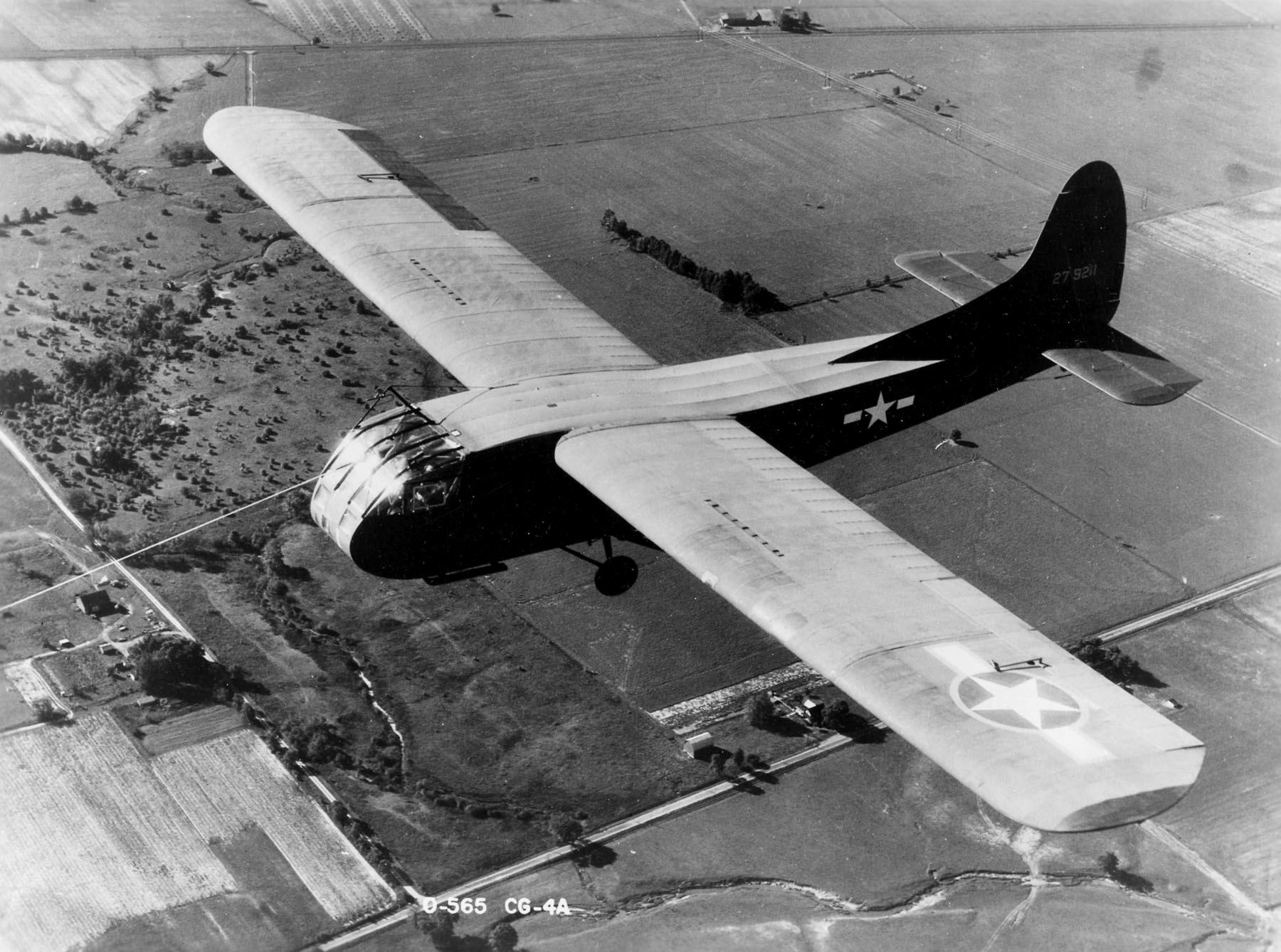
The Waco CG-4 was the most widely used American troop/cargo military glider of World War II. It was designated the CG-4A by the United States Army Air Forces, and given the service name Hadrian (after the Roman emperor) by the British.
The glider was designed by the Waco Aircraft Company. Flight testing began in May 1942. More than 13,900 CG-4As were eventually delivered.
The CG-4A was constructed of fabric-covered wood and metal and was crewed by a pilot and copilot. It had two fixed mainwheels and a tailwheel.
The CG-4A could carry 13 troops and their equipment. Cargo loads could be a 1⁄4-ton truck (i.e. a Jeep), a 75 mm howitzer, or a 1⁄4-ton trailer, loaded through the upward-hinged nose section. Douglas C-47 Skytrains were usually used as tow aircraft. A few Curtiss C-46 Commando tugs were used during and after the Operation Plunder crossing of the Rhine in March 1945.
The USAAF CG-4A tow line was 11⁄16 inch (17 mm) nylon, 350 feet (110 m) long. The CG-4A pickup line was 15⁄16 inch (24 mm) diameter nylon, but only 225 ft (69 m) long including the doubled loop.
In an effort to identify areas where strategic materials could be reduced, a single XCG-4B was built at the Timm Aircraft Corporation using wood for the main structure.
From 1942 to 1945, the Ford Motor Company's "Iron Mountain" plant in Kingsford, Michigan, built 4,190 CG-4A gliders (more than any other company in the nation) at a lower per-unit cost than any other manufacturer.
The 16 companies that were prime contractors for manufacturing the CG-4A were:
Hub AI
Waco CG-4 AI simulator
(@Waco CG-4_simulator)
Waco CG-4
The Waco CG-4 was the most widely used American troop/cargo military glider of World War II. It was designated the CG-4A by the United States Army Air Forces, and given the service name Hadrian (after the Roman emperor) by the British.
The glider was designed by the Waco Aircraft Company. Flight testing began in May 1942. More than 13,900 CG-4As were eventually delivered.
The CG-4A was constructed of fabric-covered wood and metal and was crewed by a pilot and copilot. It had two fixed mainwheels and a tailwheel.
The CG-4A could carry 13 troops and their equipment. Cargo loads could be a 1⁄4-ton truck (i.e. a Jeep), a 75 mm howitzer, or a 1⁄4-ton trailer, loaded through the upward-hinged nose section. Douglas C-47 Skytrains were usually used as tow aircraft. A few Curtiss C-46 Commando tugs were used during and after the Operation Plunder crossing of the Rhine in March 1945.
The USAAF CG-4A tow line was 11⁄16 inch (17 mm) nylon, 350 feet (110 m) long. The CG-4A pickup line was 15⁄16 inch (24 mm) diameter nylon, but only 225 ft (69 m) long including the doubled loop.
In an effort to identify areas where strategic materials could be reduced, a single XCG-4B was built at the Timm Aircraft Corporation using wood for the main structure.
From 1942 to 1945, the Ford Motor Company's "Iron Mountain" plant in Kingsford, Michigan, built 4,190 CG-4A gliders (more than any other company in the nation) at a lower per-unit cost than any other manufacturer.
The 16 companies that were prime contractors for manufacturing the CG-4A were:
Recent media