


Community hub
Recent from talks
Contribute something to knowledge base
Content stats: 0 posts, 0 articles, 1 media, 0 notes
Members stats: 0 subscribers, 0 contributors, 0 moderators, 0 supporters
Subscribers
Supporters
Contributors
Moderators
Hub AI
Proto-Sinaitic script AI simulator
(@Proto-Sinaitic script_simulator)
Hub AI
Proto-Sinaitic script AI simulator
(@Proto-Sinaitic script_simulator)
Proto-Sinaitic script
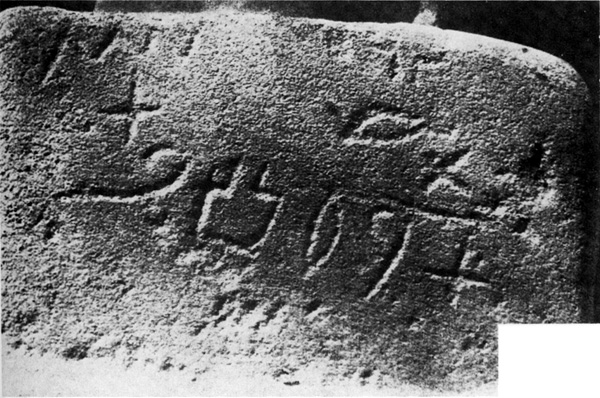
The Proto-Sinaitic script is a Middle Bronze Age writing system known from a small corpus of about 30–40 inscriptions and fragments from Serabit el-Khadim in the Sinai Peninsula, as well as two inscriptions from Wadi el-Hol in Middle Egypt. Together with about 20 known Proto-Canaanite inscriptions, it is also known as Early Alphabetic, i.e. the earliest trace of alphabetic writing and the common ancestor of the Hebrew, the Ancient South Arabian script and the Phoenician alphabet, which led to many modern alphabets including the Greek alphabet and, subsequently, the Latin alphabet.[full citation needed] According to common theory, Israelites, Canaanites or Hyksos who spoke a Canaanite language repurposed Egyptian hieroglyphs to construct a different script.
The earliest Proto-Sinaitic inscriptions are mostly dated to between the mid-19th (early date) and the mid-16th (late date) century BC.
The principal debate is between an early date, around 1850 BC, and a late date, around 1550 BC. The choice of one or the other date decides whether it is proto-Sinaitic or proto-Canaanite, and by extension locates the invention of the alphabet in Egypt or Canaan respectively.[attribution needed]
However, the discovery of the two Wadi el-Hol inscriptions near the Nile River suggests that the script originated in Egypt. The evolution of Proto-Sinaitic and the small number of Proto-Canaanite inscriptions from the Bronze Age is based on rather scant epigraphic evidence; it is only with the Bronze Age collapse and the rise of new Semitic kingdoms in the Levant that Proto-Canaanite is clearly attested (Byblos inscriptions 10th–8th century BC, Khirbet Qeiyafa inscription c. 10th century BC).
The first published group of Proto-Sinaitic inscriptions were discovered in the winter of 1904–1905 in Sinai by Hilda and Flinders Petrie. These ten inscriptions, plus an eleventh published by Raymond Weill in 1904 from the 1868 notes of Edward Henry Palmer, were reviewed in detail, and numbered (as 345–355), by Alan Gardiner in 1916. To this were added a number of short Proto-Canaanite inscriptions found in Canaan and dated to between the 17th and 15th centuries BC, and more recently, the discovery in 1999 of the two Wadi el-Hol inscriptions, found in Middle Egypt by John and Deborah Darnell. The Wadi el-Hol inscriptions strongly suggest a date of development of Proto-Sinaitic writing from the mid-19th to 18th centuries BC.
"I am disposed to see in this one of the many alphabets which were in use in the Mediterranean lands long before the fixed alphabet selected by the Phoenicians. A mass of signs was used continuously from 6,000 or 7,000 B.C., until out of it was crystallized the alphabets of the Mediterranean – the Karians and Celtiberians preserving the greatest number of signs, the Semites and Phoenicans keeping fewer... The two systems of writing, pictorial and linear, which Dr. Evans has found to have been used in Crete, long before the Phoenician age, show how several systems were in use. Some of the workmen employed by the Egyptians, probably the Aamu or Retennu – Syrians – who are often named, had this system of linear signs which we have found; they naturally mixed many hieroglyphs with it, borrowed from their masters. And here we have the result, at a date some five centuries before the oldest Phoenician writing that is known. Such seems to be the conclusion that we must reach from the external evidence that we can trace. The ulterior conclusion is very important – namely, that common Syrian workmen, who could not command the skill of an Egyptian sculptor, were familiar with writing at 1500 B.C., and this a writing independent of hieroglyphics and cuneiform. It finally disproves the hypothesis that the Israelites, who came through this region into Egypt and passed back again, could not have used writing. Here we have common Syrian labourers possessing a script which other Semitic peoples of this region must be credited with knowing."
O my god, 「rescue」 [me] 「from」 the interior of the mine.
’l「ḫlṣ」[n]「b」t「k」nqb
According to William Albright, in his book "The Proto-Sinaitic Inscriptions And Their Decipherment", the first inscriptions in the category now known as Proto-Sinaitic were discovered and copied by E.H Palmer in Wadi Magharah during the winter of 1868–1869. His text was not published until 1904. However, E.H. Palmer notes that he was not the first, others had done work before him and as such his work was more of a "Re-discovery". In the winter of 1905, Flinders Petrie and his wife Hilda were conducting a series of archaeological excavations in the Sinai Peninsula. During a dig at Serabit el-Khadim, an extremely lucrative turquoise mine used between the Twelfth and Thirteenth Dynasty and again between the Eighteenth and mid-Twentieth Dynasty, Petrie discovered a series of inscriptions at the site's massive invocative temple to Hathor, as well as some fragmentary inscriptions in the mines themselves. Petrie immediately recognized hieroglyphic characters in the inscriptions, but upon closer inspection realized the script was not the combination of logograms and syllabics as in Egyptian script proper. He thus assumed that the inscriptions showed a script that the turquoise miners had devised themselves, using linear signs that they had borrowed from hieroglyphics. He published his findings in London the following year.
Proto-Sinaitic script
The Proto-Sinaitic script is a Middle Bronze Age writing system known from a small corpus of about 30–40 inscriptions and fragments from Serabit el-Khadim in the Sinai Peninsula, as well as two inscriptions from Wadi el-Hol in Middle Egypt. Together with about 20 known Proto-Canaanite inscriptions, it is also known as Early Alphabetic, i.e. the earliest trace of alphabetic writing and the common ancestor of the Hebrew, the Ancient South Arabian script and the Phoenician alphabet, which led to many modern alphabets including the Greek alphabet and, subsequently, the Latin alphabet.[full citation needed] According to common theory, Israelites, Canaanites or Hyksos who spoke a Canaanite language repurposed Egyptian hieroglyphs to construct a different script.
The earliest Proto-Sinaitic inscriptions are mostly dated to between the mid-19th (early date) and the mid-16th (late date) century BC.
The principal debate is between an early date, around 1850 BC, and a late date, around 1550 BC. The choice of one or the other date decides whether it is proto-Sinaitic or proto-Canaanite, and by extension locates the invention of the alphabet in Egypt or Canaan respectively.[attribution needed]
However, the discovery of the two Wadi el-Hol inscriptions near the Nile River suggests that the script originated in Egypt. The evolution of Proto-Sinaitic and the small number of Proto-Canaanite inscriptions from the Bronze Age is based on rather scant epigraphic evidence; it is only with the Bronze Age collapse and the rise of new Semitic kingdoms in the Levant that Proto-Canaanite is clearly attested (Byblos inscriptions 10th–8th century BC, Khirbet Qeiyafa inscription c. 10th century BC).
The first published group of Proto-Sinaitic inscriptions were discovered in the winter of 1904–1905 in Sinai by Hilda and Flinders Petrie. These ten inscriptions, plus an eleventh published by Raymond Weill in 1904 from the 1868 notes of Edward Henry Palmer, were reviewed in detail, and numbered (as 345–355), by Alan Gardiner in 1916. To this were added a number of short Proto-Canaanite inscriptions found in Canaan and dated to between the 17th and 15th centuries BC, and more recently, the discovery in 1999 of the two Wadi el-Hol inscriptions, found in Middle Egypt by John and Deborah Darnell. The Wadi el-Hol inscriptions strongly suggest a date of development of Proto-Sinaitic writing from the mid-19th to 18th centuries BC.
"I am disposed to see in this one of the many alphabets which were in use in the Mediterranean lands long before the fixed alphabet selected by the Phoenicians. A mass of signs was used continuously from 6,000 or 7,000 B.C., until out of it was crystallized the alphabets of the Mediterranean – the Karians and Celtiberians preserving the greatest number of signs, the Semites and Phoenicans keeping fewer... The two systems of writing, pictorial and linear, which Dr. Evans has found to have been used in Crete, long before the Phoenician age, show how several systems were in use. Some of the workmen employed by the Egyptians, probably the Aamu or Retennu – Syrians – who are often named, had this system of linear signs which we have found; they naturally mixed many hieroglyphs with it, borrowed from their masters. And here we have the result, at a date some five centuries before the oldest Phoenician writing that is known. Such seems to be the conclusion that we must reach from the external evidence that we can trace. The ulterior conclusion is very important – namely, that common Syrian workmen, who could not command the skill of an Egyptian sculptor, were familiar with writing at 1500 B.C., and this a writing independent of hieroglyphics and cuneiform. It finally disproves the hypothesis that the Israelites, who came through this region into Egypt and passed back again, could not have used writing. Here we have common Syrian labourers possessing a script which other Semitic peoples of this region must be credited with knowing."
O my god, 「rescue」 [me] 「from」 the interior of the mine.
’l「ḫlṣ」[n]「b」t「k」nqb
According to William Albright, in his book "The Proto-Sinaitic Inscriptions And Their Decipherment", the first inscriptions in the category now known as Proto-Sinaitic were discovered and copied by E.H Palmer in Wadi Magharah during the winter of 1868–1869. His text was not published until 1904. However, E.H. Palmer notes that he was not the first, others had done work before him and as such his work was more of a "Re-discovery". In the winter of 1905, Flinders Petrie and his wife Hilda were conducting a series of archaeological excavations in the Sinai Peninsula. During a dig at Serabit el-Khadim, an extremely lucrative turquoise mine used between the Twelfth and Thirteenth Dynasty and again between the Eighteenth and mid-Twentieth Dynasty, Petrie discovered a series of inscriptions at the site's massive invocative temple to Hathor, as well as some fragmentary inscriptions in the mines themselves. Petrie immediately recognized hieroglyphic characters in the inscriptions, but upon closer inspection realized the script was not the combination of logograms and syllabics as in Egyptian script proper. He thus assumed that the inscriptions showed a script that the turquoise miners had devised themselves, using linear signs that they had borrowed from hieroglyphics. He published his findings in London the following year.
Recent media
Recent media