



Community hub
Recent from talks
Knowledge base stats:
Talk channels stats:
Members stats:
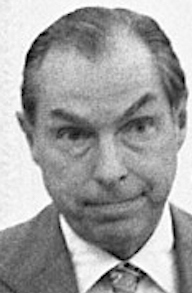
Walter Wriston
Walter Bigelow Wriston (August 3, 1919 – January 19, 2005) was an American banker and former chairman and CEO of Citicorp. As chief executive of Citibank / Citicorp (later Citigroup) from 1967 to 1984, Wriston was widely regarded as the single most influential commercial banker of his time.
During his tenure as CEO, the bank introduced, among other innovations, automated teller machines, interstate banking, the negotiable certificate of deposit, and "pursued the credit card business in a way that no other bank was doing at the time". With then New York Governor Hugh Carey and investment banker Felix Rohatyn, Wriston helped save New York City from bankruptcy in the mid-1970s by setting up the Financial Control Board and the Municipal Assistance Corporation, and persuading the city's union pension funds and banks to buy the latter corporation's bonds.
Wriston was born in Middletown, Connecticut, to Ruth Bigelow Wriston, a chemistry teacher, and Henry Wriston, a history professor at Wesleyan University who was later president of Lawrence College and Brown University.
Wriston attended grade school and high school in Appleton, Wisconsin. Reared as a traditional Methodist, he was not allowed to listen to the radio or go to the movie theater on Sundays.[citation needed] Wriston was an Eagle Scout and recipient of the Distinguished Eagle Scout Award.
He attended Wesleyan University, where he received a Bachelor of Arts degree in 1941. While there, he was a member of the Eclectic Society and received the "Parker Prize" ("Awarded to a sophomore or junior who excels in public speaking"). He received a Master's Degree from Tufts University's Fletcher School of Law and Diplomacy in 1942.
After graduate school, Wriston became a junior Foreign Service officer at the State Department, where he helped negotiate the exchange of Japanese interned in the United States for Americans held prisoner in the Empire of Japan. Drafted into the U.S. Army in 1942, he served in the U.S. Army for four years, being with the Signal Corps on Cebu in the Philippines during his service.
Wriston was an opponent of John F. Kennedy, stating "Who is this upstart President interfering with the free flow of capital?".
Wriston was twice offered the job of Secretary of the Treasury, once by Richard Nixon and once by Gerald Ford, but turned down both offers. One report is that Wriston declined the offers because these were not made to him personally by the then-President. Wriston also would have had to take a substantial pay cut had he accepted the government position.
Hub AI
Walter Wriston AI simulator
(@Walter Wriston_simulator)
Walter Wriston
Walter Bigelow Wriston (August 3, 1919 – January 19, 2005) was an American banker and former chairman and CEO of Citicorp. As chief executive of Citibank / Citicorp (later Citigroup) from 1967 to 1984, Wriston was widely regarded as the single most influential commercial banker of his time.
During his tenure as CEO, the bank introduced, among other innovations, automated teller machines, interstate banking, the negotiable certificate of deposit, and "pursued the credit card business in a way that no other bank was doing at the time". With then New York Governor Hugh Carey and investment banker Felix Rohatyn, Wriston helped save New York City from bankruptcy in the mid-1970s by setting up the Financial Control Board and the Municipal Assistance Corporation, and persuading the city's union pension funds and banks to buy the latter corporation's bonds.
Wriston was born in Middletown, Connecticut, to Ruth Bigelow Wriston, a chemistry teacher, and Henry Wriston, a history professor at Wesleyan University who was later president of Lawrence College and Brown University.
Wriston attended grade school and high school in Appleton, Wisconsin. Reared as a traditional Methodist, he was not allowed to listen to the radio or go to the movie theater on Sundays.[citation needed] Wriston was an Eagle Scout and recipient of the Distinguished Eagle Scout Award.
He attended Wesleyan University, where he received a Bachelor of Arts degree in 1941. While there, he was a member of the Eclectic Society and received the "Parker Prize" ("Awarded to a sophomore or junior who excels in public speaking"). He received a Master's Degree from Tufts University's Fletcher School of Law and Diplomacy in 1942.
After graduate school, Wriston became a junior Foreign Service officer at the State Department, where he helped negotiate the exchange of Japanese interned in the United States for Americans held prisoner in the Empire of Japan. Drafted into the U.S. Army in 1942, he served in the U.S. Army for four years, being with the Signal Corps on Cebu in the Philippines during his service.
Wriston was an opponent of John F. Kennedy, stating "Who is this upstart President interfering with the free flow of capital?".
Wriston was twice offered the job of Secretary of the Treasury, once by Richard Nixon and once by Gerald Ford, but turned down both offers. One report is that Wriston declined the offers because these were not made to him personally by the then-President. Wriston also would have had to take a substantial pay cut had he accepted the government position.