Hubbry Logo
The Andy Warhol MuseumThe Andy Warhol MuseumMain
Open search
The Andy Warhol Museum
Community hub
The Andy Warhol Museum
logo
8 pages, 0 posts
0 subscribers
Be the first to start a discussion here.
The Andy Warhol Museum
from Wikipedia

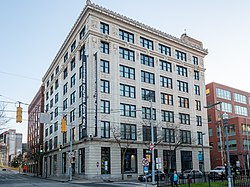
The Andy Warhol Museum is located on the North Shore of Pittsburgh, Pennsylvania, in the United States. It is the largest museum in North America dedicated to a single artist.[3] The museum holds an extensive permanent collection of art and archives from the Pittsburgh-born pop art icon Andy Warhol.

Key Information

The Andy Warhol Museum is one of the four Carnegie Museums of Pittsburgh and is a collaborative project of the Carnegie Institute, the Dia Art Foundation and The Andy Warhol Foundation for the Visual Arts (AWFVA).[4]

Warhol Self Portrait Exhibit in 2010

The museum is located in an 88,000-square-foot (8,200 m2) facility on seven floors. Containing 17 galleries, the museum features 900 paintings, close to 2,000 works on paper, over 1,000 published unique prints, 77 sculptures, 4,000 photographs, and over 4,350 Warhol films and videotaped works. Its most recent operating budget (2010) was $6.1 million. In addition to its Pittsburgh location the museum has sponsored 56 traveling exhibits that have attracted close to nine million visitors in 153 venues worldwide since 1996.[5]

History

[edit]

Plans for the museum were announced in October 1989,[6] about 2½ years after Warhol's death. At the time of the announcement, works worth an estimated $80 million were donated to the newly announced museum by the AWFVA and the Dia Art Foundation.[6] Thomas N. Armstrong III, who had been the director of the Whitney Museum of American Art from 1974 to 1990, was named the museum's first director in 1993.[7] Matt Wrbican joined the staff of the museum before it opened, inventorying Warhol's belongings in New York, and has become the archivist and an expert on Warhol's work.[8]

By 1993, the 88,000-square-foot (8,200 m2) industrial warehouse and its extensive renovations had cost about $12 million, and the AWFVA had donated more than 1,000 of Warhol's works worth over $55 million,[7] a donation that grew to about 3,000 works.[3]

On May 13–14, 1994, the museum attracted about 25,000 visitors to its opening weekend.[3] Armstrong, its founding director, resigned nine months after its opening; at the time of his resignation, the museum had had "tense relations" with the AWFVA and the Carnegie Institute, its financial backer, though The New York Times could find no one involved who would say whether that friction played a role in Armstrong's resignation.[3]

On November 1, 1997, the AWFVA donated all Warhol film and video copyrights to the museum.[9]

In 2013, it was announced that in Manhattan, New York City, in the Essex Crossing development on the Lower East Side, an annex to the main Pittsburgh museum was scheduled to open by 2017.[10][11][12][13] [14] However, the museum announced in March 2015 that it had dropped its plans to open the New York annex.[15]

In October 2019, an audio tape of publicly unknown music by Lou Reed, based on Warhol's 1975 book, “The Philosophy of Andy Warhol: From A to B and Back Again”, was reported to have been discovered in an archive at the museum in Pittsburgh.[16]

In 2022, the museum announced a $60 million expansion deemed The 'Pop District' covering six blocks in Pittsburgh, PA. The expansion looks to build a music venue, a social media studio called Warhol Creative, and expand places for public art exhibits.[17] The proposed site would be around 58,000 square feet (17,500 square meters), including a first-floor concert venue with standing room for up to 1,000 people, a second-floor mezzanine, and an events space that could hold up to 360 people on the fourth floor. The third floor would be used for offices and support spaces.[18] The project is expected to take ten years and is funded primarily through local foundations.[19]

[edit]
Display of Interview magazine covers

See also

[edit]

References

[edit]
[edit]
Revisions and contributorsEdit on WikipediaRead on Wikipedia
from Grokipedia
The Andy Warhol Museum is a in , , dedicated exclusively to the life, work, and legacy of the influential pop artist . Housed in a seven-story renovated industrial building on the city's North Shore, it features 17 galleries spanning Warhol's prolific career, including paintings, sculptures, films, and archival materials. As the largest single-artist in , it serves as a global hub for scholarship, exhibitions, and public engagement with Warhol's exploration of fame, consumerism, and identity. Opened to the public on May 14, 1994, following a 24-hour inaugural celebration, the museum was established through a collaboration announced in 1989 between the Foundation for the Visual Arts, the Dia Art Foundation, and . The institution occupies a former 1911 distribution warehouse, redesigned by architect Richard Gluckman with a modern glass and steel entrance, blending industrial heritage with contemporary design to reflect Warhol's innovative spirit. Over the decades, it has transformed Pittsburgh's North Shore into a vibrant cultural district while hosting rotating exhibitions, film screenings, and educational initiatives that connect Warhol's art to modern society. The museum's permanent collection is the world's most extensive, comprising approximately 900 paintings, 100 sculptures, nearly 2,000 works on paper, more than 1,000 published and unique prints, over 60,000 photographs, more than 4,000 hours of film and video footage, and 610 Time Capsules filled with personal artifacts from Warhol's life. This vast archive, drawn largely from Warhol's estate, enables in-depth explorations of his cultural impact, from iconic series like and to his experimental films and Time Capsules. The Warhol continues to evolve, with ongoing acquisitions and programs that emphasize its role in preserving and interpreting history.

Background and Establishment

Founding and Opening

Plans for The Andy Warhol Museum were announced on October 3, 1989, by the , the Dia Art Foundation, and The Andy Warhol Foundation for the Visual Arts (AWFVA), with the institution set to operate under the Carnegie Museums of Pittsburgh's auspices as the largest museum dedicated to a single artist in . The partners selected an abandoned 88,000-square-foot industrial warehouse on Pittsburgh's North Shore for the site, drawn by the city's role as Warhol's birthplace in 1928 and its post-industrial landscape, which echoed the artist's explorations of , , and . At the time of the announcement, the AWFVA and Dia Art Foundation donated an initial core collection of over 700 artworks—including paintings, prints, drawings, sculptures, films, and videotapes—valued at approximately $80 million, forming the foundation of the museum's holdings. By , this had expanded to around 3,000 works through additional gifts from Warhol's estate, encompassing a broad spectrum of his output from commercial illustrations to multimedia installations. The museum officially opened on May 13-14, 1994, following a $12 million of the historic building, with inaugural events featuring a private reception and dinner for 1,100 guests on Friday evening, followed by a 24-hour celebration on that included tours, performances, and . The opening weekend drew approximately 25,000 visitors, marking a significant launch that highlighted the museum's role in revitalizing Pittsburgh's cultural scene.

Connection to Andy Warhol's Legacy

The sudden death of on February 22, 1987, from complications following gallbladder surgery, prompted the establishment of The Andy Warhol Foundation for the (AWFVA) later that year, as stipulated in his will to manage his estate and promote . This foundation played a pivotal role in facilitating the museum's creation by partnering with the Dia Art Foundation and to cofound the institution in 1989, ensuring a dedicated space for preserving and interpreting Warhol's oeuvre in his birthplace. The museum, which opened in 1994, stands as North America's largest single-artist museum, home to more than 500,000 objects that span his career and underscore his enduring influence. Central to the museum's mission is to engage and inspire visitors through a nuanced exploration of Warhol's life, art, and legacy, particularly by rooting his revolutionary in the industrial grit of , where he was born in 1928. Exhibitions and displays contextualize his iconic works—such as the series—as sharp critiques of consumer culture and , while highlighting his early commercial career and multimedia experiments like , all tied back to his origins that informed his fascination with mass production and celebrity. This approach reveals Warhol not merely as a but as a commentator on American , with serving as a symbolic anchor for understanding the socio-economic forces shaping his aesthetic. The museum integrates extensive archival materials, including 610 Time Capsules—cardboard boxes Warhol filled with everyday ephemera from the 1970s and 1980s, such as receipts, letters, and mementos—to humanize the artist beyond his enigmatic public persona. These artifacts, alongside personal effects like photobooth strips and business records, offer intimate glimpses into his private world, fostering a deeper appreciation of his vulnerabilities and creative processes. For instance, contains items reflecting his daily routines, bridging the gap between the celebrity facade and the reclusive individual. Under its first director, Thomas N. Armstrong III, appointed in 1993, the museum's initial curatorial vision emphasized a chronological and thematic narrative that balanced Warhol's commercial roots with his innovations, setting the stage for ongoing scholarly engagement. Armstrong's leadership focused on creating an immersive environment that demystified Warhol's persona, influencing subsequent reinstallations to prioritize interdisciplinary interpretations of his work. This foundational approach has sustained the museum's role as a vital repository, ensuring Warhol's legacy evolves through rigorous historical and cultural analysis.

Building and Facilities

Architectural Design

The Andy Warhol Museum occupies a historic industrial building on Pittsburgh's North Shore, originally constructed in 1911 as the Frick & Lindsay warehouse to serve as a for goods supplied to local mills and mines. Additions were made to the structure in 1918 and 1922 by architect O. M. Topp, expanding its footprint while maintaining its utilitarian design. In 1994, the building underwent a major renovation led by New York-based architect Richard Gluckman of Gluckman Tang Architects, in collaboration with local firm UDA Architects, transforming the aging warehouse into an 88,000-square-foot, seven-story facility—the largest museum in the United States dedicated to a single artist. This conversion preserved much of the original cream-toned terra-cotta cladding and structural elements, creating a modern exhibition space across approximately 35,000 square feet while honoring the site's industrial heritage. The architectural design emphasizes an industrial aesthetic that resonates with Andy Warhol's own creative environments, particularly his iconic Factory studios in New York. Exposed brick walls, raw steel beams, and expansive windows flood the interiors with natural light, evoking the lofts and warehouses where Warhol produced his groundbreaking Pop Art. These features not only highlight the building's origins but also provide a raw, versatile backdrop for displaying Warhol's diverse oeuvre, from silkscreens to installations, without overwhelming the artworks themselves. The minimalist approach by Gluckman—known for his adaptive reuse projects at institutions like —ensures the architecture serves as a subtle frame, prioritizing open sightlines and flexible gallery configurations. Sustainability considerations were integrated into the 1994 renovation, including energy-efficient climate control systems designed to meet the precise temperature and humidity demands of art preservation. The museum is situated at 117 Sandusky Street, with geographic coordinates 40°26′54″N 80°00′09″W, anchoring it firmly in the revitalized North Shore district along the .

Interior Layout and Visitor Experience

The Andy Warhol Museum occupies a renovated industrial building spanning seven floors, housing 17 galleries that display works across various media including paintings, prints, films, and sculptures. These galleries are organized to provide dedicated spaces for different aspects of Warhol's oeuvre, with the fourth floor featuring a permanent Film and Video Gallery equipped with multiple viewing stations for exploring his extensive cinematic output. Additional facilities include The Warhol theater on the ground level, which hosts daily screenings of Warhol's films and related programs, and The Factory education studio located on an underground level for hands-on learning activities. The museum's interior emphasizes functional navigation, with amenities such as a café and store accessible on the ground floor without admission, while galleries require tickets. A rooftop terrace serves as a venue for special events, offering outdoor space amid the urban North Shore setting. has been integrated since the museum's 1994 opening, including wheelchair ramps at the main entrance, elevators serving all floors, and free wheelchairs available upon reservation. Audio guides evolved from initial dial-in systems to the inclusive Out Loud app in 2016 using beacon technology for location-aware narration; as of 2024, the museum offers a digital guide through the Bloomberg Connects app, featuring multimedia content including descriptive audio and tactile elements to support visitors with visual impairments. Visitor experience typically begins with orientation at the ground-floor entrance, where staff provide maps and guidance before ascending via to the seventh floor to follow a chronological progression downward through Warhol's career, from early commercial illustrations to late experiments. This downward flow allows for a journey, with key works like screenprints and sculptures positioned to highlight thematic evolutions across floors. Interactive elements, such as the Machine on select levels, enable visitors to create their own short films, enhancing engagement with Warhol's experimental spirit.

Collections and Holdings

Scope of the Collection

The Andy Warhol Museum houses the world's largest collection of the artist's works and archival materials, encompassing over 500,000 objects that span his career from the 1940s to 1987. This includes approximately 900 paintings, nearly 2,000 works on paper, more than 1,000 published and unique prints, around 100 sculptures, over 60,000 photographs, and more than 4,000 hours of and video footage. The holdings provide a comprehensive representation of Warhol's evolution, from his early 1950s commercial illustrations and drawings to his later explorations in self-portraiture and experiments. Beyond the art and media, the museum's archives form a significant portion of the collection, including extensive correspondence, business records, and that document Warhol's personal and professional life. A key element is the around 650 Time Capsules—cardboard boxes filled with everyday items, artifacts, and mementos that Warhol began assembling in the 1950s and continued until his death, offering intimate insights into his creative process and cultural milieu. These materials, preserved as part of the estate's transfer to the museum, underscore the institution's role as a complete repository of Warhol's output. The collection has grown through strategic donations and transfers from the Andy Warhol Foundation for the , which co-founded the museum and initially endowed it with the bulk of Warhol's estate. In 1997, the Foundation transferred copyrights to Warhol's and videos to the museum (in partnership with other institutions), enabling expanded preservation, research, and public access to these time-based works. This ongoing support ensures the holdings remain dynamic, with the museum prioritizing comprehensive coverage of Warhol's multifaceted career phases.

Notable Works and Acquisitions

The Andy Warhol Museum houses several of Andy Warhol's most iconic works, exemplifying his exploration of consumer culture, , and through silkscreen printing and repetition. Among these is the series from 1962, consisting of 32 paintings that depict everyday canned soups in a grid format, challenging traditional notions of by elevating commercial imagery. The series, also initiated in 1962 shortly after the actress's death, features her likeness in vibrant, repetitive silkscreens that juxtapose glamour with mortality, including variations like the . Warhol's portraits from 1972 transform the Chinese leader's official image into colorful, commodified pop icons, reflecting his commentary on political amid Nixon's visit to . The cycle, created between 1984 and 1986, reinterprets Leonardo da Vinci's masterpiece through overlaid silkscreens and diamond-dust embellishments, with the museum holding versions like The Pink Last Supper that highlight Warhol's late-career engagement with religious themes. The museum's collection was significantly bolstered by a core donation in 1994 from The Andy Warhol Foundation for the Visual Arts, which provided over 3,900 works, including paintings, prints, and archival materials that formed the institution's foundation. In the 2010s, notable additions included rare early drawings from the 1940s and 1950s, such as expressive ink sketches exploring identity and queerness, acquired to deepen understanding of Warhol's pre-Pop influences. Collaborative pieces from this period, like the 1985–1986 Ten Punching Bags (Last Supper) with Jean-Michel Basquiat, were also integrated, showcasing Warhol's experimental partnerships with younger artists. In January 2024, the museum unveiled more than 60 previously never-displayed works from its archives. Conservation efforts at the museum focus on preserving fragile elements of Warhol's oeuvre, particularly oxidized films and silkscreens prone to chemical degradation. The conservation team employs multi-analytical techniques, such as examining resin binders in silkscreen inks from works like Orange Car Crash (), to mitigate fading and discoloration. For the Oxidation series, created in 1977–1978 using on canvases to produce metallic effects, specialists investigate environmental triggers like humidity fluctuations to ensure long-term stability, contributing to the care of nearly 100 such pieces in collections worldwide. Unique holdings include Warhol's personal camera collection, featuring Polaroid Big Shot models from the 1970s that he used for instant portraits, preserved as part of Time Capsule 21 to illustrate his photographic process. The museum also maintains complete archives of Interview magazine, encompassing all 204 issues from 1969 to 1987, which document Warhol's curation of celebrity culture through editorials, interviews, and visual layouts.

Exhibitions and Programs

Permanent Installations

The permanent installations at The Andy Warhol Museum are organized chronologically across five of the building's seven floors, tracing Andy Warhol's artistic evolution from his early years to his later multimedia experiments. This arrangement, established through a major rehang in 2014 to mark the museum's 20th anniversary, begins on the seventh floor with displays of Warhol's childhood and initial commercial illustrations from the and , including rare paintings, photographs, and family artifacts like his childhood scrapbook. The sixth floor shifts to the , featuring immersive recreations of Warhol's multimedia performances, such as the , with projections of films like Velvet Underground and Nico and interactive elements including a 2012 booth where visitors can film and digitally process their own portraits in Warhol's style. Progressing downward, the fifth floor covers the 1970s era with celebrity portraits, studio recreations like "The Office" evoking Warhol's silver-painted workspace, and the iconic Silver Clouds room filled with approximately 25 floating helium-inflated metallic pillows that visitors can interact with, requiring weekly maintenance to replace deflated or damaged elements. The fourth floor highlights late-career works from the 1980s, including the Mao Gallery with oversized screenprints of against matching wallpaper, while the third floor houses the Archives Study Center, showcasing unopened Time Capsules and ongoing conservation work. Dedicated spaces enhance thematic immersion throughout these floors, such as the permanent Film and Video Gallery on the sixth floor, where over 70 of Warhol's films and videos play continuously on large monitors with touch-screen interfaces for visitor navigation. The Silver Clouds installation, originally created in 1966 as Warhol's self-proclaimed "retirement from painting," occupies a dedicated room on , inviting tactile engagement as the reflective pillows drift and reflect gallery light, symbolizing Warhol's interest in ephemeral, consumer-like art objects. Recreated Factory setups on incorporate authentic elements like Warhol's black rotary phone and stuffed dog Cecil, providing a sensory reconstruction of his collaborative studio environment from the and . These fixed displays emphasize Warhol's progression from commercial illustrator to innovator and multimedia pioneer, with representative works like and portraits integrated sparingly to avoid overlap with detailed holdings elsewhere. Post-2010 updates to the permanent displays have incorporated digital access to deepen visitor engagement with the archives, beginning with the 2014 rehang that refreshed the chronological layout and added interactive components like the project. In 2016, the Unboxed allowed users to digitally collect and annotate artworks during visits, extending physical installations into personal digital archives. Further enhancements in 2017 introduced tactile reproductions of key works for , placed directly in gallery spaces, while a 2024 digital museum guide provides stories and diverse interpretive voices accessible via app or online, enabling remote exploration of the fixed displays without altering their core physical arrangement. These integrations maintain the installations' focus on Warhol's legacy while adapting to contemporary technology, ensuring the chronological and thematic narrative remains dynamic yet anchored.

Temporary and Traveling Exhibitions

The Andy Warhol Museum has hosted a range of temporary exhibitions that complement its permanent collection, often drawing on loans from other institutions to explore Warhol's influence through contemporary lenses. Since its opening, these shows have emphasized thematic explorations such as , , and artistic collaborations, providing fresh interpretations of Warhol's oeuvre. In parallel, the museum's traveling exhibitions program has been a cornerstone of its outreach, with more than 56 shows organized since that have reached over 12 million visitors across more than 153 venues worldwide (as of ). Recent temporary exhibitions illustrate the museum's commitment to dynamic programming. "Andy Warhol: Vanitas," on view from October 10, 2025, to March 9, 2026, examines Warhol's contemplation of mortality, , and temporality through late works like Details of Renaissance Paintings and archival materials. The museum fosters collaborations that extend Warhol's legacy internationally. Curatorial efforts for temporary and traveling exhibitions involve rigorous into the museum's archives and external loans, prioritizing themes like —evident in screenprint-focused shows—and cross-artist dialogues to contextualize Warhol's innovations. This process ensures exhibitions are adaptable for international tours while maintaining scholarly depth.

Educational Initiatives and Public Engagement

The Andy Warhol Museum has offered educational programs for K-12 students since its opening in , including guided gallery tours and hands-on artist workshops that explore Warhol's techniques and themes such as pop culture and . These programs, adaptable to different grade levels and aligned with state and national learning standards, emphasize interdisciplinary learning through art-making activities like silkscreen and , often tied to Warhol's exploration of identity and everyday objects. For , initiatives like the weekly Youth Open Studio provide drop-in access to facilities for middle and high school students, while annual events such as Youth Invasion and Winter Teen Nights foster creativity and leadership through music, shows, and interactive installations planned by the museum's Youth Arts Council. Adult engagement is facilitated through lectures, artist talks, and panel discussions that delve into Warhol's legacy, with community events promoting inclusivity on topics like identity and social activism. For instance, during , the museum hosts gallery talks examining Warhol's themes and relationships, alongside collaborations such as the LGBTQ+ Youth , which offers a for ages 13-18 with art activities, dancing, and discussions on personal expression. These programs extend beyond the museum walls via partnerships with local institutions, including the Homeless Children's Education Fund for hands-on sessions with underserved youth and CAPA for projects collecting contemporary , emphasizing themes of identity and in Warhol's work. Digital initiatives, launched in the and significantly expanded post-2020 to support remote access, include an extensive online archive of free lesson plans, videos, and interactive tools like DIY Warhol for creating digitally. Virtual field trips and tours, such as the Warhol Without Walls series, provide online access to exhibitions and archival materials, enabling global participation in discussions on Warhol's influence through live-streamed artist talks and self-guided explorations of his history and cultural critiques.

Developments and Operations

Expansion Projects

In 2022, The Andy Warhol Museum announced a $60 million, 10-year expansion project known as The Pop District, aimed at transforming a six-block area on Pittsburgh's North Shore into a cultural hub featuring installations, production facilities, and new event spaces to foster and community engagement. The initiative, divided into two phases, builds on the museum's architectural origins by extending its influence beyond the main building to include live music venues and interactive public spaces. Entering Phase Two in 2024, the project marked key milestones, including the May 17 unveiling of KAWS's commissioned public sculpture Together in Pop Park, a monumental wooden work depicting two embracing figures that aligns with the museum's 30th anniversary and concurrent KAWS + Warhol exhibition. This phase also advanced planning for The Factory, a new creative arts center adjacent to the museum designed to host performances and events. In January 2025, the museum scaled back and redesigned The Factory's concert and event venue from four to three stories, eliminating office and additional event space to reduce costs while maintaining a 1,000-person capacity for live programming. The museum explored satellite expansion in 2013 with plans for a 10,000-square-foot outpost at New York City's Essex Crossing development on the , intended as a gallery space within the mixed-use project on the former Seward Park Urban Renewal Area site. However, the proposal was abandoned in 2015 due to financial and strategic considerations. Historically, the museum's capacity for digital enhancements traces to a 1997 donation from The Andy Warhol Foundation for the Visual Arts, which transferred copyrights to most of Warhol's films and videos, enabling preservation efforts and technological upgrades for accessing his analog media works.

Governance and Visitor Statistics

The Andy Warhol Museum operates as one of the four museums under the , a nonprofit institution established in 1895 that oversees its administrative, financial, and operational functions. As of 2025, the museum's director is Mario R. Rossero, who assumed the role in March 2025 after serving as of the National Art Education Association; he also holds the position of vice president of Carnegie Museums. The museum is guided by an chaired by James Spencer, which provides strategic input on programming and , while the broader Carnegie Museums Board of Trustees handles overarching . The museum's operating budget has grown modestly since its early years, reflecting expansions in programming and infrastructure. In 2010, its annual budget stood at $6.1 million, supporting core operations across its 88,000-square-foot facility. By 2023, this had increased to approximately $9.7 million, with additional Carnegie-wide allocations covering shared services like facilities management. Recent funding has included grants from the Foundation for the , which supports visual arts initiatives nationwide and has historically aided the museum's projects through its exhibition and program support programs. As of 2025, the budget remains around $9 million annually, enabling sustained operations amid rising costs for conservation and public access. Visitor attendance has shown steady recovery and growth post-opening, underscoring the museum's role as a key cultural draw in . In 2010, the museum welcomed approximately 100,000 visitors, a figure that stabilized after initial post-opening surges. The prompted temporary closures starting in March 2020, during which the museum adapted by launching digital programming, virtual tours, and online educational content to maintain engagement. Reopening in late June 2020 with timed ticketing and safety protocols facilitated a rebound, with attendance reaching approximately 180,000 visitors in 2023, driven by new exhibitions, the Pop District initiative, and enhanced efforts. Operationally, the museum has navigated early challenges, including leadership transitions that shaped its development. In 1995, founding director Thomas N. Armstrong III resigned after nine months, citing tensions with the Carnegie Institute over curatorial direction and resource allocation, which led to an interim leadership period under John W. Smith. These early hurdles, combined with pandemic-related disruptions, highlighted the institution's resilience through adaptive strategies like diversified funding and digital innovation, ensuring long-term stability within the Carnegie framework.

Cultural Impact

Representation in Media

The Andy Warhol Museum has been featured in several documentaries that explore Andy Warhol's life and legacy, often highlighting the institution's role as the world's largest repository of his work. Ric Burns's 2006 film Andy Warhol: A Documentary Film, a four-hour PBS production, includes discussions of the museum's establishment in 1994 as a pivotal moment in preserving Warhol's archives, drawing on interviews and footage to contextualize his influence on contemporary art. News outlets have extensively covered the museum's major openings and exhibitions, such as the 2025 launch of Andy Warhol: Vanitas, which examines Warhol's meditations on mortality through skull motifs and self-portraits, attracting attention for its thematic depth during a macabre opening event. In 2019, the museum's archives gained international media attention with the discovery of a lost cassette tape featuring unreleased recordings inspired by Warhol's 1975 book The Philosophy. Cornell musicologist Judith Peraino uncovered the 1975 artifact among Warhol's 3,500 audio tapes housed at the museum, revealing 12 demo songs by Reed—Warhol's protégé and collaborator—that set Warhol's aphorisms to music, including bitter tracks like "Forever" and "Walk on the Wild Side" variations. The find, authenticated through the museum's collection, was reported widely as a bridge between Warhol's multimedia experiments and Reed's rock innovations, with the tape now part of ongoing scholarly access at the institution. The museum has appeared in popular culture, particularly in television productions tied to Pittsburgh's media landscape and events evoking Warhol's Factory era. The 2001 Channel 4 miniseries Andy Warhol: The Complete Picture prominently features the museum as the narrative endpoint, tracing Warhol's career from his death in 1987 to the institution's opening, using its spaces to symbolize his enduring cultural footprint. Music events at the museum often recreate the improvisational spirit of Warhol's 1960s Factory, such as the Sound Series performances that blend contemporary indie acts with archival influences, fostering nods to the era's experimental ethos in local programming like Pittsburgh Public Broadcasting's arts segments. Recent press coverage has spotlighted the museum's 2024-2025 initiatives, including the KAWS + Warhol exhibition, which juxtaposed Warhol's pop icons with contemporary artist Brian Donnelly's () works to celebrate the museum's 30th anniversary and explore intergenerational dialogues. Outlets praised the collaboration for its commercial tie-ins, like the UT collection of Warhol-inspired apparel, drawing crowds and underscoring the museum's role in bridging 1960s pop with . Coverage also focused on the Pop District expansion, a $60 million project transforming Pittsburgh's North Shore into an arts hub with live music venues and public installations, entering phase two in 2024 amid reports of economic revitalization through Factory-inspired creative spaces. highlighted related 1980s art retrospectives, noting how exhibitions like those featuring Warhol alongside Basquiat and Haring reflect the museum's influence in reviving era-specific narratives of New York creativity.

Broader Influence on Art and Society

The Andy Warhol Museum has significantly influenced scholarship by providing unparalleled access to Warhol's archives and producing publications that reinterpret his critiques of . Through its Archives Study Center, the museum houses the world's largest collection of Warhol's artworks and materials, enabling researchers to explore themes such as the artist's engagement with American consumer icons like cars, which reflect his preoccupations with death, fame, and celebrity. Publications from the museum, including catalogs like Just American, delve into Warhol's explorations of beauty, , and fame, offering fresh scholarly perspectives on how his work mirrored and critiqued societal obsessions with . The museum's programs have extended Warhol's legacy to address contemporary societal issues, particularly the dynamics of fame in the social media era, while its traveling exhibitions have reached a global audience. Exhibitions such as Andy Warhol's : Interview, Television and Portraits examine Warhol's pioneering ventures in media and , drawing parallels to modern digital influencers and the of personal fame. Initiatives like the DIY Warhol App allow users worldwide to engage with silkscreen and claim their "" digitally, fostering discussions on technology's role in identity and visibility today. Since 1996, the museum has organized numerous traveling exhibitions, reaching millions of visitors at venues worldwide. The institution has earned recognition for its innovative approaches as the world's most comprehensive single-artist museum, alongside its pivotal role in Pittsburgh's cultural and economic revitalization. It has received grants such as the Art Conservation Project Grant in 2023 for preservation efforts and was shortlisted for the Kids in Museums Museum in 2020 for its adaptive programming during lockdowns, highlighting its leadership in accessibility and technology integration. Through The Pop District initiative, launched in 2022, the museum is transforming Pittsburgh's North Shore with , workforce training via The Warhol , and creative production studios, generating over $3 million for local professionals and positioning the city as an arts destination. On a global scale, the museum has inspired the development of artist-centric institutions by serving as a model for dedicated single-artist spaces that integrate archives, exhibitions, and . Its framework has influenced similar efforts worldwide, emphasizing Warhol's vision of as a democratic and practice. In , the Andy Warhol Foundation for the awarded over $4.3 million in grants to 51 organizations across 25 states and , supporting diverse projects including exhibitions and curatorial research that echo the museum's commitment to innovative, inclusive cultural production.

References

Add your contribution
Related Hubs
User Avatar
No comments yet.