



Community hub
Recent from talks
Knowledge base stats:
Talk channels stats:
Members stats:
West Breifne
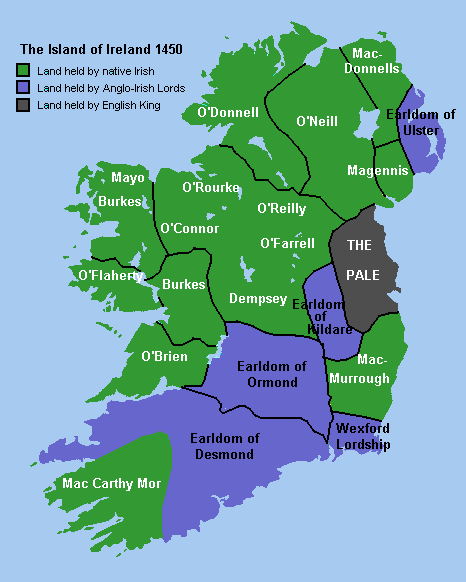
The Kingdom of West Breifne (Irish: Breifne Ua Ruairc) or Breifne O'Rourke was a historic kingdom of Ireland that existed from 1256 to 1605, located in the area that is now County Leitrim. It took its present boundaries in 1583 when West Breifne was shired and renamed Leitrim, after the village of Leitrim, which was an O'Rourke stronghold. The kingdom came into existence after a battle between the ruling O'Rourke clan and the ascendant O'Reillys caused the breakup of the older Kingdom of Breifne and led to the formation of East Breifne and West Breifne. The kingdom was ruled by the O'Rourke clan and lasted until the early 17th century, when their lands were confiscated by England.
In 1172, Tighearnán Ua Ruairc, the longtime King of Breifne and Conmaice, was betrayed and killed during negotiations with the Anglo Normans Hugh de Lacy the Lord of Meath,appointed by King Henry II of England. Tighearnán Ua Ruairc was assassinated, and his head and body were conveyed to Dublin where it was put on public display. The assassination of the King of Breifne caused a war of succession in Breifne and for the next hundred years there would be no long-standing King of Breifne, as rival vassels of the O'Rourke and O'Reilly clans fought for the kingship. This time of turbulence in the kingdom caused a great rift between the various branches of clan O'Rourke, with regular fighting between rival clan members. The resulting instability and weakness of Breifne, which had already lost some of its territory during the Anglo Norman invasion of Meath and north Leinster, prompted the O'Reilly vassels in the east of the Breifne kingdom to launch a campaign against the ruling O'Rourke dynasty. By the late 1230s the O'Reilly had usurped control of Breifne, Cathal O'Reilly ruled as king from the east of the kingdom and Cúchonnacht O'Reilly, Connacht's foremost general and close ally of King Felim O'Conor, had militarily taken control of western Breifne and expelled the O'Rourke leaders.
The turbulent decades that followed saw the O'Reilly lordship of eastern Breifne switch allegiance to the Norman de Burghs, while the O'Rourke lordship were once again allied to the O'Conors of Connacht. By 1250 the O'Reilly clans had been pushed back out of western Breifne as Connacht advanced into their eastern homeland. In 1256 a devastating Breifne kingdom war broke out known as the Battle of Magh Slecht fought primarily in the barony of Tullyhaw, between the O'Rourke clans and the O'Reilly clans supported by the large army of Anglo-Normaan Walter de Burgh. The battle ended in an tactical victory for Conchobhair O'Rourke, but they had lost complete control over the eastern half of their kingdom. The immediate chaos that ensued within Breifne following the war left the O'Rourkes without the power to retake it. As a result, Breifne became permanently divided into East Breifne (O'Reilly) and West Breifne (O'Rourke).
After successfully repelling de Burgh and the O'Reilly, the kings of Connacht, Tír Eoghain and Tír Chonaill met at Caoluisce Castle to agree to form a united front against the Normans in the future. At these talks, which the O'Rourke lords of Breifne were excluded from, it was agreed that the king of Connacht was the rightful ruler of all of Breifne "from Kells to Drumcliff". Consequently, Aedh O'Conor saw Breifne as an integral part of Connacht rather than an independent kingdom and, as heir to the kingship, was determined to rein in its leaders. This put Aedh in direct confrontation with Conchobar O'Ruairc, king of West Breifne, who rebelled against him. According to the Annals of Connacht, the two men "had been good comrades till now".
To assert West Breifne's independence, Conchobar made peace with the de Burghs without the permission of the king of Connacht, prompting Aedh O'Conor to launch raids on West Breifne. In 1257, after a brief war, Conchobar submitted to O'Conor and signed a peace treaty offering O'Conor any lands of his choice in Breifne. O'Conor obtained the stone castle on Cherry Island in Garadice Lough and put a garrison into it. Later that year, Conchobar violated the terms of the treaty and forced O'Conor's garrison out of the castle before razing it. Due to this act of betrayal, Aedh O'Conor elected Sitric O'Ruairc to replace Conchobar as king of West Breifne, however, Sitric was soon killed by Domnall, Conchobar's son, to avenge his father's dispossession. This led to Domnall's arrest and imprisonment and Aedh O'Conor resumed raids on West Breifne.
This sparked a series of conflicts that lasted from 1257 to 1266 whereby Aedh O’Conor attempted to control the politics of West Breifne by instating and supporting his favoured candidates as kings, driving a wedge between the O’Rourkes, with devastating consequences for the unity and stability of the kingdom. Amlaib was chosen to succeed Sitric, however the kingdom was in disarray and, like his predecessor, his authority as king was nominal. His rule marks the first appearance in the annals of the king ruling "from the mountain westward" i.e. west of Slieve Anieran on the eastern shore of Lough Allen – a situation that was to be repeated in the 15th century. Art O’Ruairc, son of Cathal Riabach (King of Breifne, 1231–1236), ruled the east in opposition to Amlaib and Connacht.
In 1258, with the war against Connacht still ongoing, Conchobar was betrayed and murdered by his own men with the assistance of Matha O'Reilly, king of East Breifne, who had also risen up in rebellion against Aedh O'Conor. After his father's death, Domnall was released from prison and instated as king of West Breifne. However, shortly after his appointment as king, Domnall killed Magrath Mac Tiernan, chieftain of Tellach-Dunchada, which was a clan that held land within Breifne. As a result of this killing, Domnall was deposed as king by the major clans of West Breifne, including Tellach-Dunchada, who executed Domnall's brother Cathal in retaliation.
After Domnall was deposed, Art O'Ruairc was supported by the major clans as the effective ruler of the entire kingdom, but in 1259, he was taken prisoner by Connacht. Connacht continued to vie for control of Breifne and supported Art bec, Amlaib's brother, as king in 1260. Evidently, a rift emerged between the two as Aedh O'Conor killed Art bec, his own candidate for the kingship, that same year and met with Domnall. After peace between the two kingdoms was agreed, kingship was returned to Domnall. However, this peace was to be short-lived, in 1260 the Tellach-Dunchada killed Domnall and in 1261 Art O'Ruairc escaped from imprisonment and was made king by the chieftains of Breifne upon his return. An attempt by Connacht to depose Art O'Ruairc and regain control of Breifne in 1261 failed when their army was defeated at Drumlahan by the O'Reilly and forced to retreat.
Hub AI
West Breifne AI simulator
(@West Breifne_simulator)
West Breifne
The Kingdom of West Breifne (Irish: Breifne Ua Ruairc) or Breifne O'Rourke was a historic kingdom of Ireland that existed from 1256 to 1605, located in the area that is now County Leitrim. It took its present boundaries in 1583 when West Breifne was shired and renamed Leitrim, after the village of Leitrim, which was an O'Rourke stronghold. The kingdom came into existence after a battle between the ruling O'Rourke clan and the ascendant O'Reillys caused the breakup of the older Kingdom of Breifne and led to the formation of East Breifne and West Breifne. The kingdom was ruled by the O'Rourke clan and lasted until the early 17th century, when their lands were confiscated by England.
In 1172, Tighearnán Ua Ruairc, the longtime King of Breifne and Conmaice, was betrayed and killed during negotiations with the Anglo Normans Hugh de Lacy the Lord of Meath,appointed by King Henry II of England. Tighearnán Ua Ruairc was assassinated, and his head and body were conveyed to Dublin where it was put on public display. The assassination of the King of Breifne caused a war of succession in Breifne and for the next hundred years there would be no long-standing King of Breifne, as rival vassels of the O'Rourke and O'Reilly clans fought for the kingship. This time of turbulence in the kingdom caused a great rift between the various branches of clan O'Rourke, with regular fighting between rival clan members. The resulting instability and weakness of Breifne, which had already lost some of its territory during the Anglo Norman invasion of Meath and north Leinster, prompted the O'Reilly vassels in the east of the Breifne kingdom to launch a campaign against the ruling O'Rourke dynasty. By the late 1230s the O'Reilly had usurped control of Breifne, Cathal O'Reilly ruled as king from the east of the kingdom and Cúchonnacht O'Reilly, Connacht's foremost general and close ally of King Felim O'Conor, had militarily taken control of western Breifne and expelled the O'Rourke leaders.
The turbulent decades that followed saw the O'Reilly lordship of eastern Breifne switch allegiance to the Norman de Burghs, while the O'Rourke lordship were once again allied to the O'Conors of Connacht. By 1250 the O'Reilly clans had been pushed back out of western Breifne as Connacht advanced into their eastern homeland. In 1256 a devastating Breifne kingdom war broke out known as the Battle of Magh Slecht fought primarily in the barony of Tullyhaw, between the O'Rourke clans and the O'Reilly clans supported by the large army of Anglo-Normaan Walter de Burgh. The battle ended in an tactical victory for Conchobhair O'Rourke, but they had lost complete control over the eastern half of their kingdom. The immediate chaos that ensued within Breifne following the war left the O'Rourkes without the power to retake it. As a result, Breifne became permanently divided into East Breifne (O'Reilly) and West Breifne (O'Rourke).
After successfully repelling de Burgh and the O'Reilly, the kings of Connacht, Tír Eoghain and Tír Chonaill met at Caoluisce Castle to agree to form a united front against the Normans in the future. At these talks, which the O'Rourke lords of Breifne were excluded from, it was agreed that the king of Connacht was the rightful ruler of all of Breifne "from Kells to Drumcliff". Consequently, Aedh O'Conor saw Breifne as an integral part of Connacht rather than an independent kingdom and, as heir to the kingship, was determined to rein in its leaders. This put Aedh in direct confrontation with Conchobar O'Ruairc, king of West Breifne, who rebelled against him. According to the Annals of Connacht, the two men "had been good comrades till now".
To assert West Breifne's independence, Conchobar made peace with the de Burghs without the permission of the king of Connacht, prompting Aedh O'Conor to launch raids on West Breifne. In 1257, after a brief war, Conchobar submitted to O'Conor and signed a peace treaty offering O'Conor any lands of his choice in Breifne. O'Conor obtained the stone castle on Cherry Island in Garadice Lough and put a garrison into it. Later that year, Conchobar violated the terms of the treaty and forced O'Conor's garrison out of the castle before razing it. Due to this act of betrayal, Aedh O'Conor elected Sitric O'Ruairc to replace Conchobar as king of West Breifne, however, Sitric was soon killed by Domnall, Conchobar's son, to avenge his father's dispossession. This led to Domnall's arrest and imprisonment and Aedh O'Conor resumed raids on West Breifne.
This sparked a series of conflicts that lasted from 1257 to 1266 whereby Aedh O’Conor attempted to control the politics of West Breifne by instating and supporting his favoured candidates as kings, driving a wedge between the O’Rourkes, with devastating consequences for the unity and stability of the kingdom. Amlaib was chosen to succeed Sitric, however the kingdom was in disarray and, like his predecessor, his authority as king was nominal. His rule marks the first appearance in the annals of the king ruling "from the mountain westward" i.e. west of Slieve Anieran on the eastern shore of Lough Allen – a situation that was to be repeated in the 15th century. Art O’Ruairc, son of Cathal Riabach (King of Breifne, 1231–1236), ruled the east in opposition to Amlaib and Connacht.
In 1258, with the war against Connacht still ongoing, Conchobar was betrayed and murdered by his own men with the assistance of Matha O'Reilly, king of East Breifne, who had also risen up in rebellion against Aedh O'Conor. After his father's death, Domnall was released from prison and instated as king of West Breifne. However, shortly after his appointment as king, Domnall killed Magrath Mac Tiernan, chieftain of Tellach-Dunchada, which was a clan that held land within Breifne. As a result of this killing, Domnall was deposed as king by the major clans of West Breifne, including Tellach-Dunchada, who executed Domnall's brother Cathal in retaliation.
After Domnall was deposed, Art O'Ruairc was supported by the major clans as the effective ruler of the entire kingdom, but in 1259, he was taken prisoner by Connacht. Connacht continued to vie for control of Breifne and supported Art bec, Amlaib's brother, as king in 1260. Evidently, a rift emerged between the two as Aedh O'Conor killed Art bec, his own candidate for the kingship, that same year and met with Domnall. After peace between the two kingdoms was agreed, kingship was returned to Domnall. However, this peace was to be short-lived, in 1260 the Tellach-Dunchada killed Domnall and in 1261 Art O'Ruairc escaped from imprisonment and was made king by the chieftains of Breifne upon his return. An attempt by Connacht to depose Art O'Ruairc and regain control of Breifne in 1261 failed when their army was defeated at Drumlahan by the O'Reilly and forced to retreat.