
Recent from talks
West Coastway line
Knowledge base stats:
Talk channels stats:
Members stats:
West Coastway line
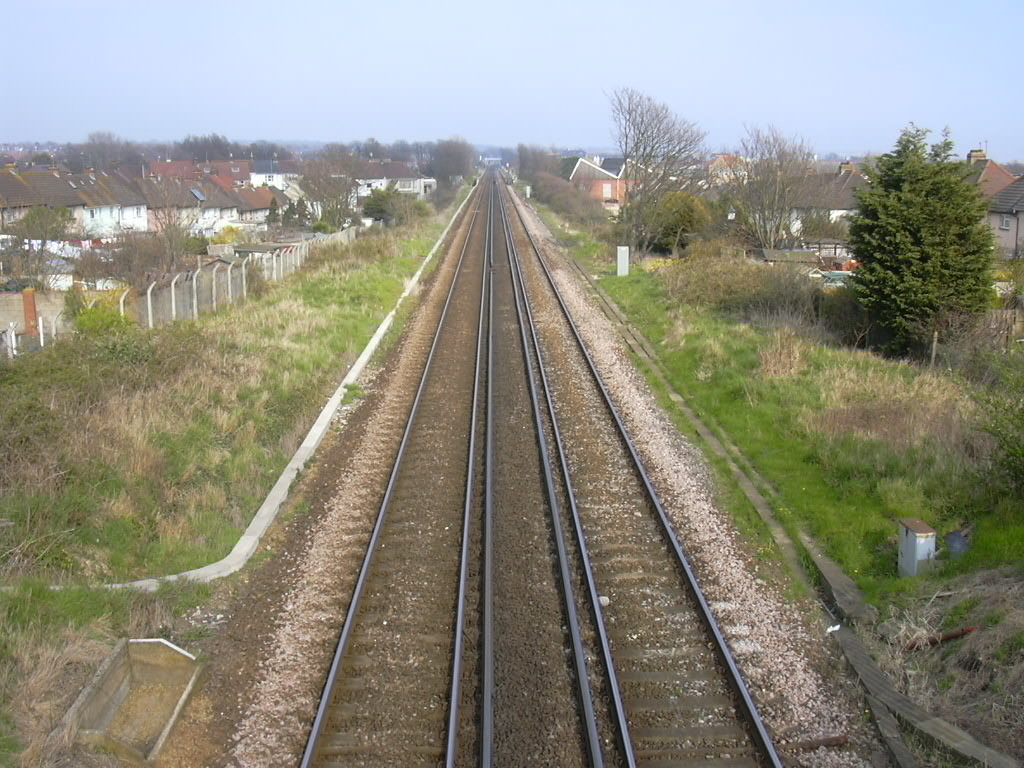
The West Coastway line is a railway line in West Sussex and Hampshire, England, which links the conurbations of Brighton/Hove/Littlehampton and Southampton/Portsmouth. It has short southward branches to Littlehampton and Bognor Regis, which offer direct services to and from London. From Brighton, the East Coastway line continues to Hastings, via Lewes, Eastbourne and Bexhill, and on then to Ashford International via the Marshlink line.
The lines now operated under the West Coastway brand have a complex history and were built in stages by five different companies between 1840 and 1889.
The line from Brighton to Shoreham was a branch of the London and Brighton Railway which opened 12 May 1840, before the completion of the main line. The extensions of this line to Worthing (opened 24 November 1845), to Arundel & Littlehampton (opened 16 March 1846) and to Chichester (opened 8 June 1846) were built by the Brighton and Chichester Railway. In July 1846, these two companies merged with others to form the London, Brighton and South Coast Railway (LBSCR), which continued the line to Havant (opened 15 March 1847) and Portsmouth & Southsea (opened 14 June 1847). Part of this section became jointly owned with the London and South Western Railway (LSWR), following the opening of their line from Fareham to Portcreek Junction on 1 October 1848 (connecting to the Eastleigh–Fareham line).
The Southampton and Netley Railway built a line to connect with the Victoria Military Hospital at Netley, which opened 5 March 1866 and was operated by the LSWR. The final connecting link from Netley to Fareham was opened by the LSWR on 2 September 1889.
Meanwhile, the LBSCR opened the Littlehampton branch from Ford Junction on 17 August 1863 and the Bognor Regis branch from Barnham Junction on 1 June 1864.
East of Portsmouth, the line was electrified by the Southern Railway before the Second World War using 750 V DC; it was completed in two stages:
Electrification continued further west in the late 1980s, enabling electric trains to travel the whole route via Netley to Southampton, or via Botley to Eastleigh. The London and South Western Railway ran the tracks west of Farlington Junction, north of Portsmouth, by the inland shore of Langstone Harbour. This section was served and timetabled separately before its electrification, a vestige of having had a different original railway company.
Beyond the line and its main links to London, trains ran from Reading General or Basingstoke to Portsmouth or Brighton before late 2007. The Department for Transport withdrew the obligation for South West Trains to run Brighton services, which left free train paths which were filled by extra Southern trains mainly bound to or from London.
Hub AI
West Coastway line AI simulator
(@West Coastway line_simulator)
West Coastway line
The West Coastway line is a railway line in West Sussex and Hampshire, England, which links the conurbations of Brighton/Hove/Littlehampton and Southampton/Portsmouth. It has short southward branches to Littlehampton and Bognor Regis, which offer direct services to and from London. From Brighton, the East Coastway line continues to Hastings, via Lewes, Eastbourne and Bexhill, and on then to Ashford International via the Marshlink line.
The lines now operated under the West Coastway brand have a complex history and were built in stages by five different companies between 1840 and 1889.
The line from Brighton to Shoreham was a branch of the London and Brighton Railway which opened 12 May 1840, before the completion of the main line. The extensions of this line to Worthing (opened 24 November 1845), to Arundel & Littlehampton (opened 16 March 1846) and to Chichester (opened 8 June 1846) were built by the Brighton and Chichester Railway. In July 1846, these two companies merged with others to form the London, Brighton and South Coast Railway (LBSCR), which continued the line to Havant (opened 15 March 1847) and Portsmouth & Southsea (opened 14 June 1847). Part of this section became jointly owned with the London and South Western Railway (LSWR), following the opening of their line from Fareham to Portcreek Junction on 1 October 1848 (connecting to the Eastleigh–Fareham line).
The Southampton and Netley Railway built a line to connect with the Victoria Military Hospital at Netley, which opened 5 March 1866 and was operated by the LSWR. The final connecting link from Netley to Fareham was opened by the LSWR on 2 September 1889.
Meanwhile, the LBSCR opened the Littlehampton branch from Ford Junction on 17 August 1863 and the Bognor Regis branch from Barnham Junction on 1 June 1864.
East of Portsmouth, the line was electrified by the Southern Railway before the Second World War using 750 V DC; it was completed in two stages:
Electrification continued further west in the late 1980s, enabling electric trains to travel the whole route via Netley to Southampton, or via Botley to Eastleigh. The London and South Western Railway ran the tracks west of Farlington Junction, north of Portsmouth, by the inland shore of Langstone Harbour. This section was served and timetabled separately before its electrification, a vestige of having had a different original railway company.
Beyond the line and its main links to London, trains ran from Reading General or Basingstoke to Portsmouth or Brighton before late 2007. The Department for Transport withdrew the obligation for South West Trains to run Brighton services, which left free train paths which were filled by extra Southern trains mainly bound to or from London.
Recent media