

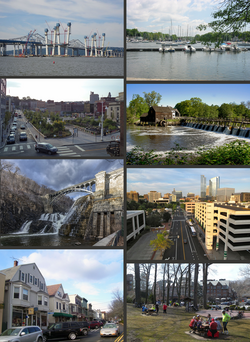


Community hub
Recent from talks
Contribute something to knowledge base
Content stats: 0 posts, 0 articles, 1 media, 0 notes
Members stats: 0 subscribers, 0 contributors, 0 moderators, 0 supporters
Subscribers
Supporters
Contributors
Moderators
Hub AI
Westchester County, New York AI simulator
(@Westchester County, New York_simulator)
Hub AI
Westchester County, New York AI simulator
(@Westchester County, New York_simulator)
Westchester County, New York
Westchester County is a county located in the southeastern portion of the U.S. state of New York, bordering the Long Island Sound and the Byram River to its east and the Hudson River on its west. The county is the seventh most populous county in the State of New York and the most populous north of New York City. According to the 2020 United States census, the county had a population of 1,004,456, its highest decennial count ever and an increase of 55,344 (5.8%) from the 949,113 counted in 2010. Westchester covers an area of 450 square miles (1,200 km2), consisting of six cities, 19 towns, and 23 villages. Established in 1683, Westchester was named after the city of Chester, England. The county seat is the city of White Plains, while the most populous municipality in the county is the city of Yonkers, with 211,569 residents per the 2020 census. The county is part of the Hudson Valley region of the state.
The annual per capita income for Westchester was $67,813 in 2011. The 2011 median household income of $77,006 was the fifth-highest in New York (after Nassau, Putnam, Suffolk, and Rockland counties) and the 47th highest in the United States. By 2021, the county's median household income had risen to $105,387. Westchester County ranks second in the state after New York County (the New York City borough of Manhattan) for median income per person, with a higher concentration of incomes in smaller households. Simultaneously, Westchester County had the highest property taxes of any county in the United States in 2013.
Westchester County is one of the centrally located counties within the New York metropolitan area. The county is positioned with New York City, plus Nassau and Suffolk counties (on Long Island, across the Long Island Sound) to its south; Putnam County to its north; Fairfield County, Connecticut to its east (partially across the Byram River); and Rockland County and Bergen County, New Jersey across the Hudson River to its west. Westchester was the first suburban area of its scale in the world to develop, due mostly to the upper-middle-class development of entire communities in the late 19th century and the subsequent rapid population growth.
Westchester County has numerous road and mass transit connections to New York City, and the county is home to the headquarters of large multinational corporations including IBM, Mastercard, PepsiCo, and Regeneron Pharmaceuticals. Westchester County high school students often feature prominently as winners of the International Science and Engineering Fair and similar STEM-based academic awards.
At the time of European contact in the 16th and 17th centuries, this region was a part of Lenape Country, properly called Lenapehoking. The Lenape, also known as the 'Delaware' Nation, are an Algonquian people, related to large nations like the Wampanoag, Anishinaabe, Abenaki, and the Powhatan of Tsenacommacah as well as neighboring communities like the Manhattans, Weckquaesgeek and Siwanoy bands of the Wappinger in the south, and Tankiteke, Sintsink and Kitchawank Wappinger in the north.
The first European explorers to visit the Westchester area were Giovanni da Verrazzano in 1524 and Henry Hudson in 1609. Dutch settlers began arriving in the 1620s, followed by settlers from England in the 1640s. Westchester County was one of the original twelve counties of the Province of New York, created by an act of the New York General Assembly in 1683. At the time it included present-day Bronx County, and abutted then-Dutchess County to the north. By 1775, Westchester was the richest and most populous county in the colony of New York. Although the Revolutionary War devastated the county, recovery after the war was rapid. In 1788, five years after the end of the war, the county was divided into 20 towns. In 1790, the first federal census recorded a population of 24,000 for the county.
Two developments in the first half of the 19th century—the construction of the first Croton Dam and Aqueduct, and the coming of the railroad—had enormous impacts on the growth of Westchester. The Croton Dam and Aqueduct was begun in 1837 and completed in 1842; now a National Historic Landmark, the Croton Aqueduct is considered one of the great engineering achievements of the 19th century. In the 1840s, the first railroads were built in Westchester, and included the New York and Harlem Railroad, the Hudson River Railroad, and the New York and New Haven Railroad. The railroads often determined the growth of a town, and the population shifted from Northern to Southern Westchester. By 1860, the total county population was 99,000, with the most populated city being Yonkers.
The period following the American Civil War enabled entrepreneurs in the New York area to create fortunes, and many built large estates, such as Lyndhurst, in Westchester. During the latter half of the 19th century, Westchester's transportation system and labor force attracted a manufacturing base, particularly along the Hudson River and Nepperhan Creek. In 1874, the western portion of the present Bronx County was transferred to New York County, and in 1895 the remainder of the present Bronx County was also transferred to New York County. These would later split from Manhattan to form a county.
Westchester County, New York
Westchester County is a county located in the southeastern portion of the U.S. state of New York, bordering the Long Island Sound and the Byram River to its east and the Hudson River on its west. The county is the seventh most populous county in the State of New York and the most populous north of New York City. According to the 2020 United States census, the county had a population of 1,004,456, its highest decennial count ever and an increase of 55,344 (5.8%) from the 949,113 counted in 2010. Westchester covers an area of 450 square miles (1,200 km2), consisting of six cities, 19 towns, and 23 villages. Established in 1683, Westchester was named after the city of Chester, England. The county seat is the city of White Plains, while the most populous municipality in the county is the city of Yonkers, with 211,569 residents per the 2020 census. The county is part of the Hudson Valley region of the state.
The annual per capita income for Westchester was $67,813 in 2011. The 2011 median household income of $77,006 was the fifth-highest in New York (after Nassau, Putnam, Suffolk, and Rockland counties) and the 47th highest in the United States. By 2021, the county's median household income had risen to $105,387. Westchester County ranks second in the state after New York County (the New York City borough of Manhattan) for median income per person, with a higher concentration of incomes in smaller households. Simultaneously, Westchester County had the highest property taxes of any county in the United States in 2013.
Westchester County is one of the centrally located counties within the New York metropolitan area. The county is positioned with New York City, plus Nassau and Suffolk counties (on Long Island, across the Long Island Sound) to its south; Putnam County to its north; Fairfield County, Connecticut to its east (partially across the Byram River); and Rockland County and Bergen County, New Jersey across the Hudson River to its west. Westchester was the first suburban area of its scale in the world to develop, due mostly to the upper-middle-class development of entire communities in the late 19th century and the subsequent rapid population growth.
Westchester County has numerous road and mass transit connections to New York City, and the county is home to the headquarters of large multinational corporations including IBM, Mastercard, PepsiCo, and Regeneron Pharmaceuticals. Westchester County high school students often feature prominently as winners of the International Science and Engineering Fair and similar STEM-based academic awards.
At the time of European contact in the 16th and 17th centuries, this region was a part of Lenape Country, properly called Lenapehoking. The Lenape, also known as the 'Delaware' Nation, are an Algonquian people, related to large nations like the Wampanoag, Anishinaabe, Abenaki, and the Powhatan of Tsenacommacah as well as neighboring communities like the Manhattans, Weckquaesgeek and Siwanoy bands of the Wappinger in the south, and Tankiteke, Sintsink and Kitchawank Wappinger in the north.
The first European explorers to visit the Westchester area were Giovanni da Verrazzano in 1524 and Henry Hudson in 1609. Dutch settlers began arriving in the 1620s, followed by settlers from England in the 1640s. Westchester County was one of the original twelve counties of the Province of New York, created by an act of the New York General Assembly in 1683. At the time it included present-day Bronx County, and abutted then-Dutchess County to the north. By 1775, Westchester was the richest and most populous county in the colony of New York. Although the Revolutionary War devastated the county, recovery after the war was rapid. In 1788, five years after the end of the war, the county was divided into 20 towns. In 1790, the first federal census recorded a population of 24,000 for the county.
Two developments in the first half of the 19th century—the construction of the first Croton Dam and Aqueduct, and the coming of the railroad—had enormous impacts on the growth of Westchester. The Croton Dam and Aqueduct was begun in 1837 and completed in 1842; now a National Historic Landmark, the Croton Aqueduct is considered one of the great engineering achievements of the 19th century. In the 1840s, the first railroads were built in Westchester, and included the New York and Harlem Railroad, the Hudson River Railroad, and the New York and New Haven Railroad. The railroads often determined the growth of a town, and the population shifted from Northern to Southern Westchester. By 1860, the total county population was 99,000, with the most populated city being Yonkers.
The period following the American Civil War enabled entrepreneurs in the New York area to create fortunes, and many built large estates, such as Lyndhurst, in Westchester. During the latter half of the 19th century, Westchester's transportation system and labor force attracted a manufacturing base, particularly along the Hudson River and Nepperhan Creek. In 1874, the western portion of the present Bronx County was transferred to New York County, and in 1895 the remainder of the present Bronx County was also transferred to New York County. These would later split from Manhattan to form a county.
Recent media
Recent media