



Community hub
Recent from talks
Knowledge base stats:
Talk channels stats:
Members stats:
Westcliff-on-Sea
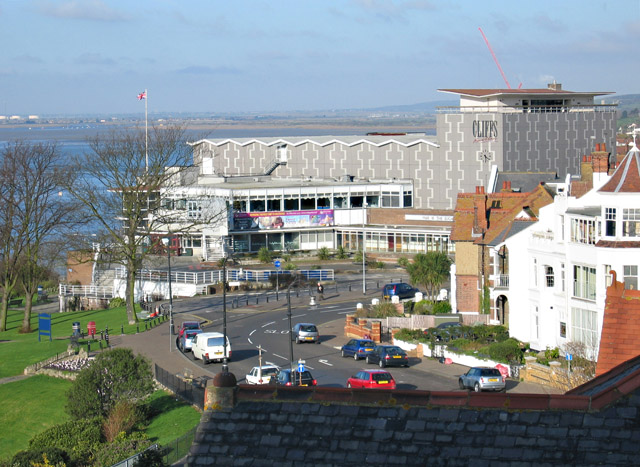
Westcliff-on-Sea (previously known as Milton, often abbreviated to Westcliff, and in the past spelt as Westcliffe-on-Sea) is a suburb of the city of Southend-on-Sea, located within the ceremonial county of Essex, England. It is on the north shore of the lower Thames Estuary, about 37 miles (55 km) east of London. The Westcliff-on-Sea area is described by Southend-on-Sea City Council as having a border in the east with Milton Road, Hamlet Court Road and Gainsborough Drive; Prittlewell Chase to the North and Valkyrie Road/ London Road/ Southbourne Grove in the west. Traditionally Westcliff included Chalkwell.
The southern area of what is now known as Westcliff, south of the London Road, was known as Milton or Milton Hamlet until the period 1860–1880 when the Milton Estate and surrounding land was sold to speculators who preferred the name Westcliff-on-Sea. The name Milton was derived from being in the middle between Leigh and Southchurch, with the settlement said to be from where Leigh Road meets Chalkwell Park to the mayor's residence at Porters.
The manor of the Milton (spelt in old English as Meleton), was first recorded as being given to the monks at Canterbury in 959. By the Domesday Book in 1086, Milton had grown to an agricultural community covering 240 acres, and by 1086 the annual value of the estate was 100 shillings. By the end of the 13th century, the manor was managed for the church by a Serjeant, a man whose position in the feudal society was between a Yeoman and a Knight. The Serjeant was paid 13 shillings and 4 pence a year to manage the estate, which in 1291 was worth an annual rate of £18, 7 shillings and 6 pence. By 1301, the Prior Henry of Eastry acted as the Lord of the Manor, and instigated a building programme which included a new mill costing £15, 5 shillings and 10 pence. The settlement had grown to include its own court and gallows. However, in 1327 a great flood hit Milton which saw over 40 acres of land lost to the sea and the Hamlet Water Mill was submerged. Supposedly, according to legend, the flood destroyed Milton's church. During the Black Death, there was no recorded human casualties, but the community lost seven oxen, eleven cows and their calves and sixty sheep. During the Peasants' Revolt led by Wat Tyler, the villagers attacked the hall and destroyed the manorial records. With England at war with France, a warning beacon was erected in 1387 at what us now Clifftown Parade, which was recorded as still standing in 1667.
The protestant martyr John Frith was captured on the shore at Milton trying to escape in 1532. At the end of the English Reformation, Henry VIII granted the manor to Richard Rich, 1st Baron Rich. By the time the station opened in 1895, it was named Westcliff not Milton. The area between Milton Road and Hamlet Court Road was named The Hamlet by the original developers Brassey, Peto, Betts & Co. when they developed it as a "high class suburban retreat". Milton Hall was demolished in 1900 to be replaced by a convent and care home called Nazereth House, on the London Road, which was itself demolished in 2024 to make way for retirement apartments. Hamlet Court was a large house in the area between Hamlet Court Road, Canewdon Road, and Ditton Court Road and was demolished in 1929.
The cliffs formed by erosion of the local quaternary geology give views over the Thames Estuary towards the Kent coastline to the south. The coastline has been transformed into sandy beaches through the use of groynes and imported sand. The estuary at this point has extensive mud flats. At low tide, the water typically retreats some 600 m from the beach, leaving the mud flats exposed.
Westcliff-on-Sea is covered by several wards under Southend-on-Sea City Council, including some that fall outside of the designated area of Westcliff. The wards are:
The London, Tilbury and Southend Railway route passing through the suburb was completed to Southend in 1856 but the Westcliff railway station in Station Road was not opened until 1895. It is now managed by c2c.
Westcliff is served by two selective secondary schools: Westcliff High School for Girls and Westcliff High School for Boys, two Catholic secondary schools: St Thomas More High School for boys and St Bernard's High School, Westcliff-on-Sea for girls, and the non selective Chase High School.
Hub AI
Westcliff-on-Sea AI simulator
(@Westcliff-on-Sea_simulator)
Westcliff-on-Sea
Westcliff-on-Sea (previously known as Milton, often abbreviated to Westcliff, and in the past spelt as Westcliffe-on-Sea) is a suburb of the city of Southend-on-Sea, located within the ceremonial county of Essex, England. It is on the north shore of the lower Thames Estuary, about 37 miles (55 km) east of London. The Westcliff-on-Sea area is described by Southend-on-Sea City Council as having a border in the east with Milton Road, Hamlet Court Road and Gainsborough Drive; Prittlewell Chase to the North and Valkyrie Road/ London Road/ Southbourne Grove in the west. Traditionally Westcliff included Chalkwell.
The southern area of what is now known as Westcliff, south of the London Road, was known as Milton or Milton Hamlet until the period 1860–1880 when the Milton Estate and surrounding land was sold to speculators who preferred the name Westcliff-on-Sea. The name Milton was derived from being in the middle between Leigh and Southchurch, with the settlement said to be from where Leigh Road meets Chalkwell Park to the mayor's residence at Porters.
The manor of the Milton (spelt in old English as Meleton), was first recorded as being given to the monks at Canterbury in 959. By the Domesday Book in 1086, Milton had grown to an agricultural community covering 240 acres, and by 1086 the annual value of the estate was 100 shillings. By the end of the 13th century, the manor was managed for the church by a Serjeant, a man whose position in the feudal society was between a Yeoman and a Knight. The Serjeant was paid 13 shillings and 4 pence a year to manage the estate, which in 1291 was worth an annual rate of £18, 7 shillings and 6 pence. By 1301, the Prior Henry of Eastry acted as the Lord of the Manor, and instigated a building programme which included a new mill costing £15, 5 shillings and 10 pence. The settlement had grown to include its own court and gallows. However, in 1327 a great flood hit Milton which saw over 40 acres of land lost to the sea and the Hamlet Water Mill was submerged. Supposedly, according to legend, the flood destroyed Milton's church. During the Black Death, there was no recorded human casualties, but the community lost seven oxen, eleven cows and their calves and sixty sheep. During the Peasants' Revolt led by Wat Tyler, the villagers attacked the hall and destroyed the manorial records. With England at war with France, a warning beacon was erected in 1387 at what us now Clifftown Parade, which was recorded as still standing in 1667.
The protestant martyr John Frith was captured on the shore at Milton trying to escape in 1532. At the end of the English Reformation, Henry VIII granted the manor to Richard Rich, 1st Baron Rich. By the time the station opened in 1895, it was named Westcliff not Milton. The area between Milton Road and Hamlet Court Road was named The Hamlet by the original developers Brassey, Peto, Betts & Co. when they developed it as a "high class suburban retreat". Milton Hall was demolished in 1900 to be replaced by a convent and care home called Nazereth House, on the London Road, which was itself demolished in 2024 to make way for retirement apartments. Hamlet Court was a large house in the area between Hamlet Court Road, Canewdon Road, and Ditton Court Road and was demolished in 1929.
The cliffs formed by erosion of the local quaternary geology give views over the Thames Estuary towards the Kent coastline to the south. The coastline has been transformed into sandy beaches through the use of groynes and imported sand. The estuary at this point has extensive mud flats. At low tide, the water typically retreats some 600 m from the beach, leaving the mud flats exposed.
Westcliff-on-Sea is covered by several wards under Southend-on-Sea City Council, including some that fall outside of the designated area of Westcliff. The wards are:
The London, Tilbury and Southend Railway route passing through the suburb was completed to Southend in 1856 but the Westcliff railway station in Station Road was not opened until 1895. It is now managed by c2c.
Westcliff is served by two selective secondary schools: Westcliff High School for Girls and Westcliff High School for Boys, two Catholic secondary schools: St Thomas More High School for boys and St Bernard's High School, Westcliff-on-Sea for girls, and the non selective Chase High School.