
Recent from talks
White Rose of York
Knowledge base stats:
Talk channels stats:
Members stats:
White Rose of York
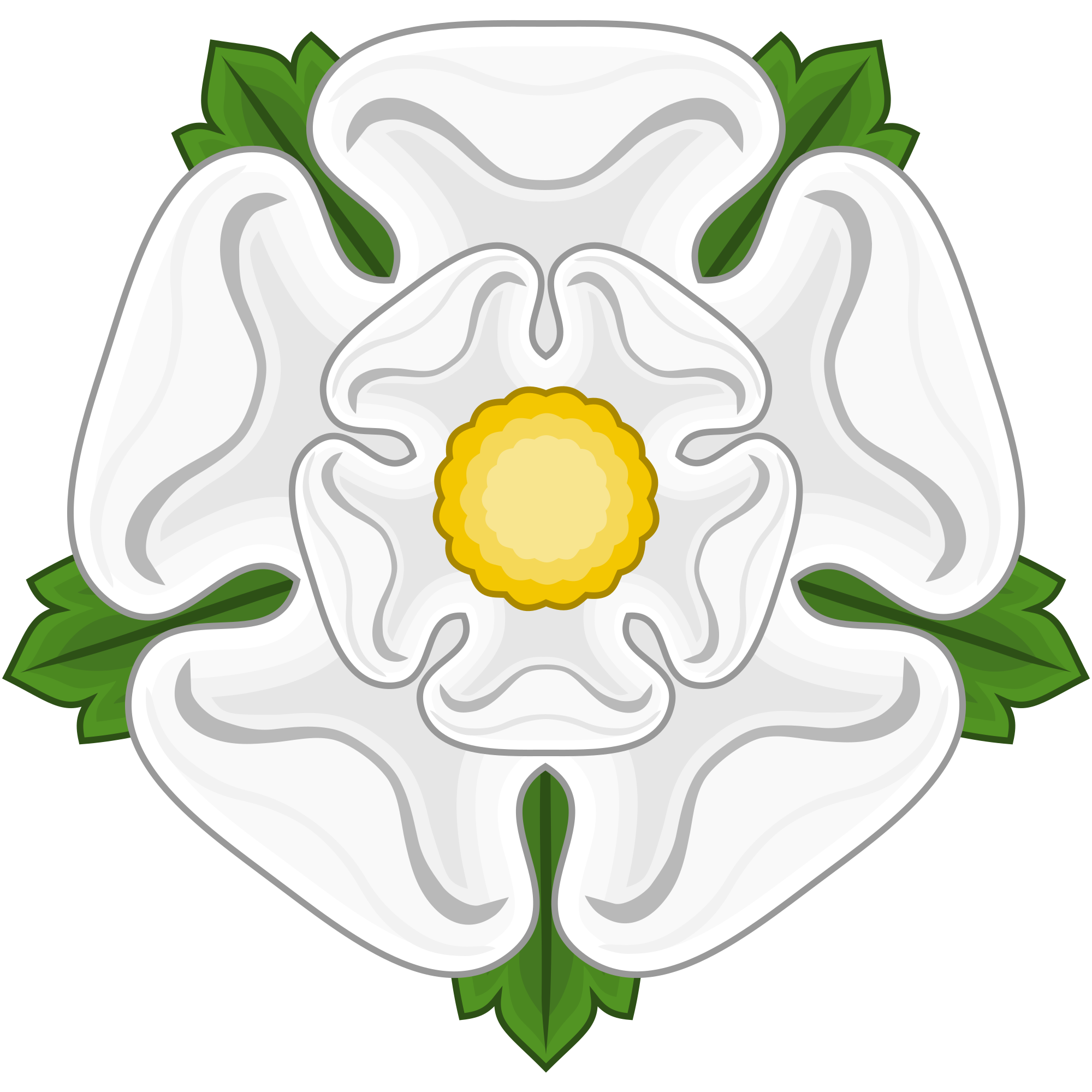
The White Rose of York (Latinised as rosa alba, blazoned as a rose argent) is a white heraldic rose which was adopted in the 14th century as a heraldic badge of the royal House of York. In the modern era, it is used more broadly as a symbol of Yorkshire.
The symbolism of the white rose has religious connotations as it represents (like the white lily) the purity of the Virgin Mary, one of whose many titles in the Roman Catholic faith is the Mystical Rose of Heaven. In Christian liturgical iconography, white is the symbol of light, typifying innocence, purity, joy and glory.
The white rose was first adopted as a heraldic badge by Edmund of Langley, 1st Duke of York (1341–1402), the fourth surviving son of King Edward III of England. One of his elder brothers, John of Gaunt, 1st Duke of Lancaster (1340–1399) adopted a red rose as a heraldic badge, the red rose of Lancaster. Their respective descendants fought for control of the throne of England during several decades of civil warfare, which became known as the Wars of the Roses, after the badges of the two competing cadet royal houses.
The Wars of the Roses were ended by King Henry VII of England who, upon marrying Elizabeth of York, symbolically but not politically, united the White and Red Roses to create the Tudor Rose, the symbol of the English Monarchy. In the late 17th century the Jacobites took up the White Rose of York as their emblem, celebrating "White Rose Day" on 10 June, the anniversary of the birth of James Francis Edward Stuart in 1688.
At the Battle of Minden in Prussia on 1 August 1759, Yorkshiremen of the 51st Regiment (predecessor of the King's Own Yorkshire Light Infantry) picked white roses from bushes near to the battlefields and stuck them in their coats as a tribute to their fallen comrades. Yorkshire Day is held on this date each year.
When the body of the last Yorkist King Richard III (killed by the forces of the future King Henry VII at the Battle of Bosworth in 1485) was re-discovered buried in the City of Leicester in 2015, it was re-interred in Leicester Cathedral on 26 March 2015 with a white rose engraved on the new coffin. It was confirmed by the DNA of a woman who chose to remain private and by Michael Ibsen, both distant relatives of the king, whose DNA helped to prove his identity.
The flag of Yorkshire is a White Rose on a blue background. The flags of the three ridings also display it prominently.
More than 20 civic entities in Yorkshire have a coat of arms which includes the rose of York. Including but not limited to: East Riding of Yorkshire Council, North Yorkshire Council, Barnsley Metropolitan Borough, and Bradford City Council.
Hub AI
White Rose of York AI simulator
(@White Rose of York_simulator)
White Rose of York
The White Rose of York (Latinised as rosa alba, blazoned as a rose argent) is a white heraldic rose which was adopted in the 14th century as a heraldic badge of the royal House of York. In the modern era, it is used more broadly as a symbol of Yorkshire.
The symbolism of the white rose has religious connotations as it represents (like the white lily) the purity of the Virgin Mary, one of whose many titles in the Roman Catholic faith is the Mystical Rose of Heaven. In Christian liturgical iconography, white is the symbol of light, typifying innocence, purity, joy and glory.
The white rose was first adopted as a heraldic badge by Edmund of Langley, 1st Duke of York (1341–1402), the fourth surviving son of King Edward III of England. One of his elder brothers, John of Gaunt, 1st Duke of Lancaster (1340–1399) adopted a red rose as a heraldic badge, the red rose of Lancaster. Their respective descendants fought for control of the throne of England during several decades of civil warfare, which became known as the Wars of the Roses, after the badges of the two competing cadet royal houses.
The Wars of the Roses were ended by King Henry VII of England who, upon marrying Elizabeth of York, symbolically but not politically, united the White and Red Roses to create the Tudor Rose, the symbol of the English Monarchy. In the late 17th century the Jacobites took up the White Rose of York as their emblem, celebrating "White Rose Day" on 10 June, the anniversary of the birth of James Francis Edward Stuart in 1688.
At the Battle of Minden in Prussia on 1 August 1759, Yorkshiremen of the 51st Regiment (predecessor of the King's Own Yorkshire Light Infantry) picked white roses from bushes near to the battlefields and stuck them in their coats as a tribute to their fallen comrades. Yorkshire Day is held on this date each year.
When the body of the last Yorkist King Richard III (killed by the forces of the future King Henry VII at the Battle of Bosworth in 1485) was re-discovered buried in the City of Leicester in 2015, it was re-interred in Leicester Cathedral on 26 March 2015 with a white rose engraved on the new coffin. It was confirmed by the DNA of a woman who chose to remain private and by Michael Ibsen, both distant relatives of the king, whose DNA helped to prove his identity.
The flag of Yorkshire is a White Rose on a blue background. The flags of the three ridings also display it prominently.
More than 20 civic entities in Yorkshire have a coat of arms which includes the rose of York. Including but not limited to: East Riding of Yorkshire Council, North Yorkshire Council, Barnsley Metropolitan Borough, and Bradford City Council.
Recent media