
Recent from talks
Whitewashing in film
Knowledge base stats:
Talk channels stats:
Members stats:
Whitewashing in film
Whitewashing is a casting practice in the film industry in which white actors are cast in non-white roles. As defined by Merriam-Webster, to whitewash is "to alter...in a way that favors, features, or caters to white people: such as...casting a white performer in a role based on a nonwhite person or fictional character." According to the BBC, films in which white actors have played other races include all genres. African-American roles and roles of Asian descent have been whitewashed, as well as characters from the ancient world in the genre of classical and mythological films.
In the early 20th century, white actors caricatured different ethnicities by brownface, blackface or yellowface, commonly exaggerating the perceived stereotypes of other ethnicities. For example, Swedish-born actor Warner Oland played the Chinese detective Charlie Chan in Charlie Chan Carries On (1931) and subsequent films. Because of the lack of characters of color in the film industry, these roles were well received at the time by viewers. Other non-Asian actors to portray Chinese detective Charlie Chan include Manuel Arbó, Sidney Toler, Roland Winters, Ross Martin, and Peter Ustinov.
There was a greater color diversity in film by the mid-20th-century and blackface mostly disappeared from the industry. The film Othello (1965) was an exception, as the white actor Laurence Olivier was cast as "the Moor" and wore blackface as the title character. New York Times film critic Bosley Crowther was critical of the 1965 Othello, referring to it as a "minstrel show".
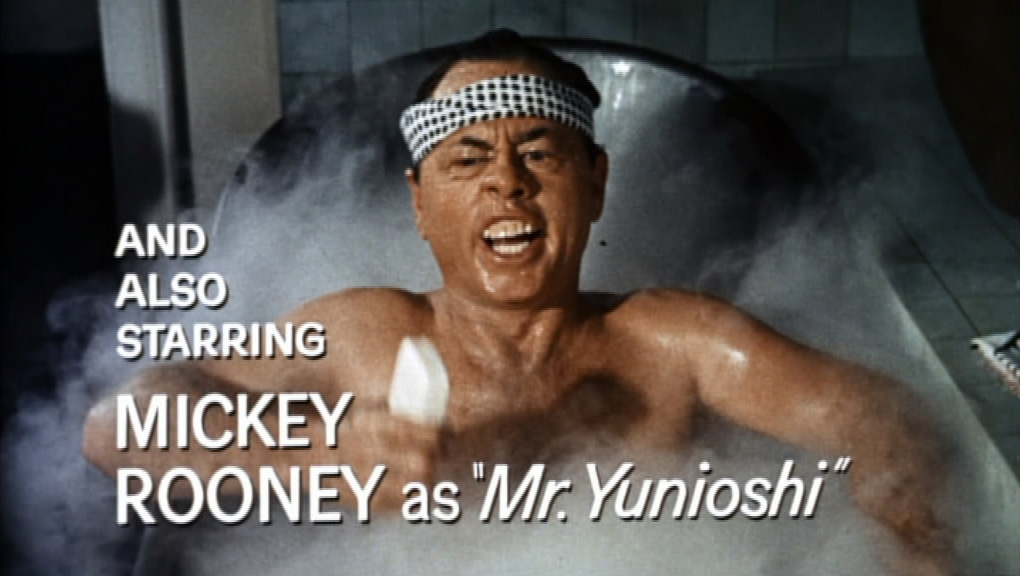
The practice of "yellowface" extended into the 1960s. For instance, Mickey Rooney played a Japanese landlord in Breakfast at Tiffany's (1961). Professor David A. Schlossman said of Asian characters in particular, "Many of the Asian roles portrayed by White actors also contributed to the pantheon of cultural stereotypes in US national discourse." At the start of the 21st century, minorities were still under-represented in the film industry at different stages. While historically black roles are now generally cast with black actors, the practice of whitewashing applied to other minorities.
Guy Aoki said African Americans "have long felt the full brunt of the 'whitewashing' of roles" and that Asians have experienced it as well. Native Americans have also had their historic leaders and warriors portrayed by whites.
The BBC said in 2015, "The practice of casting white actors in non-white roles is still prevalent in Hollywood – despite widespread condemnation and protest." A report in 2013 showed that 94% of film executives were white and that non-white people were under-represented as filmmakers and actors. The BBC explored two reasons for the casting practice: institutional racism and a belief that well-known white actors attract more audiences and maximize profits. Tom Rothman, the chairman of the Sony Pictures Motion Picture Group said, "I guess there's a certain institutional force and memory that exists out there. ... I think the industry's improving but I certainly agree with those who say we haven't come far enough fast enough."
Jeffery Mio, author of Multicultural Psychology: Understanding Our Diverse Communities, hypothesizes that the film industry, mostly white, hires people of similar backgrounds. Mio said of the rationale that only the most qualified actors are cast, "That's the argument that directors and casting directors make, but a lot of times ethnic actors will tell us that when they say we're just choosing the best actor, they mean we're choosing our friends, or people we're used to." Craig Detweiler, professor of film history at Pepperdine University, said, "There are [sic] a shortage of African American, Asian and Latino stars. For all Hollywood's progressive politics, its casting decisions look remarkably retrograde." In 2010, TheWrap ascribed the lack of racial diversity to institutional racism and a lack of bankable actors of color and that whitewashing in films like Prince of Persia: The Sands of Time and The Last Airbender aggravated the issue.
On casting white actors to maximize profits, David White, National Executive Director of the actors' union SAG-AFTRA said popular black actors such as Will Smith, Denzel Washington, and David Oyelowo refuted the casting rationale. Assistant professor of telecommunications Andrew J. Weaver said, "There is an assumption in Hollywood that whites would avoid movies with majority black casts, or any race cast for that matter. You see this whitewashing of films – even films that have minority characters written into them are being cast with whites." Film professor Mitchell W. Block said studios adhered to casting norms as a matter of practicing business to appeal to investors and producers.
Hub AI
Whitewashing in film AI simulator
(@Whitewashing in film_simulator)
Whitewashing in film
Whitewashing is a casting practice in the film industry in which white actors are cast in non-white roles. As defined by Merriam-Webster, to whitewash is "to alter...in a way that favors, features, or caters to white people: such as...casting a white performer in a role based on a nonwhite person or fictional character." According to the BBC, films in which white actors have played other races include all genres. African-American roles and roles of Asian descent have been whitewashed, as well as characters from the ancient world in the genre of classical and mythological films.
In the early 20th century, white actors caricatured different ethnicities by brownface, blackface or yellowface, commonly exaggerating the perceived stereotypes of other ethnicities. For example, Swedish-born actor Warner Oland played the Chinese detective Charlie Chan in Charlie Chan Carries On (1931) and subsequent films. Because of the lack of characters of color in the film industry, these roles were well received at the time by viewers. Other non-Asian actors to portray Chinese detective Charlie Chan include Manuel Arbó, Sidney Toler, Roland Winters, Ross Martin, and Peter Ustinov.
There was a greater color diversity in film by the mid-20th-century and blackface mostly disappeared from the industry. The film Othello (1965) was an exception, as the white actor Laurence Olivier was cast as "the Moor" and wore blackface as the title character. New York Times film critic Bosley Crowther was critical of the 1965 Othello, referring to it as a "minstrel show".
The practice of "yellowface" extended into the 1960s. For instance, Mickey Rooney played a Japanese landlord in Breakfast at Tiffany's (1961). Professor David A. Schlossman said of Asian characters in particular, "Many of the Asian roles portrayed by White actors also contributed to the pantheon of cultural stereotypes in US national discourse." At the start of the 21st century, minorities were still under-represented in the film industry at different stages. While historically black roles are now generally cast with black actors, the practice of whitewashing applied to other minorities.
Guy Aoki said African Americans "have long felt the full brunt of the 'whitewashing' of roles" and that Asians have experienced it as well. Native Americans have also had their historic leaders and warriors portrayed by whites.
The BBC said in 2015, "The practice of casting white actors in non-white roles is still prevalent in Hollywood – despite widespread condemnation and protest." A report in 2013 showed that 94% of film executives were white and that non-white people were under-represented as filmmakers and actors. The BBC explored two reasons for the casting practice: institutional racism and a belief that well-known white actors attract more audiences and maximize profits. Tom Rothman, the chairman of the Sony Pictures Motion Picture Group said, "I guess there's a certain institutional force and memory that exists out there. ... I think the industry's improving but I certainly agree with those who say we haven't come far enough fast enough."
Jeffery Mio, author of Multicultural Psychology: Understanding Our Diverse Communities, hypothesizes that the film industry, mostly white, hires people of similar backgrounds. Mio said of the rationale that only the most qualified actors are cast, "That's the argument that directors and casting directors make, but a lot of times ethnic actors will tell us that when they say we're just choosing the best actor, they mean we're choosing our friends, or people we're used to." Craig Detweiler, professor of film history at Pepperdine University, said, "There are [sic] a shortage of African American, Asian and Latino stars. For all Hollywood's progressive politics, its casting decisions look remarkably retrograde." In 2010, TheWrap ascribed the lack of racial diversity to institutional racism and a lack of bankable actors of color and that whitewashing in films like Prince of Persia: The Sands of Time and The Last Airbender aggravated the issue.
On casting white actors to maximize profits, David White, National Executive Director of the actors' union SAG-AFTRA said popular black actors such as Will Smith, Denzel Washington, and David Oyelowo refuted the casting rationale. Assistant professor of telecommunications Andrew J. Weaver said, "There is an assumption in Hollywood that whites would avoid movies with majority black casts, or any race cast for that matter. You see this whitewashing of films – even films that have minority characters written into them are being cast with whites." Film professor Mitchell W. Block said studios adhered to casting norms as a matter of practicing business to appeal to investors and producers.
Recent media