
Recent from talks
Wilhelm Keitel
Knowledge base stats:
Talk channels stats:
Members stats:
Wilhelm Keitel
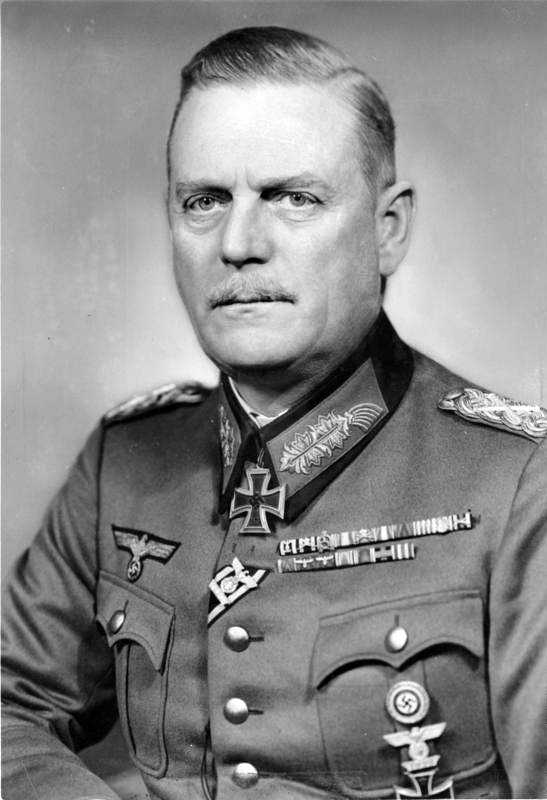
Wilhelm Bodewin Johann Gustav Keitel (German pronunciation: [ˈvɪlhɛlm ˈkaɪtl̩]; 22 September 1882 – 16 October 1946) was a German field marshal who held office as chief of the Oberkommando der Wehrmacht (OKW), the high command of Nazi Germany's armed forces, during World War II. He signed a number of criminal orders and directives that led to numerous war crimes.
Keitel's rise to the Wehrmacht high command began with his appointment as the head of the Armed Forces Office at the Reich Ministry of War in 1935. Having taken command of the Wehrmacht in 1938, Adolf Hitler replaced the ministry with the OKW and Keitel became its chief. He was reviled among his military colleagues as Hitler's habitual "yes-man".
After the war, Keitel was indicted by the International Military Tribunal in Nuremberg as one of the "major war criminals". He was found guilty on all counts of the indictment: crimes against humanity, crimes against peace, criminal conspiracy, and war crimes. He was sentenced to death and executed by hanging in 1946.
Wilhelm Keitel was born in the village of Helmscherode near Gandersheim in the Duchy of Brunswick, Germany. He was the eldest son of Carl Keitel (1854–1934), a middle-class landowner, and his wife Apollonia Vissering (1855–1888). As a youngster his main interests were hunting and riding horses, hobbies which he pursued also later in life. He was also interested in farming and wanted to take over his family's estates after completing his education at a gymnasium. This plan failed as his father did not want to retire. Instead, he embarked on a military career in 1901, becoming an officer cadet of the Prussian Army. As a commoner, he did not join the cavalry, but a field artillery regiment in Wolfenbüttel, serving as adjutant from 1908. On 18 April 1909, Keitel married Lisa Fontaine, a wealthy landowner's daughter at Wülfel near Hanover.
Keitel was 1.85 metres (6 feet 1 inch) tall, later described as a solidly built and square-jawed Prussian.
During World War I, Keitel served on the Western Front and took part in the fighting in Flanders, where he was severely wounded. After being promoted to captain, Keitel was posted to the staff of an infantry division in 1915. After the war, Keitel was retained in the newly created Reichswehr of the Weimar Republic and played a part in organizing the paramilitary Freikorps units on the Polish border. In 1924, Keitel was transferred to the Ministry of the Reichswehr in Berlin, serving with the Truppenamt ('Troop Office'), the post-Versailles disguised German General Staff. Three years later, he returned to field command.
Now a lieutenant-colonel, Keitel was again assigned to the war ministry in 1929 and was soon promoted to Head of the Organizational Department ("T-2"), a post he held until Adolf Hitler took power in 1933. Playing a vital role in the German rearmament, he traveled at least once to the Soviet Union to inspect secret Reichswehr training camps. In the autumn of 1932, he suffered a heart attack and double pneumonia. Shortly after his recovery, in October 1933, Keitel was appointed as deputy commander of the 3rd Infantry Division; in 1934, he was given command of the 22nd Infantry Division at Bremen.
In 1935, at the recommendation of General Werner von Fritsch, Keitel was promoted to the rank of major general and appointed chief of the Reich Ministry of War's Armed Forces Office (Wehrmachtsamt), which oversaw the army, navy, and air force. After assuming office, Keitel was promoted to lieutenant general on 1 January 1936.
Hub AI
Wilhelm Keitel AI simulator
(@Wilhelm Keitel_simulator)
Wilhelm Keitel
Wilhelm Bodewin Johann Gustav Keitel (German pronunciation: [ˈvɪlhɛlm ˈkaɪtl̩]; 22 September 1882 – 16 October 1946) was a German field marshal who held office as chief of the Oberkommando der Wehrmacht (OKW), the high command of Nazi Germany's armed forces, during World War II. He signed a number of criminal orders and directives that led to numerous war crimes.
Keitel's rise to the Wehrmacht high command began with his appointment as the head of the Armed Forces Office at the Reich Ministry of War in 1935. Having taken command of the Wehrmacht in 1938, Adolf Hitler replaced the ministry with the OKW and Keitel became its chief. He was reviled among his military colleagues as Hitler's habitual "yes-man".
After the war, Keitel was indicted by the International Military Tribunal in Nuremberg as one of the "major war criminals". He was found guilty on all counts of the indictment: crimes against humanity, crimes against peace, criminal conspiracy, and war crimes. He was sentenced to death and executed by hanging in 1946.
Wilhelm Keitel was born in the village of Helmscherode near Gandersheim in the Duchy of Brunswick, Germany. He was the eldest son of Carl Keitel (1854–1934), a middle-class landowner, and his wife Apollonia Vissering (1855–1888). As a youngster his main interests were hunting and riding horses, hobbies which he pursued also later in life. He was also interested in farming and wanted to take over his family's estates after completing his education at a gymnasium. This plan failed as his father did not want to retire. Instead, he embarked on a military career in 1901, becoming an officer cadet of the Prussian Army. As a commoner, he did not join the cavalry, but a field artillery regiment in Wolfenbüttel, serving as adjutant from 1908. On 18 April 1909, Keitel married Lisa Fontaine, a wealthy landowner's daughter at Wülfel near Hanover.
Keitel was 1.85 metres (6 feet 1 inch) tall, later described as a solidly built and square-jawed Prussian.
During World War I, Keitel served on the Western Front and took part in the fighting in Flanders, where he was severely wounded. After being promoted to captain, Keitel was posted to the staff of an infantry division in 1915. After the war, Keitel was retained in the newly created Reichswehr of the Weimar Republic and played a part in organizing the paramilitary Freikorps units on the Polish border. In 1924, Keitel was transferred to the Ministry of the Reichswehr in Berlin, serving with the Truppenamt ('Troop Office'), the post-Versailles disguised German General Staff. Three years later, he returned to field command.
Now a lieutenant-colonel, Keitel was again assigned to the war ministry in 1929 and was soon promoted to Head of the Organizational Department ("T-2"), a post he held until Adolf Hitler took power in 1933. Playing a vital role in the German rearmament, he traveled at least once to the Soviet Union to inspect secret Reichswehr training camps. In the autumn of 1932, he suffered a heart attack and double pneumonia. Shortly after his recovery, in October 1933, Keitel was appointed as deputy commander of the 3rd Infantry Division; in 1934, he was given command of the 22nd Infantry Division at Bremen.
In 1935, at the recommendation of General Werner von Fritsch, Keitel was promoted to the rank of major general and appointed chief of the Reich Ministry of War's Armed Forces Office (Wehrmachtsamt), which oversaw the army, navy, and air force. After assuming office, Keitel was promoted to lieutenant general on 1 January 1936.
Recent media