Hubbry Logo
Willard MotleyWillard MotleyMain
Open search
Willard Motley
Community hub
Willard Motley
logo
8 pages, 0 posts
0 subscribers
Be the first to start a discussion here.
Contribute something
Willard Motley
Willard Motley
from Wikipedia

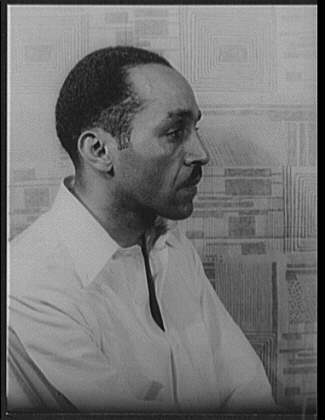
Willard Francis Motley (July 14, 1909 – March 4, 1965) was an American author. Beginning as a teenager, Motley published a column in the African-American oriented Chicago Defender newspaper under the pen-name Bud Billiken. He worked as a freelance writer, and later founded and published the Hull House Magazine and worked in the Federal Writers' Project. Motley's first and best known novel was Knock on Any Door (1947), which was made into a movie of the same name (1949).

Key Information

Biography

[edit]

Early life and career

[edit]

Motley was born and grew up in the Englewood neighborhood, South Side, Chicago, in one of the few African-American families residing in that neighborhood at the time. The family was Catholic.[2] His grandfather, Archibald Motley Sr. was a Pullman porter who raised him as a son. His grandmother Mary ("Mae") was a homemaker.[2] Motley graduated from Lewis-Champlain grammar school, and Englewood High School.[3] He and the noted artist Archibald Motley Jr. were raised as brothers, although Archibald was in fact Willard's uncle; Willard's mother, Florence (known as "Flossie") moved to New York City after he was born and left him to be raised by her parents.[2]

When he was 13, Willard was hired by Robert S. Abbott to write a children's column called "Bud Says," under the pen name, "Bud Billiken," for the Chicago Defender.[2][4] Later, Willard traveled to New York, California and the western states, earning a living through various menial jobs, as well as by writing for the radio and newspapers. During this period, he served a jail sentence for vagrancy in Cheyenne, Wyoming.[5] Returning to Chicago in 1939, he lived near the Maxwell Street Market, which was to figure prominently in his later writing. He became associated with Hull House, and helped found the Hull House Magazine, in which some of his fiction appeared. In 1940 he wrote for the Works Progress Administration Federal Writers' Project along with Richard Wright and Nelson Algren.[6]

In 1947, his first novel, Knock on Any Door, appeared to critical acclaim. A work of gritty naturalism, it concerns the life of Nick Romano, an Italian-American altar boy who turns to crime because of poverty and the difficulties of the immigrant experience; it is Romano who says the famous phrase: "Live fast, die young and have a good-looking corpse!"[7][8][9] It was an immediate hit, selling 47,000 copies during its first three weeks in print. In 1949, it was made into a movie starring Humphrey Bogart. In response to critics who charged Motley with avoiding issues of race by writing about white characters, Motley said: "My race is the human race."[10] His second novel, We Fished All Night (1948),[11] was not hailed as a success, and after it appeared Motley moved to Mexico to start over. His third novel, Let No Man Write My Epitaph, picks up the story of Knock on Any Door. Columbia Pictures made it into a movie in 1960. Ella Fitzgerald's music for the film was released on the album Ella Fitzgerald Sings Songs from the Soundtrack of "Let No Man Write My Epitaph".

Criticism

[edit]

According to the citation statement for the Chicago Literary Hall of Fame awards, "Motley was criticized in his life for being a black man writing about white characters, a middle-class man writing about the lower class, and a closeted homosexual writing about heterosexual urges. But those more kindly disposed to his work, and there were plenty, admired his grit and heart....Chicago was more complicated than just its racial or sexual tensions, and as a writer his exploration was expansive...."[12] Motley was inducted into the Hall of Fame in 2014.

Death and legacy

[edit]

On March 4, 1965, Motley died of intestinal gangrene in Mexico City, Mexico.[3][4] Some sources say he was 52, giving his birthdate as July 14, 1912;[3][5] however, the Vivian G. Harsh Research Collection of Afro-American History and Literature at the Chicago Public Library, which holds a selection of his papers, notes his date of birth as July 14, 1909.[4] After his death, his adopted son, Sergio Lopez, said, "He let this illness go too long before getting proper medical treatment."[5] Lopez also said that Motley had been working on a novel tentatively titled My House Is Your House.[5]

His final novel, posthumously published in 1966, was Let Noon Be Fair.[13] Since 1929, Chicago has held an annual Bud Billiken Parade and Picnic (acknowledging his pen name during his early career at the Chicago Defender) on the second Saturday of August.[14] The parade travels through the city's Bronzeville, Grand Boulevard and Washington Park neighborhoods on the south side. The bulk of Motley's archive is held in the University Libraries, Rare Books and Special Collections, at Northern Illinois University.[15]

Bibliography

[edit]

References

[edit]
[edit]
Revisions and contributorsEdit on WikipediaRead on Wikipedia
from Grokipedia
''Willard Motley'' is an African American novelist known for his naturalist depictions of urban poverty, crime, and social injustice in mid-20th-century America, most notably through his bestselling debut novel ''Knock on Any Door'' (1947). His works often explored the destructive effects of slum environments and flawed criminal justice systems, drawing from extensive firsthand research in Chicago's inner-city neighborhoods. Born on July 14, 1909, in Chicago, Illinois, Motley grew up in a middle-class family in the racially diverse Englewood neighborhood, initially believing his grandparents were his parents while his biological mother was presented as an older sister. He began writing at age 13, authoring the popular children's column under the pseudonym Bud Billiken for the ''Chicago Defender'', a leading African American newspaper. After graduating from Englewood High School in 1929, he held various jobs, traveled widely—including bicycle trips to New York and automobile journeys westward—and lived in Chicago's Maxwell Street slum area to gather authentic material for his fiction. Motley's first novel, ''Knock on Any Door'', achieved commercial success, appearing on bestseller lists and selling tens of thousands of copies shortly after publication before being adapted into a 1949 film starring Humphrey Bogart. He continued with ''We Fished All Night'' (1951), examining the postwar struggles of veterans, and ''Let No Man Write My Epitaph'' (1958), a sequel to his debut that was also adapted for film. His final novel, ''Let Noon Be Fair'', was published posthumously in 1966 and shifted focus to the impact of American tourism on a Mexican village. Motley moved permanently to Mexico City in 1952 and resided there until his death on March 4, 1965.

Early Life

Birth and Family Background

Willard Motley was born on July 14, 1909, in Chicago, Illinois. His biological mother was Florence “Flossie” Motley, who became pregnant at age 14 by a 36-year-old Pullman porter known only as Bryant, who lived in the family home. To prevent the birth from being considered illegitimate, the family hastily arranged a marriage between Flossie and Bryant, which was annulled shortly after Motley's birth. Motley was raised by his grandparents, Archibald Motley Sr., a Pullman porter, and Mary “Mae” Frederica Huff Motley, a public school teacher, who presented themselves as his parents and portrayed his biological mother as his older sister. A younger sister, Rita Motley, born from the same parents, was similarly raised as a child of the grandparents. This arrangement created a stable, middle-class household in the Englewood neighborhood on Chicago's South Side, where the family was the only Black household in their immediate area, though the broader community held a degree of racial diversity. Motley experienced little racial discrimination during childhood, and his white neighbors defended the family during the Chicago race riot of 1919. His uncle, the prominent painter Archibald J. Motley Jr., was nearly twenty years older and was raised alongside him as an older brother, exerting an early influence on his creative development.

Childhood and Early Writing

Willard Motley spent his childhood in the racially diverse Englewood neighborhood on Chicago's South Side, where his family was the only Black household in their immediate area yet experienced little racial discrimination, with white neighbors defending them during the Chicago race riot of 1919. He grew up in a middle-class family and was well-liked and active as a student. Motley attended Englewood High School, where he participated actively in the school's newspaper and yearbook. He graduated from the school in 1929. His interest in writing emerged early; at age 13, in 1922, Motley submitted a short story to the Chicago Defender, which was accepted and published in three installments during September and October of that year. This early success marked the beginning of his engagement with publishing while still a teenager in high school.

Journalism Career

Bud Billiken Column in the Chicago Defender

Willard Motley began his professional writing at age 13 when he submitted a short story to the Chicago Defender that was published in three installments during September and October 1922. This early success prompted publisher Robert S. Abbott to hire him for a weekly children's column under the pseudonym Bud Billiken, which ran from December 1922 to July 5, 1924. The pen name Bud Billiken was devised by Abbott and managing editor Lucius Harper, combining Harper's nickname "Bud" with a fictitious good-luck character known as a "Billiken," a figure associated with positive fortune in early 20th-century popular culture. The column, often presented as "Bud Says," was written specifically for young readers and covered children's interests in an engaging style. As a popular weekly feature in the prominent African-American newspaper Chicago Defender, Motley's Bud Billiken contributions helped establish his early reputation in journalism. He continued the column for over a year and a half until July 1924, after which the pseudonym passed to other writers at the paper.

Other Early Journalism and Experiences

After graduating from Englewood High School in 1929, Willard Motley embarked on a period of extensive travel across the United States instead of pursuing plans to move to Paris like his brother. He spent several years journeying the country, supporting himself through a variety of odd jobs while continuing to write and gather material that would inform his realistic style. These travels included stints in New York, California, and western states, exposing him to the hardships of the Great Depression, itinerant life, and diverse working-class experiences that shaped his understanding of urban poverty and social issues. He returned to Chicago in 1939, where he engaged in freelance writing and took on editorial work, including founding and publishing the Hull House Magazine. These pre-1947 experiences, marked by economic instability and direct observation of marginalized communities in Depression-era America, provided the foundation for his commitment to authentic, socially conscious storytelling beyond his earlier Chicago Defender contributions.

Literary Career

Breakthrough with Knock on Any Door

Willard Motley's debut novel, Knock on Any Door, published in 1947 by Appleton-Century, marked his major breakthrough as a writer after years of manuscript rejections and revisions. The book achieved immediate commercial success as a bestseller, selling 47,000 copies within three weeks of publication and reaching 350,000 copies by 1950. It stood as one of the best-selling novels by an African American author up to that point, drawing widespread readership across diverse audiences, including soldiers and international fans. The novel centers on Nick Romano, a young Italian-American man raised in Chicago's slums, whose impoverished and brutal environment leads him into delinquency and crime, ultimately facing a murder trial. Written in a naturalist style, it emphasizes environmental determinism, portraying how urban poverty and slum conditions shape individual behavior and produce criminal outcomes. Key themes include juvenile delinquency, police brutality, unfair court procedures, and the broader social production of crime. Notably, Motley chose a white protagonist, which distinguished the work from the racial protest literature often expected of Black authors at the time and positioned it as addressing "universal" human problems rather than explicit racial issues. This "white-life" approach drew praise from some Black intellectuals, who welcomed it as a move beyond racial chauvinism toward broader social concerns. The novel received strong critical and public acclaim for its sociological depth and realistic depiction of urban life, earning endorsements such as from Eleanor Roosevelt and leading Motley to be regarded as an expert on juvenile delinquency and slums.

Subsequent Novels and Themes

Following the success of Knock on Any Door, Willard Motley published his second novel, We Fished All Night, in 1951. The book traces the post-World War II experiences of three Chicago men—Jim Norris, a principled labor leader; Aaron Levin, a sensitive aspiring writer who suffers mental collapse; and Don Lockwood, a Polish-American who rises through political corruption—each struggling with disillusionment, moral compromise, and the city's pervasive decay. The narrative explores themes of political corruption, denial of origins, and the loss of personal ideals amid urban squalor, with sex and sordidness presented starkly and little hope offered for redemption. Critics noted its unrelieved depression and brutality, contrasting it unfavorably with the compassion that tempered his debut. Motley's third novel, Let No Man Write My Epitaph, appeared in 1958 and returned to the Chicago slums as a sequel centered on Nick Romano, the illegitimate son of the executed criminal from Knock on Any Door. The story examines narcotics addiction in detail, depicting the deliberate corruption of an innocent youth, alongside poverty, prostitution, gangsters, and the desperate efforts of a few individuals—including a sympathetic cop and a writer—to protect him. The novel functions primarily as an exposé of addiction's tragedies and the failures of authority, with pervasive desperation and little optimism. Reviewers acknowledged its crusading intensity but observed that the reformist agenda sometimes overwhelmed the storytelling. Motley's final novel, Let Noon Be Fair, was published posthumously in 1966. Set in a fictional Mexican coastal village modeled on Puerto Vallarta, it portrays the transformation of a traditional community into a tourist destination dominated by American visitors. The work critiques tourism's social and cultural costs, arguing that economic gains are far outweighed by the erosion of authentic Mexican identity and local self-respect. Adopting a panoramic approach similar to We Fished All Night, it was considered less effective than his more tightly focused earlier fiction. Across these later novels, Motley sustained his commitment to urban realism and social justice, emphasizing the destructive power of environment, poverty, corruption, and societal forces on individuals. His protagonists often come from diverse ethnic backgrounds, underscoring universal human struggles rather than race-specific experiences. Critical assessments of his post-debut output highlighted powerful depictions of social ills but frequently pointed to unrelieved bleakness, occasional narrative diffuseness, and a heavier emphasis on exposé over storytelling.

Film Adaptations and Media Influence

Knock on Any Door (1949 Film)

Knock on Any Door (1949 Film) Knock on Any Door (1949), directed by Nicholas Ray, is the film adaptation of Willard Motley's 1947 bestselling novel of the same name. Produced by Santana Pictures, Humphrey Bogart's newly formed independent company, the film marked the company's first project and featured Bogart in the starring role as idealistic defense attorney Andrew Morton. John Derek, introduced in the credits as a newcomer, portrayed the young defendant Nick Romano, a juvenile delinquent accused of murdering a policeman during a robbery. The screenplay was adapted by writers other than Motley, who received no screen credit and had no direct involvement in the production. However, Derek reportedly corresponded with Motley to seek advice on authentically portraying Romano's character. To comply with the Production Code, the film toned down or eliminated certain elements from the novel, including Romano's bisexuality and explicit depictions of sadistic police officers. The core narrative retains the novel's social commentary, focusing on environmental determinism as Morton argues in court that Romano's life of crime resulted from oppressive slum conditions, delivering an impassioned plea that indicts society with the line "knock on any door" in the slums to find similar tragic stories. The film became a commercial success and launched Derek to prominence, with Variety praising his performance as a new star with strong audience appeal. It is also noted for popularizing Romano's motto, "Live fast, die young, and have a good-looking corpse," which originated in Motley's novel.

Broader Media Legacy

Willard Motley's 1958 novel Let No Man Write My Epitaph, a direct sequel to Knock on Any Door featuring the son of the character Nick Romano, was adapted into a feature film of the same name released in 1960. Directed by Philip Leacock and produced by Columbia Pictures, the film starred Shelley Winters, Burl Ives, James Darren, Jean Seberg, and Ricardo Montalban, with Ella Fitzgerald appearing in a rare dramatic supporting role. The adaptation centered on Chicago tenement residents' efforts to steer Romano's orphaned son, a talented young pianist, away from the paths of crime, heroin addiction, prostitution, and poverty that had destroyed his father. Reviewers noted its frank, uncompromising portrayal of urban social ills and sleazy environments, marking it as a mature social-problem melodrama characteristic of early 1960s Hollywood. Fitzgerald's soundtrack album tied to the film also drew critical praise. These adaptations of Motley's naturalistic novels contributed to mid-20th-century American cinema's depictions of urban realism, focusing on poverty, crime, and social decay in inner-city settings. No additional film or television adaptations of his other works, including We Fished All Night or the posthumously published Let Noon Be Fair, are documented.

Personal Life

Relationships and Identity

Willard Motley was a gay African American man whose sexuality contributed to his sense of dislocation in mid-20th-century American society. He remained closeted during his lifetime, consistent with the widespread stigma and legal risks surrounding homosexuality at the time, particularly for Black individuals. After the mixed reception of his second novel in 1951, Motley expatriated to Mexico, which he experienced as a queer refuge that allowed greater personal freedom. There he lived in places such as Puerto Vallarta and Cuernavaca, where he was often in the company of young men and expressed a marked sexual preference for darker-skinned Mexican men who embraced traditional markers of masculinity. Motley maintained considerable privacy about his personal relationships and identity, rarely addressing them directly in public. He articulated a universalist perspective on identity, stating in interviews and writings that "people are just people" and declaring "my race is the human race," which positioned racial and sexual categories as peripheral or ideological rather than essential. Scholars observe that this egalitarian stance sometimes stood in tension with the more stereotyped depictions of non-conformist characters in his fiction.

Life in Mexico

In 1952, Willard Motley relocated to Mexico, purchasing a house outside Mexico City and establishing a new home with his adopted son Sergio (and possibly Raul in some accounts). Disheartened by the chilly critical reception of his second novel We Fished All Night, Motley moved to make a fresh start, drawn to Mexico as a haven for individuals facing communist scaremongering, racism, and restrictive U.S. laws on personal freedoms. Financial pressures contributed to the decision, as a sharp decline in his literary popularity made earning a living increasingly difficult, compounded by earlier troubles including IRS scrutiny that left him in near-poverty during his final years. Motley continued his writing from Mexico, producing additional novels and nonfiction while maintaining a modest, financially strained existence until his death from intestinal gangrene in Mexico City on March 4, 1965.

Death and Legacy

Death in 1965

Willard Motley died on March 4, 1965, in Mexico City at the age of 55 from intestinal gangrene. He had been living in Mexico since 1952 and succumbed to the illness. Motley was buried in nearby Cuernavaca following his death. At the time of his passing, Motley had recently completed the first draft of his final novel, Let Noon Be Fair, though he did not live to participate in its editing or publication. A memorial service was later held in Chicago at St. Martin de Porres church.

Posthumous Recognition and Influence

Motley's final novel, Let Noon Be Fair, was published posthumously in 1966, following his death the previous year. The book, drawing on his long residence in Mexico, explores the disruptive effects of American tourism on a coastal village, continuing his interest in social change and human costs of economic transformation. Although Motley's works enjoyed commercial popularity during his lifetime, his contributions received relatively little sustained critical attention in the decades after his death, with scholars often overlooking him due to his refusal to center Black experiences or race in his fiction and his insistence that "My race is the human race." This marginalization has positioned him as a "hidden figure" in 20th-century American literature, particularly within studies of African American and gay writers, prompting recent calls for a fresh reevaluation of his role and broader recognition of Black authors who wrote outside conventional racial expectations. Renewed acknowledgment arrived in 2014 when Motley was inducted into the Chicago Literary Hall of Fame, an honor that affirmed his lasting influence on the city's literary heritage and American fiction more broadly. His naturalistic portrayals of urban poverty, crime, and social injustice, especially in early novels, align with traditions of protest literature and urban realism, offering depictions of marginalized lives that resonate in discussions of societal inequality and human universality.

References

Add your contribution
Related Hubs
Contribute something
User Avatar
No comments yet.