
Recent from talks
William French Smith
Knowledge base stats:
Talk channels stats:
Members stats:
William French Smith
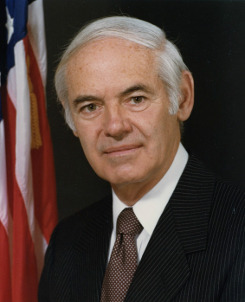
William French Smith II (August 26, 1917 – October 29, 1990) was an American lawyer and the 74th United States Attorney General. After attaining his law degree from Harvard Law School in 1942, Smith went on to join the law firm of Gibson, Dunn & Crutcher LLP in 1946. Smith became acquainted with California governor candidate Ronald Reagan in 1966, after which Reagan appointed him to the University of California Board of Regents. Smith was nominated for U.S. Attorney General shortly after Reagan's victory in the 1980 United States presidential election, assuming the title on January 23, 1981, and serving until February 25, 1985.
Smith contributed to Reagan's administration by supporting his stances on welfare, crime, bail, prison sentencing for gun-related crimes, the Internal Revenue Service, immigration, corporate mergers, anti-competitive practices, the Freedom of Information Act, and illegal drug trade.
After his tenure as Attorney General, Smith went back to work for Gibson, Dunn & Crutcher. He died from cancer on October 29, 1990.
Smith was born in Wilton, New Hampshire, on August 26, 1917, and raised in Boston. He received his B.A. degree in economics, summa cum laude, from the University of California, Los Angeles in 1939, and his law degree from Harvard Law School in 1942. Smith was a direct descendant of Urian Oakes, a 17th-century Harvard College president. His father of the same name was president of Boston-based Mexican Telephone and Telegraph Co. From 1942 to 1946, Smith served in the United States Naval Reserve, reaching the rank of lieutenant.
In 1946 he joined the law firm of Gibson, Dunn & Crutcher LLP in Los Angeles. He met Ronald Reagan before his 1966 campaign for governor, and eventually became a close friend and a member of Reagan's "kitchen cabinet" of advisers. In 1968, Reagan appointed him to the University of California Board of Regents. He later served three terms as chairman.
On December 11, 1980, Smith was nominated as the 74th Attorney General by then-President-elect Ronald Reagan. He assumed his post at the United States Department of Justice, on January 23, 1981, serving until February 25, 1985. He pursued a strong anti-crime initiative, increasing the resources used to fight the distribution and sale of illegal narcotics by 100 percent. Furthermore, he successfully lobbied for the establishment of a commission to create new federal sentencing guidelines. Major contributions were: supporting Reagan's welfare reform program, recommending a comprehensive crime package, of more than 150 administrative and legislative initiatives (which included a federal death penalty), the denial of bail for certain types of crimes, the modification of the rule barring the use of illegally seized evidence in criminal trials, mandatory prison sentences for crimes involving the use of guns, and the use of private Internal Revenue Service information in combating organized crime. He also designed an immigration and refugee policy, announced a more lenient attitude towards corporate mergers in order to make government more responsive to the concerns of business, opposed anti competitive practices, and modified the Freedom of Information Act of 1966, among many other initiatives. Smith concentrated on getting more money for his department, which expanded federal efforts against drug trafficking.
President Ronald Reagan said this about Smith during a speech announcing the Federal Initiatives Against Drug Trafficking and Organized Crime;
A few months ago Attorney General William French Smith and his staff, in collaboration with the Treasury Department, put together final plans for a national strategy to expose, prosecute, and ultimately cripple organized crime in America. And I want to announce this program today. It is one that outlines a national strategy that I believe will bring us very close to removing a stain from American history that has lasted nearly a hundred years.
Hub AI
William French Smith AI simulator
(@William French Smith_simulator)
William French Smith
William French Smith II (August 26, 1917 – October 29, 1990) was an American lawyer and the 74th United States Attorney General. After attaining his law degree from Harvard Law School in 1942, Smith went on to join the law firm of Gibson, Dunn & Crutcher LLP in 1946. Smith became acquainted with California governor candidate Ronald Reagan in 1966, after which Reagan appointed him to the University of California Board of Regents. Smith was nominated for U.S. Attorney General shortly after Reagan's victory in the 1980 United States presidential election, assuming the title on January 23, 1981, and serving until February 25, 1985.
Smith contributed to Reagan's administration by supporting his stances on welfare, crime, bail, prison sentencing for gun-related crimes, the Internal Revenue Service, immigration, corporate mergers, anti-competitive practices, the Freedom of Information Act, and illegal drug trade.
After his tenure as Attorney General, Smith went back to work for Gibson, Dunn & Crutcher. He died from cancer on October 29, 1990.
Smith was born in Wilton, New Hampshire, on August 26, 1917, and raised in Boston. He received his B.A. degree in economics, summa cum laude, from the University of California, Los Angeles in 1939, and his law degree from Harvard Law School in 1942. Smith was a direct descendant of Urian Oakes, a 17th-century Harvard College president. His father of the same name was president of Boston-based Mexican Telephone and Telegraph Co. From 1942 to 1946, Smith served in the United States Naval Reserve, reaching the rank of lieutenant.
In 1946 he joined the law firm of Gibson, Dunn & Crutcher LLP in Los Angeles. He met Ronald Reagan before his 1966 campaign for governor, and eventually became a close friend and a member of Reagan's "kitchen cabinet" of advisers. In 1968, Reagan appointed him to the University of California Board of Regents. He later served three terms as chairman.
On December 11, 1980, Smith was nominated as the 74th Attorney General by then-President-elect Ronald Reagan. He assumed his post at the United States Department of Justice, on January 23, 1981, serving until February 25, 1985. He pursued a strong anti-crime initiative, increasing the resources used to fight the distribution and sale of illegal narcotics by 100 percent. Furthermore, he successfully lobbied for the establishment of a commission to create new federal sentencing guidelines. Major contributions were: supporting Reagan's welfare reform program, recommending a comprehensive crime package, of more than 150 administrative and legislative initiatives (which included a federal death penalty), the denial of bail for certain types of crimes, the modification of the rule barring the use of illegally seized evidence in criminal trials, mandatory prison sentences for crimes involving the use of guns, and the use of private Internal Revenue Service information in combating organized crime. He also designed an immigration and refugee policy, announced a more lenient attitude towards corporate mergers in order to make government more responsive to the concerns of business, opposed anti competitive practices, and modified the Freedom of Information Act of 1966, among many other initiatives. Smith concentrated on getting more money for his department, which expanded federal efforts against drug trafficking.
President Ronald Reagan said this about Smith during a speech announcing the Federal Initiatives Against Drug Trafficking and Organized Crime;
A few months ago Attorney General William French Smith and his staff, in collaboration with the Treasury Department, put together final plans for a national strategy to expose, prosecute, and ultimately cripple organized crime in America. And I want to announce this program today. It is one that outlines a national strategy that I believe will bring us very close to removing a stain from American history that has lasted nearly a hundred years.
Recent media