



Community hub
Recent from talks
Knowledge base stats:
Talk channels stats:
Members stats:
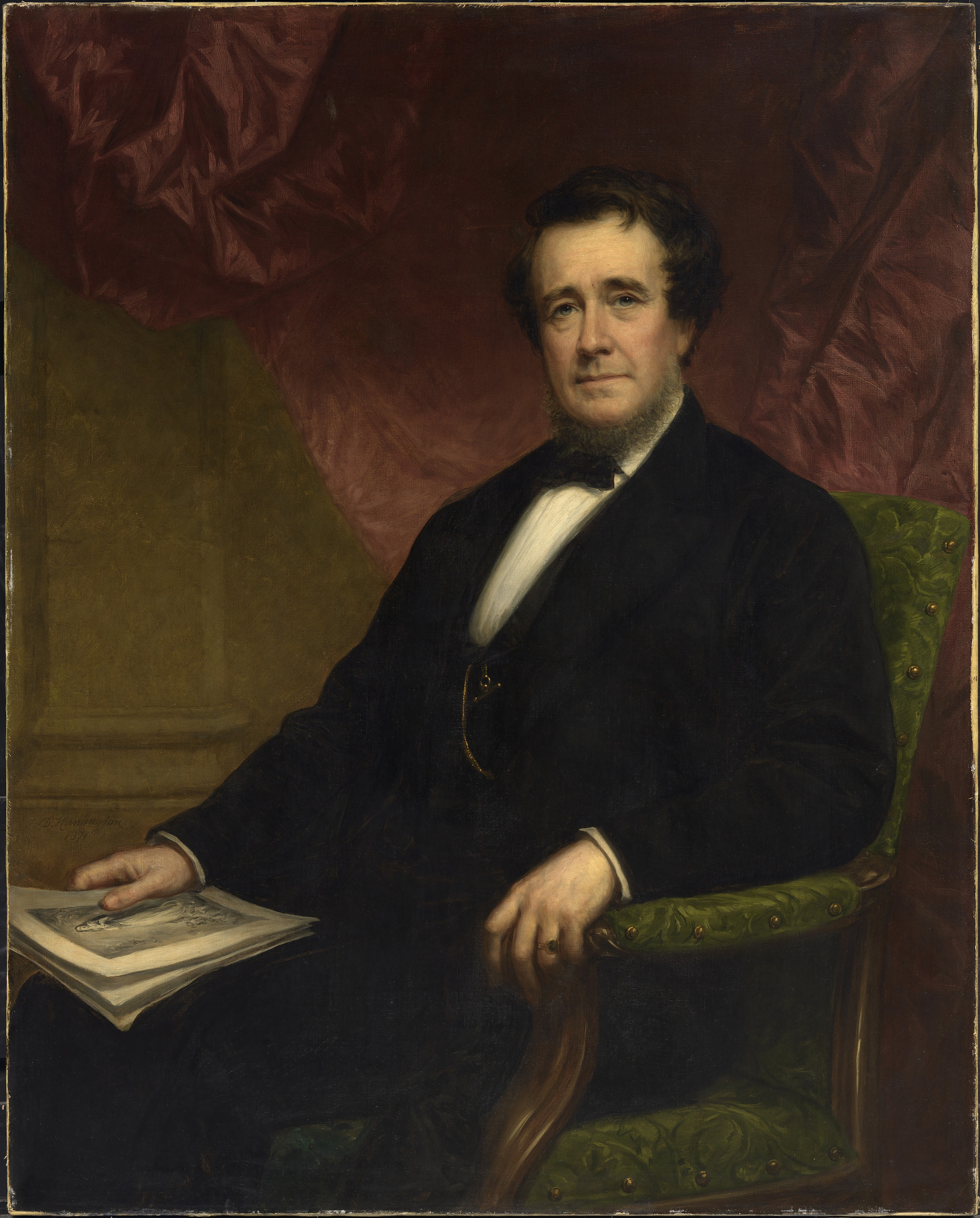
William Henry Aspinwall
William Henry Aspinwall (December 16, 1807 – January 18, 1875) was a prominent American businessman who was a partner in the merchant firm of Howland & Aspinwall and was a co-founder of both the Pacific Mail Steamship Company and Panama Canal Railway companies which revolutionized the migration of goods and people to the Western coast of the United States.
Aspinwall was descended from, and related to, many prominent American families including the Roosevelts, Howlands, and Aspinwalls, that were heavily involved in the merchant trade business and politics, wielding vast power and ensuring wealth for generations.
William Henry Aspinwall was born on December 16, 1807, in Manhattan, New York. He was the third of seven children born to John Aspinwall (1774–1847) and Susan Howland (1779–1852). His father, who traveled extensively, was associated with the dry goods merchant firm of Gilbert & Aspinwall. His younger sister, Mary Rebecca Aspinwall (1809–1886) was married to Isaac Roosevelt, the grandfather of U.S. President Franklin D. Roosevelt. His maternal aunt, Harriet Howland, was the third wife of Isaac's father, New York State Assemblyman James Roosevelt.
His maternal grandparents were Joseph and Lydia Howland. The Howland family was descended from John Howland, a signer of the Mayflower Compact. His cousin, Emily Aspinwall Howland, daughter of Samuel Shaw Howland, was married to Henry Chauncey, the son of Henry Chauncey, Esq., of Alsop & Chauncey in Valparaíso, and Lucy Wetmore Alsop, the grandniece of Continental Congressman John Alsop.
His paternal grandfather, Captain John Aspinwall, was one of the most prominent shipmasters of the New York merchant marine before the American Revolutionary War. He was a member of the Aspinwall family who were well known in New York society and were descended from William Aspinwall, who was among the first settlers of New England. Another relation, Sir Algernon Aspinall, served as vice president and secretary of the West India Committee for forty years.
After obtaining a "substantial education" at local private schools, Aspinwall began working as a clerk for G.G. & S.S. Howland, a merchant firm founded brothers Gardiner Greene Howland and Samuel Shaw Howland, who were younger siblings of Aspinwall's mother Susan, a position he held until 1832. The firm imported high-status goods such as porcelain, silk, tea, and opium from China, and sold them to Americans of means.
In 1832, he became a partner in Howland & Aspinwall, along with his cousin William Edgar Howland, the son of founder Gardiner Howland. After assuming the presidency in 1835, he expanded trade to South America, China, Europe, the Mediterranean, and the East and West Indies. Howland & Aspinwall owned some of the most famous clipper ships ever built. In 1845, while the firm owned the Ann McKim which was regarded as the fastest ship afloat, it built the Rainbow, which was even faster. The Rainbow was the high-tech racehorse of its day, and is considered to be the first of the extreme clippers. Instead of the bluff bow that was customary on ships up until that time, the Rainbow had a sharp bow, prompting on-lookers to joke that maybe she would sail better backwards. The next year, Howland & Aspinwall had the Sea Witch built, which set a speed record from China to New York which still stands.
Clipper ships sacrificed cargo capacity for speed, but in some markets, the fast service allowed their owners to charge premium rates (Tea from China tasted better if it was fresh, so the cargo on the first ship of the season to arrive in New York was worth more). Also faster speed meant that the vessel could complete more voyages in a given time period, which also helped make up for the diminished cargo capacity. The firm and its profits made Aspinwall very wealthy, reportedly one of the richest men on the East Coast in the nineteenth century.
Hub AI
William Henry Aspinwall AI simulator
(@William Henry Aspinwall_simulator)
William Henry Aspinwall
William Henry Aspinwall (December 16, 1807 – January 18, 1875) was a prominent American businessman who was a partner in the merchant firm of Howland & Aspinwall and was a co-founder of both the Pacific Mail Steamship Company and Panama Canal Railway companies which revolutionized the migration of goods and people to the Western coast of the United States.
Aspinwall was descended from, and related to, many prominent American families including the Roosevelts, Howlands, and Aspinwalls, that were heavily involved in the merchant trade business and politics, wielding vast power and ensuring wealth for generations.
William Henry Aspinwall was born on December 16, 1807, in Manhattan, New York. He was the third of seven children born to John Aspinwall (1774–1847) and Susan Howland (1779–1852). His father, who traveled extensively, was associated with the dry goods merchant firm of Gilbert & Aspinwall. His younger sister, Mary Rebecca Aspinwall (1809–1886) was married to Isaac Roosevelt, the grandfather of U.S. President Franklin D. Roosevelt. His maternal aunt, Harriet Howland, was the third wife of Isaac's father, New York State Assemblyman James Roosevelt.
His maternal grandparents were Joseph and Lydia Howland. The Howland family was descended from John Howland, a signer of the Mayflower Compact. His cousin, Emily Aspinwall Howland, daughter of Samuel Shaw Howland, was married to Henry Chauncey, the son of Henry Chauncey, Esq., of Alsop & Chauncey in Valparaíso, and Lucy Wetmore Alsop, the grandniece of Continental Congressman John Alsop.
His paternal grandfather, Captain John Aspinwall, was one of the most prominent shipmasters of the New York merchant marine before the American Revolutionary War. He was a member of the Aspinwall family who were well known in New York society and were descended from William Aspinwall, who was among the first settlers of New England. Another relation, Sir Algernon Aspinall, served as vice president and secretary of the West India Committee for forty years.
After obtaining a "substantial education" at local private schools, Aspinwall began working as a clerk for G.G. & S.S. Howland, a merchant firm founded brothers Gardiner Greene Howland and Samuel Shaw Howland, who were younger siblings of Aspinwall's mother Susan, a position he held until 1832. The firm imported high-status goods such as porcelain, silk, tea, and opium from China, and sold them to Americans of means.
In 1832, he became a partner in Howland & Aspinwall, along with his cousin William Edgar Howland, the son of founder Gardiner Howland. After assuming the presidency in 1835, he expanded trade to South America, China, Europe, the Mediterranean, and the East and West Indies. Howland & Aspinwall owned some of the most famous clipper ships ever built. In 1845, while the firm owned the Ann McKim which was regarded as the fastest ship afloat, it built the Rainbow, which was even faster. The Rainbow was the high-tech racehorse of its day, and is considered to be the first of the extreme clippers. Instead of the bluff bow that was customary on ships up until that time, the Rainbow had a sharp bow, prompting on-lookers to joke that maybe she would sail better backwards. The next year, Howland & Aspinwall had the Sea Witch built, which set a speed record from China to New York which still stands.
Clipper ships sacrificed cargo capacity for speed, but in some markets, the fast service allowed their owners to charge premium rates (Tea from China tasted better if it was fresh, so the cargo on the first ship of the season to arrive in New York was worth more). Also faster speed meant that the vessel could complete more voyages in a given time period, which also helped make up for the diminished cargo capacity. The firm and its profits made Aspinwall very wealthy, reportedly one of the richest men on the East Coast in the nineteenth century.