
Recent from talks
William II of England
Knowledge base stats:
Talk channels stats:
Members stats:
William II of England
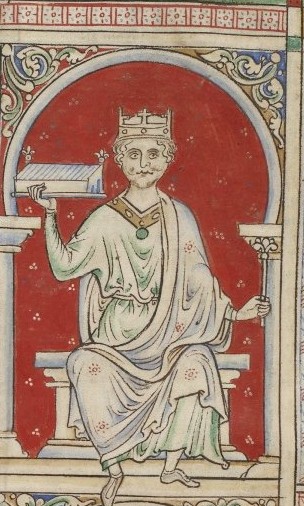
William II (Anglo-Norman: Williame; c. 1057 – 2 August 1100) was King of England from 26 September 1087 until his death in 1100, with powers over Normandy and influence in Scotland. He was less successful in extending his control into Wales. The third son of William the Conqueror, he is commonly referred to as William Rufus (Rufus being Latin for "the Red"), perhaps because of his ruddy appearance or, more likely, because he had red hair.
William was a figure of complex temperament, capable of both bellicosity and flamboyance. He did not marry or have children, which – along with contemporary accounts – has led some historians to speculate on homosexuality or bisexuality. He died after being hit by an arrow while hunting. Circumstantial evidence in the behaviour of those around him – including his younger brother Henry I – raises strong but unproven suspicions of murder. Upon William's death, Henry immediately seized the treasury and had himself crowned king.
Historian Frank Barlow observes William was "[a] rumbustious, devil-may-care soldier, without natural dignity or social graces, with no cultivated tastes and little show of conventional religious piety or morality – indeed, according to his critics, addicted to every kind of vice, particularly lust and especially sodomy." On the other hand, he was a wise ruler and victorious general. Barlow noted, "His chivalrous virtues and achievements were all too obvious. He had maintained good order and satisfactory justice in England and restored good peace to Normandy. He had extended Anglo-Norman rule in Wales, brought Scotland firmly under his lordship, recovered Maine, and kept up the pressure on the Vexin."
William's date of birth is not known, but according to historian Frank Barlow it occurred by 1060. He was the third of four sons born to William the Conqueror and Matilda of Flanders, the eldest being Robert Curthose, the second Richard, and the youngest Henry. Richard died around 1075 while hunting in the New Forest. William succeeded to the throne of England on his father's death in 1087, but Robert inherited Normandy.
William had five or six sisters. The existence of sisters Adeliza and Matilda is not absolutely certain, but four sisters are more securely attested:
Records indicate strained relations between the three surviving sons of William I. William's contemporary, chronicler Orderic Vitalis, wrote about an incident that took place at L'Aigle in Normandy in 1077 or 1078: William and Henry, having grown bored with casting dice, decided to make mischief by emptying a chamber pot onto their brother Robert from an upper gallery, thus infuriating and shaming him. A brawl broke out, and their father had to intercede to restore order.
According to William of Malmesbury, writing in the 12th century, William Rufus was "well set; his complexion florid, his hair yellow; of open countenance; different coloured eyes, varying with certain glittering specks; of astonishing strength, though not very tall, and his belly rather projecting."
The division of William the Conqueror's lands into two parts upon his death presented a dilemma for those nobles who held land on both sides of the English Channel. Since the younger William and his brother Robert were natural rivals, these nobles worried that they could not hope to please both of their lords and thus ran the risk of losing the favour of one ruler or the other, or both. The solution, as they saw it, was to unite England and Normandy once more under one ruler. The pursuit of this aim led them to revolt against William in favour of Robert in the Rebellion of 1088, under the leadership of the powerful Bishop Odo of Bayeux, who was a half-brother of William the Conqueror. As Robert failed to appear in England to rally his supporters, William won the support of the English with silver and promises of better government, and defeated the rebellion, thus securing his authority. In 1090, William decided to intervene in Normandy and started buying the allegiance of Norman barons in Upper Normandy, but his attempt to plot to take the city of Rouen in November that year failed. In 1091 he invaded Normandy, crushing Robert's forces and forcing him to cede a portion of his lands. The two made up their differences, and William agreed to help Robert recover lands lost to France, notably Maine. This plan was later abandoned, but William continued to pursue a ferociously warlike defence of his French possessions and interests to the end of his life, exemplified by his response to the attempt by Elias de la Flèche, Count of Maine, to take Le Mans in 1099.
Hub AI
William II of England AI simulator
(@William II of England_simulator)
William II of England
William II (Anglo-Norman: Williame; c. 1057 – 2 August 1100) was King of England from 26 September 1087 until his death in 1100, with powers over Normandy and influence in Scotland. He was less successful in extending his control into Wales. The third son of William the Conqueror, he is commonly referred to as William Rufus (Rufus being Latin for "the Red"), perhaps because of his ruddy appearance or, more likely, because he had red hair.
William was a figure of complex temperament, capable of both bellicosity and flamboyance. He did not marry or have children, which – along with contemporary accounts – has led some historians to speculate on homosexuality or bisexuality. He died after being hit by an arrow while hunting. Circumstantial evidence in the behaviour of those around him – including his younger brother Henry I – raises strong but unproven suspicions of murder. Upon William's death, Henry immediately seized the treasury and had himself crowned king.
Historian Frank Barlow observes William was "[a] rumbustious, devil-may-care soldier, without natural dignity or social graces, with no cultivated tastes and little show of conventional religious piety or morality – indeed, according to his critics, addicted to every kind of vice, particularly lust and especially sodomy." On the other hand, he was a wise ruler and victorious general. Barlow noted, "His chivalrous virtues and achievements were all too obvious. He had maintained good order and satisfactory justice in England and restored good peace to Normandy. He had extended Anglo-Norman rule in Wales, brought Scotland firmly under his lordship, recovered Maine, and kept up the pressure on the Vexin."
William's date of birth is not known, but according to historian Frank Barlow it occurred by 1060. He was the third of four sons born to William the Conqueror and Matilda of Flanders, the eldest being Robert Curthose, the second Richard, and the youngest Henry. Richard died around 1075 while hunting in the New Forest. William succeeded to the throne of England on his father's death in 1087, but Robert inherited Normandy.
William had five or six sisters. The existence of sisters Adeliza and Matilda is not absolutely certain, but four sisters are more securely attested:
Records indicate strained relations between the three surviving sons of William I. William's contemporary, chronicler Orderic Vitalis, wrote about an incident that took place at L'Aigle in Normandy in 1077 or 1078: William and Henry, having grown bored with casting dice, decided to make mischief by emptying a chamber pot onto their brother Robert from an upper gallery, thus infuriating and shaming him. A brawl broke out, and their father had to intercede to restore order.
According to William of Malmesbury, writing in the 12th century, William Rufus was "well set; his complexion florid, his hair yellow; of open countenance; different coloured eyes, varying with certain glittering specks; of astonishing strength, though not very tall, and his belly rather projecting."
The division of William the Conqueror's lands into two parts upon his death presented a dilemma for those nobles who held land on both sides of the English Channel. Since the younger William and his brother Robert were natural rivals, these nobles worried that they could not hope to please both of their lords and thus ran the risk of losing the favour of one ruler or the other, or both. The solution, as they saw it, was to unite England and Normandy once more under one ruler. The pursuit of this aim led them to revolt against William in favour of Robert in the Rebellion of 1088, under the leadership of the powerful Bishop Odo of Bayeux, who was a half-brother of William the Conqueror. As Robert failed to appear in England to rally his supporters, William won the support of the English with silver and promises of better government, and defeated the rebellion, thus securing his authority. In 1090, William decided to intervene in Normandy and started buying the allegiance of Norman barons in Upper Normandy, but his attempt to plot to take the city of Rouen in November that year failed. In 1091 he invaded Normandy, crushing Robert's forces and forcing him to cede a portion of his lands. The two made up their differences, and William agreed to help Robert recover lands lost to France, notably Maine. This plan was later abandoned, but William continued to pursue a ferociously warlike defence of his French possessions and interests to the end of his life, exemplified by his response to the attempt by Elias de la Flèche, Count of Maine, to take Le Mans in 1099.
Recent media