
Recent from talks
William J. McCluney
Knowledge base stats:
Talk channels stats:
Members stats:
William J. McCluney
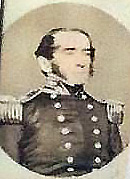
Commodore William J. McCluney (12 April 1796 — 11 February 1864) was a United States Navy officer whose service included the War of 1812, the Mexican-American War, and the Battle of Ty-ho Bay, China. McCluney commanded two of the flagships—the USS Mississippi and the USS Powhatan—in support of the Perry Expedition to Japan in 1853-1854. As a flag officer, McCluney transported the first Japanese Embassy to the United States aboard his flagship, the USS Roanoke, in 1860 on the last leg of their journey.
Born near Washington, Pennsylvania on 12 April 1796, William was the first child and only son of merchant James McCluney and Martha Levy. William's father died in 1799 leaving him, his mother, and two infant sisters on the Pennsylvania frontier. Four-year-old William's mother moved the family to Philadelphia in 1800. To support her family, William's mother became a shopkeeper in the heart of Philadelphia's commercial center. William's childhood was spent along the waterfront of America's busiest port. At age 15, McCluney applied for a commission in the U.S. Navy and on 1 January 1812, he became a midshipman. His first assignment was aboard the sloop-of-war USS Wasp (1807) under Master Commandant Jacob Jones and first Lieutenant James Biddle, a fellow Philadelphian.
McCluney's naval career began on the eve of the second war between the United States and Great Britain—now called the War of 1812. McCluney may have been aboard the Wasp returning from a diplomatic mission to France when the war hawks in Congress and President James Madison declared war on 18 June. For certain, he was aboard when the Wasp sailed from Philadelphia on 13 October with orders to harass British commercial shipping. After a storm damaged the ship and swept two crewmen overboard, the Wasp sighted a convoy of merchantmen accompanied by warships.
On Sunday morning 18 October, the Wasp closed with the convoy and engaged the 22-gun brig-sloop HMB Frolic. The ships exchanged broadside after broadside at close range, at times hull-to-hull in heavy seas. Finally, the Wasp pulled ahead and unleashed raking fire the length of Frolic's deck.
Wasp First Officer James Biddle led the boarding party to discover the destruction of the Frolic, both ship and crew. All of Frolic's officers and more than half her men were dead or wounded. Wounded British Commander Thomas Whinyates surrendered, but was unable to strike the Frolic's colors. Lieutenant Biddle struck for him. Moments later, both of Frolic's masts fell "by-the-board". The Wasp was badly damaged as well. Five men were dead and five wounded.
Contemporary historians described the Wasp-Frolic battle as possibly the most intense single-ship action of the war. Commandant Jones put a prize-crew aboard the Frolic to jury-rig repairs and assist the Frolic's surgeon with the wounded.
Neither victor nor vanquished could sail. Sunday afternoon, the 74-gun British battleship HMS Poitiers arrived, forcing both the Wasp and her prize to surrender.
At dawn, Sunday, 18 October, five days from his home in Philadelphia, McCluney, 16, the least experienced officer aboard the Wasp, could only imagine the coming duel of warships. By noon, McCluney had witnessed the death and dismemberment of more than a hundred comrades and enemy. By evening, he was a prisoner of war. Thus began a 50-year naval career.
Hub AI
William J. McCluney AI simulator
(@William J. McCluney_simulator)
William J. McCluney
Commodore William J. McCluney (12 April 1796 — 11 February 1864) was a United States Navy officer whose service included the War of 1812, the Mexican-American War, and the Battle of Ty-ho Bay, China. McCluney commanded two of the flagships—the USS Mississippi and the USS Powhatan—in support of the Perry Expedition to Japan in 1853-1854. As a flag officer, McCluney transported the first Japanese Embassy to the United States aboard his flagship, the USS Roanoke, in 1860 on the last leg of their journey.
Born near Washington, Pennsylvania on 12 April 1796, William was the first child and only son of merchant James McCluney and Martha Levy. William's father died in 1799 leaving him, his mother, and two infant sisters on the Pennsylvania frontier. Four-year-old William's mother moved the family to Philadelphia in 1800. To support her family, William's mother became a shopkeeper in the heart of Philadelphia's commercial center. William's childhood was spent along the waterfront of America's busiest port. At age 15, McCluney applied for a commission in the U.S. Navy and on 1 January 1812, he became a midshipman. His first assignment was aboard the sloop-of-war USS Wasp (1807) under Master Commandant Jacob Jones and first Lieutenant James Biddle, a fellow Philadelphian.
McCluney's naval career began on the eve of the second war between the United States and Great Britain—now called the War of 1812. McCluney may have been aboard the Wasp returning from a diplomatic mission to France when the war hawks in Congress and President James Madison declared war on 18 June. For certain, he was aboard when the Wasp sailed from Philadelphia on 13 October with orders to harass British commercial shipping. After a storm damaged the ship and swept two crewmen overboard, the Wasp sighted a convoy of merchantmen accompanied by warships.
On Sunday morning 18 October, the Wasp closed with the convoy and engaged the 22-gun brig-sloop HMB Frolic. The ships exchanged broadside after broadside at close range, at times hull-to-hull in heavy seas. Finally, the Wasp pulled ahead and unleashed raking fire the length of Frolic's deck.
Wasp First Officer James Biddle led the boarding party to discover the destruction of the Frolic, both ship and crew. All of Frolic's officers and more than half her men were dead or wounded. Wounded British Commander Thomas Whinyates surrendered, but was unable to strike the Frolic's colors. Lieutenant Biddle struck for him. Moments later, both of Frolic's masts fell "by-the-board". The Wasp was badly damaged as well. Five men were dead and five wounded.
Contemporary historians described the Wasp-Frolic battle as possibly the most intense single-ship action of the war. Commandant Jones put a prize-crew aboard the Frolic to jury-rig repairs and assist the Frolic's surgeon with the wounded.
Neither victor nor vanquished could sail. Sunday afternoon, the 74-gun British battleship HMS Poitiers arrived, forcing both the Wasp and her prize to surrender.
At dawn, Sunday, 18 October, five days from his home in Philadelphia, McCluney, 16, the least experienced officer aboard the Wasp, could only imagine the coming duel of warships. By noon, McCluney had witnessed the death and dismemberment of more than a hundred comrades and enemy. By evening, he was a prisoner of war. Thus began a 50-year naval career.
Recent media