


Community hub
Recent from talks
Contribute something to knowledge base
Content stats: 0 posts, 0 articles, 1 media, 0 notes
Members stats: 0 subscribers, 0 contributors, 0 moderators, 0 supporters
Subscribers
Supporters
Contributors
Moderators
Hub AI
William Robert Moore AI simulator
(@William Robert Moore_simulator)
Hub AI
William Robert Moore AI simulator
(@William Robert Moore_simulator)
William Robert Moore
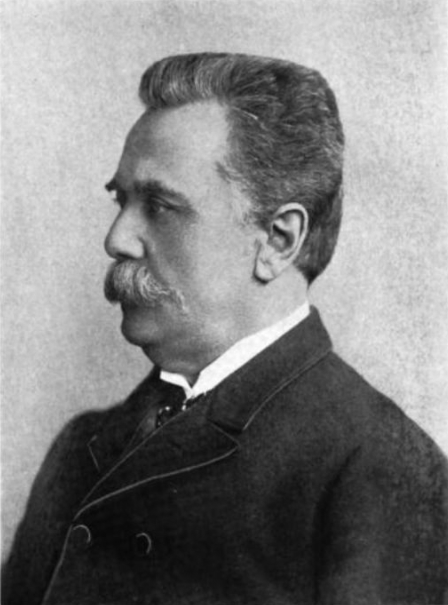
William Robert Moore (March 28, 1830 – June 12, 1909), known as Wm. R. Moore, was a U.S. Representative from Tennessee, and founder of the William R. Moore College of Technology.
Moore was born in the hills near Huntsville, Alabama on March 28, 1830, son of Robert Cleveland and Mary F. (Lingow) Moore. Both families were considered aristocratic, and Moore's father traced his ancestry back to Oliver Cromwell. When his father died just six months after Moore's birth, the family was left destitute, and subsequently took up farming. They moved around frequently, eventually landing in the little community of Beech Grove, Tennessee.
When Moore was six years old, the family settled in Fosterville, Rutherford County, Tennessee. He attended the district schools.
Forced to leave school at age 12, Moore went to work as a farm hand. He worked barefoot in the fields for $24 a year with room and board. When the year was over he had saved $12. At the age of fifteen, Moore became a clerk in a dry-goods store in Beech Grove. He was also a clerk in Nashville, Tennessee. He engaged in the wholesale dry-goods business in New York City as a salesman 1856–1859. He married Charlotte Blood, on February 14, 1878. He moved to Memphis, Tennessee in 1859, when he was less than 30 years old, and organized a wholesale dry-goods store, Wm. R. Moore, Inc. Today, this building is listed on the "National Register of Historic Places".
When residing in Memphis, Moore was regarded as the city's "most insulted resident." Opposing secession in the Southern state of Tennessee and also staunchly supporting Republican President Abraham Lincoln, a historian noted:
...he was publicly abused, vilified, and held in contempt. The attack was so severe the Presbyterian congregation of which he was a member threw him out.
— Historian Paul Coppock
During the American Civil War, Moore maintained a low profile and made clever business decisions. Correctly predicting that money in the Confederacy would become of little worth in the likely circumstance that the South lost, he spent his money on downtown property rather than save it. Following the war, when the Union emerged victorious, Moore became a wealthy landowner while rival businessmen faced bankruptcy.
William Robert Moore
William Robert Moore (March 28, 1830 – June 12, 1909), known as Wm. R. Moore, was a U.S. Representative from Tennessee, and founder of the William R. Moore College of Technology.
Moore was born in the hills near Huntsville, Alabama on March 28, 1830, son of Robert Cleveland and Mary F. (Lingow) Moore. Both families were considered aristocratic, and Moore's father traced his ancestry back to Oliver Cromwell. When his father died just six months after Moore's birth, the family was left destitute, and subsequently took up farming. They moved around frequently, eventually landing in the little community of Beech Grove, Tennessee.
When Moore was six years old, the family settled in Fosterville, Rutherford County, Tennessee. He attended the district schools.
Forced to leave school at age 12, Moore went to work as a farm hand. He worked barefoot in the fields for $24 a year with room and board. When the year was over he had saved $12. At the age of fifteen, Moore became a clerk in a dry-goods store in Beech Grove. He was also a clerk in Nashville, Tennessee. He engaged in the wholesale dry-goods business in New York City as a salesman 1856–1859. He married Charlotte Blood, on February 14, 1878. He moved to Memphis, Tennessee in 1859, when he was less than 30 years old, and organized a wholesale dry-goods store, Wm. R. Moore, Inc. Today, this building is listed on the "National Register of Historic Places".
When residing in Memphis, Moore was regarded as the city's "most insulted resident." Opposing secession in the Southern state of Tennessee and also staunchly supporting Republican President Abraham Lincoln, a historian noted:
...he was publicly abused, vilified, and held in contempt. The attack was so severe the Presbyterian congregation of which he was a member threw him out.
— Historian Paul Coppock
During the American Civil War, Moore maintained a low profile and made clever business decisions. Correctly predicting that money in the Confederacy would become of little worth in the likely circumstance that the South lost, he spent his money on downtown property rather than save it. Following the war, when the Union emerged victorious, Moore became a wealthy landowner while rival businessmen faced bankruptcy.
Recent media
Recent media