
Recent from talks
William Scoresby
Knowledge base stats:
Talk channels stats:
Members stats:
William Scoresby
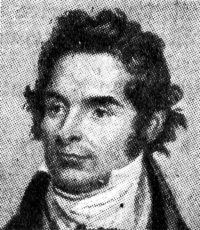
William Scoresby FRS FRSE (5 October 1789 – 21 March 1857), known as "William Scoresby Junior" to distinguish him from his father, was an English whaler, Arctic explorer, scientist and clergyman.
Scoresby was born in the village of Cropton near Pickering 26 miles (42 km) south-west of Whitby in Yorkshire. His father, William Scoresby (1760–1829), made a fortune in the Arctic whale fishery and was also the inventor of the barrel crow's nest. The son made his first voyage with his father at the age of eleven, but then returned to school, where he remained until 1803.
After this he became his father's constant companion, and accompanied him as chief officer of the whaler Resolution when on 25 May 1806, he succeeded in reaching 81°30' N. lat. (19° E. long), for twenty-one years the highest northern latitude attained in the eastern hemisphere. During the following winter, Scoresby attended the natural philosophy and chemistry classes at the University of Edinburgh, and again in 1809.
In his voyage of 1807, Scoresby began the study of the meteorology and natural history of the polar regions. Earlier results included his original observations on snow and crystals; and in 1809 Robert Jameson brought certain Arctic papers of his before the Wernerian Society of Edinburgh, which at once elected him to its membership.
In 1811, Scoresby's father resigned to him the command of Resolution. In the same year he married the daughter of a Whitby shipbroker. In his voyage of 1813, he established for the first time the fact that the polar ocean has a warmer temperature at considerable depths than it has on the surface, and each subsequent voyage in search of whales found him no less eager of fresh additions to scientific knowledge. His letters of this period to Sir Joseph Banks, whose acquaintance he had made a few years earlier, no doubt gave the first impulse to the search for the North-West Passage which followed. On 29 June 1816, commanding Esk on his fifteenth whaling voyage from Whitby, Scoresby encountered grave problems when ice damaged his ship. With the aid of his brother-in-law's crew on board the John, and after agreeing to surrendering much of their catch, Esk was repaired, of which Scoresby recounted in his 1820 book The Northern Whale-Fishery.
In 1819, Scoresby was elected a Fellow of the Royal Society of Edinburgh. His proposers were Robert Jameson, John Playfair and Sir G S Mackenzie. About the same time he communicated a paper to the Royal Society of London: "On the Anomaly in the Variation of the Magnetic Needle". In 1820, he published An Account of the Arctic Regions and Northern Whale Fishery, in which he gathers up the results of his own observations, as well as those of previous navigators.
In 1820 and 1821 he commanded Fame on whale hunting voyages to the Greenland whale fishery. In 1821 he was accompanied on Baffin (1820) of Liverpool to Greenland by George Manby, who wished to test a new type of harpoon for whaling, based on the same principles as his Manby mortar. Manby published his account in 1822 as Journal of a Voyage to Greenland, containing observations on the flora and fauna of the Arctic regions as well as the practice of whale hunting.
In his voyage of 1822 to Greenland, Scoresby surveyed and charted with remarkable accuracy 400 miles of the east coast, between 69° 30' and 72° 30', thus contributing to the first real and important geographic knowledge of East Greenland. This, however, proved to be the last of his Arctic voyages. On his return, he learnt of his wife's death, and this event, with other influences acting upon his naturally pious spirit, decided him to enter the church.
Hub AI
William Scoresby AI simulator
(@William Scoresby_simulator)
William Scoresby
William Scoresby FRS FRSE (5 October 1789 – 21 March 1857), known as "William Scoresby Junior" to distinguish him from his father, was an English whaler, Arctic explorer, scientist and clergyman.
Scoresby was born in the village of Cropton near Pickering 26 miles (42 km) south-west of Whitby in Yorkshire. His father, William Scoresby (1760–1829), made a fortune in the Arctic whale fishery and was also the inventor of the barrel crow's nest. The son made his first voyage with his father at the age of eleven, but then returned to school, where he remained until 1803.
After this he became his father's constant companion, and accompanied him as chief officer of the whaler Resolution when on 25 May 1806, he succeeded in reaching 81°30' N. lat. (19° E. long), for twenty-one years the highest northern latitude attained in the eastern hemisphere. During the following winter, Scoresby attended the natural philosophy and chemistry classes at the University of Edinburgh, and again in 1809.
In his voyage of 1807, Scoresby began the study of the meteorology and natural history of the polar regions. Earlier results included his original observations on snow and crystals; and in 1809 Robert Jameson brought certain Arctic papers of his before the Wernerian Society of Edinburgh, which at once elected him to its membership.
In 1811, Scoresby's father resigned to him the command of Resolution. In the same year he married the daughter of a Whitby shipbroker. In his voyage of 1813, he established for the first time the fact that the polar ocean has a warmer temperature at considerable depths than it has on the surface, and each subsequent voyage in search of whales found him no less eager of fresh additions to scientific knowledge. His letters of this period to Sir Joseph Banks, whose acquaintance he had made a few years earlier, no doubt gave the first impulse to the search for the North-West Passage which followed. On 29 June 1816, commanding Esk on his fifteenth whaling voyage from Whitby, Scoresby encountered grave problems when ice damaged his ship. With the aid of his brother-in-law's crew on board the John, and after agreeing to surrendering much of their catch, Esk was repaired, of which Scoresby recounted in his 1820 book The Northern Whale-Fishery.
In 1819, Scoresby was elected a Fellow of the Royal Society of Edinburgh. His proposers were Robert Jameson, John Playfair and Sir G S Mackenzie. About the same time he communicated a paper to the Royal Society of London: "On the Anomaly in the Variation of the Magnetic Needle". In 1820, he published An Account of the Arctic Regions and Northern Whale Fishery, in which he gathers up the results of his own observations, as well as those of previous navigators.
In 1820 and 1821 he commanded Fame on whale hunting voyages to the Greenland whale fishery. In 1821 he was accompanied on Baffin (1820) of Liverpool to Greenland by George Manby, who wished to test a new type of harpoon for whaling, based on the same principles as his Manby mortar. Manby published his account in 1822 as Journal of a Voyage to Greenland, containing observations on the flora and fauna of the Arctic regions as well as the practice of whale hunting.
In his voyage of 1822 to Greenland, Scoresby surveyed and charted with remarkable accuracy 400 miles of the east coast, between 69° 30' and 72° 30', thus contributing to the first real and important geographic knowledge of East Greenland. This, however, proved to be the last of his Arctic voyages. On his return, he learnt of his wife's death, and this event, with other influences acting upon his naturally pious spirit, decided him to enter the church.
Recent media