Recent from talks
Contribute something
Nothing was collected or created yet.
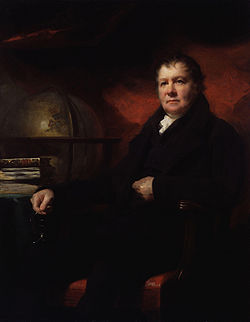
John Playfair
View on Wikipedia
John Playfair FRSE, FRS (10[citation needed] March 1748 – 20 July 1819) was a Church of Scotland minister, remembered as a scientist and mathematician, and a professor of natural philosophy at the University of Edinburgh. He is best known for his book Illustrations of the Huttonian Theory of the Earth (1802), which summarised the work of James Hutton.[1] It was through this book that Hutton's principle of uniformitarianism, later taken up by Charles Lyell, first reached a wide audience. Playfair's textbook Elements of Geometry made a brief expression of Euclid's parallel postulate known now as Playfair's axiom.
Key Information
In 1783 he was a co-founder of the Royal Society of Edinburgh. He served as General Secretary to the society 1798–1819.[2]
Life
[edit]Born at Benvie, slightly west of Dundee to Margaret Young (1719/20 – 1805) and Reverend James Playfair (died 1772), the kirk minister of Liff and Benvie.[3][4]
Playfair was educated at home until the age of 14, when he entered the University of St Andrews to study divinity. He also did further studies at Edinburgh University. In 1766, when only 18, he was a candidate for the chair of mathematics in Marischal College (now part of the University of Aberdeen), and, although he was unsuccessful, his claims were admitted to be high.[5]
Six years later (1772) he applied for the chair of natural philosophy (physics) at St Andrews University, but again without success. In 1773 he was licensed to preach by the Church of Scotland and was offered the united parishes of Liff and his home parish of Benvie (made vacant by the death of his father). However, Playfair chose to continue his studies in mathematics and physics, and in 1782 he resigned his charge to become the tutor of Adam Ferguson. By this arrangement Playfair regularly visited Edinburgh and went on to cultivate the literary and scientific society for which the city was at that time specially distinguished. In particular, he attended the natural history course of John Walker. Through Nevil Maskelyne, whose acquaintance he had first made in the course of the celebrated Schiehallion experiments in 1774, he also gained access to the scientific circles of London. In 1785 when Dugald Stewart succeeded Ferguson in the University of Edinburgh Chair of Moral Philosophy, Playfair succeeded the former to become the chair of mathematics.[5]

In 1795 Playfair published an alternative, more stringent formulation of Euclid's parallel postulate, which is now called Playfair's axiom. Although the axiom bears Playfair's name, he did not create it, but credited others, in particular William Ludlam with its prior use.[6]
In 1802 Playfair published his celebrated volume entitled Illustrations of the Huttonian Theory of the Earth. The influence exerted by James Hutton on the development of geology is thought to be largely due to its publication. In 1805 Playfair exchanged the Chair of Mathematics for that of natural philosophy in succession to John Robison, whom also he succeeded as general secretary to the Royal Society of Edinburgh. He took a prominent part, on the liberal side, in the ecclesiastical controversy that arose in connection with Sir John Leslie's appointment to the post he had vacated, and published a satirical letter (1806).[5]
He moved from 6 Buccleuch Place to a new house at 2 Albany Street (then called Albany Row) in 1807.[7][8]
Playfair was an opponent of Gottfried Leibniz's vis viva principle, an early version of the conservation of energy. In 1808, he launched an attack[9] on John Smeaton and William Hyde Wollaston's work championing the theory. In 1808 he also published a review of Laplace's Traité de Mécanique Celeste.[10]
He died at 2 Albany Street on 20 July 1819. He is buried nearby in Old Calton Burial Ground (a secular burial ground).[11]
Family
[edit]
Playfair's brothers were architect James Playfair, solicitor Robert Playfair and engineer William Playfair. His nephew, William Henry Playfair (1790–1857) was an eminent architect in Scotland.
In later life he admired and proposed to the wealthy widow Jane Apreece. She turned him down and married Sir Humphry Davy.[12]
He died of strangury on 20 July 1819, and, although an eminent man, was buried in an unmarked grave in Old Calton Burial Ground, on Waterloo Place in Edinburgh. His, and his brother, James's graves were marked by a plaque unveiled in 2011 following a local campaign.[13] The monument to his memory by William Henry Playfair, on Calton Hill,[14] is visible from the spot.
Honours
[edit]- Fellow of the Royal Society of Edinburgh
- Fellow of the Royal Society of London, 1807
- Craters on Mars and the Moon were named in his honour.
- The mineral playfairite was named in his honour.[15][16]

Works
[edit]- Illustrations of the Huttonian theory of the Earth (in French). London: Pierre François Jean Baptiste Leblanc. 1815.
Critical bibliography
[edit]A four-volume collected edition of Playfair's works, with a memoir by James G. Playfair, appeared at Edinburgh in 1822.[17]
His writings include a number of essays contributed to the Edinburgh Review from 1804 onwards, various papers in the Philosophical Transactions of the Royal Society (including his earliest publication, "On the Arithmetic of Impossible Quantities", 1779, and an "Account of the Lithological Survey of Schehallion", 1811) and in the Transactions of the Royal Society of Edinburgh ("On the Causes which Affect the Accuracy of Barometrical Measurements" and others), the articles "Aepinus" and "Physical Astronomy", and a "Dissertation on the Progress of Mathematical and Physical Science since the Revival of Learning in Europe" in the Encyclopædia Britannica (Supplement to fourth, fifth and sixth editions).[5] He also took an interest in Indian astronomy and compared them with traditional and ancient astronomy from Egypt and Greece.[18] He also examined Indian concepts in trigonometry.[19]
His Elements of Geometry first appeared in 1795 and has passed through many editions; his Outlines of Natural Philosophy (2 vols., 1812–1816) consist of the propositions and formulae which were the basis of his class lectures. Playfair's contributions to pure mathematics were not considerable, his papers "On the Arithmetic of Impossible Quantities" and "On the Causes which Affect the Accuracy of Barometrical Measurements", and his Elements of Geometry, all already referred to, being the most important. His lives of Matthew Stewart, Hutton, and Robison, many of his reviews, and above all his "Dissertation" are of the utmost value.[5]
References
[edit]- ^ Playfair, John (1802). Illustration of the Huttonian Theory. Edinburgh: Cadell & Davies – via Internet Archive.
- ^ Biographical Index of Former Fellows of the Royal Society of Edinburgh 1783–2002 (PDF). The Royal Society of Edinburgh. July 2006. ISBN 0-902-198-84-X. Archived from the original (PDF) on 4 March 2016. Retrieved 8 January 2018.
- ^ C D Waterston; A Macmillan Shearer (July 2006). Former Fellows of The Royal Society of Edinburgh, 1783–2002: Part 2 (K–Z) (PDF). Royal Society of Edinburgh. ISBN 090219884X. Retrieved 13 February 2022.
- ^ Morrell, Jack (2004). Playfair, John (1748–1819), mathematician and geologist. Oxford: Oxford University Press.
- ^ a b c d e Chisholm 1911.
- ^ J. Playfair and Euclid, Elements of geometry; containing the first six books of Euclid, with two books on the geometry of solids. To which are added, elements of plane and spherical trigonometry, J.B. Lippincott & Co, 1860, p. 291. Available online from Google Books. See also Cajori's A History of Mathematics.
- ^ Edinburgh Post Office Directories 1805 to 1810
- ^ grant's Old and New Edinburgh vol III
- ^ Edinburgh Review, 12, 1808, 120–130
- ^ Smith, Sydney. "Review of Traité de Mécanique Céleste par P. S. Laplace". Edinburgh Review. 11 (22): 249–284.
- ^ Grant's Old and New Edinburgh vol III
- ^ Sophie Forgan, 'Davy, Jane, Lady Davy (1780–1855)', Oxford Dictionary of National Biography, Oxford University Press, 2004; online edn, May 2008 accessed 17 Dec 2014
- ^ "Edinburgh World Heritage - News Article". Archived from the original on 29 August 2013. Retrieved 2 June 2013.
- ^ Biographical Dictionary of Eminent Scotsmen (1856), reproduced in Significant Scots
- ^ Information about Playfairite on Mindat database, Retrieved on 19 April 2012.
- ^ J.L. Jambor (1967) New lead sulfantimonides from Madoc, Ontario; Part 2, Mineral descriptions, Canadian Mineralogist, vol. 9, 194–6
- ^ See the Collected Works of John Playfair on the Internet Archive (www.archive.org)
- ^ Playfair, John (1790). "XIII. Remarks on the Astronomy of the Brahmins". Earth and Environmental Science Transactions of the Royal Society of Edinburgh. 2 (2): 135–192. doi:10.1017/s0263593300027322. ISSN 2053-5945. S2CID 251576277.
- ^ Burgess, James (1893). "Art. XVIII.—Notes on Hindu Astronomy and the History of our Knowledge of it". Journal of the Royal Asiatic Society. 25 (4): 717–761. doi:10.1017/s0035869x00022553. ISSN 1474-0591. S2CID 163252270.
External links
[edit]- Dictionary of Scientific Biography
- O'Connor, John J.; Robertson, Edmund F., "John Playfair", MacTutor History of Mathematics Archive, University of St Andrews
- Significant Scots: John Playfair
- National Portrait Gallery
- John Playfair (1836) Elements of Geometry from Google books, see page 22 for parallel axiom.
- The works of John Playfair. Edinburgh: A. Constable & Co. 1822. (from HathiTrust)
- From the Linda Hall Library
- Playfair's (1802) Illustrations of the Huttonian Theory of the Earth
- Playfair's (1815) Explication de Playfair sur la théorie de la terre par Hutton
This article incorporates text from a publication now in the public domain: Chisholm, Hugh, ed. (1911). "Playfair, John". Encyclopædia Britannica. Vol. 21 (11th ed.). Cambridge University Press. p. 831.
John Playfair
View on GrokipediaJohn Playfair (10 March 1748 – 20 July 1819) was a Scottish mathematician, natural philosopher, and geologist, best known for clarifying and popularizing James Hutton's uniformitarian geological theories through his influential 1802 publication Illustrations of the Huttonian Theory of the Earth.[1][2]
Born in Benvie near Dundee, Playfair studied at the University of St Andrews, earning an M.A. in 1765 and training in divinity before serving as a Church of Scotland minister in Liff and Benvie from 1773 to 1782.[1]
In 1785, he was appointed joint professor of mathematics at the University of Edinburgh, a position he held until 1805, after which he succeeded as professor of natural philosophy until his death.[1][2]
His mathematical contributions included Elements of Geometry (1795), which reformulated Euclid's parallel postulate as Playfair's axiom—stating that through a point not on a given line, exactly one line parallel to the given line can be drawn—a simplification that facilitated the teaching of Euclidean geometry and influenced later non-Euclidean developments.[1]
In geology, Playfair's Illustrations presented Hutton's ideas of gradual, cyclical Earth processes driven by observable forces over immense timescales in a more accessible and eloquent prose, providing empirical examples and refuting critics, thereby establishing uniformitarianism as a cornerstone of modern geology.[1][2]
He also advanced natural philosophy through lectures on mechanics and optics, published Outlines of Natural Philosophy (1812), and founded the Astronomical Institution of Edinburgh in 1811, promoting observational astronomy.[1]
Early Life and Education
Birth and Family Background
John Playfair was born on 10 March 1748 in Benvie, a small parish near Dundee in Forfarshire (now Angus), Scotland.[1] He was the eldest son of Reverend James Playfair, minister of the united parishes of Liff and Benvie in the Church of Scotland, and his wife Margaret Young, daughter of John Young of Newtyle.[3] The family resided in the manse at Benvie, where Reverend Playfair served from at least the 1740s until his death in 1772; the minister's role involved pastoral duties, preaching, and community oversight in a rural Presbyterian setting typical of 18th-century lowland Scotland.[1] Playfair had several siblings, including brothers James (an architect who died in 1794), William (an engineer and economist born in 1759), and Robert (a solicitor); he also had unnamed sisters, whom he supported and educated after their father's passing.[1][4] This familial network later connected Playfair to broader intellectual circles, as his brothers pursued distinguished careers in architecture, invention, and law, reflecting the Playfairs' emphasis on education and professional advancement despite modest clerical origins.[4]Academic Training and Early Influences
Playfair was born on 10 March 1748 in Benvie, near Dundee, Scotland, as the eldest son of Reverend James Playfair, the local parish minister whose clerical role shaped the family's intellectual and religious environment.[1] He received his initial education at home under his father's guidance, focusing on classical languages, theology, and foundational knowledge typical of a minister's son destined for the church.[1] In 1762, at age 14, Playfair entered the University of St Andrews on a scholarship, initially studying arts and earning a Master of Arts degree in 1765 before proceeding to divinity at St Mary's College, which he completed in 1769.[1] During his time there, he supplemented his theological training with studies in mathematics and natural philosophy, even delivering lectures on behalf of Professor Alexander Wilkie in the mid-1760s, revealing an early aptitude for scientific subjects amid his primary ecclesiastical preparation.[1] In 1770, following completion of his divinity course, he was licensed to preach by the Presbytery of Dundee, aligning with expectations to enter the ministry like his father.[1] From 1769 to 1773, Playfair resided in Edinburgh, where exposure to the Scottish Enlightenment profoundly redirected his interests toward mathematics and natural philosophy; he engaged with leading thinkers including Dugald Stewart, Adam Smith, Joseph Black, and James Hutton, whose ideas on empirical inquiry and uniformitarian principles began to influence his shift from theology.[1] This period marked a transition, as the vibrant intellectual circles contrasted with his St Andrews clerical focus, fostering a preference for analytical pursuits over pulpit duties, though he briefly served as minister of Liff and Benvie from 1773 before resigning in 1782 to pursue tutoring and scientific study.[1]Professional Career
Ministerial and Teaching Roles
Playfair studied divinity after graduating from the University of St Andrews in 1765, assisting his father at the parish of Liff and Benvie while pursuing private theological education.[1] He was licensed to preach by the Presbytery of Dundee in 1770.[1] In 1772, Playfair was nominated by Lord Gray to succeed his father, James Playfair, as parish minister of Liff and Benvie in Angus, Scotland; he was ordained in August 1773 following legal confirmation by the General Assembly of the Church of Scotland.[1] [5] He served in this role from 1773 to 1782 (or early 1783), during which the relatively undemanding parish duties afforded him leisure to continue mathematical studies independently.[1] [5] In 1782, Playfair resigned his ministerial position to accept a private tutoring role for the sons of Ferguson of Raith, including Ronald Ferguson (later Sir Ronald) and his brother, relocating nearer to Edinburgh.[1] This appointment, lasting until around 1787, provided financial stability and opportunities for intellectual engagement, facilitating his transition to academic circles and eventual university appointment without formal competition.[1] The tutoring involved instructing the young aristocrats in mathematics and related sciences, aligning with Playfair's growing expertise beyond clerical duties.[6]Professorships at the University of Edinburgh
In 1785, John Playfair was appointed joint Professor of Mathematics at the University of Edinburgh, sharing the chair with Adam Ferguson, who was advanced in age and increasingly reliant on assistance for lectures.[1] This position marked Playfair's entry into full-time academic teaching after prior ministerial and tutoring roles, and he delivered lectures that emphasized clarity and practical application, drawing significant student attendance despite competition from private instructors.[1] He retained the mathematics professorship until 1805, during which time he contributed to curriculum development, including the publication of textbooks that standardized Euclidean geometry instruction.[1][7] In 1805, following the death of John Robison, Playfair exchanged the mathematics chair for the professorship of Natural Philosophy (encompassing physics and related experimental sciences) at the same university, a move that aligned with his broadening interests in physical theories and empirical demonstration.[1] In this role, he succeeded Robison and focused lectures on mechanics, optics, and hydrostatics, incorporating apparatus for live demonstrations to engage students, though he faced challenges from limited funding for equipment compared to English institutions.[1] Playfair held the natural philosophy chair until his death on July 20, 1819, influencing successors like Sir John Leslie in mathematics and advancing interdisciplinary ties between mathematics, physics, and emerging geological studies within Edinburgh's faculty.[8]Contributions to Mathematics
Playfair's Axiom and Geometric Works
In 1795, John Playfair published Elements of Geometry, a revised edition of Euclid's Elements comprising the first six books supplemented by two books on solid geometry, intended primarily for use in his mathematics courses at the University of Edinburgh.[1] The text introduced algebraic notation to denote the results of propositions, enhancing clarity and accessibility for students compared to Euclid's purely verbal and diagrammatic approach.[1] Playfair structured the work to emphasize rigorous demonstration, integrating analytic methods to derive synthetic proofs, which he viewed as essential for understanding geometric truths from first principles.[9] Central to Playfair's geometric contributions is his reformulation of Euclid's fifth postulate, now termed Playfair's axiom: "Given a line and a point not on it, exactly one line can be drawn through the point parallel to the given line."[10] This statement, presented as a postulate in the opening axioms, is logically equivalent to Euclid's original parallel postulate but distills it into a simpler form focused on the uniqueness and existence of parallels, bypassing the latter's reliance on transversals and interior angles exceeding two right angles.[11] Playfair adopted this version because he considered Euclid's phrasing insufficiently axiomatic, as its converse—that alternate interior angles equal implies non-intersection—necessitated separate proof rather than self-evident intuition.[12] Playfair's axiom proved influential in geometric education and theory, serving as a foundational assumption in plane geometry texts for over a century and aiding attempts to prove the parallel postulate's independence, which ultimately paved the way for non-Euclidean geometries in the 19th century.[13] While Playfair did not innovate new theorems, his textbook's pedagogical refinements—such as streamlined proofs and algebraic aids—standardized Euclidean geometry instruction in Britain and beyond, fostering precise reasoning about parallels and congruence.[10] The work's enduring adoption underscores Playfair's role in bridging classical geometry with modern analytic techniques.[1]Textbooks and Pedagogical Impact
Playfair published Elements of Geometry in 1795, adapting the first six books of Euclid's Elements to provide a clearer, more systematic presentation suited for contemporary instruction.[10] The text incorporated supplements on topics such as the quadrature of the circle and the geometry of solids, aiming to reform geometry teaching in Britain by streamlining Euclidean proofs.[14] A key innovation was the replacement of Euclid's fifth postulate with Playfair's axiom: "Given a line and a point not on the line, it is possible to draw exactly one line through the point parallel to the given line."[10] Playfair also introduced algebraic notation to simplify proof expositions, reducing reliance on purely geometric arguments and enhancing accessibility for students.[10] These changes emphasized analytical methods alongside synthetic geometry, reflecting Playfair's view that modern pedagogy required bridging classical rigor with emerging mathematical practices.[15] The textbook achieved widespread adoption, with at least six editions in Britain and an American edition in 1832, influencing geometry curricula across universities and schools.[10] It shaped instruction for an estimated 13,000 British students during the nineteenth century, establishing Playfair's axiom as the standard equivalent to Euclid's postulate in subsequent educational materials.[15] This pedagogical legacy facilitated broader engagement with Euclidean principles, contributing to the axiom's enduring role in non-Euclidean geometry discussions.[13]Contributions to Physics and Astronomy
Optical and Physical Theories
John Playfair's engagement with optical and physical theories occurred primarily through his professorship in natural philosophy at the University of Edinburgh, to which he was appointed in 1805 following an exchange from the chair of mathematics.[1] In this role, he delivered annual lecture courses synthesizing contemporary physics, drawing on Newtonian principles while incorporating practical demonstrations and mathematical analysis via geometry and algebra.[16] His approach emphasized empirical observation and causal mechanisms, framing physical laws as manifestations of intelligent design, consistent with Scottish Enlightenment traditions.[16] In optics, Playfair's lectures addressed foundational topics including the nature of light, vision, and optical instruments such as lenses, as documented in student notes from sessions between 1806 and 1809.[17] [16] He adhered to the Newtonian corpuscular theory of light, treating it as particulate propagation subject to laws of reflection and refraction, rather than endorsing emerging wave hypotheses like those proposed by Thomas Young in 1801.[16] These discussions incorporated rudimentary calculus, such as differentials for ray paths, but prioritized accessible geometric proofs for phenomena like image formation and magnification.[16] Playfair's treatment remained pedagogical, aimed at training students in verifiable optical principles without proposing novel theoretical advancements. Broader physical theories in Playfair's curriculum encompassed mechanics, hydrostatics, pneumatics, and heat, grounded in Newtonian dynamics and extended to applications like fluid pressure and atmospheric phenomena.[1] His Outlines of Natural Philosophy (1812–1814), derived from these lectures, detailed volumes on dynamics, fluids, and astronomy but left a projected third volume—intended to cover optics, electricity, and magnetism—unfinished due to his declining health.[1] This work reflected transmission of French analytical methods into British pedagogy, yet Playfair critiqued overly speculative continental approaches in favor of empirical rigor and first-principles deduction from observed forces.[18] His contributions thus lay in clarifying causal structures of physical interactions, such as gravitational and elastic forces, through clear exposition rather than experimental innovation.[16]Schiehallion Experiments and Density Estimates
In 1774, Nevil Maskelyne, Astronomer Royal, conducted observations on Schiehallion, a mountain in the Scottish Highlands, to measure the deflection of a plumb line caused by the mountain's gravitational attraction, aiming to estimate the Earth's mean density.[19] Charles Hutton subsequently analyzed the data in 1778, yielding an Earth specific gravity of 4.5 relative to water, based on assumptions of the mountain's uniform density and shape.[20] These assumptions proved imprecise due to Schiehallion's heterogeneous composition of quartzite and schist, prompting later refinements.[19] Playfair, who had visited Schiehallion during Maskelyne's original fieldwork, undertook a targeted lithological survey in 1801 to quantify the mountain's rock densities more accurately.[20] He mapped the outcrops, collected representative samples of the dominant quartzite (specific gravity approximately 2.65) and schist (specific gravity approximately 2.70–2.75), and calculated a weighted average density for the mountain's mass, correcting Hutton's overestimate of uniformity.[21] Integrating these measurements with Maskelyne's observed plumb-line deflections (up to 54 arcseconds toward the mountain) and gravitational theory, Playfair derived an improved Earth specific gravity range of 4.56 to 4.87 in his 1811 analysis.[19][22] This estimate implied the Earth's mean density was roughly double that of surface crustal rocks like those on Schiehallion, supporting inferences of a denser core despite the era's limited seismic data.[23] Playfair's approach emphasized empirical rock sampling over idealized models, enhancing the experiment's reliability, though it remained below the modern value of 5.51 due to uncertainties in Schiehallion's exact mass and shape.[19] His work demonstrated the value of geological fieldwork in geophysical calculations, bridging astronomy and earth sciences.[20]Geological Contributions
Promotion of Hutton's Uniformitarianism
John Playfair advanced James Hutton's uniformitarian geology primarily through his 1802 publication, Illustrations of the Huttonian Theory of the Earth, which systematically expounded and defended Hutton's principles of gradual, uniform geological processes operating over immense timescales.[24] This work addressed the inaccessibility of Hutton's original Theory of the Earth (1795), presenting its core ideas—such as the cyclical erosion, deposition, and uplift driven by present-day mechanisms like rivers, winds, and volcanism—in a clearer, more logical structure supported by empirical observations.[25] Playfair emphasized that no evidence required invoking paroxysmal revolutions or supernatural interventions, arguing instead for the sufficiency of observable natural agencies to account for Earth's features.[26] The book explicitly countered prevailing Neptunist doctrines, which attributed rock formations to precipitation from a primordial ocean, by marshaling field evidence for igneous origins and sedimentary cycles that aligned with Hutton's plutonist views.[27] Playfair responded to critics like Richard Kirwan, who in 1799 revived attacks on Hutton's theory as inconsistent with scriptural timelines and physical laws, by reinforcing the empirical basis for deep time and uniform causation without resorting to ad hoc catastrophism.[27] Through precise descriptions of phenomena like angular unconformities and basaltic formations, he demonstrated how uniform processes could produce complex strata, thereby bolstering Hutton's rejection of directional permanence in Earth's history.[28] Playfair's exposition proved instrumental in sustaining uniformitarianism amid dominant Wernerian influences in European geology, rendering Hutton's abstract principles more palatable to mathematicians and natural philosophers by integrating deductive reasoning with inductive evidence.[25] Its readability and fidelity to Hutton's data—drawn from Scottish terrains like Siccar Point—facilitated broader acceptance, paving the way for later syntheses while critiquing alternatives for lacking causal continuity with known physics.[26] The 1802 edition, spanning over 500 pages with appended illustrations, underscored Playfair's commitment to rigor, as he avoided speculative extensions and prioritized verifiable mechanisms over theoretical overreach.[29]Key Observations and Empirical Evidence
Playfair documented extensive field observations of unconformities, such as the prominent example at Siccar Point on Scotland's Berwickshire coast, where steeply inclined Silurian greywacke strata are sharply truncated by erosion and overlain by nearly horizontal Devonian sandstones, evidencing cycles of marine deposition, tectonic uplift, prolonged subaerial denudation, and subsequent subsidence over immense timescales without invoking paroxysmal events. This feature, examined during a 1788 excursion with Hutton and James Hall, exemplifies the uniformity of geological agents, as the overlying strata show no disturbance from the underlying erosion surface, implying vast elapsed time for degradation to base level.[30] In river systems, Playfair observed valleys incised through resistant lithologies, including the Rhône River excavating a deep gorge through limestone masses to form the basin of Lake Leman (Geneva), with lateral terraces marking former lake levels filled by alluvial deposition, demonstrating fluvial downcutting and sediment aggradation as ongoing processes capable of reshaping topography gradually.[31] Similarly, coastal breaches along the British Channel, such as those by the Dart, Plym, and Tamar rivers, reveal cliffs undermined by wave action and stream erosion, yielding measurable quantities of detritus that contribute to offshore stratification.[31] These observations counter claims of insufficient erosive power in modern agents, as quantified debris volumes from mountain ranges like the Cheviots supply basins in Northumberland and Durham, balancing continental decay with marine accumulation.[31] Igneous intrusions provided further evidence of subterranean heat and fluidity; Playfair described whinstone (basaltic) dikes traversing and indurating enclosing sediments at Salisbury Crags near Edinburgh, with wedge-shaped masses disrupting stratification in a manner analogous to observed lava flows, indicating consolidation from molten states without surface volcanism.[31] Granite veins penetrating schistose rocks violently, as seen in Arran and Glentilt, exhibit sharp contacts and xenoliths, supporting injection of fused material into fissures under pressure rather than aqueous precipitation.[31] Mineral veins containing rock fragments and displaced walls further attest to past liquidity driven by geothermal gradients, with native metals like gold and copper occurring in crystalline forms consistent with cooling from melt.[31] Deposition rates offered quantifiable support for stratification; in the Baltic Sea, river inflows shallow the basin by approximately 40 inches per century through silts and sands, mirroring the incremental buildup of secondary strata from eroded primaries.[31] Calcareous beds rich in organized shells and corals, as at Coniston Lake and Plymouth, derive from subaqueous precipitation and organic accumulation, while bituminous coals stem from vegetable detritus in stagnant basins, as evidenced by Isle of Skye specimens preserving plant structures.[31] Angular blocks in conglomerates imply short-distance transport from nearby sources, aligning with localized fluvial and glacial action rather than universal diluvial currents, thus reinforcing the adequacy of uniform processes for geological history.[31]Debates with Neptunism and Catastrophism
In his Illustrations of the Huttonian Theory of the Earth published in 1802, John Playfair mounted a detailed critique of Neptunism, the theory advanced by Abraham Gottlob Werner positing that all rocks formed through precipitation and crystallization from a primordial ocean.[32] Playfair argued that Werner's system failed to explain the igneous origins of rocks like granite and basalt, citing evidence of their intrusive relationships with sedimentary strata and vesicular textures indicative of former fluidity, as observed in Scottish dikes and whins. He contrasted this with Neptunist claims by referencing volcanic districts such as Auvergne, where recent lava flows paralleled ancient formations, undermining the aqueous precipitation model.[33] Playfair further challenged Neptunism's chronological sequence of rock formations, asserting that Werner's universal ocean hypothesis lacked empirical support for the absence of marine fossils in primitive rocks and ignored lateral variations in strata continuity.[34] His advocacy for plutonist (igneous) processes emphasized observable analogies between modern volcanic activity and ancient rocks, promoting Hutton's theory of subterranean heat as the agent of consolidation over Werner's chemical precipitation.[35] This positioned Playfair as a key figure in shifting geological opinion away from Neptunism in Britain, though continental adherents like Robert Jameson initially resisted, interpreting Scottish features through a Wernerian lens.[36] Regarding catastrophism, Playfair's uniformitarian framework inherently opposed notions of sudden, paroxysmal upheavals as primary shapers of Earth's surface, such as those later formalized by Georges Cuvier.[37] He contended that features like river valleys and coastal erosion resulted from prolonged, steady action of water and weathering rather than violent deluges or revolutions, using examples from Scottish Highlands where denudation rates aligned with gradual processes over immense time.[35] Playfair dismissed catastrophic explanations for want of evidence, arguing that Hutton's cyclic theory of deposition, consolidation, upheaval, and erosion via uniform causes better accounted for stratigraphic succession without invoking unobservable cataclysms.[32] This stance reinforced empirical observation over speculative appeals to extraordinary events, influencing subsequent geologists to prioritize present-day processes in interpreting the past.[37]Personal Life and Character
Family Relations and Marriage
John Playfair was born on 10 March 1748 at Benvie, the eldest son of Reverend James Playfair, minister of the united parishes of Liff and Benvie near Dundee, and his wife Margaret Young.[1] He was the first of seven siblings to reach adulthood, a talented family that included brothers James, an architect who worked in London; William (1759–1823), known as an engineer, economist, and inventor of statistical graphical methods; and Robert, a solicitor whose descendants later emigrated to Canada.[1][6] Following his father's death in 1772, Playfair took responsibility for supervising the education of his younger brothers and sisters, reflecting the close-knit family dynamics amid financial constraints.[1] Playfair never married and fathered no children, a circumstance that shaped his domestic life around extended family support rather than a nuclear household.[6] From 1787, upon settling in Edinburgh as professor of mathematics, his home included his widowed mother and unmarried sisters, who resided with him for the remainder of his life, providing a stable familial environment amid his academic and clerical duties.[1][6] After brother James's death in 1794, Playfair extended his paternal role by supporting the education of James's sons, including formally adopting nephew William Henry Playfair (c. 1790–1857), who grew to prominence as an architect designing key elements of Edinburgh's New Town and a monument to his uncle on Calton Hill.[1][6] Another nephew, James George Playfair, assisted in Playfair's geological fieldwork and posthumously edited his works in 1822, underscoring enduring familial ties in intellectual pursuits.[1]Personality, Friendships, and Daily Life
John Playfair was renowned for his amiable and estimable character, which endeared him to colleagues and friends alike.[38] Contemporaries described him as possessing delightful manners, inflexible principles, and generous affections, with a gentle and steady temperament that was cheerful yet tempered by a slow, philanthropic smile.[38] His cordial frankness and sweetness of temper allowed him to conciliate even those opposed to his views, while he showed intolerance only toward baseness or cruelty.[1] Playfair exhibited a calm intellect marked by clear thought and genuine enthusiasm, making him a magnetic teacher capable of inspiring students through brilliant exposition and effective pedagogy.[1] Playfair cultivated deep friendships within the Scottish Enlightenment circle, including close associations with geologist James Hutton, mathematician Dugald Stewart, and natural philosopher John Robison.[1] He accompanied Hutton on geological excursions across Britain from 1797 to 1802, later promoting his uniformitarian theories following Hutton's death in 1797.[1] With Stewart, a fellow professor, Playfair shared intellectual pursuits and a reputation for excellence in Edinburgh's academic milieu.[39] His bond with Robison extended to succeeding him as Secretary of the Royal Society of Edinburgh in 1815.[1] Earlier, lifelong friendship with Astronomer Royal Neville Maskelyne introduced him to broader scientific networks during his time in London in 1774.[1] Playfair also interacted with figures like Adam Smith, Joseph Black, and Principal William Robertson during his student and early professional years in Edinburgh from 1769 to 1773.[1] In daily life as a professor at the University of Edinburgh, Playfair balanced teaching duties with scholarly writing and travel.[1] From 1785 to 1805, he jointly held the chair of mathematics, delivering lectures on modern analysis to diverse students, before transitioning to natural philosophy from 1805 to 1819, where he emphasized experimental demonstrations.[1] He resided in Edinburgh, supporting his mother and sisters after moving them there in 1787 following family losses, and later adopted his nephew William Henry Playfair in 1794.[1] Spare time involved contributions to the Edinburgh Review, extensive revisions of his writings, and geological fieldwork; in 1815–1816, he undertook a 4,000-mile European tour for scientific observation.[1] Toward the end of his life, in 1818, Playfair relocated to Burntisland to focus on completing works like Outlines of Natural Philosophy amid declining health, maintaining a routine of deliberate, pleasurable composition until his death in 1819.[1]Honors, Recognition, and Later Years
Scientific Societies and Awards
Playfair was elected a Fellow of the Royal Society of Edinburgh (FRSE) in 1783, coinciding with the society's establishment that year.[1] He contributed administratively by serving as secretary to the physical class from 1789 and later as general secretary from 1803 until his death in 1819.[40] In 1807, he received the honor of election as a Fellow of the Royal Society of London (FRS), recognizing his contributions to natural philosophy and geometry.[1] Additionally, he held honorary membership in the Royal Medical Society of Edinburgh.[41] These affiliations underscored his standing among Scottish and British scientific elites, though no major medals or prizes were conferred during his lifetime.[42]Death and Immediate Aftermath
John Playfair died on 20 July 1819 in Burntisland, Fife, Scotland, at the age of 71, after suffering from an illness that had persisted for approximately one month.[1] His death occurred while he was residing there, though the precise medical cause beyond the prolonged ailment remains undocumented in contemporary accounts.[1] Playfair's funeral drew a large attendance, with more than 500 mourners present, reflecting his prominence in Edinburgh's intellectual circles.[1] He was buried in the Old Calton Burial Ground in Edinburgh, a site overlooking the city observatory he had helped establish earlier in his career.[1] Initially, his grave lacked a marker, underscoring the era's variable practices for even notable figures, though later efforts preserved his memory there.[43] In the years immediately following his death, tributes emphasized Playfair's contributions to mathematics, geology, and philosophy, with obituaries in scientific journals highlighting his role in advancing uniformitarian principles and empirical observation in the earth sciences.[44] No major institutional disruptions arose from his passing, as his professorial duties at the University of Edinburgh had transitioned to successors, but his influence persisted through protégés and published works.[1]Legacy and Critical Assessment
Influence on Geological and Mathematical Thought
Playfair's Illustrations of the Huttonian Theory of the Earth (1802) played a pivotal role in disseminating James Hutton's uniformitarian principles, presenting them in clear, persuasive prose that contrasted with Hutton's denser original Theory of the Earth (1795). By elucidating processes such as erosion, sedimentation, and volcanic activity as ongoing and sufficient to explain geological features without invoking catastrophes, Playfair provided empirical illustrations from Scottish terrains, including angular unconformities at Siccar Point, which demonstrated vast timescales of cyclic change.[45][46] This work countered the prevailing Neptunist views of Abraham Werner, which posited precipitation from a universal ocean as the primary formative mechanism, and helped shift geological discourse toward gradualism.[45] The treatise's accessibility influenced subsequent geologists, notably Charles Lyell, whose Principles of Geology (1830–1833) built directly on Playfair's exposition, crediting it for clarifying Hutton's ideas on the earth's indefinite antiquity and the adequacy of present causes. Lyell's adoption amplified uniformitarianism's dominance, embedding it as a foundational paradigm in 19th-century earth science, evidenced by its application in interpreting strata and fossils without reliance on supernatural interventions.[47][48] Playfair's emphasis on observable evidence over speculative hypotheses also anticipated methodological rigor in field geology, promoting systematic observation of denudation and uplift rates.[25] In mathematics, Playfair's Elements of Geometry (1795) reformed pedagogical approaches by adapting Euclid's Elements into a more intuitive English framework, incorporating synthetic proofs and eliminating archaic propositions to facilitate student comprehension. This text, used widely in British education, emphasized rigorous deduction while addressing perceived declines in mathematical vitality compared to continental advances.[10] His formulation of the parallel postulate—known as Playfair's axiom, stating that through a point not on a given line, exactly one parallel line can be drawn—provided an equivalent to Euclid's fifth postulate, aiding later explorations in non-Euclidean geometries by figures like Nikolai Lobachevsky and János Bolyai, though Playfair himself adhered to Euclidean assumptions.[13][44] These contributions, alongside papers on instrumental precision and arithmetic of impossible quantities (early imaginaries), sustained Edinburgh's Enlightenment-era mathematical tradition amid shifting academic priorities.[44]Contemporary and Modern Criticisms
Contemporary critics, particularly adherents of Abraham Werner's Neptunian theory, challenged Playfair's Illustrations of the Huttonian Theory of the Earth (1802) for its defense of igneous origins for rocks like basalt and gradual sedimentary deposition through uniform processes. An anonymous 1806 response, A Comparative View of the Huttonian and Neptunian Systems of Geology, argued that Playfair misinterpreted empirical evidence by favoring volcanic over aqueous formation of basalt and rejecting catastrophic water-based deposition, such as that implied by biblical floods, in favor of slow, steady erosion and sedimentation.[49] The critique emphasized that the same geological observations—stratified rocks and mineral compositions—better supported Neptunism's emphasis on precipitation from ancient oceans, accusing Playfair of methodological bias toward Hutton's a priori assumptions rather than neutral empirical analysis.[49] These Neptunian objections persisted into the early 19th century, with figures like Robert Jameson highlighting Playfair's underemphasis on chemical precipitation and overreliance on physical erosion models lacking quantitative validation.[49] Playfair's eloquent prose was acknowledged but criticized for masking Hutton's opaque original arguments, potentially prioritizing rhetorical persuasion over rigorous falsifiability.[50] In modern assessments, Playfair's promotion of uniformitarianism has been faulted for its substantive form, which assumed constant rates of geological processes and minimal role for catastrophes, an oversimplification contradicted by evidence of episodic events like asteroid impacts and rapid climate shifts.[51] Geologist Stephen Jay Gould, in his 1987 critique, argued that such uniformitarian dogma—echoed in Playfair's framework—imposed an ahistorical gradualism that hindered recognition of punctuated equilibria and mass extinctions, as later confirmed by iridium layers and Chicxulub crater dating to 66 million years ago.[51] While methodological uniformitarianism (invariance of natural laws) endures, Playfair's substantive variant is seen as flawed for neglecting rare, high-magnitude events evident in the stratigraphic record, such as the Permian-Triassic extinction around 252 million years ago.[52] These reevaluations position Playfair as a transitional thinker whose clarity advanced Hutton but entrenched a paradigm later refined by neocatastrophism.[51]Enduring Impact and Reevaluations
Playfair's Illustrations of the Huttonian Theory of the Earth (1802) provided a lucid exposition of uniformitarianism, emphasizing that geological features result from processes observable today acting over immense periods, thereby establishing a methodological foundation for interpreting Earth's history without invoking unobserved catastrophes.[53] This work bridged Hutton's dense original ideas with broader scientific acceptance, influencing subsequent geologists like Charles Lyell and contributing to the paradigm shift toward actualism in Earth sciences.[54] Playfair's articulation that "amid all the revolutions of the globe, the economy of nature has been uniform" underscored continuity in natural laws, a principle enduring in modern geology despite refinements acknowledging episodic events such as asteroid impacts or rapid climatic shifts.[54] In glaciology, Playfair pioneered recognition of glacial dynamics, being the first to conceptualize and describe the erosive action of Alpine glaciers extending across central Europe, predating Louis Agassiz's more comprehensive ice age theory by decades.[55] His observations on river valleys formed by fluvial erosion rather than sudden subsidence further exemplified application of uniform processes to landscape evolution.[56] These contributions reinforced empirical observation over speculative mechanisms, aligning with the Scottish Enlightenment's emphasis on evidence-based inquiry. Mathematically, Playfair's reformulation of Euclid's parallel postulate in his Elements of Geometry (1795)—stating that through a point not on a given line, exactly one parallel line can be drawn—offered a concise equivalent that facilitated pedagogical clarity and highlighted logical tensions later resolved in non-Euclidean geometries.[1] Though Playfair upheld Euclidean assumptions, his axiom's precision influenced geometry instruction and indirectly paved interpretive paths for hyperbolic and elliptic systems developed by Gauss, Bolyai, and Lobachevsky.[1] Contemporary reevaluations affirm Playfair's role in demystifying Huttonianism but note that strict gradualism has yielded to integrated models incorporating both uniform laws and variable intensities, as in neocatastrophism where rare high-magnitude events operate under the same physical principles.[57] His geological writings, while not advancing novel data, excelled in synthesizing evidence coherently, ensuring uniformitarianism's persistence as a core tenet evaluated through ongoing empirical testing rather than dogmatic adherence.[54] In mathematics, the axiom bears his name enduringly, though attributions sometimes overlook its roots in Proclus and earlier equivalents, underscoring Playfair's synthetic rather than revolutionary impact.[1]Principal Works
Major Publications
Playfair's Elements of Geometry, first published in 1795, presented the first six books of Euclid's Elements with an algebraic supplement on the quadrature of the circle and geometry of the sphere, aiming to modernize geometric education by incorporating contemporary analytical methods while preserving Euclidean rigor.[10] This work became a standard textbook in Britain and America, influencing mathematical pedagogy for decades through its clear exposition and practical additions.[10] His most enduring contribution to geology, Illustrations of the Huttonian Theory of the Earth, appeared in 1802, systematically expounding James Hutton's uniformitarian principles of slow, cyclical geological processes driven by observable causes without invoking catastrophes.[28] Playfair clarified Hutton's often opaque prose, providing empirical examples from Scottish landscapes to argue for the Earth's immense antiquity and the adequacy of present forces in forming its features, thus popularizing plutonist and uniformitarian views against Neptunism.[28] The book, comprising two volumes with detailed observations, secured Playfair's reputation as a key synthesizer of early modern geology.[28] Other notable works include contributions to the Edinburgh Review, such as reviews advancing scientific discourse, and posthumously collected papers on astronomy and mathematics, but these lacked the transformative impact of his geometric textbook and geological treatise.[58]Selected Articles and Reviews
Playfair contributed extensively to the Edinburgh Review from 1804 onward, authoring unsigned articles and reviews on geology, mathematics, astronomy, and related sciences, which helped disseminate continental advances to British audiences.[1] His pieces often critiqued prevailing theories while advocating empirical observation and uniformitarian principles, reflecting his commitment to Huttonian geology and mathematical rigor.[59] Notable geological reviews include his analysis of James Hall's experimental work on basalt and granite formation in Edinburgh Review volume 9 (1807), pages 19–31, where Playfair praised Hall's demonstrations of igneous origins as empirical support against Neptunist sedimentation theories.[59] In volume 18 (1811), pages 80–97, he dissected Abraham Werner's Neptunian system, arguing its overreliance on water-based deposition lacked sufficient field evidence compared to volcanic and aqueous processes.[59] These formed part of seven major unsigned geological critiques Playfair penned for the journal, bolstering uniformitarianism through targeted rebuttals.[59] In mathematics, Playfair's Edinburgh Review contributions, such as those assessing British versus French and German progress, propagated the view of a post-Newtonian lull in UK analytical methods, urging adoption of synthetic geometry and fluxions reforms; for instance, he reviewed editions of Euclid, emphasizing analytical development in trigonometry despite traditional synthetic preferences.[60] [12] Astronomically, his 1807 review of John Bentley's History and Antiquities of Ancient Astronomy evaluated Indian observational records against modern mechanics, highlighting historical accuracies in eclipse predictions while noting limitations in pre-telescopic data.[61] Earlier, Playfair published articles in the Transactions of the Royal Society of Edinburgh, including a 1786 paper on compass declination variations observed in Scotland, linking magnetic shifts to local geology and advocating repeated surveys for precision.[1] These works, later collected in The Works of John Playfair (1822, volume 4), underscore his role in bridging observation with theory across disciplines.[58]References
- https://en.wikisource.org/wiki/Dictionary_of_National_Biography%2C_1885-1900/Playfair%2C_John