


Community hub
Recent from talks
Contribute something to knowledge base
Content stats: 0 posts, 0 articles, 1 media, 0 notes
Members stats: 0 subscribers, 0 contributors, 0 moderators, 0 supporters
Subscribers
Supporters
Contributors
Moderators
Hub AI
Winifred Carney AI simulator
(@Winifred Carney_simulator)
Hub AI
Winifred Carney AI simulator
(@Winifred Carney_simulator)
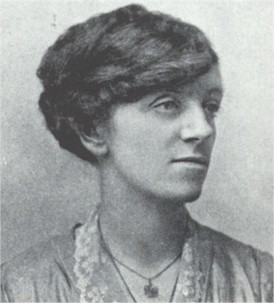
Winifred Carney
Maria Winifred "Winnie" Carney (4 December 1887 – 21 November 1943), was an Irish republican, a participant in the 1916 Easter Rising in Dublin and, as a trade union secretary, women's suffragist, and socialist party member, a lifelong social and political activist in Belfast. In March 2024, a statue to her was unveiled on the grounds of Belfast City Hall.
Born into a lower-middle class Catholic family at Fisher's Hill in Bangor, County Down, Carney was the daughter of commercial traveler Alfred Carney and Sarah Cassidy who had married in Belfast on 25 February 1873. She had six siblings.
Winifred and her family moved to Falls Road in Belfast when she was a child, where her mother ran a small sweet shop. Her father, a Protestant, later left the family, leaving her mother to support them. Two brothers left for America, and two sisters for the convent. Carney, educated at the Christian Brothers School in Donegall Street in the city, taught at the school before qualifying, around 1911, as a secretary and shorthand typist, one of the first women in Belfast to do so.
Carney took an early interest in the work of the Gaelic League (Conradh na Gaeilge) and of the Irish Women's Suffrage Society,
In 1912, she resigned a position with a solicitor in Dungannon, to succeed her friend, Marie Johnson, in the poor and irregularly paid position of secretary to the Irish Textile Workers' Union.The union, a rival to Mary Galway's more cautious Textile Operatives Society, was officially a branch of the Irish Women Worker's Union led in Dublin by Delia Larkin. In practice it functioned, in Belfast, as the women's section of James Larkin's Irish Transport and General Workers Union. The ITGWU branch secretary in Belfast was the republican socialist James Connolly.
In June 1913, while claiming that "the ranks of the Irish Textile Workers’ Union are being recruited by hundreds", with Carney Connolly produced a Manifesto to the Linen Slaves of Belfast (1913) that revealed his frustration as an organiser:
[M]any Belfast mills are slaughterhouses for the women and penitentiaries for the children. But while all the world is deploring your conditions, they also unite in deploring your slavish and servile nature in submitting to them; they unite in wondering of what material these Belfast women are made, who refuse to unite together and fight to better their conditions.
It did not always "hinder women from fighting together when circumstances demanded it" (they had struck en masse in 1874, in 1906.and again in 1911 during which the ITWU had been formed), but the rate of organisation among the female textile workers in Belfast remained low. The ITWU's predominantly Catholic membership may not have greatly exceeded the 300 subscribed under Johnson. To Carney, Connolly conceded that its survival was largely a matter of "keeping the Falls Road crowd together".
Winifred Carney
Maria Winifred "Winnie" Carney (4 December 1887 – 21 November 1943), was an Irish republican, a participant in the 1916 Easter Rising in Dublin and, as a trade union secretary, women's suffragist, and socialist party member, a lifelong social and political activist in Belfast. In March 2024, a statue to her was unveiled on the grounds of Belfast City Hall.
Born into a lower-middle class Catholic family at Fisher's Hill in Bangor, County Down, Carney was the daughter of commercial traveler Alfred Carney and Sarah Cassidy who had married in Belfast on 25 February 1873. She had six siblings.
Winifred and her family moved to Falls Road in Belfast when she was a child, where her mother ran a small sweet shop. Her father, a Protestant, later left the family, leaving her mother to support them. Two brothers left for America, and two sisters for the convent. Carney, educated at the Christian Brothers School in Donegall Street in the city, taught at the school before qualifying, around 1911, as a secretary and shorthand typist, one of the first women in Belfast to do so.
Carney took an early interest in the work of the Gaelic League (Conradh na Gaeilge) and of the Irish Women's Suffrage Society,
In 1912, she resigned a position with a solicitor in Dungannon, to succeed her friend, Marie Johnson, in the poor and irregularly paid position of secretary to the Irish Textile Workers' Union.The union, a rival to Mary Galway's more cautious Textile Operatives Society, was officially a branch of the Irish Women Worker's Union led in Dublin by Delia Larkin. In practice it functioned, in Belfast, as the women's section of James Larkin's Irish Transport and General Workers Union. The ITGWU branch secretary in Belfast was the republican socialist James Connolly.
In June 1913, while claiming that "the ranks of the Irish Textile Workers’ Union are being recruited by hundreds", with Carney Connolly produced a Manifesto to the Linen Slaves of Belfast (1913) that revealed his frustration as an organiser:
[M]any Belfast mills are slaughterhouses for the women and penitentiaries for the children. But while all the world is deploring your conditions, they also unite in deploring your slavish and servile nature in submitting to them; they unite in wondering of what material these Belfast women are made, who refuse to unite together and fight to better their conditions.
It did not always "hinder women from fighting together when circumstances demanded it" (they had struck en masse in 1874, in 1906.and again in 1911 during which the ITWU had been formed), but the rate of organisation among the female textile workers in Belfast remained low. The ITWU's predominantly Catholic membership may not have greatly exceeded the 300 subscribed under Johnson. To Carney, Connolly conceded that its survival was largely a matter of "keeping the Falls Road crowd together".
Recent media
Recent media