



Community hub
Recent from talks
Knowledge base stats:
Talk channels stats:
Members stats:
Witley Court
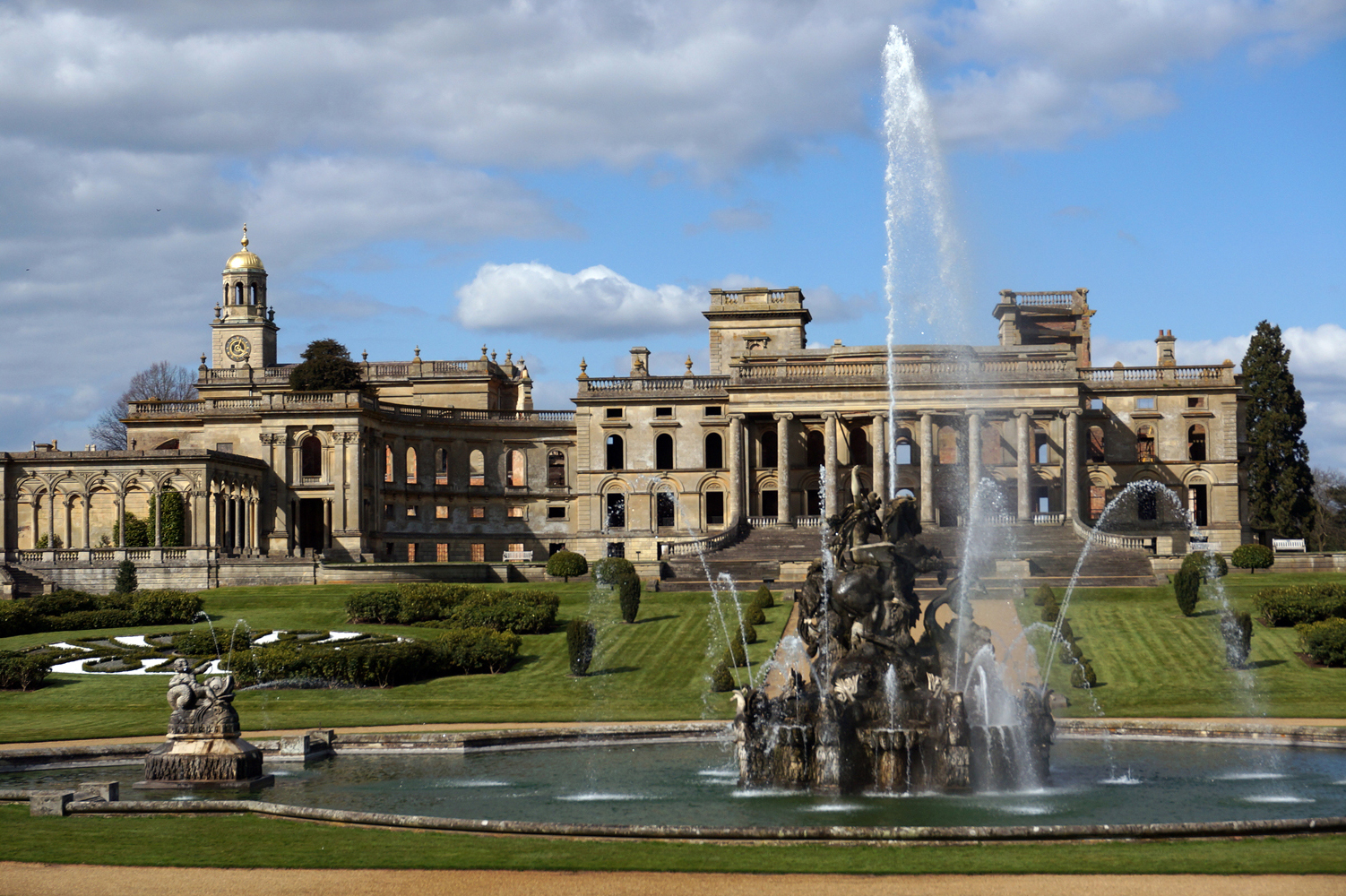
Witley Court, in Great Witley, Worcestershire, England, is a ruined Italianate mansion. Built for the Foleys in the seventeenth century on the site of a former manor house, it was enormously expanded in the early nineteenth century by the architect John Nash for Thomas Foley, 3rd Baron Foley.
The estate was later sold to the Earls of Dudley, who undertook a second massive reconstruction in the mid-19th century, employing the architect Samuel Daukes to create one of the great palaces of Victorian and Edwardian England.
The declining fortune of the Dudleys saw the sale of the court after the First World War to a Kidderminster carpet manufacturer. In 1937 a major fire caused great damage to the court, the estate was broken up and sold and the house was subsequently stripped of its fittings and furnishings. Forty years of decay followed before the house and grounds were taken into the care of the Department of the Environment in 1972. Since that point, significant restoration and stabilisation have secured the house as a spectacular ruin.
Witley Court, and the attached Church of St Michael and All Angels, are both Grade I listed buildings.
The earliest building on the site was a Jacobean brick house constructed by the Russell family. After the Civil War the house was sold to Thomas Foley (1616-1677), an ironmaster. He erected two towers on the north side of the house and his grandson Thomas Foley, 1st Baron Foley (1716–1777) added the wings which enclose the entrance courtyard.
In 1735 the Thomas Foley, 2nd Baron Foley (1742–1793) constructed a new parish church to the west of this courtyard, an undertaking begun by his father. The church was given a baroque interior in 1747, when he commissioned James Gibbs to incorporate paintings and furnishings acquired at the auction of the contents of Cannons House. Once reconstructed, the Church interior included painted panels by Antonio Bellucci, and ten hand painted windows by Joshua Price of London, based on the designs of Francesco Slater.
In the second half of the 18th century the park was landscaped. This included the relocation of the village of Great Witley, which came too close to the south front (rear) of the house. In about 1805 Thomas Foley, 3rd Baron Foley (1780–1833) employed John Nash to carry out a major reconstruction of the house, including the addition of huge ionic porticoes to the north and south fronts.
In 1837 serious debt forced Thomas Foley, 4th Baron Foley (1808–1869) to sell the estate to the trustees of William Ward, 11th Baron Ward (1817–1885, later 1st Earl of Dudley), who had inherited a great fortune from the coal and iron industries in the Black Country.
Hub AI
Witley Court AI simulator
(@Witley Court_simulator)
Witley Court
Witley Court, in Great Witley, Worcestershire, England, is a ruined Italianate mansion. Built for the Foleys in the seventeenth century on the site of a former manor house, it was enormously expanded in the early nineteenth century by the architect John Nash for Thomas Foley, 3rd Baron Foley.
The estate was later sold to the Earls of Dudley, who undertook a second massive reconstruction in the mid-19th century, employing the architect Samuel Daukes to create one of the great palaces of Victorian and Edwardian England.
The declining fortune of the Dudleys saw the sale of the court after the First World War to a Kidderminster carpet manufacturer. In 1937 a major fire caused great damage to the court, the estate was broken up and sold and the house was subsequently stripped of its fittings and furnishings. Forty years of decay followed before the house and grounds were taken into the care of the Department of the Environment in 1972. Since that point, significant restoration and stabilisation have secured the house as a spectacular ruin.
Witley Court, and the attached Church of St Michael and All Angels, are both Grade I listed buildings.
The earliest building on the site was a Jacobean brick house constructed by the Russell family. After the Civil War the house was sold to Thomas Foley (1616-1677), an ironmaster. He erected two towers on the north side of the house and his grandson Thomas Foley, 1st Baron Foley (1716–1777) added the wings which enclose the entrance courtyard.
In 1735 the Thomas Foley, 2nd Baron Foley (1742–1793) constructed a new parish church to the west of this courtyard, an undertaking begun by his father. The church was given a baroque interior in 1747, when he commissioned James Gibbs to incorporate paintings and furnishings acquired at the auction of the contents of Cannons House. Once reconstructed, the Church interior included painted panels by Antonio Bellucci, and ten hand painted windows by Joshua Price of London, based on the designs of Francesco Slater.
In the second half of the 18th century the park was landscaped. This included the relocation of the village of Great Witley, which came too close to the south front (rear) of the house. In about 1805 Thomas Foley, 3rd Baron Foley (1780–1833) employed John Nash to carry out a major reconstruction of the house, including the addition of huge ionic porticoes to the north and south fronts.
In 1837 serious debt forced Thomas Foley, 4th Baron Foley (1808–1869) to sell the estate to the trustees of William Ward, 11th Baron Ward (1817–1885, later 1st Earl of Dudley), who had inherited a great fortune from the coal and iron industries in the Black Country.