
Recent from talks
Wolayita Zone
Knowledge base stats:
Talk channels stats:
Members stats:
Wolayita Zone
Wolayita or Wolaita is an administrative zone in Ethiopia. Wolayita is bordered on the south by Gamo Zone, on the west by the Omo River which separates it from Dawro, on the northwest by Kembata Zone and Tembaro Special Woreda, on the north by Hadiya, on the northeast by the Oromia Region, on the east by the Bilate River which separates it from Sidama Region, and on the south east by the Lake Abaya which separates it from Oromia Region. The administrative centre of Wolayita is Wolaita Sodo. Other major towns are Areka, Boditi, Tebela, Bale Hawassa, Gesuba, Gununo, Bedessa and Dimtu.
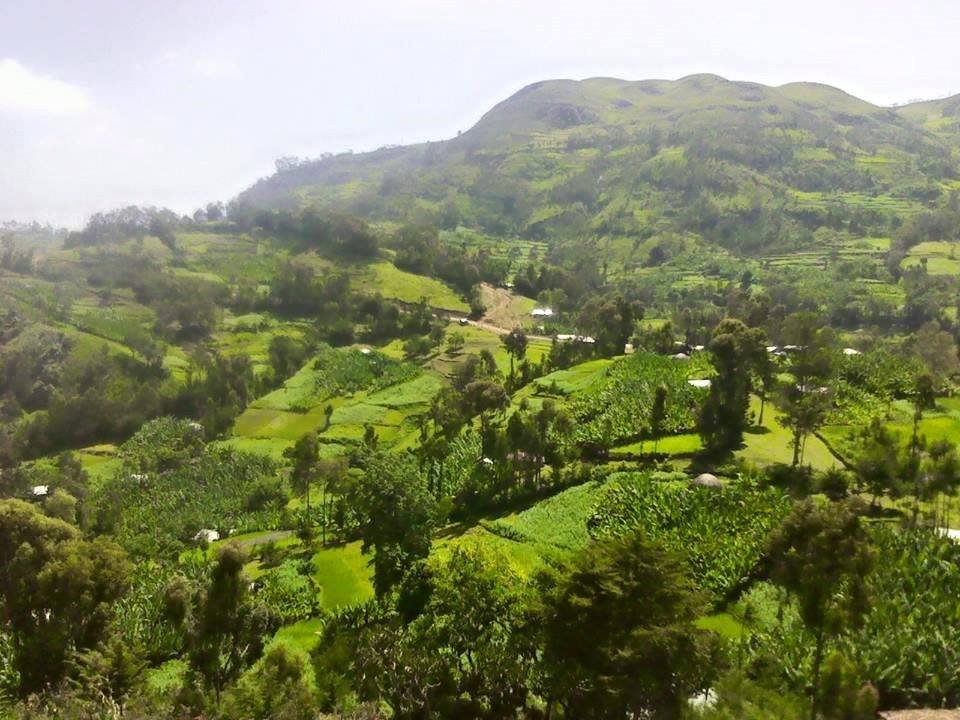
Wolayita has 358 kilometres (222 mi) of all-weather roads and 425 kilometres (264 mi) of dry-weather roads, for an average road density of 187 kilometres per 1000 square kilometres. Its highest point is Mount Damota (2738 meters).
The people of Wolayta are known for their more than 50 kings within four dynasties. The kings of Wolaita got the title Kawo. The Wolayta nationality are a proud people who had a distinct, continuous, strong and independent kingdoms going back to the 13th Century and beyond to the first Millennium until 1894. The war of resistance led by the last Kawo (King) of Wolaita, Tona Gaga, was one of the bloodiest campaigns in Menelik's whole period of expansion, which resulted in the incorporation of the Wolaita Kingdom, along with other nationalities and peoples in the South, into the Ethiopian Empire. The Wolaita's military resistance, and repulsion of Menelik’s generals (which were armed with modern firearms), showed the strength of Wolaita's military organization and people. The Wolaita’s resistance was finally crushed, with it conquered by Ethiopia, in 1894 after the bloodiest battle led by Emperor Menelik II himself.
Despite the centuries-old oppression, the Wolayta people have a distinct national identity, that is, the people have a language, culture, traditions, history, a psychological make-up, and a contiguous geography that define them and make them distinct from other nationalities and people in Ethiopia. The Wolayta people’s resistance and struggle against the monarchical regime for economic and political emancipation, and the anti-democratic denial of the Wolayta peoples self-governance afterwards epitomizes their enduring and uninterrupted struggle for self-determination.
During the 1991-94 Transitional Government period, the Wolayta had its own Region which was Kilil 9 but it was merged into the Southern Nations, Nationalities, and Peoples' Region (SNNPR) when the federation was constituted in 1995. Since, there has been public discontent and opposition members requesting autonomy were beaten, tortured, and a significant number of youths exiled.
In 1997, SEPDM tried to create WOGAGODA, merging the neighboring ethnicities with Wolayta, which ultimately would have diluted the century-old culture and emblem of the Wolayta people. That attempt saw a fierce struggle from the people and the government’s homogenizing move was finally abandoned. However, thousands were detained and hundreds were killed, and hundreds of thousands of ethnic Wolaita were forcefully displaced from Arba Minch, the then capital of North Omo Zone, which dissolved after Wolaita, Gamo Gofa and Dawro split and formed their own zonal administration between 1998 and 2000. Security forces killed at least five when the Wolayta successfully campaigned for their own zone and rejected the attempted imposition of a new composite language.
Until 2000 Wolayita was part of the North Omo Zone, and the 1994 national census counted its inhabitants as part of that zone. However friction between the various ethnic groups in North Omo, which was often blamed on the Wolayta for "ethnic chauvinism" and despite the efforts of the ruling party to emphasize the need to co-ordinate, consolidate, and unify the smaller ethnic units to achieve the "efficient use of scarce government resources", eventually led to the division of the zone in 2000, resulting in the creation of not only the Wolayita, but also the Gamo Gofa and Dawro Zones, and two special woredas.
The constitutional rights of the Wolayta people for statehood has gathered momentum in the recent years, where following widespread consultation held at all levels the proposal to establish a Wolaita Regional State was approved. During the administration of Dagato Kumbe, the Zonal Council unanimously voted to demand statehood, and consistent with the letter and spirit of the Constitution sent a formal letter on 19 December 2018 to the SNNPR Government requesting a referendum.
Hub AI
Wolayita Zone AI simulator
(@Wolayita Zone_simulator)
Wolayita Zone
Wolayita or Wolaita is an administrative zone in Ethiopia. Wolayita is bordered on the south by Gamo Zone, on the west by the Omo River which separates it from Dawro, on the northwest by Kembata Zone and Tembaro Special Woreda, on the north by Hadiya, on the northeast by the Oromia Region, on the east by the Bilate River which separates it from Sidama Region, and on the south east by the Lake Abaya which separates it from Oromia Region. The administrative centre of Wolayita is Wolaita Sodo. Other major towns are Areka, Boditi, Tebela, Bale Hawassa, Gesuba, Gununo, Bedessa and Dimtu.
Wolayita has 358 kilometres (222 mi) of all-weather roads and 425 kilometres (264 mi) of dry-weather roads, for an average road density of 187 kilometres per 1000 square kilometres. Its highest point is Mount Damota (2738 meters).
The people of Wolayta are known for their more than 50 kings within four dynasties. The kings of Wolaita got the title Kawo. The Wolayta nationality are a proud people who had a distinct, continuous, strong and independent kingdoms going back to the 13th Century and beyond to the first Millennium until 1894. The war of resistance led by the last Kawo (King) of Wolaita, Tona Gaga, was one of the bloodiest campaigns in Menelik's whole period of expansion, which resulted in the incorporation of the Wolaita Kingdom, along with other nationalities and peoples in the South, into the Ethiopian Empire. The Wolaita's military resistance, and repulsion of Menelik’s generals (which were armed with modern firearms), showed the strength of Wolaita's military organization and people. The Wolaita’s resistance was finally crushed, with it conquered by Ethiopia, in 1894 after the bloodiest battle led by Emperor Menelik II himself.
Despite the centuries-old oppression, the Wolayta people have a distinct national identity, that is, the people have a language, culture, traditions, history, a psychological make-up, and a contiguous geography that define them and make them distinct from other nationalities and people in Ethiopia. The Wolayta people’s resistance and struggle against the monarchical regime for economic and political emancipation, and the anti-democratic denial of the Wolayta peoples self-governance afterwards epitomizes their enduring and uninterrupted struggle for self-determination.
During the 1991-94 Transitional Government period, the Wolayta had its own Region which was Kilil 9 but it was merged into the Southern Nations, Nationalities, and Peoples' Region (SNNPR) when the federation was constituted in 1995. Since, there has been public discontent and opposition members requesting autonomy were beaten, tortured, and a significant number of youths exiled.
In 1997, SEPDM tried to create WOGAGODA, merging the neighboring ethnicities with Wolayta, which ultimately would have diluted the century-old culture and emblem of the Wolayta people. That attempt saw a fierce struggle from the people and the government’s homogenizing move was finally abandoned. However, thousands were detained and hundreds were killed, and hundreds of thousands of ethnic Wolaita were forcefully displaced from Arba Minch, the then capital of North Omo Zone, which dissolved after Wolaita, Gamo Gofa and Dawro split and formed their own zonal administration between 1998 and 2000. Security forces killed at least five when the Wolayta successfully campaigned for their own zone and rejected the attempted imposition of a new composite language.
Until 2000 Wolayita was part of the North Omo Zone, and the 1994 national census counted its inhabitants as part of that zone. However friction between the various ethnic groups in North Omo, which was often blamed on the Wolayta for "ethnic chauvinism" and despite the efforts of the ruling party to emphasize the need to co-ordinate, consolidate, and unify the smaller ethnic units to achieve the "efficient use of scarce government resources", eventually led to the division of the zone in 2000, resulting in the creation of not only the Wolayita, but also the Gamo Gofa and Dawro Zones, and two special woredas.
The constitutional rights of the Wolayta people for statehood has gathered momentum in the recent years, where following widespread consultation held at all levels the proposal to establish a Wolaita Regional State was approved. During the administration of Dagato Kumbe, the Zonal Council unanimously voted to demand statehood, and consistent with the letter and spirit of the Constitution sent a formal letter on 19 December 2018 to the SNNPR Government requesting a referendum.
Recent media