
Recent from talks
Wolong National Nature Reserve
Knowledge base stats:
Talk channels stats:
Members stats:
Wolong National Nature Reserve
Wolong National Nature Reserve (from Chinese 卧龙; wòlóng; 'crouching dragon'), officially known as Wolong Special Administrative Region, is a national protected area in Wenchuan County in China. It was established in 1963 with an initial size of about 20,000 ha (49,000 acres). It was expanded in 1975 to an area of about 200,000 ha (490,000 acres) in the Qionglai Mountains region. It hosts over 4,000 species. In 2006, it became a UNESCO World Heritage Site.
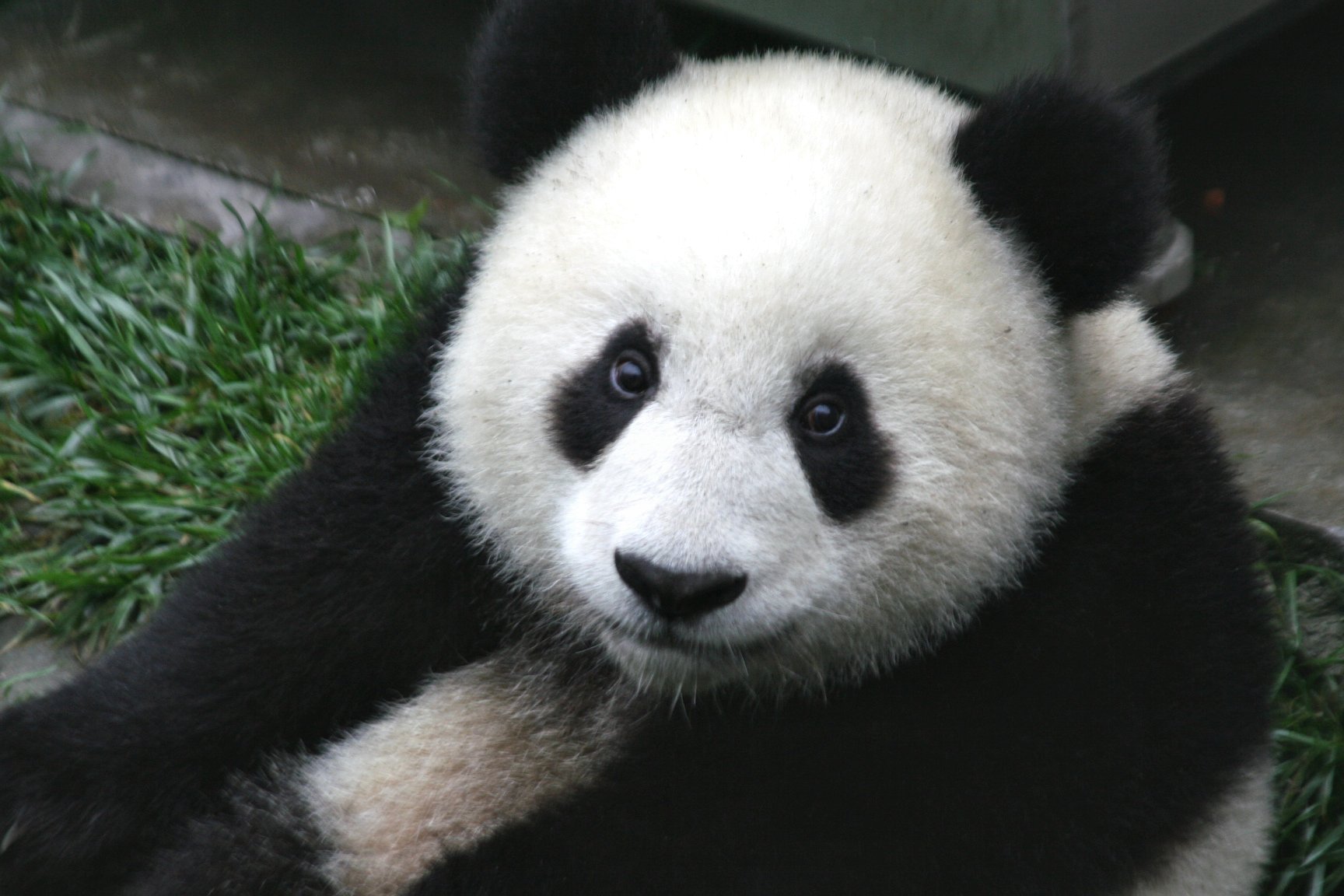
According to China's Third National Giant Panda Survey, about 150 wild giant pandas live in Wolong National Nature Reserve. The reserve is also a home to many other endangered species including the snow leopard, red panda, golden snub-nosed monkey and white-lipped deer. Before the devastating 2008 Sichuan earthquake, Wolong received up to 200,000 visitors every year.
The reserve became part of the Giant Panda National Park in 2020.[citation needed]
In June 1980, the Chinese government started its cooperation with the World Wide Fund for Nature, and the "China Conservation and Research Center for the Giant Panda" (CCRCGP) was established to ensure a future for the giant pandas. The aim was to increase the number of pandas in captive-breeding programs, however with the ultimate goal to return a larger number of pandas to their original, natural habitats. When the cooperation started giant pandas were still listed as an endangered species by the IUCN. In 2016, the IUCN reclassified the giant panda from being "endangered" to the new classification "vulnerable", affirming decade-long efforts to save the panda.
A mountain stream runs through the Wolong Valley (where the reserve is); the stream is heavily armoured with boulders and smaller rounded stones. Stream waters are rather alkaline with pH levels in the range of 8.91. (Hogan, 2007) Water quality turbidity is quite high due to extensive sand and gravel mining in stream.
According to a 2001 research, the rate of destruction is higher after the reserve's creation than before its creation due to the increase of tourism.
The China Conservation and Research Center for the Giant Panda engages in global cooperations with 16 zoos in 14 countries, providing the world's largest platform for the scientific research regarding the giant pandas. By 2019 a total of 19 other pandas have been returned to China.
Giant pandas from Wolong have been loaned to zoos all over the world to ensure breeding success. Bai Yun, who was the first female panda born at the Nature Reserve in 1991, was the first panda to be loaned to a zoo outside of China. From 1996 until 2019 she lived at the San Diego Zoo in California, where she gave birth to six cubs. When the conservation loan ended, 27-year-old Bai Yun was returned to China together with her last-born old son, Xiao Liwu.[citation needed]
Hub AI
Wolong National Nature Reserve AI simulator
(@Wolong National Nature Reserve_simulator)
Wolong National Nature Reserve
Wolong National Nature Reserve (from Chinese 卧龙; wòlóng; 'crouching dragon'), officially known as Wolong Special Administrative Region, is a national protected area in Wenchuan County in China. It was established in 1963 with an initial size of about 20,000 ha (49,000 acres). It was expanded in 1975 to an area of about 200,000 ha (490,000 acres) in the Qionglai Mountains region. It hosts over 4,000 species. In 2006, it became a UNESCO World Heritage Site.
According to China's Third National Giant Panda Survey, about 150 wild giant pandas live in Wolong National Nature Reserve. The reserve is also a home to many other endangered species including the snow leopard, red panda, golden snub-nosed monkey and white-lipped deer. Before the devastating 2008 Sichuan earthquake, Wolong received up to 200,000 visitors every year.
The reserve became part of the Giant Panda National Park in 2020.[citation needed]
In June 1980, the Chinese government started its cooperation with the World Wide Fund for Nature, and the "China Conservation and Research Center for the Giant Panda" (CCRCGP) was established to ensure a future for the giant pandas. The aim was to increase the number of pandas in captive-breeding programs, however with the ultimate goal to return a larger number of pandas to their original, natural habitats. When the cooperation started giant pandas were still listed as an endangered species by the IUCN. In 2016, the IUCN reclassified the giant panda from being "endangered" to the new classification "vulnerable", affirming decade-long efforts to save the panda.
A mountain stream runs through the Wolong Valley (where the reserve is); the stream is heavily armoured with boulders and smaller rounded stones. Stream waters are rather alkaline with pH levels in the range of 8.91. (Hogan, 2007) Water quality turbidity is quite high due to extensive sand and gravel mining in stream.
According to a 2001 research, the rate of destruction is higher after the reserve's creation than before its creation due to the increase of tourism.
The China Conservation and Research Center for the Giant Panda engages in global cooperations with 16 zoos in 14 countries, providing the world's largest platform for the scientific research regarding the giant pandas. By 2019 a total of 19 other pandas have been returned to China.
Giant pandas from Wolong have been loaned to zoos all over the world to ensure breeding success. Bai Yun, who was the first female panda born at the Nature Reserve in 1991, was the first panda to be loaned to a zoo outside of China. From 1996 until 2019 she lived at the San Diego Zoo in California, where she gave birth to six cubs. When the conservation loan ended, 27-year-old Bai Yun was returned to China together with her last-born old son, Xiao Liwu.[citation needed]
Recent media