
Recent from talks
Wolseley Motors
Knowledge base stats:
Talk channels stats:
Members stats:
Wolseley Motors
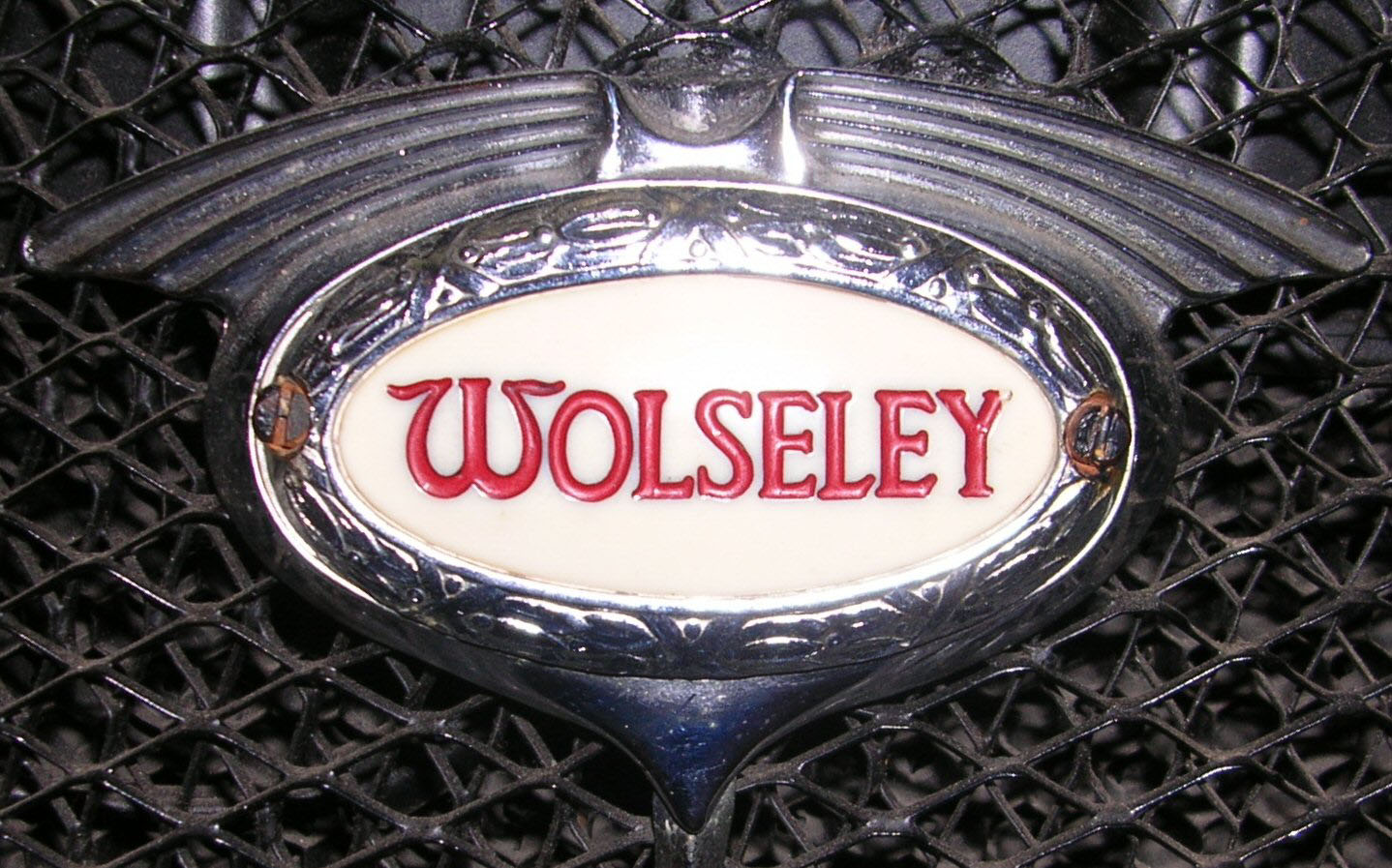
Wolseley Motors Limited was a British motor vehicle manufacturer founded in early 1901 by the Vickers Armaments in conjunction with Herbert Austin. It initially made a full range, topped by large luxury cars, and dominated the market in the Edwardian era. The Vickers brothers died in 1914 and 1919, respectively, and, without their guidance, Wolseley expanded rapidly after the war, manufacturing 12,000 cars in 1921, and remained the biggest motor manufacturer in Britain.
In 1927, it was acquired by William Morris from Vickers Limited as a personal investment. Over-expansion led to receivership. He moved it into his Morris Motors empire just before World War II. After that, Wolseley products were "badge-engineered" Morris cars. Wolseley went with its sister businesses into BMC, BMH, and British Leyland, where its name lapsed in 1975.
Hiram Maxim, inventor of the machine gun that bears his name, and by then a member of the combine Vickers Sons & Maxim, had consulted Herbert Austin at The Wolseley Sheep Shearing Machine Company Limited in the late 1890s a number of times in relation to the design of flying machines, which Maxim was developing and constructing. Maxim made use of a number of suggestions made by Austin in Maxim's activities at his works in Crayford, Kent. Once the sheep shearing company had decided they would not pursue their automobile interest, an approach was made and agreement quickly reached.
The Wolseley Tool and Motor Car Company of Adderley Park Birmingham was incorporated in March 1901 with a capital of £40,000 by Vickers, Sons and Maxim to manufacture motor cars and machine tools. The managing director was Herbert Austin. The cars and the Wolseley name came from Austin's exploratory venture for The Wolseley Sheep Shearing Machine Company Limited, run since the early 1890s by the now 33-year-old Austin. Wolseley's board had decided not to enter the business and Maxim and the Vickers brothers picked it up. After his five-year contract with The Wolseley Tool and Motor Car Company ended Austin founded The Austin Motor Company Limited.
Austin had been searching for other products for WSSMC because sale of sheep-shearing machinery was a highly seasonal trade. About 1895–96 he became interested in engines and automobiles. During the winter of 1895–96, working in his own time at nights and weekends, he made his own version of a design by Léon Bollée that he had seen in Paris. In 1895, a tricycle with two seats in a back-to-back configuration (dos-à-dos) was developed. It was presented in 1896. The front wheels were steered by a lever. The two-cylinder motor made of cast steel was mounted on the side of an aluminum frame and drove the single rear wheel. An image of the vehicle can be seen on page 24 of the visit report of the American Society of Mechanical Engineers from July 28, 1910. Later he found that another British group had bought the rights and he had to come up with a design of his own, having persuaded the directors of WSSMC to invest in the necessary machinery.
In 1897 Austin's second Wolseley car, the Wolseley Autocar No. 1 was revealed. It was a three-wheeled design (one front, two rear) featuring independent rear suspension, mid-engine and back to back seating for two adults. It was not successful and although advertised for sale, none were sold. The third Wolseley car, the four-wheeled Wolseley "Voiturette" followed in 1899. A further four-wheeled car was made in 1900. The 1901 Wolseley Gasoline Carriage featured a steering wheel instead of a tiller. The first Wolseley cars sold to the public were based on the "Voiturette", but production did not get underway until 1901, by which time the board of WSSMC had lost interest in the nascent motor industry.
Thomas and Albert Vickers, directors of Vickers and Maxim, Britain's largest armaments manufacturer, had much earlier decided to enter the industry at the right moment and, impressed by Austin's achievements at WSSMC, they took on his enterprise. When Austin's five-year contract officially ended in 1906 they had made more than 1,500 cars. Wolseley was the largest British motor manufacturer and Austin's reputation was made.
The company had been formed in March 1901. By 1 May 1901 Austin had issued his first catalogue. There were to be two models, 5 hp and 10 hp. They were both available with either a Tonneau or a Phaeton body with either pneumatic or solid tyres. For an additional outlay of thirty shillings (£1.50) the 10 hp model would be fitted with a sprag to prevent it running backwards. "We recommend pneumatic tyres for all cars required to run over twenty miles an hour." Austin then provided a paragraph as to why his horizontal engines were better lubricated (than vertical engines) and that 750 rpm, the speed of his Wolseley engines, avoided the short life of competing engines that ran between 1,000 and 2,000 rpm."
Hub AI
Wolseley Motors AI simulator
(@Wolseley Motors_simulator)
Wolseley Motors
Wolseley Motors Limited was a British motor vehicle manufacturer founded in early 1901 by the Vickers Armaments in conjunction with Herbert Austin. It initially made a full range, topped by large luxury cars, and dominated the market in the Edwardian era. The Vickers brothers died in 1914 and 1919, respectively, and, without their guidance, Wolseley expanded rapidly after the war, manufacturing 12,000 cars in 1921, and remained the biggest motor manufacturer in Britain.
In 1927, it was acquired by William Morris from Vickers Limited as a personal investment. Over-expansion led to receivership. He moved it into his Morris Motors empire just before World War II. After that, Wolseley products were "badge-engineered" Morris cars. Wolseley went with its sister businesses into BMC, BMH, and British Leyland, where its name lapsed in 1975.
Hiram Maxim, inventor of the machine gun that bears his name, and by then a member of the combine Vickers Sons & Maxim, had consulted Herbert Austin at The Wolseley Sheep Shearing Machine Company Limited in the late 1890s a number of times in relation to the design of flying machines, which Maxim was developing and constructing. Maxim made use of a number of suggestions made by Austin in Maxim's activities at his works in Crayford, Kent. Once the sheep shearing company had decided they would not pursue their automobile interest, an approach was made and agreement quickly reached.
The Wolseley Tool and Motor Car Company of Adderley Park Birmingham was incorporated in March 1901 with a capital of £40,000 by Vickers, Sons and Maxim to manufacture motor cars and machine tools. The managing director was Herbert Austin. The cars and the Wolseley name came from Austin's exploratory venture for The Wolseley Sheep Shearing Machine Company Limited, run since the early 1890s by the now 33-year-old Austin. Wolseley's board had decided not to enter the business and Maxim and the Vickers brothers picked it up. After his five-year contract with The Wolseley Tool and Motor Car Company ended Austin founded The Austin Motor Company Limited.
Austin had been searching for other products for WSSMC because sale of sheep-shearing machinery was a highly seasonal trade. About 1895–96 he became interested in engines and automobiles. During the winter of 1895–96, working in his own time at nights and weekends, he made his own version of a design by Léon Bollée that he had seen in Paris. In 1895, a tricycle with two seats in a back-to-back configuration (dos-à-dos) was developed. It was presented in 1896. The front wheels were steered by a lever. The two-cylinder motor made of cast steel was mounted on the side of an aluminum frame and drove the single rear wheel. An image of the vehicle can be seen on page 24 of the visit report of the American Society of Mechanical Engineers from July 28, 1910. Later he found that another British group had bought the rights and he had to come up with a design of his own, having persuaded the directors of WSSMC to invest in the necessary machinery.
In 1897 Austin's second Wolseley car, the Wolseley Autocar No. 1 was revealed. It was a three-wheeled design (one front, two rear) featuring independent rear suspension, mid-engine and back to back seating for two adults. It was not successful and although advertised for sale, none were sold. The third Wolseley car, the four-wheeled Wolseley "Voiturette" followed in 1899. A further four-wheeled car was made in 1900. The 1901 Wolseley Gasoline Carriage featured a steering wheel instead of a tiller. The first Wolseley cars sold to the public were based on the "Voiturette", but production did not get underway until 1901, by which time the board of WSSMC had lost interest in the nascent motor industry.
Thomas and Albert Vickers, directors of Vickers and Maxim, Britain's largest armaments manufacturer, had much earlier decided to enter the industry at the right moment and, impressed by Austin's achievements at WSSMC, they took on his enterprise. When Austin's five-year contract officially ended in 1906 they had made more than 1,500 cars. Wolseley was the largest British motor manufacturer and Austin's reputation was made.
The company had been formed in March 1901. By 1 May 1901 Austin had issued his first catalogue. There were to be two models, 5 hp and 10 hp. They were both available with either a Tonneau or a Phaeton body with either pneumatic or solid tyres. For an additional outlay of thirty shillings (£1.50) the 10 hp model would be fitted with a sprag to prevent it running backwards. "We recommend pneumatic tyres for all cars required to run over twenty miles an hour." Austin then provided a paragraph as to why his horizontal engines were better lubricated (than vertical engines) and that 750 rpm, the speed of his Wolseley engines, avoided the short life of competing engines that ran between 1,000 and 2,000 rpm."
Recent media