
Recent from talks
Wu Zhou
Knowledge base stats:
Talk channels stats:
Members stats:
Wu Zhou
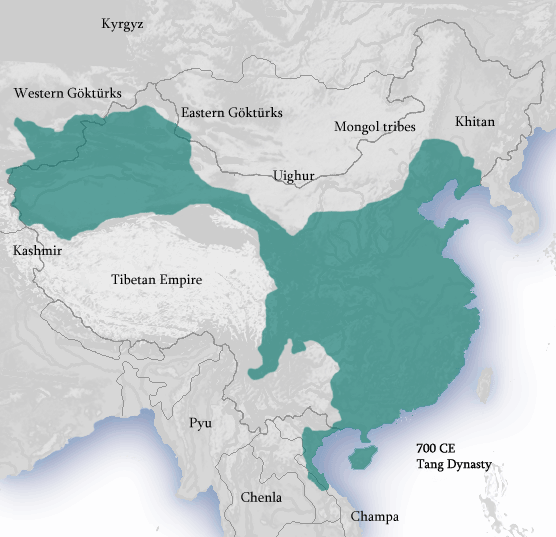
Zhou, known in historiography as the Wu Zhou (Chinese: 武周) and Southern Zhou (Chinese: 南周), was a short-lived Chinese imperial dynasty that existed between 690 and 705. The dynasty consisted of the reign of one empress regnant, Wu Zhao (Wu Zetian), who usurped the throne of her son, the Emperor Ruizong of Tang, in 690. The dynasty lasted until another one of Wu Zhao's sons, the Emperor Zhongzong of Tang, was restored to the throne in the Shenlong Coup in 705, marking the restoration of the Tang dynasty. Historians generally regard the Wu Zhou as an interregnum of the Tang dynasty.
Wu named her dynasty after the ancient Zhou dynasty, from whom she believed herself to be descended.
Before her coronation, Wu Zhao (as she was then known), was often acting as de facto regent for her husband, Emperor Gaozong, or her sons, giving her a head-start in accomplishing her aims, which she then consolidated as huangdi of Zhou once she became ruler in name also. Beginning in 655, Wu began to preside over court meetings in the name of the emperor, and she co-ruled with Emperor Gaozong until his death. After Gaozong's death, she ruled in name of her sons, who reigned officially as puppet emperors, and power was completely and solely in her hands. In 690, she deposed her son, Emperor Ruizong, and declared herself Huangdi (emperor) of her Zhou Dynasty.
The dynasty's capital was Shendu[page needed] (神都 "Divine Capital", present-day Luoyang). Despite Wu's infamous rise to power, there is evidence that suggests women were granted more privileges during her reign, and China was in a state of great prosperity during her rule.[citation needed]
The dynasty's state religions were Buddhism and Daoism, both of which Wu Zetian exploited for self-promoting propaganda. The monk Xue Huaiyi claimed to have found a document predicting the reign of a woman of great merit who would become universal ruler. In support of her imperial ambitions, Wu Zetian also proclaimed herself "Sage Mother", having statues of Laozi's mother as "Sage Mother" placed in Daoist temples
Wu Zetian became a very active supporter of Buddhism. Furthermore, she claimed to be an incarnation of Maitreya, writing a document called the Great Cloud Sutra, which prophesied that a female emperor would eradicate illness, worry and disaster from the world. She sought the support of the Buddhist clergy to this end. In 673 Wu provided 20,000 cash for a gigantic statue of Maitreya at Longmen Grottoes. Unlike her predecessor's dynasty, Wu Zetian selected people in her government based on their skills, and not on their status. The Buddhist clergy created a document called Commentary on the Meaning of the Prophecy about Shenhuang, which predicted a female Chakravartin who would rule the Jambudvipa as the reincarnation of Vimalaprabha. This document was presented to Wu Zetian two months before the proclamation of the Zhou Dynasty.
Various other documents were also written such as The Great Spell of Unsullied Pure Light, also predicting the rise of a female monarch, of which Wu Zetian ordered 100,000 copies be printed and distributed.[page needed]
Traditionalist Chinese historiography considers the dynasty as a period of the Tang dynasty, as Wu was also the former empress consort of a Tang emperor and was buried in Qianling Mausoleum, a Tang royal mausoleum. Furthermore, Wu Zetian was the only emperor of Zhou China, which does not fit the concept of a dynasty. There were, however, other dynasties of a similar length, such as the Xin dynasty, or much shorter in length, such as the Shun dynasty. Wu Zetian's rule was long also seen as a period of great tyranny, though in more recent decades this seems to have lessened or reversed, as the appearance of Wu Zetian in countless Chinese works of fiction seems to depict her as a wise ruler. [citation needed]
Hub AI
Wu Zhou AI simulator
(@Wu Zhou_simulator)
Wu Zhou
Zhou, known in historiography as the Wu Zhou (Chinese: 武周) and Southern Zhou (Chinese: 南周), was a short-lived Chinese imperial dynasty that existed between 690 and 705. The dynasty consisted of the reign of one empress regnant, Wu Zhao (Wu Zetian), who usurped the throne of her son, the Emperor Ruizong of Tang, in 690. The dynasty lasted until another one of Wu Zhao's sons, the Emperor Zhongzong of Tang, was restored to the throne in the Shenlong Coup in 705, marking the restoration of the Tang dynasty. Historians generally regard the Wu Zhou as an interregnum of the Tang dynasty.
Wu named her dynasty after the ancient Zhou dynasty, from whom she believed herself to be descended.
Before her coronation, Wu Zhao (as she was then known), was often acting as de facto regent for her husband, Emperor Gaozong, or her sons, giving her a head-start in accomplishing her aims, which she then consolidated as huangdi of Zhou once she became ruler in name also. Beginning in 655, Wu began to preside over court meetings in the name of the emperor, and she co-ruled with Emperor Gaozong until his death. After Gaozong's death, she ruled in name of her sons, who reigned officially as puppet emperors, and power was completely and solely in her hands. In 690, she deposed her son, Emperor Ruizong, and declared herself Huangdi (emperor) of her Zhou Dynasty.
The dynasty's capital was Shendu[page needed] (神都 "Divine Capital", present-day Luoyang). Despite Wu's infamous rise to power, there is evidence that suggests women were granted more privileges during her reign, and China was in a state of great prosperity during her rule.[citation needed]
The dynasty's state religions were Buddhism and Daoism, both of which Wu Zetian exploited for self-promoting propaganda. The monk Xue Huaiyi claimed to have found a document predicting the reign of a woman of great merit who would become universal ruler. In support of her imperial ambitions, Wu Zetian also proclaimed herself "Sage Mother", having statues of Laozi's mother as "Sage Mother" placed in Daoist temples
Wu Zetian became a very active supporter of Buddhism. Furthermore, she claimed to be an incarnation of Maitreya, writing a document called the Great Cloud Sutra, which prophesied that a female emperor would eradicate illness, worry and disaster from the world. She sought the support of the Buddhist clergy to this end. In 673 Wu provided 20,000 cash for a gigantic statue of Maitreya at Longmen Grottoes. Unlike her predecessor's dynasty, Wu Zetian selected people in her government based on their skills, and not on their status. The Buddhist clergy created a document called Commentary on the Meaning of the Prophecy about Shenhuang, which predicted a female Chakravartin who would rule the Jambudvipa as the reincarnation of Vimalaprabha. This document was presented to Wu Zetian two months before the proclamation of the Zhou Dynasty.
Various other documents were also written such as The Great Spell of Unsullied Pure Light, also predicting the rise of a female monarch, of which Wu Zetian ordered 100,000 copies be printed and distributed.[page needed]
Traditionalist Chinese historiography considers the dynasty as a period of the Tang dynasty, as Wu was also the former empress consort of a Tang emperor and was buried in Qianling Mausoleum, a Tang royal mausoleum. Furthermore, Wu Zetian was the only emperor of Zhou China, which does not fit the concept of a dynasty. There were, however, other dynasties of a similar length, such as the Xin dynasty, or much shorter in length, such as the Shun dynasty. Wu Zetian's rule was long also seen as a period of great tyranny, though in more recent decades this seems to have lessened or reversed, as the appearance of Wu Zetian in countless Chinese works of fiction seems to depict her as a wise ruler. [citation needed]
Recent media