
Recent from talks
Xinhai Lhasa turmoil
Knowledge base stats:
Talk channels stats:
Members stats:
Xinhai Lhasa turmoil
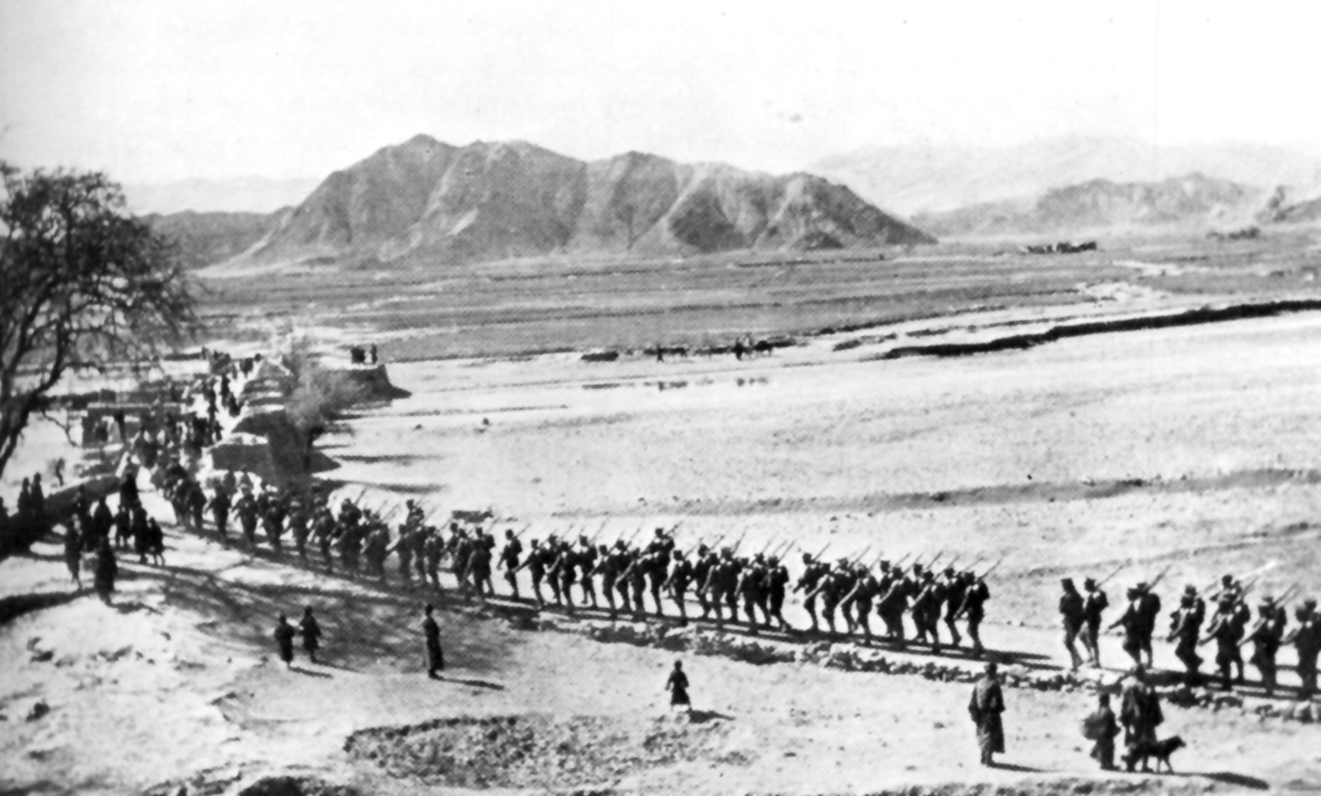
The Xinhai Lhasa turmoil (Tibetan: ཆུ་བྱི་དམག་འཁྲུག་, Wylie: chu byi dmag 'khrug; Chinese: 辛亥拉薩動亂), also known as the First Expulsion of the Han (Chinese: 第一次驅漢事件), was a series of mutinies among Qing military troops stationed in Lhasa, Tibet, followed by the military conflict between Tibetan militia and Qing garrison. It effectively resulted in the end of Qing rule in Tibet.
The Wuchang Uprising unfolded on October 10, 1911, and marked the beginning of the Xinhai Revolution. Turmoil in the frontier regions of China began to spread.
The influence of the Wuchang Uprising rapidly spread to the frontier region. Qing armies in Tibet ended up struggling against each other, and as a result, Tibet fell into a state of anarchy. In the winter of 1911, the Qing Governor of Sichuan, Zhao Erfeng, was executed by radicals, and the situation turned worse as Xikang fell into turmoil as well. The last Qing emperor, Puyi, abdicated in February 1912. As a result, the Dalai Lama was able to eliminate Qing influence in Tibet and return as the sole administrator of the region. Tibetan militia besieged the Qing army, and in August 1912, Qing officials in Lhasa signed the "Three Point Agreement" for the surrender and expulsion of Qing forces in Tibet. All officers and soldiers returned to China proper via India.
Hub AI
Xinhai Lhasa turmoil AI simulator
(@Xinhai Lhasa turmoil_simulator)
Xinhai Lhasa turmoil
The Xinhai Lhasa turmoil (Tibetan: ཆུ་བྱི་དམག་འཁྲུག་, Wylie: chu byi dmag 'khrug; Chinese: 辛亥拉薩動亂), also known as the First Expulsion of the Han (Chinese: 第一次驅漢事件), was a series of mutinies among Qing military troops stationed in Lhasa, Tibet, followed by the military conflict between Tibetan militia and Qing garrison. It effectively resulted in the end of Qing rule in Tibet.
The Wuchang Uprising unfolded on October 10, 1911, and marked the beginning of the Xinhai Revolution. Turmoil in the frontier regions of China began to spread.
The influence of the Wuchang Uprising rapidly spread to the frontier region. Qing armies in Tibet ended up struggling against each other, and as a result, Tibet fell into a state of anarchy. In the winter of 1911, the Qing Governor of Sichuan, Zhao Erfeng, was executed by radicals, and the situation turned worse as Xikang fell into turmoil as well. The last Qing emperor, Puyi, abdicated in February 1912. As a result, the Dalai Lama was able to eliminate Qing influence in Tibet and return as the sole administrator of the region. Tibetan militia besieged the Qing army, and in August 1912, Qing officials in Lhasa signed the "Three Point Agreement" for the surrender and expulsion of Qing forces in Tibet. All officers and soldiers returned to China proper via India.
Recent media