


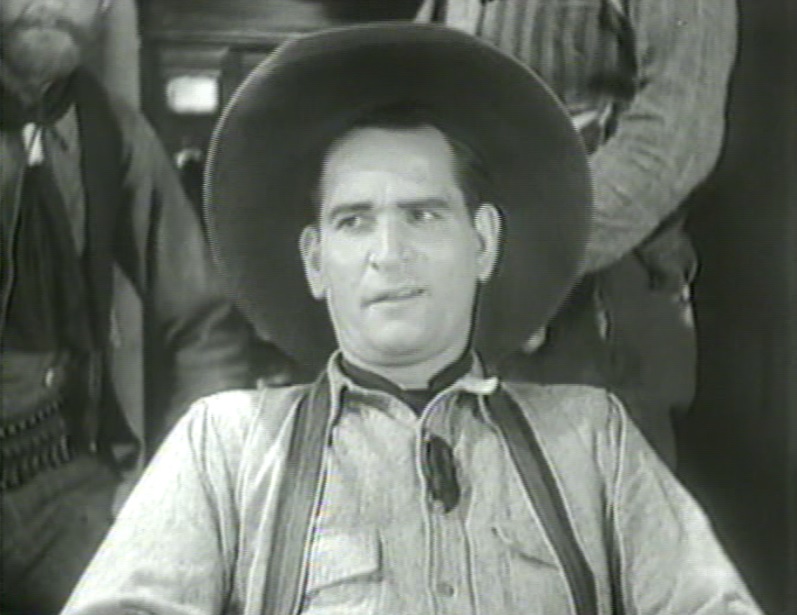
Community hub
Recent from talks
Contribute something to knowledge base
Content stats: 0 posts, 0 articles, 1 media, 0 notes
Members stats: 0 subscribers, 0 contributors, 0 moderators, 0 supporters
Subscribers
Supporters
Contributors
Moderators
Hub AI
Yakima Canutt AI simulator
(@Yakima Canutt_simulator)
Hub AI
Yakima Canutt AI simulator
(@Yakima Canutt_simulator)
Yakima Canutt
Enos Edward "Yakima" Canutt (November 29, 1895 – May 24, 1986) was an American rodeo rider, stuntman, and actor. Sometimes called "the King of the Stuntmen," he is considered one of the influential figures in the history of motion picture stuntcraft.
Canutt worked on over 200 films between 1915 and 1975, developing numerous stunt techniques and technologies which later became ubiquitous. He received an Academy Honorary Award in 1967. His oft-collaborator, director William Witney, said "there will probably never be another stuntman who can compare to Yakima Canutt."
Yakima was born Enos Edward Canutt in the Snake River Hills near Colfax, Washington, one of five children of John Lemuel Canutt, a rancher, and his wife Nettie Ellen Stevens. He grew up in eastern Washington on a ranch near Penawawa Creek, founded by his grandfather. His father operated the ranch and also served a term in the state legislature.
Canutt's formal education was limited to elementary school in Green Lake, then a suburb of Seattle. He gained the education for his life's work on the family ranch, where he learned to hunt, trap, shoot, and ride.
Canutt first broke a wild bronco when he was 11. As a 6-foot-tall (1.8 m) 16-year-old, he started bronco riding at the Whitman County Fair in Colfax in 1912, and at 17 he won the title of World's Best Bronco Buster. Canutt started rodeo riding professionally and gained a reputation as a bronc rider, bulldogger, and all-around cowboy. It was at the 1914 Pendleton Round-Up that he got the nickname "Yakima" when a newspaper caption misidentified him. Other sources claim he adopted the nickname from the Yakima River Valley in Washington. "Yakima Canutt may be the most famous person NOT from Yakima, Washington" says Elizabeth Gibson, author of Yakima, Washington.
Winning second place at the 1915 Pendleton Round-Up brought attention from show promoters, who invited Canutt to compete around the country.
"I started in major rodeos in 1914, and went through to 1923. There was quite a crop of us traveling together, and we would have special railroad cars and cars for the horses. We'd play anywhere from three, six, eight, ten-day shows. Bronc riding and bulldogging were my specialties, but I did some roping," said Canutt.
During the 1916 season, he became interested in divorcee Kitty Wilks, who had won the Lady's Bronc-Riding Championship a couple of times. They married on July 20, 1917, while at a show in Kalispell, Montana; he was 21 and she 18. They divorced in 1922. While bulldogging in Idaho, Canutt suffered tears to his mouth and upper lip by a bull's horn; after getting stitches, he returned to the competition. A plastic surgeon corrected the injury a year later.
Yakima Canutt
Enos Edward "Yakima" Canutt (November 29, 1895 – May 24, 1986) was an American rodeo rider, stuntman, and actor. Sometimes called "the King of the Stuntmen," he is considered one of the influential figures in the history of motion picture stuntcraft.
Canutt worked on over 200 films between 1915 and 1975, developing numerous stunt techniques and technologies which later became ubiquitous. He received an Academy Honorary Award in 1967. His oft-collaborator, director William Witney, said "there will probably never be another stuntman who can compare to Yakima Canutt."
Yakima was born Enos Edward Canutt in the Snake River Hills near Colfax, Washington, one of five children of John Lemuel Canutt, a rancher, and his wife Nettie Ellen Stevens. He grew up in eastern Washington on a ranch near Penawawa Creek, founded by his grandfather. His father operated the ranch and also served a term in the state legislature.
Canutt's formal education was limited to elementary school in Green Lake, then a suburb of Seattle. He gained the education for his life's work on the family ranch, where he learned to hunt, trap, shoot, and ride.
Canutt first broke a wild bronco when he was 11. As a 6-foot-tall (1.8 m) 16-year-old, he started bronco riding at the Whitman County Fair in Colfax in 1912, and at 17 he won the title of World's Best Bronco Buster. Canutt started rodeo riding professionally and gained a reputation as a bronc rider, bulldogger, and all-around cowboy. It was at the 1914 Pendleton Round-Up that he got the nickname "Yakima" when a newspaper caption misidentified him. Other sources claim he adopted the nickname from the Yakima River Valley in Washington. "Yakima Canutt may be the most famous person NOT from Yakima, Washington" says Elizabeth Gibson, author of Yakima, Washington.
Winning second place at the 1915 Pendleton Round-Up brought attention from show promoters, who invited Canutt to compete around the country.
"I started in major rodeos in 1914, and went through to 1923. There was quite a crop of us traveling together, and we would have special railroad cars and cars for the horses. We'd play anywhere from three, six, eight, ten-day shows. Bronc riding and bulldogging were my specialties, but I did some roping," said Canutt.
During the 1916 season, he became interested in divorcee Kitty Wilks, who had won the Lady's Bronc-Riding Championship a couple of times. They married on July 20, 1917, while at a show in Kalispell, Montana; he was 21 and she 18. They divorced in 1922. While bulldogging in Idaho, Canutt suffered tears to his mouth and upper lip by a bull's horn; after getting stitches, he returned to the competition. A plastic surgeon corrected the injury a year later.
Recent media
Recent media