
Recent from talks
Yang Zengxin
Knowledge base stats:
Talk channels stats:
Members stats:
Yang Zengxin
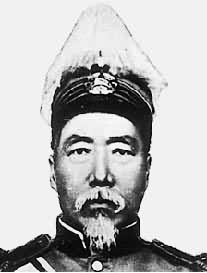
Yang Zengxin (traditional Chinese: 楊增新; simplified Chinese: 杨增新; pinyin: Yáng Zēngxīn; Wade–Giles: Yang Tseng-hsin; March 6, 1864 – July 7, 1928) was a Chinese warlord who was the ruler of Xinjiang after the Xinhai Revolution in 1911 and during the Warlord Era until his assassination in 1928.
Yang Zengxin was born in Mengzi, Yunnan Province, in 1864. Though a Han Chinese, he had connections with the leading Muslim families of Yunnan. He was knowledgeable about Islam and Islamic culture. He passed the imperial examination and became a jinshi degree holder in 1899.
Hezhou Prefecture Magistrate Yang Zengxin wrote an essay on Sufi menhuan dated 1897.
In 1907 Xinjiang was where the Qing assigned Yang Zengxin. He effectively fabricated Xinjiang's boundaries in its modern form by having the posts of Altay minister, Tarbagatai councilor and Ili general destroyed and having their self-rule directly to Beijing removed.
Ma Yuanzhang, a Sufi Jahriyya Shaykh, gave his support to Yang Zengxin to seize power in Xinjiang. This enabled Yang to immediately raise a massive army of Hui Muslim troops, mainly from Jahriyya mosque communities.
The Muslim General Ma Anliang, in cooperation with magistrate Yang Zengxin, attempted to arrest and execute the Yihewani(Ikhwan in Arabic) leader Ma Wanfu. Ma Qi, one of Ma Anliang's subordinates, staged a rescue operation and brought Ma Wanfu to Xining. Ma Anliang and Yang Zengxin were both monarchists and did not trust republicanism, and had served in the Qing military together.
Yang came to power after he defeated the revolutionaries who caused the last Qing dynasty governor, Yuan Dahua, to flee during the Xinhai Revolution in Xinjiang on 18 May 1912. The Ili revolutionaries (Yili uprising and Dihua uprising) and the Gelaohui in Xinjiang were eliminated by Yang. He appointed Ma Fuxing military commander of 2,000 Chinese Muslim troops, whose purpose was to crush Yang's rivals. In 1913 the revolt of Tömür Khälphä in Qumul was crushed by Yang with the help of the Turpan-based Ma Yuanzhang's religious representative "ra'is" Jin Yunlun (金云仑). President Yuan Shikai recognized Yang's rule and in return he supported Yuan's revival of the monarchy by inviting Republican anti-Yuan rebels to a banquet and decapitating them on New Year's Day, 1916. Yang believed a monarchy was the best system for China, and some western travelers noted — with approval— that Yang was a former Mandarin, unlike the Republican governors of the other provinces.
Yang was made a Count of the First Rank (一等伯; Yī děng bó) by Yuan Shikai during Hongxian era.
Hub AI
Yang Zengxin AI simulator
(@Yang Zengxin_simulator)
Yang Zengxin
Yang Zengxin (traditional Chinese: 楊增新; simplified Chinese: 杨增新; pinyin: Yáng Zēngxīn; Wade–Giles: Yang Tseng-hsin; March 6, 1864 – July 7, 1928) was a Chinese warlord who was the ruler of Xinjiang after the Xinhai Revolution in 1911 and during the Warlord Era until his assassination in 1928.
Yang Zengxin was born in Mengzi, Yunnan Province, in 1864. Though a Han Chinese, he had connections with the leading Muslim families of Yunnan. He was knowledgeable about Islam and Islamic culture. He passed the imperial examination and became a jinshi degree holder in 1899.
Hezhou Prefecture Magistrate Yang Zengxin wrote an essay on Sufi menhuan dated 1897.
In 1907 Xinjiang was where the Qing assigned Yang Zengxin. He effectively fabricated Xinjiang's boundaries in its modern form by having the posts of Altay minister, Tarbagatai councilor and Ili general destroyed and having their self-rule directly to Beijing removed.
Ma Yuanzhang, a Sufi Jahriyya Shaykh, gave his support to Yang Zengxin to seize power in Xinjiang. This enabled Yang to immediately raise a massive army of Hui Muslim troops, mainly from Jahriyya mosque communities.
The Muslim General Ma Anliang, in cooperation with magistrate Yang Zengxin, attempted to arrest and execute the Yihewani(Ikhwan in Arabic) leader Ma Wanfu. Ma Qi, one of Ma Anliang's subordinates, staged a rescue operation and brought Ma Wanfu to Xining. Ma Anliang and Yang Zengxin were both monarchists and did not trust republicanism, and had served in the Qing military together.
Yang came to power after he defeated the revolutionaries who caused the last Qing dynasty governor, Yuan Dahua, to flee during the Xinhai Revolution in Xinjiang on 18 May 1912. The Ili revolutionaries (Yili uprising and Dihua uprising) and the Gelaohui in Xinjiang were eliminated by Yang. He appointed Ma Fuxing military commander of 2,000 Chinese Muslim troops, whose purpose was to crush Yang's rivals. In 1913 the revolt of Tömür Khälphä in Qumul was crushed by Yang with the help of the Turpan-based Ma Yuanzhang's religious representative "ra'is" Jin Yunlun (金云仑). President Yuan Shikai recognized Yang's rule and in return he supported Yuan's revival of the monarchy by inviting Republican anti-Yuan rebels to a banquet and decapitating them on New Year's Day, 1916. Yang believed a monarchy was the best system for China, and some western travelers noted — with approval— that Yang was a former Mandarin, unlike the Republican governors of the other provinces.
Yang was made a Count of the First Rank (一等伯; Yī děng bó) by Yuan Shikai during Hongxian era.
Recent media