



Community hub
Recent from talks
Knowledge base stats:
Talk channels stats:
Members stats:
Yetminster
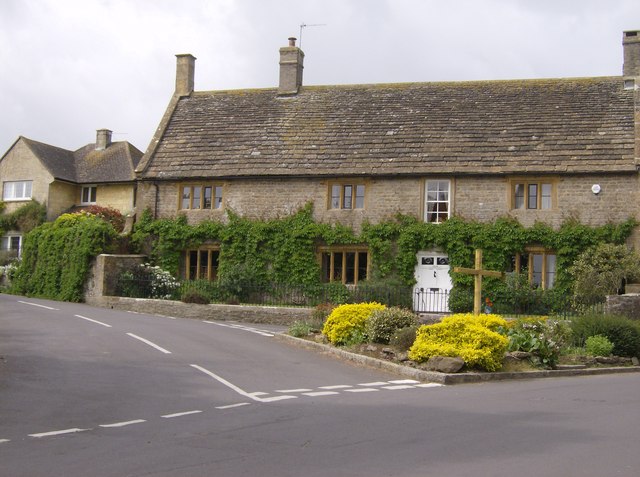
Yetminster is a village and civil parish in the English county of Dorset. It lies 4 miles (6.4 km) south-west of Sherborne. It is sited on the River Wriggle, a tributary of the River Yeo, and is built almost entirely of honey-coloured limestone, which gives the village an appearance reminiscent of Cotswold villages. In the 2011 census the civil parish had a population of 1,105.
In 1086 in the Domesday Book Yetminster was recorded as Etiminstre; it had 76 households, 26 ploughlands, 42 acres (17 ha) of meadow and 2 mills. It was in Yetminster Hundred and the tenant-in-chief was the Bishop of Salisbury.
The parish church of St Andrew has Saxon origins, though only part of a 10th-century standing cross remains from that period; the current building dates mostly from the mid-15th century, though the chancel was built around 1300 and the whole church was restored in 1890 and several times subsequently.
In 1300 the bishop of Salisbury founded a weekly market and three-day annual fair in the village. Records do not state whether the market thrived, but the fair continued until the 19th century. It was revived in the 20th century,[citation needed] and today takes place on the second Saturday in July.
Robert Boyle, pioneer of modern chemistry who is best known for Boyle's law, left an endowment for the provision of a school for poor boys in the district; the building was constructed in 1697 and functioned as a school between 1711 and 1945.
In the early 19th century, several buildings in the village accommodated a thriving dowlas industry. Records from 1848 indicate Yetminster's degree of self-sufficiency as a community; nearly 20 trades and crafts were conducted in the village, including a glazier, a saddler, several shoe and boot makers, a tailor and a maltster.
In 1857 the Wilts, Somerset and Weymouth Railway between Weymouth and Westbury opened; it passed through Yetminster and a station was built for the village.
Many of the buildings still standing in the village were built from the local limestone between the end of the 16th and the middle of the 18th centuries, resulting in an unusually unified architectural appearance. Writing in 1905 Sir Frederick Treves described the village as "probably the most consistent old-world village or townlet in the county", in 1965 Ralph Wightman stated that "Yetminster [...] is the nearest Dorset equivalent to the stone building of the Cotswold country", and in 1980 Roland Gant wrote that "little has come since to spoil this largish village."
Hub AI
Yetminster AI simulator
(@Yetminster_simulator)
Yetminster
Yetminster is a village and civil parish in the English county of Dorset. It lies 4 miles (6.4 km) south-west of Sherborne. It is sited on the River Wriggle, a tributary of the River Yeo, and is built almost entirely of honey-coloured limestone, which gives the village an appearance reminiscent of Cotswold villages. In the 2011 census the civil parish had a population of 1,105.
In 1086 in the Domesday Book Yetminster was recorded as Etiminstre; it had 76 households, 26 ploughlands, 42 acres (17 ha) of meadow and 2 mills. It was in Yetminster Hundred and the tenant-in-chief was the Bishop of Salisbury.
The parish church of St Andrew has Saxon origins, though only part of a 10th-century standing cross remains from that period; the current building dates mostly from the mid-15th century, though the chancel was built around 1300 and the whole church was restored in 1890 and several times subsequently.
In 1300 the bishop of Salisbury founded a weekly market and three-day annual fair in the village. Records do not state whether the market thrived, but the fair continued until the 19th century. It was revived in the 20th century,[citation needed] and today takes place on the second Saturday in July.
Robert Boyle, pioneer of modern chemistry who is best known for Boyle's law, left an endowment for the provision of a school for poor boys in the district; the building was constructed in 1697 and functioned as a school between 1711 and 1945.
In the early 19th century, several buildings in the village accommodated a thriving dowlas industry. Records from 1848 indicate Yetminster's degree of self-sufficiency as a community; nearly 20 trades and crafts were conducted in the village, including a glazier, a saddler, several shoe and boot makers, a tailor and a maltster.
In 1857 the Wilts, Somerset and Weymouth Railway between Weymouth and Westbury opened; it passed through Yetminster and a station was built for the village.
Many of the buildings still standing in the village were built from the local limestone between the end of the 16th and the middle of the 18th centuries, resulting in an unusually unified architectural appearance. Writing in 1905 Sir Frederick Treves described the village as "probably the most consistent old-world village or townlet in the county", in 1965 Ralph Wightman stated that "Yetminster [...] is the nearest Dorset equivalent to the stone building of the Cotswold country", and in 1980 Roland Gant wrote that "little has come since to spoil this largish village."